Vocabulary Building Normal Community Worksheets for Ages 4-9
4 filtered results
Difficulty Level
Grade
Age
-
From - To
Subject
Activity
Standards
Boost your child's vocabulary with our community-themed worksheets designed for ages 4-9! These fun and educational printables from Kids Academy focus on familiar community settings to help young learners expand their word knowledge and language skills. Each worksheet introduces age-appropriate vocabulary through engaging activities, such as matching words to pictures, completing sentences, and more. Perfect for improving reading comprehension and language development, our worksheets not only support academic success but also encourage curiosity about the world around them. Ideal for parents and teachers alike, these tools make vocabulary building a delightful adventure in your child's educational journey.
Favorites
With answer key
Interactive
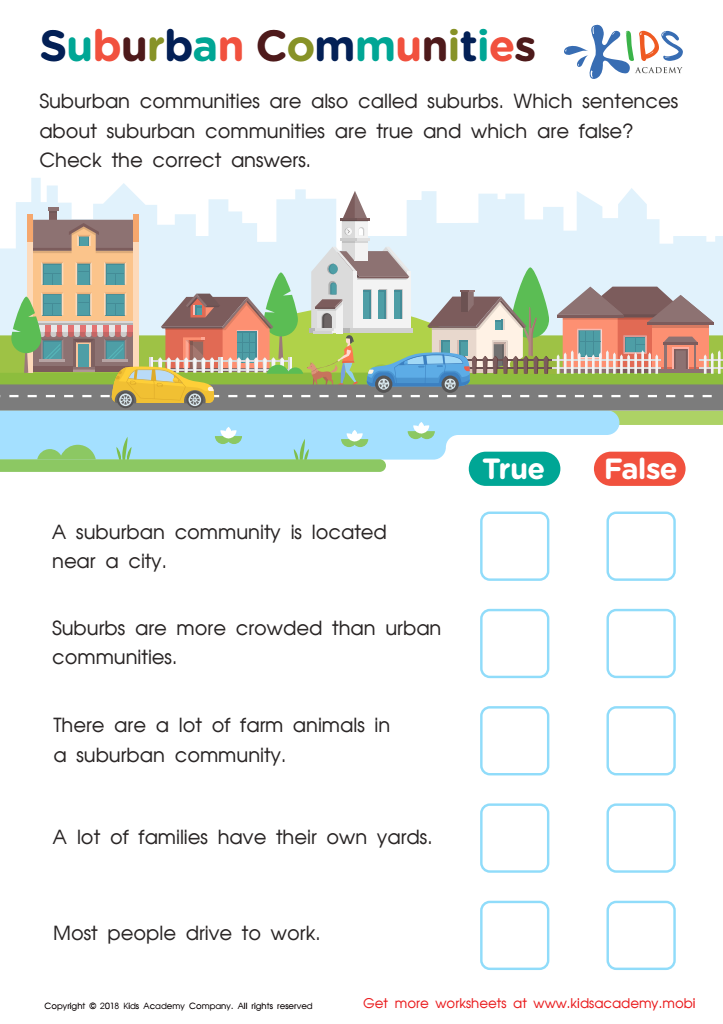
Suburban Communities Worksheet
This worksheet helps your students/children understand suburban communities. Have them read the sentences and check the true or false box for each. They will gain a better knowledge of the suburbs after this exercise.
 Assign to My Students
Suburban Communities Worksheet
Worksheet
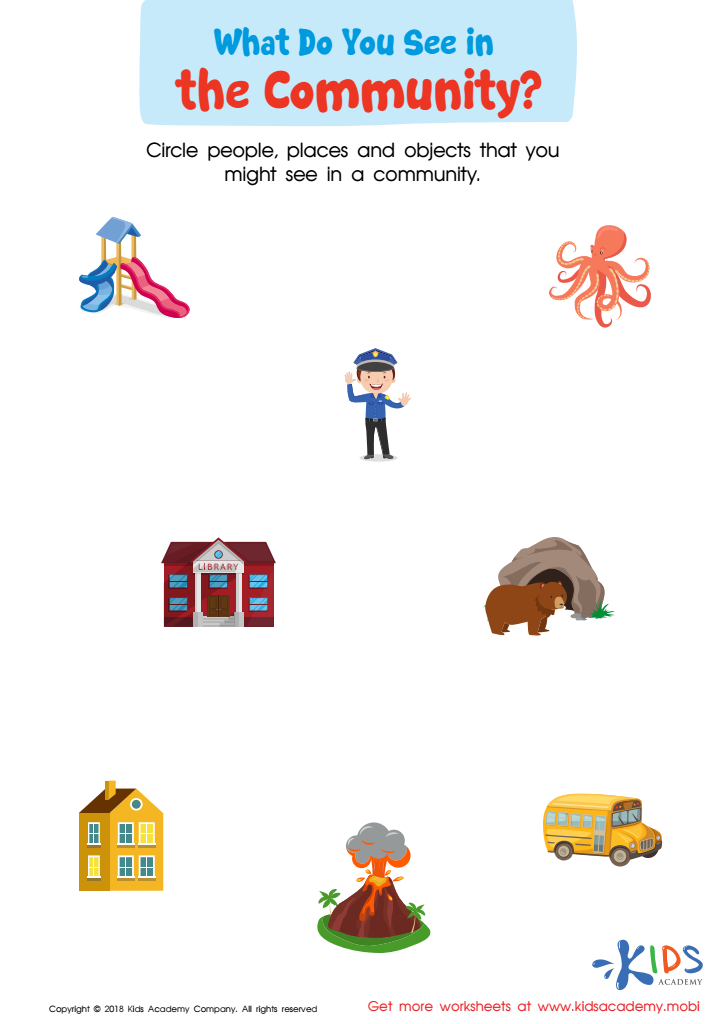
What Do You See in the Community Worksheet
This free social studies PDF can help your children learn about their local community. They'll identify its members, places and objects using engaging and recognizable pictures. As they trace circles around them, they'll also practice fine motor skills. It's a great way to introduce social science concepts and help them understand the importance of community.
What Do You See in the Community Worksheet
Worksheet
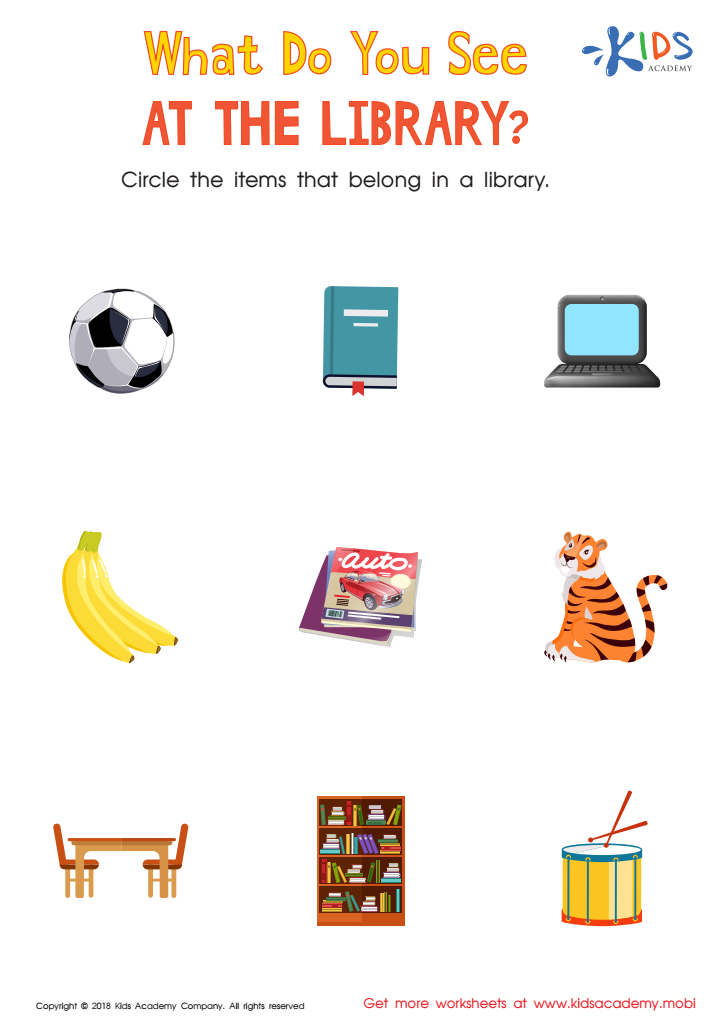
What Do you See at the Library? Worksheet
Let your kids look at the worksheet with pictures of objects found in libraries and those that don't. Ask them to list some, then circle the ones that belong in a library. Can they identify them? See if you can spot any they miss!
What Do you See at the Library? Worksheet
Worksheet
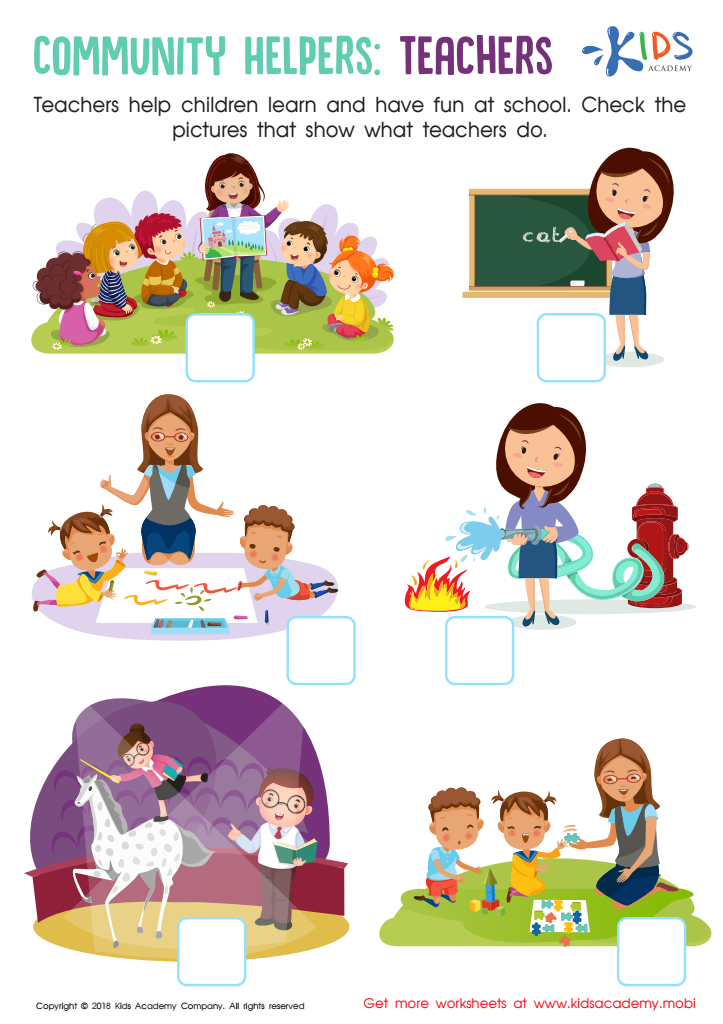
Teachers Community Helpers Worksheet
Ask your students to name some of the ways a teacher helps. Then, use this worksheet to show the right ways teachers can help. Have them check the boxes of the pictures that accurately depict what a teacher does. This is a great exercise to show your students how you help them learn and contribute to their community.
Teachers Community Helpers Worksheet
Worksheet
Join Kids Academy for Free
Who is primarily going to use this learning content?








Vocabulary building is crucial for children ages 4-9 because it directly impacts their overall academic and social development. During these formative years, a child's brain is exceptionally receptive to learning new words, which serve as fundamental building blocks for later academic skills such as reading comprehension, writing, and critical thinking.
Parents and teachers should prioritize vocabulary development because it is closely tied to a child's ability to express themselves clearly and interact effectively with others. A robust vocabulary enhances their ability to understand instructions, participate in discussions, and convey their thoughts and emotions, fostering self-confidence and independence.
Moreover, children with a rich vocabulary are better equipped to grasp new concepts across various subjects, making learning more accessible and enjoyable. Early intervention in vocabulary building can help bridge any language gaps and counteract educational disparities that might exist due to socioeconomic factors.
By investing in vocabulary building, parents and teachers provide children with the tools they need for long-term academic success and professional achievement. Collaborative efforts, such as community reading programs, storytelling activities, and engaging in conversations, create a supportive environment that nurtures a love for words and learning. This, in turn, promotes a culture of continuous intellectual growth and curiosity in young minds.