
Developing analytical skills Normal Social Studies Worksheets for Ages 4-9
3 filtered results
Difficulty Level
Grade
Age
-
From - To
Subject
Activity
Standards
Empower young minds with our tailored Normal Social Studies Worksheets designed specifically for ages 4-9. These dynamic resources foster analytical skills by presenting engaging activities that encourage critical thinking and problem-solving. Our worksheets cover diverse social studies topics, ensuring that children not only gain knowledge but also apply it through analysis and reasoning. Each worksheet is crafted to be age-appropriate and captivating, maintaining a fun and educational experience. Watch as your child develops a keen understanding of the world while sharpening their analytical abilities with our thoughtfully curated materials. Perfect for both classroom and home learning environments.
Favorites
With answer key
Interactive
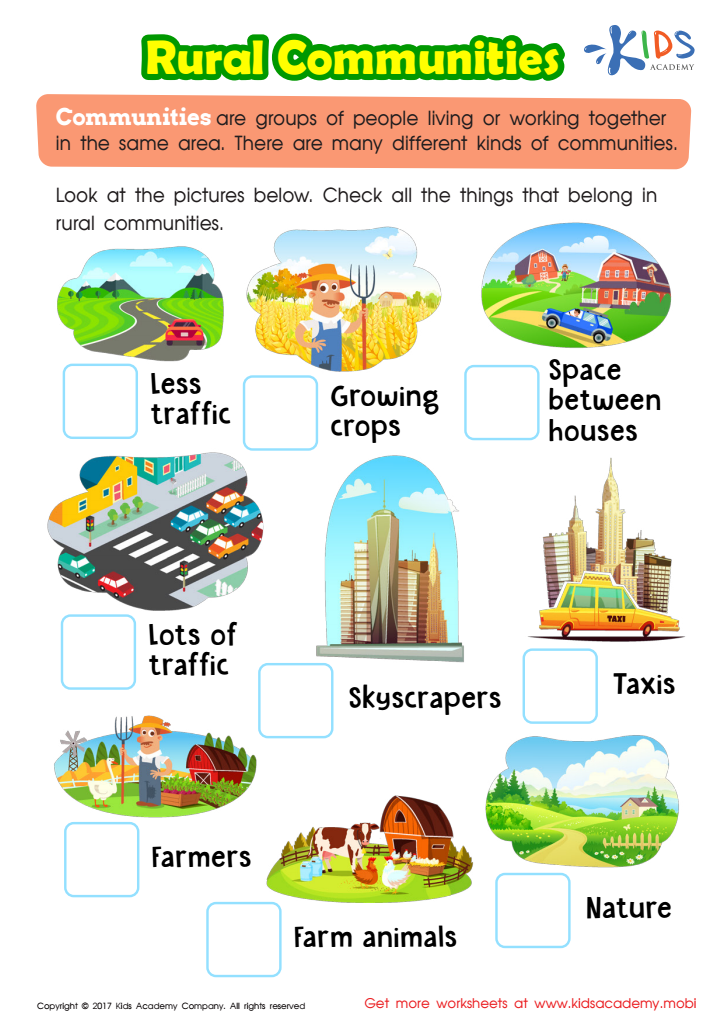
Rural Communities Printable
Help your child explore the contrast between city and rural living with this worksheet. They'll learn to recognize the buildings and transportation in urban settings, as well as how rural life can differ. Then, discuss the differences between city and rural living, and why life is different for people living in each.
 Assign to My Students
Rural Communities Printable
Worksheet

What Needs Electricity Printable
Up to 80 words: This worksheet will help your child use sorting skills to find the right objects that need electricity, strengthen problem solving skills, and learn more about electricity and electrical appliances. Let this fascinating science topic teach your little learner about the objects in their lives that need electricity!
What Needs Electricity Printable
Worksheet
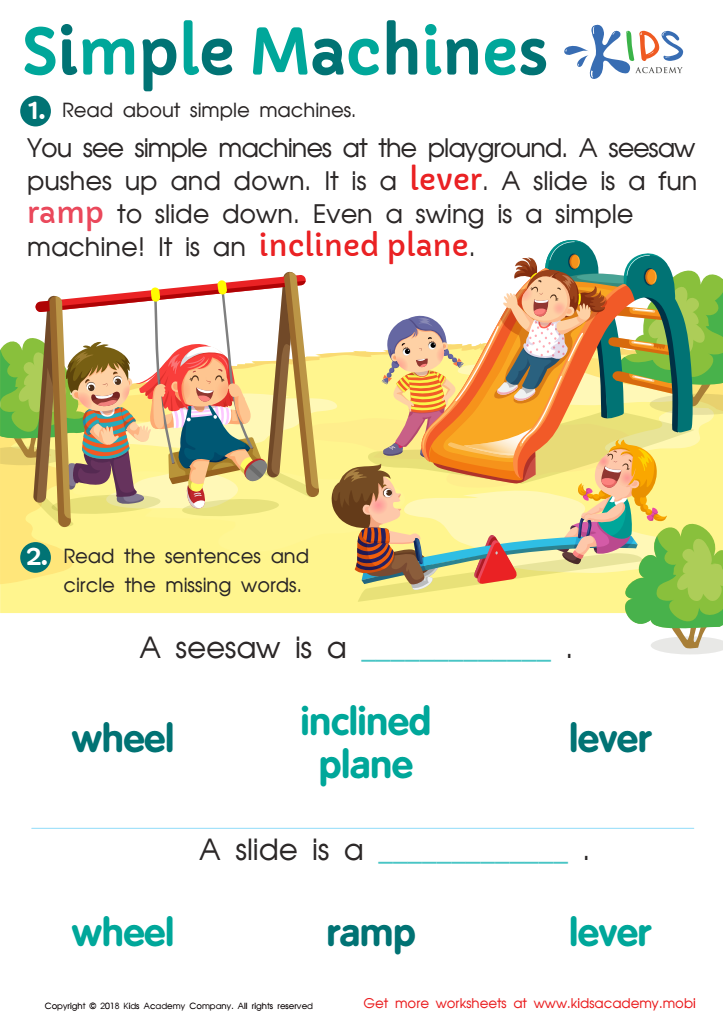
Simple Machines Worksheet
At the playground, your kids likely love to play and swing. Swings are simple machines – they work by using force to move something. Read the following sentences to them, with some words missing - help them fill in the blanks. Simple machines make work easier by __changing__ the size or __direction__ of a force. Swings use a _fulcrum_ and a _lever_ to move.
Simple Machines Worksheet
Worksheet
Join Kids Academy for Free
Who is primarily going to use this learning content?







Developing analytical skills in social studies for children aged 4-9 is crucial for several reasons that resonate with both parents and teachers. At this formative stage, children’s brains are exceptionally receptive to learning new concepts and cultivating critical thinking abilities. By introducing analytical skills in the context of social studies, we encourage young learners to understand not just the "what" but the "why" and "how" behind historical events, cultural practices, and civic structures.
First, these skills foster curiosity and inquisitive thinking, driving children to ask questions, engage in problem-solving, and appreciate different perspectives. This foundational thinking encourages a lifelong love of learning and adaptability, crucial traits in an ever-changing world.
Second, analytical skills help children sift through information critically, which is vital in an age inundated with data and varied opinions. Early familiarity with evaluating evidence, comparing viewpoints, and drawing reasoned conclusions sets the stage for thoughtful, informed citizens.
Moreover, integrating these analytical approaches in social studies simultaneously reinforces other academic areas such as reading comprehension, logical reasoning in mathematics, and effective communication. It creates a well-rounded developmental experience that benefits cognitive and social-emotional growth.
Ultimately, nurturing analytical skills in early social studies education allows children not just to learn facts but to develop wisdom, preparing them for academic challenges and societal participation.








