Geographic Understanding Normal Social Studies Worksheets for Ages 4-9
3 filtered results
-
From - To
Enhance your child's geographic understanding with our tailored Social Studies worksheets for ages 4-9 from Kids Academy! These engaging and educational resources help young learners explore maps, landforms, and key global concepts through fun activities and exercises. Our worksheets are designed to build a foundation in geography, making complex topics approachable for early grade students. With bright visuals and interactive tasks, children will develop crucial skills in direction, spatial awareness, and cultural context. Empower your child with the tools to understand their world better and set them on a path of lifelong learning and curiosity. Visit us to start exploring today!
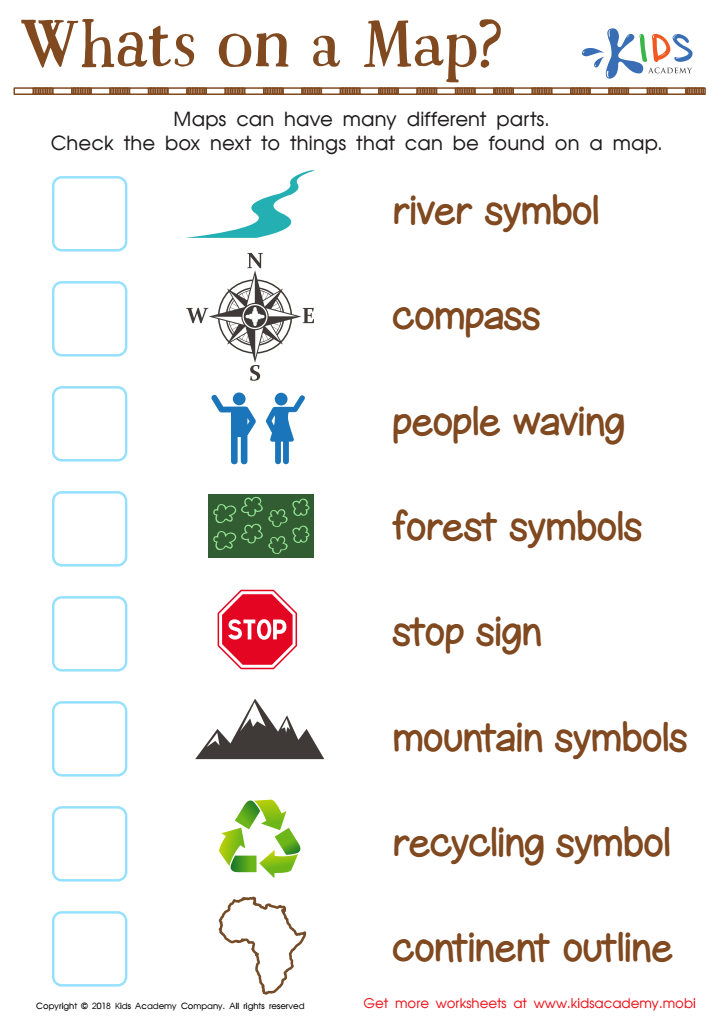
Whats on a Map? Worksheet
 Assign to My Students
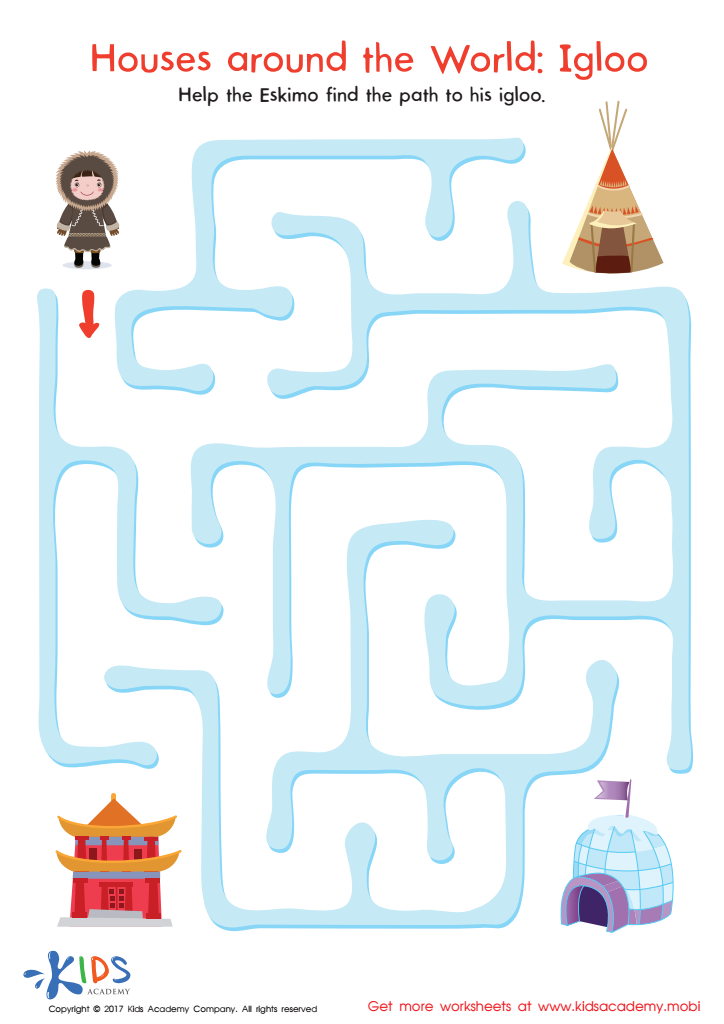
Houses Around the World: Igloo Printable
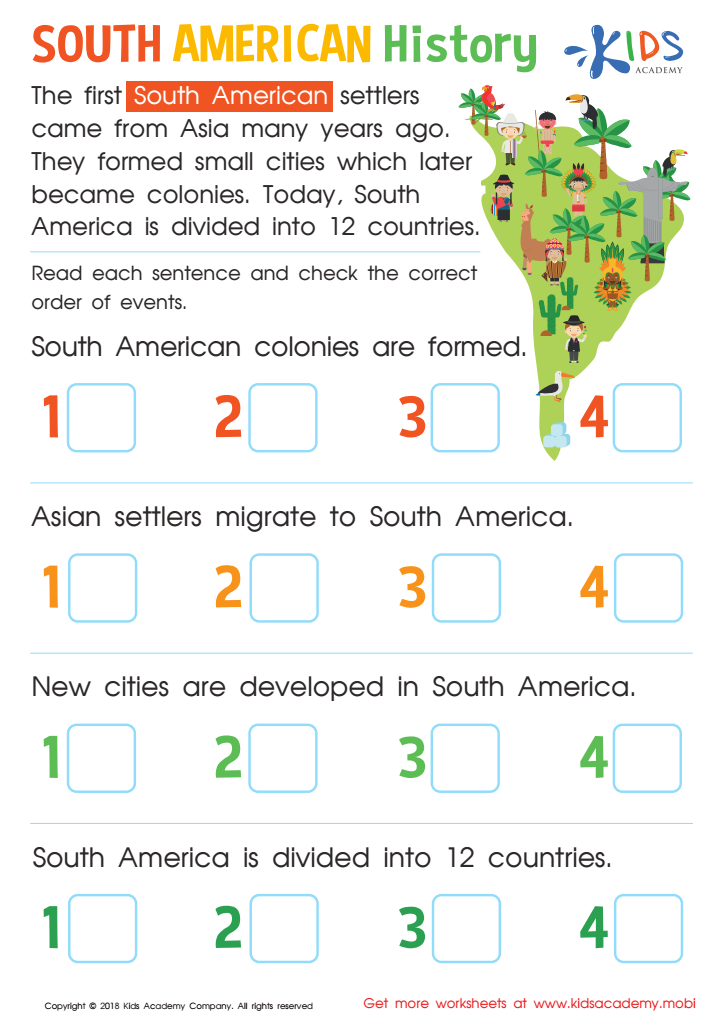
South American History Worksheet







Geographic understanding is crucial for young children aged 4-9 as it forms the foundation for comprehending the world around them. At this developmental stage, children are naturally curious and capable of absorbing concepts that shape their perspective on diverse environments, cultures, and encounters. By fostering geographic understanding, parents and teachers help children grasp essential skills like spatial awareness and directional sense.
Understanding geography also enriches social studies education, providing context for historical events, cultural practices, and societal norms. Knowing where a place is located contributes to a child's ability to learn about the people and histories relating to that place. It's not just maps and locations; it instills a sense of connection to the global community, promoting empathy and appreciation for diversity from an early age.
Moreover, geographic literacy supports critical thinking and problem-solving skills. As children learn to interpret maps and recognize geographic features, they engage in analytical and observational activities. These activities build cognitive abilities that are transferable to other subjects like math and science.
Investing in geographic education signals to young children that the world is a large, intriguing puzzle worth exploring. It primes them to become responsible global citizens who are aware of how their actions might impact other regions and communities, nurturing a sense of responsibility and stewardship for our planet.