Spatial awareness Normal Social Studies Worksheets for Ages 4-9
6 filtered results
Difficulty Level
Grade
Age
-
From - To
Subject
Activity
Standards
Explore our engaging Spatial Awareness Social Studies Worksheets designed for children aged 4-9 at Kids Academy. These thoughtfully crafted worksheets focus on developing spatial awareness to enhance young learners' understanding of their surroundings through fun, interactive activities. Ideal for early grades, our resources help children grasp key concepts such as shapes, directions, and map reading. By incorporating visuals and hands-on tasks, kids build essential skills while enjoying the learning process. Perfect for both classroom settings and at-home practice, these worksheets provide the foundational tools for academic and everyday success in spatial awareness. Start their journey today!
Favorites
With answer key
Interactive
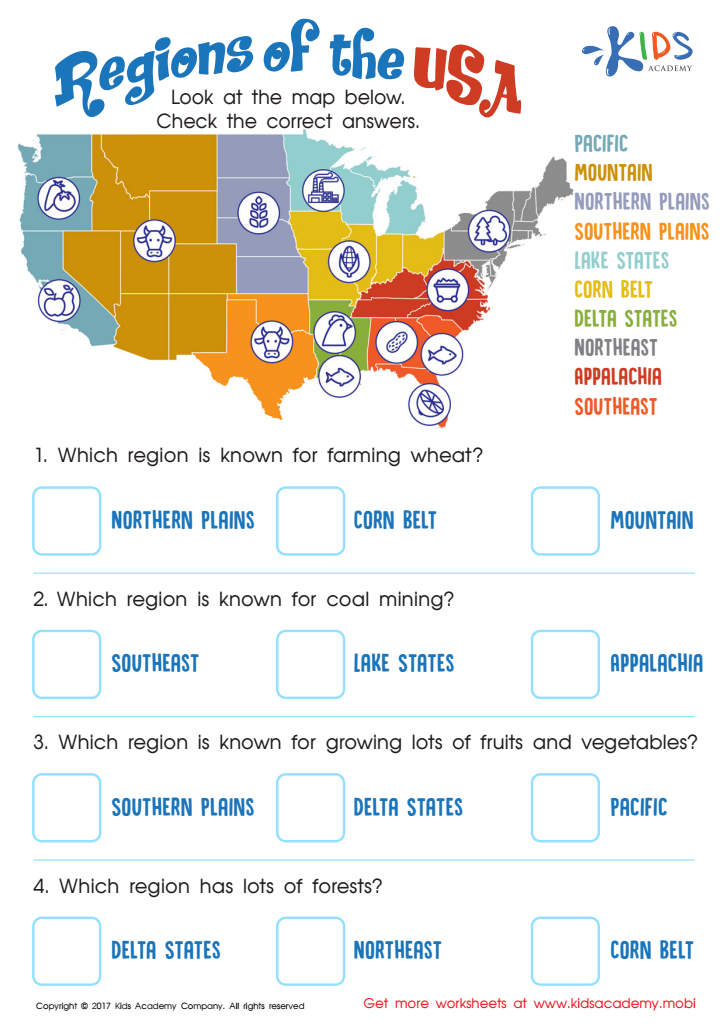
Regions of the USA Worksheet
Help your child explore the US with this regions of the United States worksheet! They'll learn about the diverse cultures, climates and purposes of each region. Make geography and US history fun with this educational exercise!
 Assign to My Students
Regions of the USA Worksheet
Worksheet
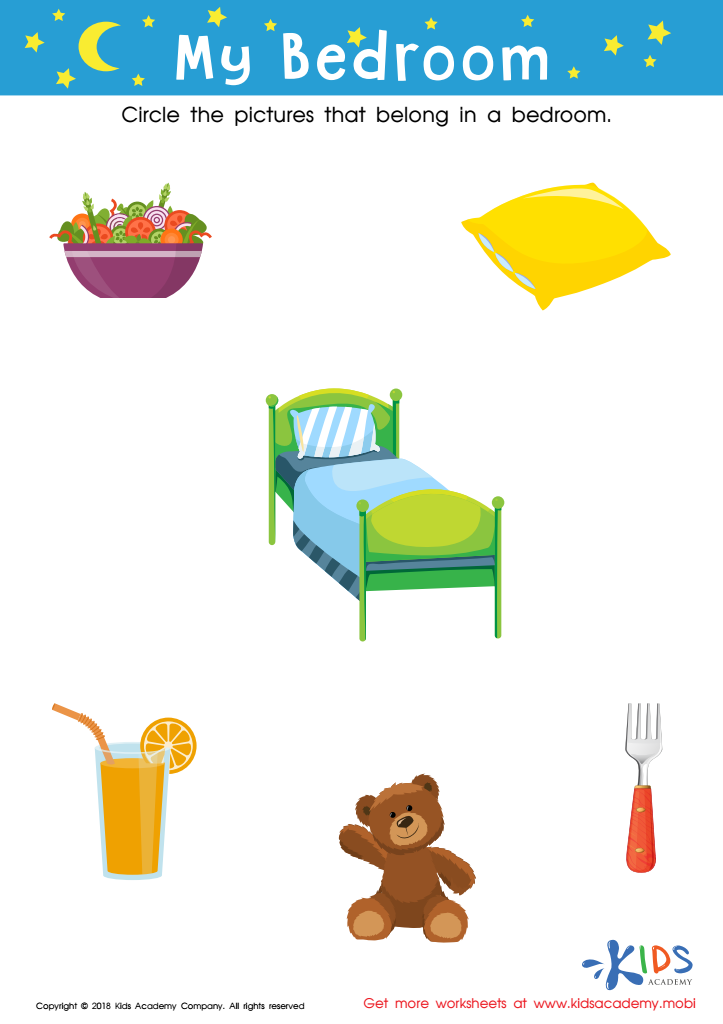
My Bedroom Worksheet
Your child's room is their special space, where only a few are allowed in. You may have let them choose some special decorations, like wall stickers and toys. This exercise will be easy for your child, as they know their bedroom well. Ask them to circle the pictures that belong in a bedroom.
My Bedroom Worksheet
Worksheet
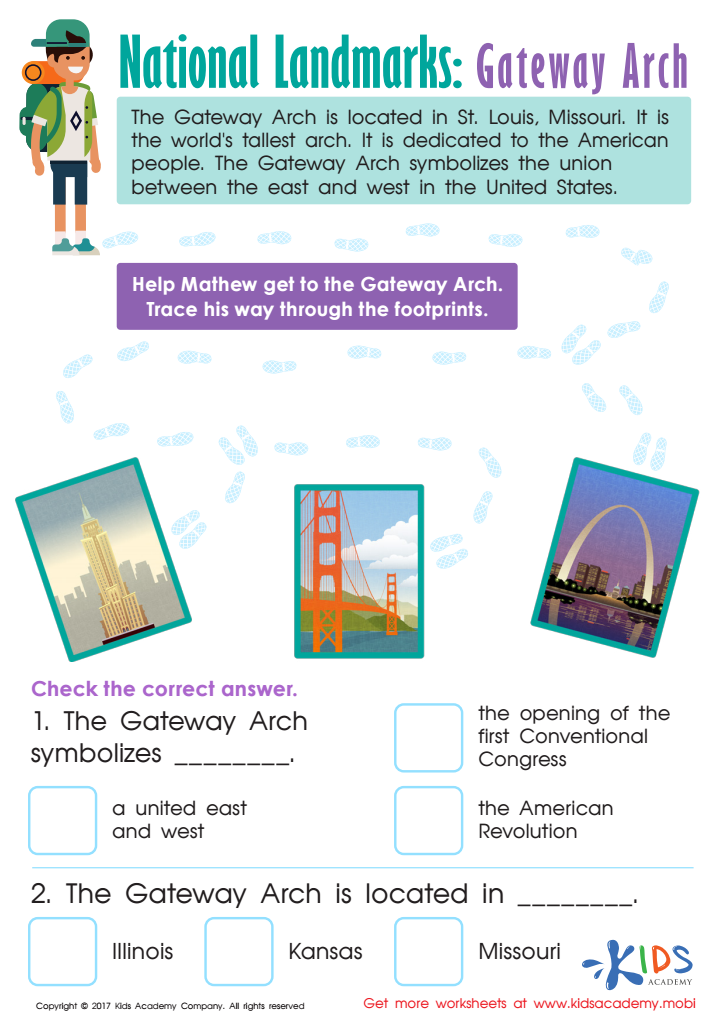
Gateway Arch Printable Worksheet
Explore America with your child! This printable worksheet takes them to St. Louis, Missouri's iconic Gateway Arch. As they learn about its history, they'll be quizzed with fun-filled facts. A great way to discover and appreciate this amazing national landmark! (80 words)
Gateway Arch Printable Worksheet
Worksheet
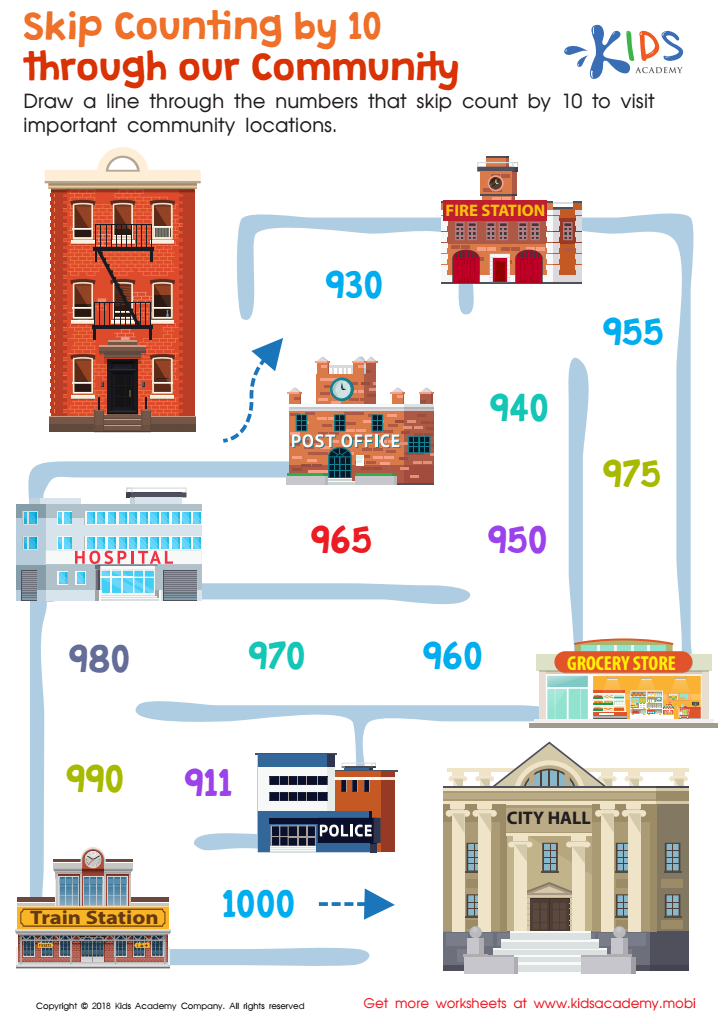
Skip Counting by 10 Through Our Community Worksheet
Our kids need to 'make a ten' and skip count by tens to boost their speed and accuracy in math. This cool, free worksheet takes them on a journey through their local community to practice counting by tens. They'll work on social studies and fine motor skills while having fun with the maze they get to count by tens in!
Skip Counting by 10 Through Our Community Worksheet
Worksheet
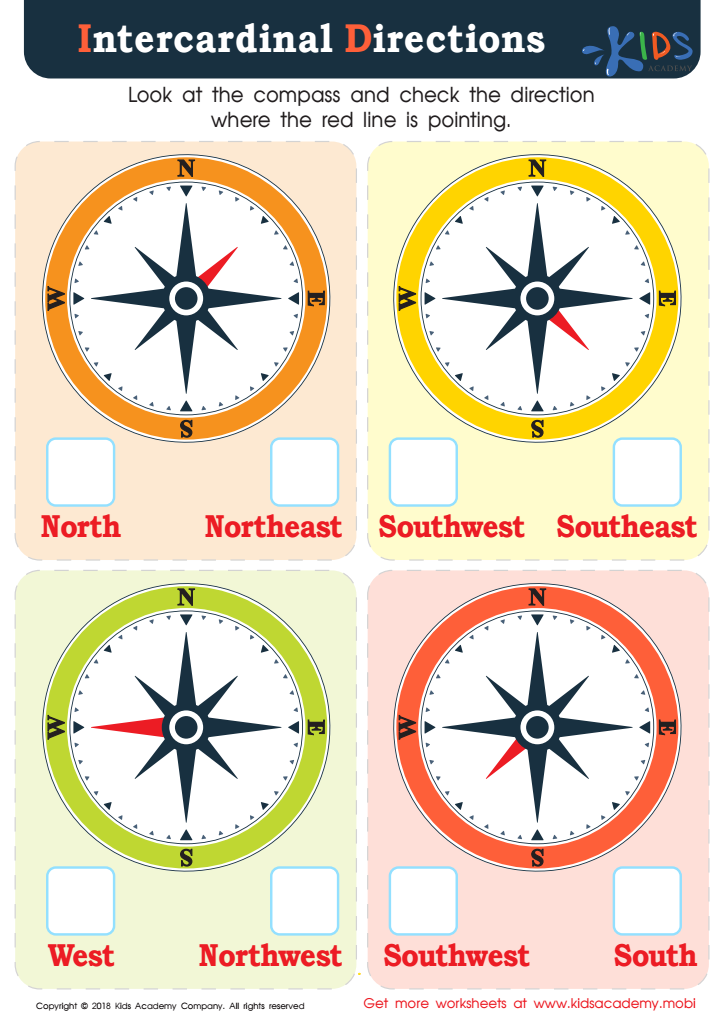
Intercardinal Directions Worksheet
Young students often don't get to practice cardinal and intercardinal directions in the digital age, but it's an important social studies and geography concept to learn. This PDF provides colorful compasses for them to practice with, giving them a real-world skill for common curriculum and independent living.
Intercardinal Directions Worksheet
Worksheet
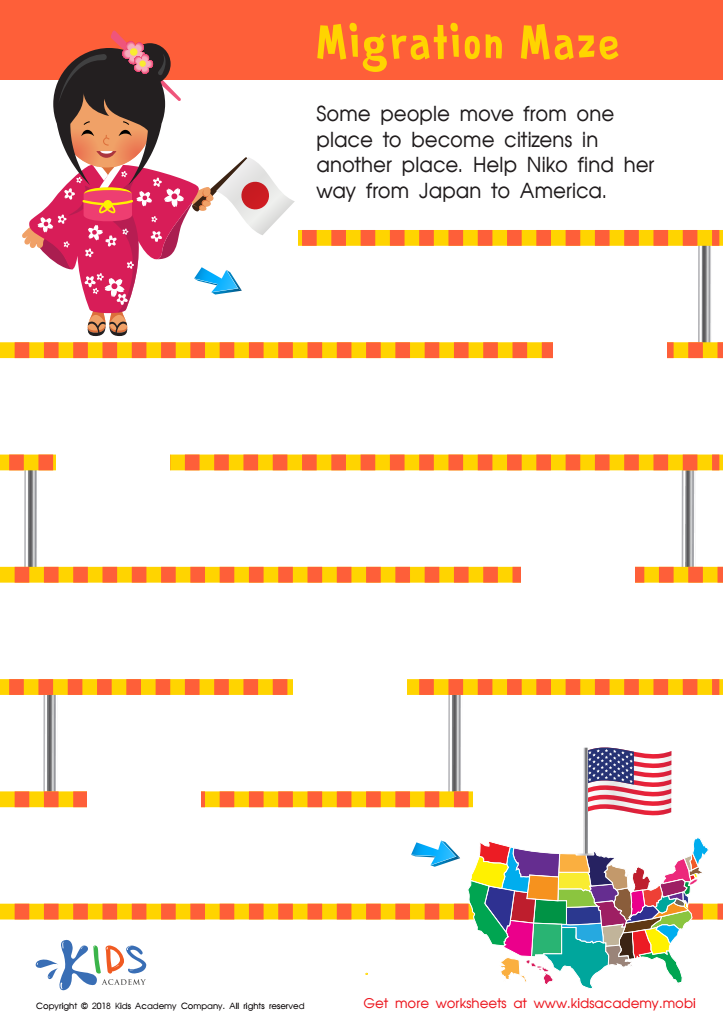
Migration Maze Worksheet
You are a citizen of your school, city and country. Many people migrate to become citizens of another place, like Niko in this worksheet. Ask your students to help her find her way from Japan to America.
Migration Maze Worksheet
Worksheet
Join Kids Academy for Free
Who is primarily going to use this learning content?







Spatial awareness is an essential skill for children aged 4-9, crucial for their overall development and success in numerous areas. For parents and teachers, fostering spatial awareness holds several key benefits:
-
Cognitive Development: Spatial awareness enhances cognitive abilities. Understanding shapes, sizes, positions, and directions lays the foundation for geometry and other advanced mathematical concepts. This early exposure helps children become better problem-solvers.
-
Academic Success: Social studies often involve interpreting maps, understanding geographic locations, and recognizing historical landmarks. A strong sense of spatial awareness helps children grasp these concepts with greater ease, thus excelling in academic subjects.
-
Daily Life Skills: Everyday activities, like tying shoelaces, navigating around obstacles, and organizing personal spaces, rely heavily on spatial reasoning. Children who develop these skills tend to be more independent and confident in their abilities.
-
Motor Skills: Games and activities that boost spatial awareness, such as puzzles, building blocks, and drawing, also enhance fine and gross motor skills. These are imperative for writing, athletics, and other physical activities.
-
Social Interaction: Understanding and navigating space helps children develop better social skills. They learn to respect personal boundaries, read body language, and interact more effectively with peers and adults.
In summary, parents and teachers nurturing spatial awareness in children aged 4-9 provide them with crucial tools for cognitive development, academic achievement, daily life skills, motor skills, and social interactions, fostering well-rounded and capable individuals.