Reading skills improvement Normal Grammar Worksheets for Ages 4-9
3 filtered results
-
From - To
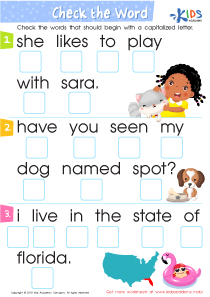
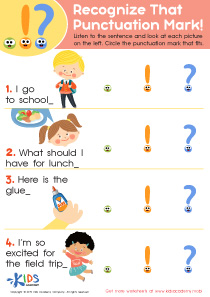
Enhance your child's reading skills with our "Reading Skills Improvement Normal Grammar Worksheets for Ages 4-9." These expertly designed worksheets focus on fundamental grammar rules, making learning fun and interactive. Perfect for early learners, they cover essential topics such as sentence structure, punctuation, and vocabulary. Each worksheet is crafted to boost confidence and comprehension, providing a strong foundation for advanced reading and writing. Ideal for both home and classroom use, our worksheets are a valuable resource for parents and teachers dedicated to academic success. Start improving your child's reading skills today with our engaging and educational grammar worksheets!
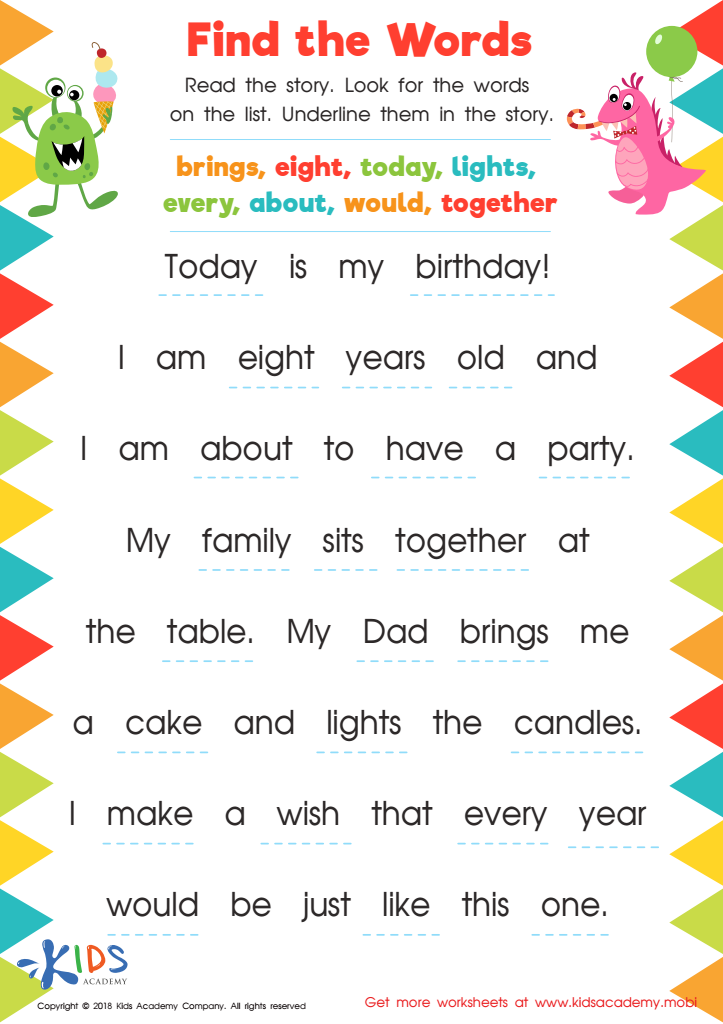
Find The Words Printable Worksheet
 Assign to My Students
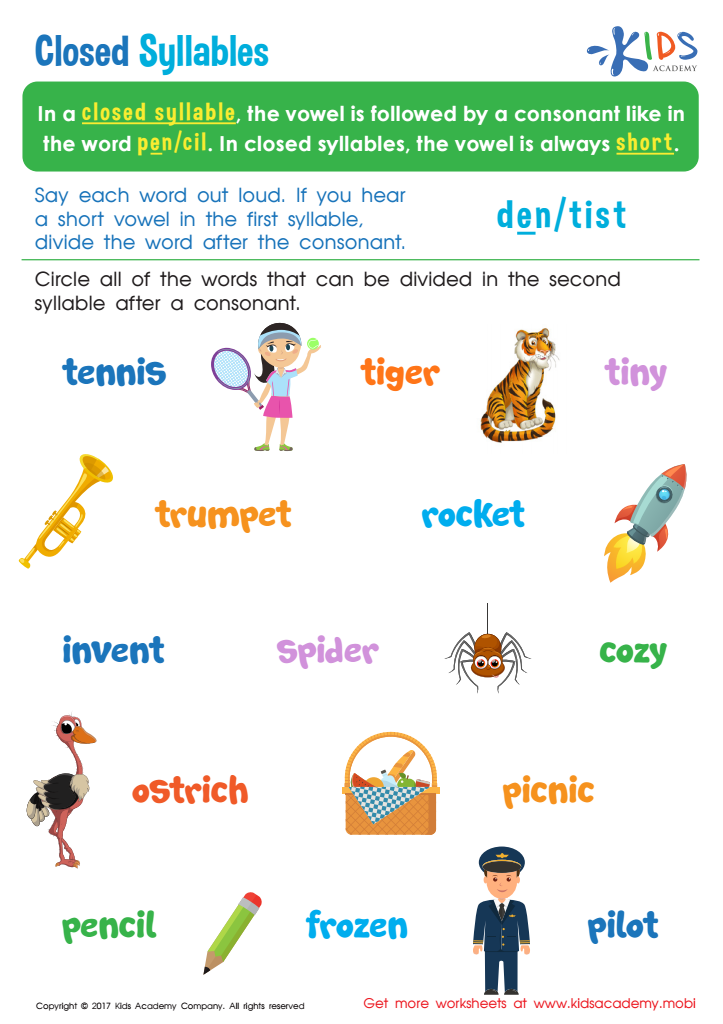
Closed Syllable Spelling Worksheet
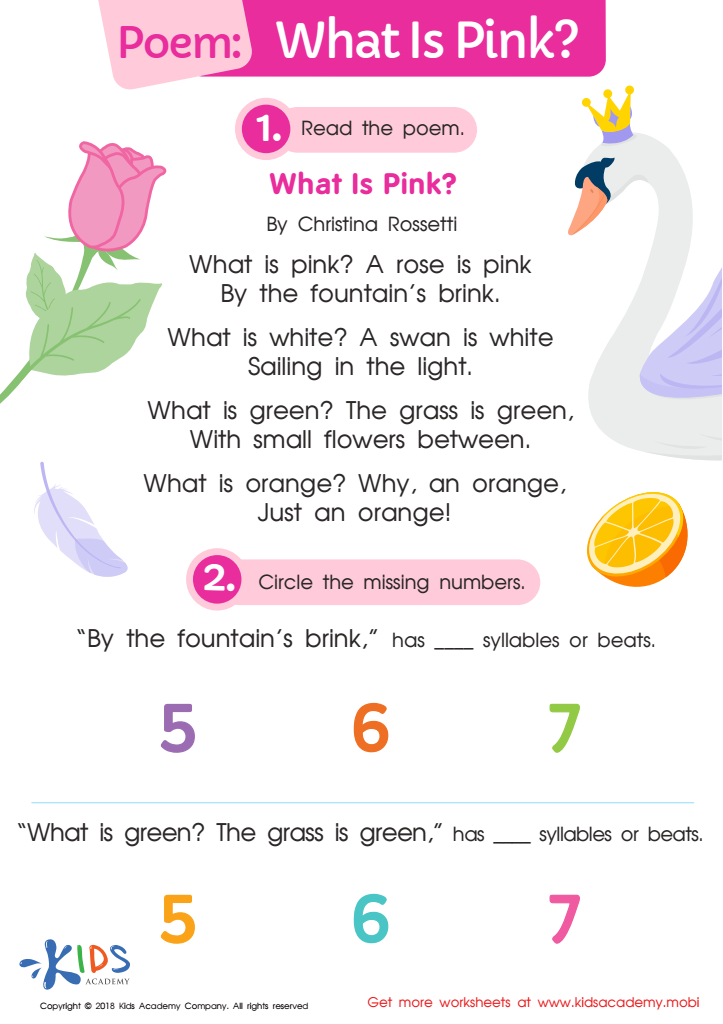
Poem: What Is Pink? Worksheet








Reading skills are fundamental to a child's academic success and overall development. For children aged 4-9, these skills form the foundation for all future learning, both inside and outside the classroom. When parents and teachers focus on improving these abilities, they open the door for children to flourish in multiple areas.
Firstly, strong reading abilities boost cognitive development. As children decipher words and understand sentences, they enhance their critical thinking and problem-solving skills. Reading also enriches vocabulary and language comprehension, essential for effective communication.
Secondly, reading fosters emotional development. When kids immerse themselves in stories, they develop empathy by understanding different characters' perspectives. This emotional intelligence is crucial for forming healthy social relationships and nurturing a sense of compassion from a young age.
Additionally, early reading skills set the stage for academic achievement. Students who are proficient readers can grasp other subjects more easily, as textbooks and information in all domains often require reading ability. This can translate to better grades and a positive attitude towards school.
Lastly, fostering a love for reading instills a lifelong habit of learning. When children associate reading with enjoyment and curiosity, they are likely to continue seeking knowledge as they grow older.
In summary, parents and teachers should prioritize reading skills for ages 4-9 to better equip children for cognitive, emotional, and academic success, ensuring well-rounded development and fostering a lifelong love of learning.