Word identification Normal Grammar Worksheets for Ages 4-9
5 filtered results
-
From - To
Enhance your child's reading journey with our captivating Word Identification Normal Grammar Worksheets for ages 4-9. Introduce young learners to essential grammar skills through engaging activities designed to improve their word recognition and language understanding. Our worksheets provide a fun and interactive way for children to identify and understand words in context, fostering stronger reading and writing abilities. Appropriate for preschool to elementary-aged students, these expertly crafted resources support effective learning at home or in the classroom. Unlock your child's potential with well-rounded language support from Kids Academy's thoughtfully designed printable worksheets!
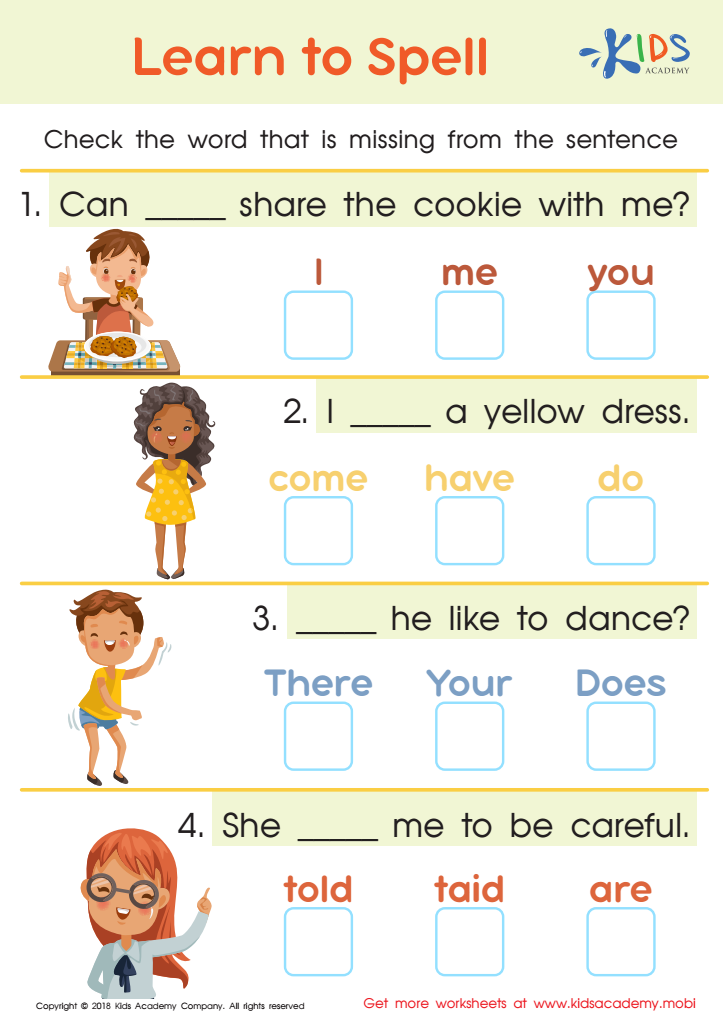
Learn to Spell Worksheet
 Assign to My Students
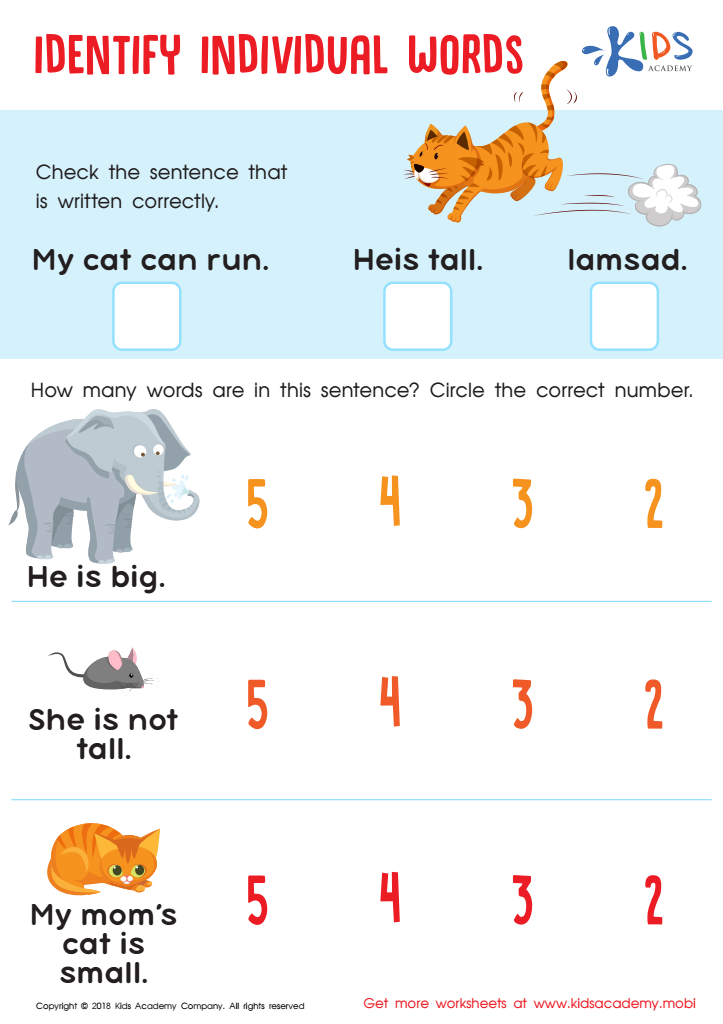
Identify Individual Words Worksheet
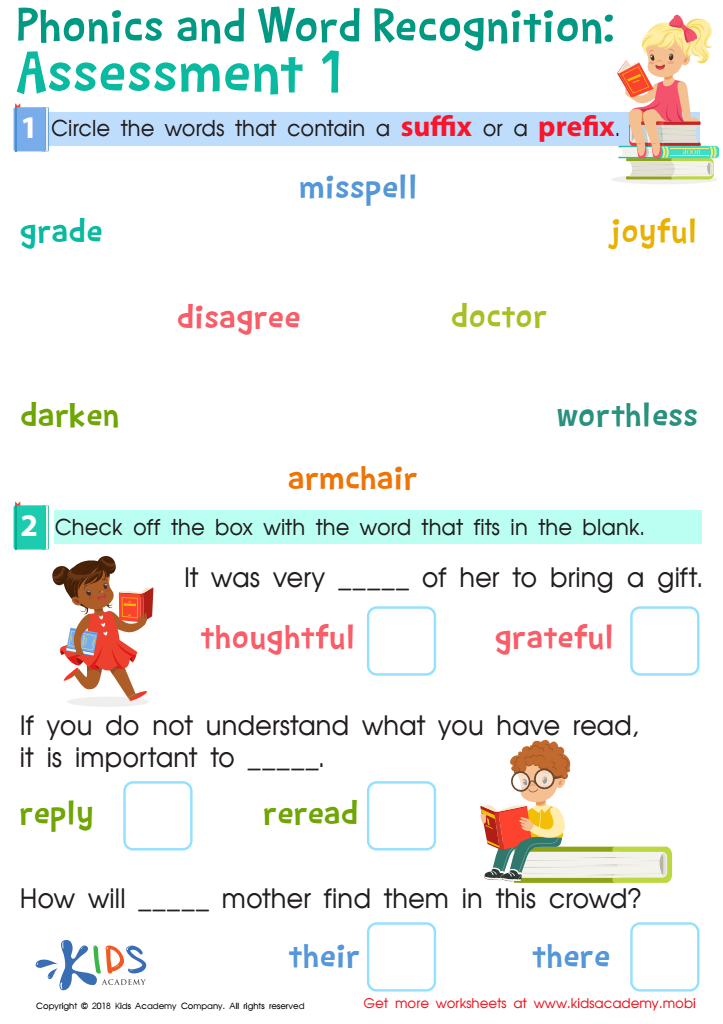
Phonics and Word Recognition: Assessment 1 Worksheet
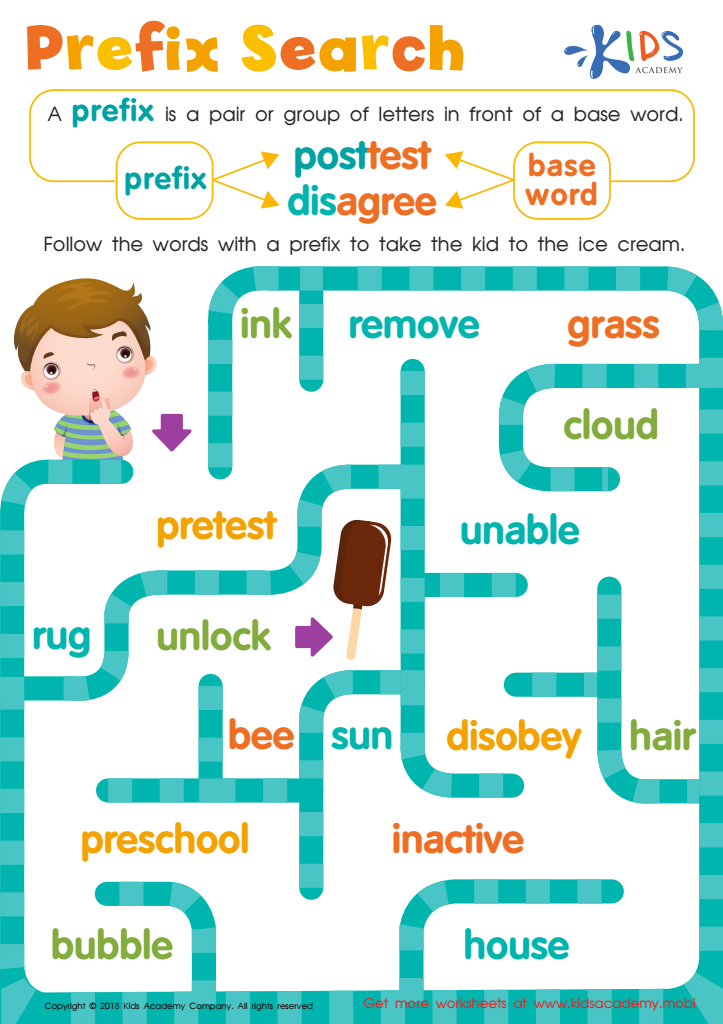
Reading: Prefix Search Worksheet
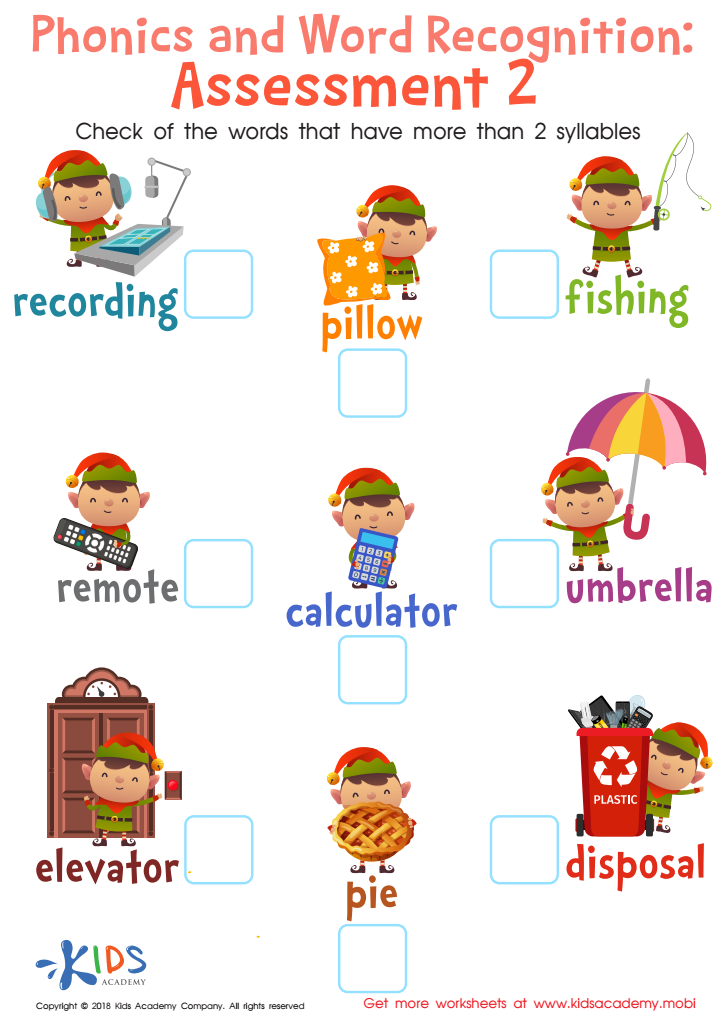
Phonics and Word Recognition: Assessment 2 Worksheet






.jpg)

Parents and teachers should care about word identification and normal grammar for children ages 4-9 because these skills are foundational to their overall literacy development. During these formative years, children's brains are highly receptive to learning language, and mastering word identification directly impacts their reading fluency and comprehension. Phonics instruction, which focuses on the relationship between letters and sounds, helps children decode words efficiently. Early success in reading fosters a love for learning and boosts self-confidence.
Normal grammar instruction is equally important, as it provides children with the tools to understand and construct meaningful sentences. Understanding the basics of syntax and grammar helps children communicate more effectively and improves their writing skills. When children grasp standard grammar rules, they are better equipped to understand more complex texts and express their ideas clearly. This dual emphasis on word identification and grammar prepares children for the higher literacy demands of later grades.
Furthermore, proficiency in reading and writing is linked to academic success across all subjects, as it enables children to follow instructions, understand content, and engage in critical thinking. By prioritizing these skills in early childhood, parents and teachers set the stage for lifelong learning and cognitive development.