Critical Thinking Normal Writing Worksheets for Ages 4-9
3 filtered results
-
From - To
Nurture your child’s mind with our Critical Thinking Normal Writing Worksheets for Ages 4-9. These engaging worksheets are designed to enhance writing skills and stimulate critical thinking. They offer a variety of fun, interactive activities that challenge young learners to think analytically and express their thoughts clearly. Our resources cover essential topics, encourage problem-solving, and build a strong foundation for academic success. Suitable for preschool through third grade, these worksheets are an excellent tool for parents and teachers aiming to develop a child's cognitive abilities in an enjoyable and effective way. Start your child’s intellectual journey today!
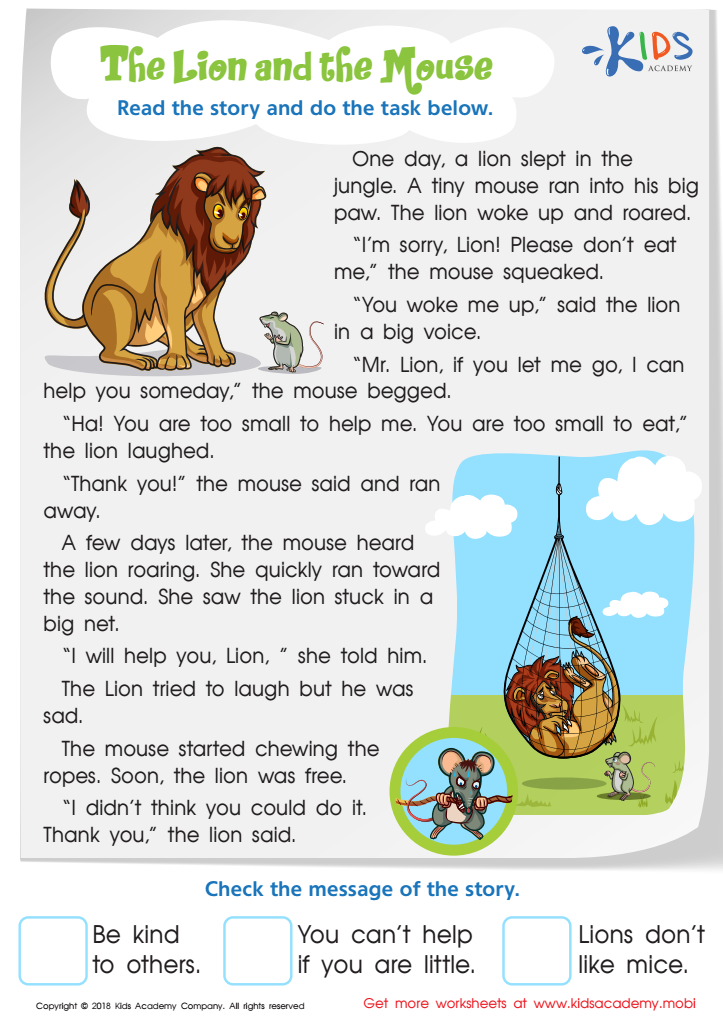
The Lion and the Mouse Worksheet
 Assign to My Students
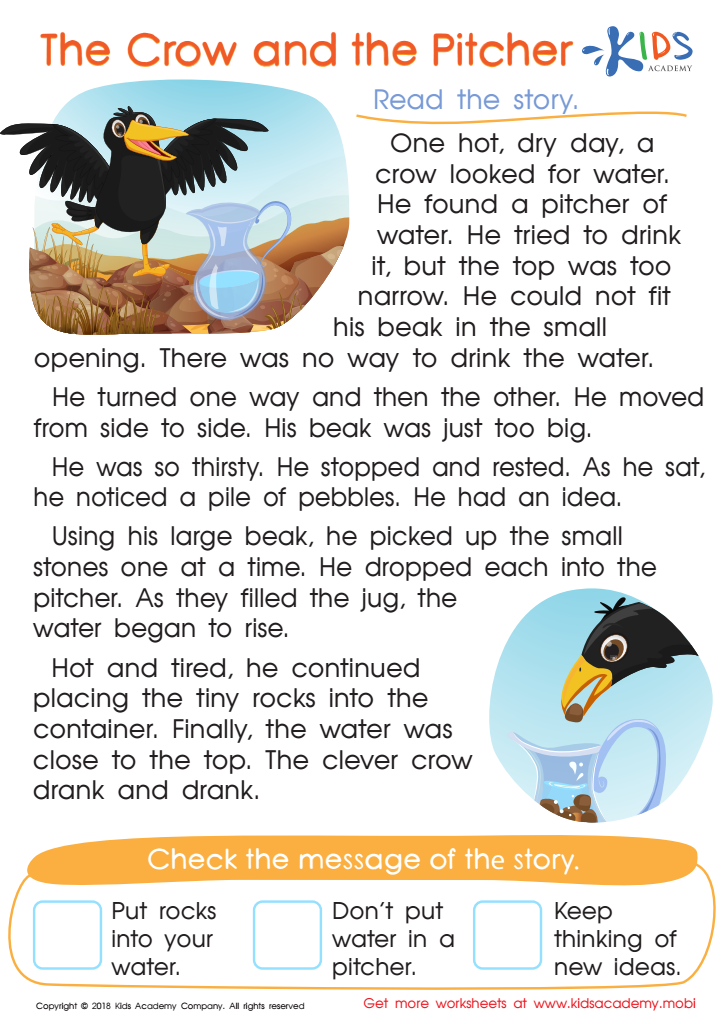
The Crow and the Pitcher Worksheet
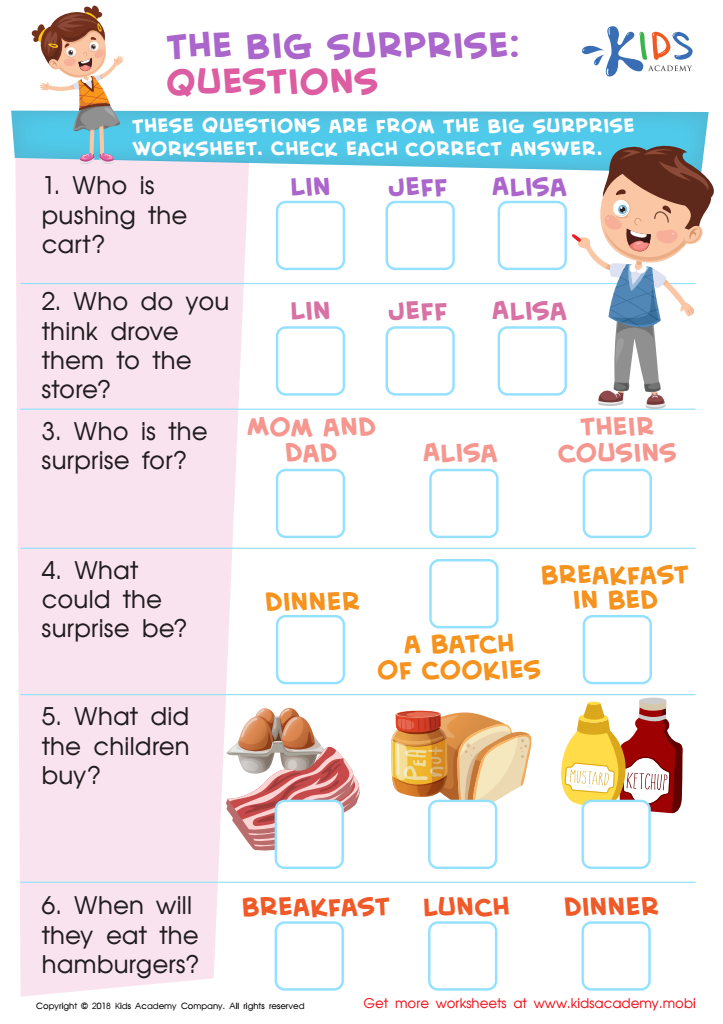
The Big Surprise: Questions Worksheet







Critical thinking is the cornerstone of effective learning and decision-making, even from a young age. Parents and teachers play essential roles in nurturing this skill in children aged 4 to 9, as it lays the foundation for their future academic and personal success. Critical thinking helps children learn how to analyze information, understand relationships between concepts, and solve problems creatively. It encourages curiosity and promotes open-mindedness, enabling kids to ask "why" and "how" rather than just accepting facts at face value.
When children engage in activities that develop critical thinking, such as puzzles, story analysis, or simple science experiments, they begin to understand cause and effect, improving their cognitive agility. This early investment in critical thinking skills helps in other areas as well, like reading comprehension and mathematical reasoning. Solving everyday problems independently boosts their confidence and prepares them for more complex challenges in higher grades.
Moreover, teaching critical thinking fosters a cooperative learning environment where children feel free to express their ideas and listen to others'. This social component is crucial for developing empathy and communication skills. Cultivating critical thinkers today prepares young minds to become innovative problem-solvers and thoughtful, discerning adults tomorrow. Hence, prioritizing this skill in early education is both beneficial and essential.