Noun identification Normal Writing Worksheets for Ages 4-9
3 filtered results
-
From - To
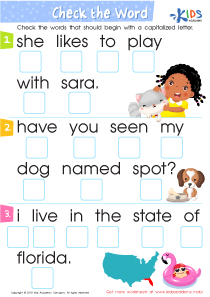
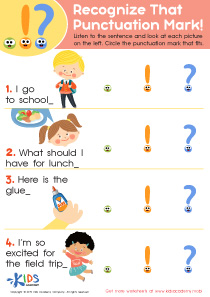
Enhance your child's writing skills with our Noun Identification Normal Writing Worksheets, designed for ages 4-9. These engaging worksheets help young learners grasp the fundamentals of nouns through fun and interactive activities. Children will enjoy identifying various nouns in sentences, improving their vocabulary, and developing critical thinking skills. Our resources align with early education standards, making them perfect for both home practice and classroom use. With colorful illustrations and age-appropriate exercises, your child will stay motivated while building essential language skills. Download our Noun Identification worksheets today and watch your little ones grow into confident writers!
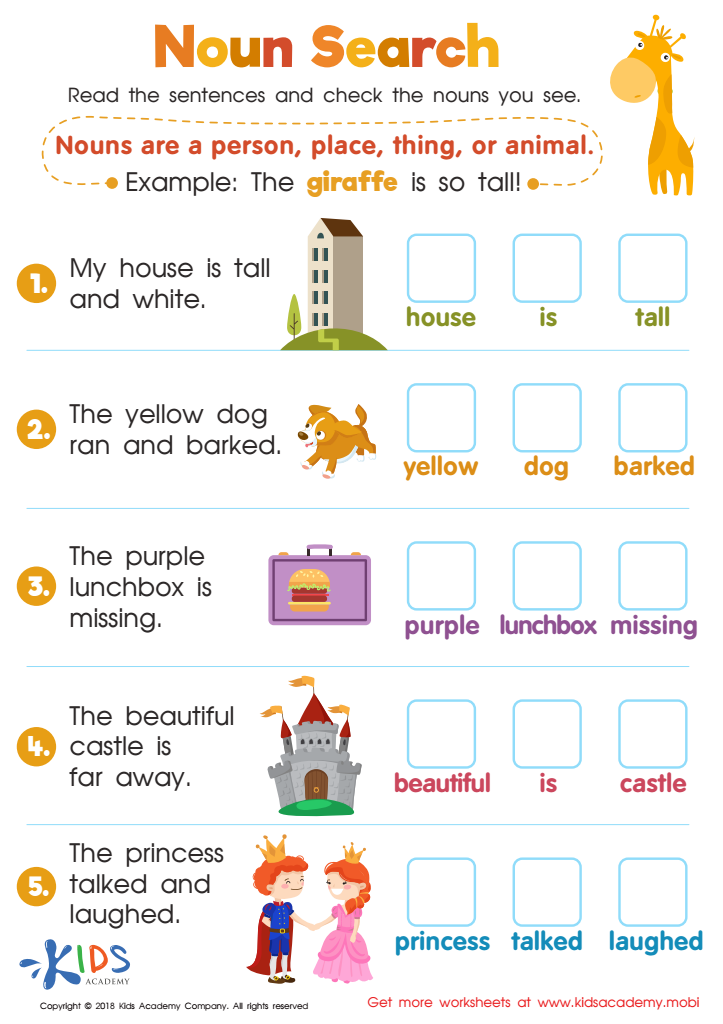
Noun Search Worksheet
 Assign to My Students
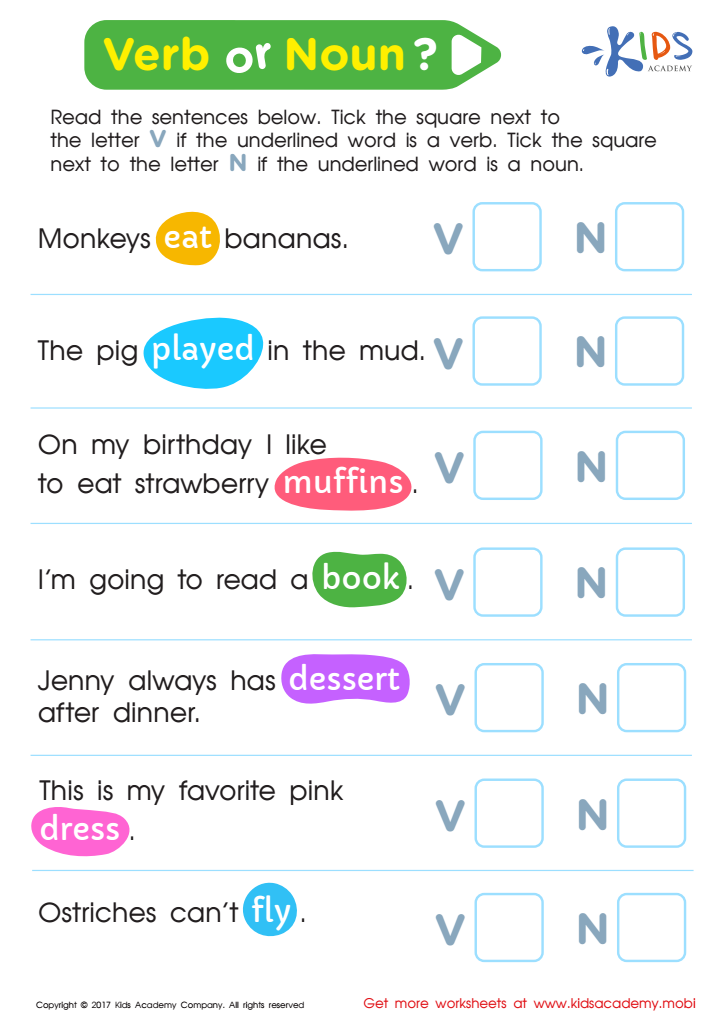
Verb or Noun Worksheet
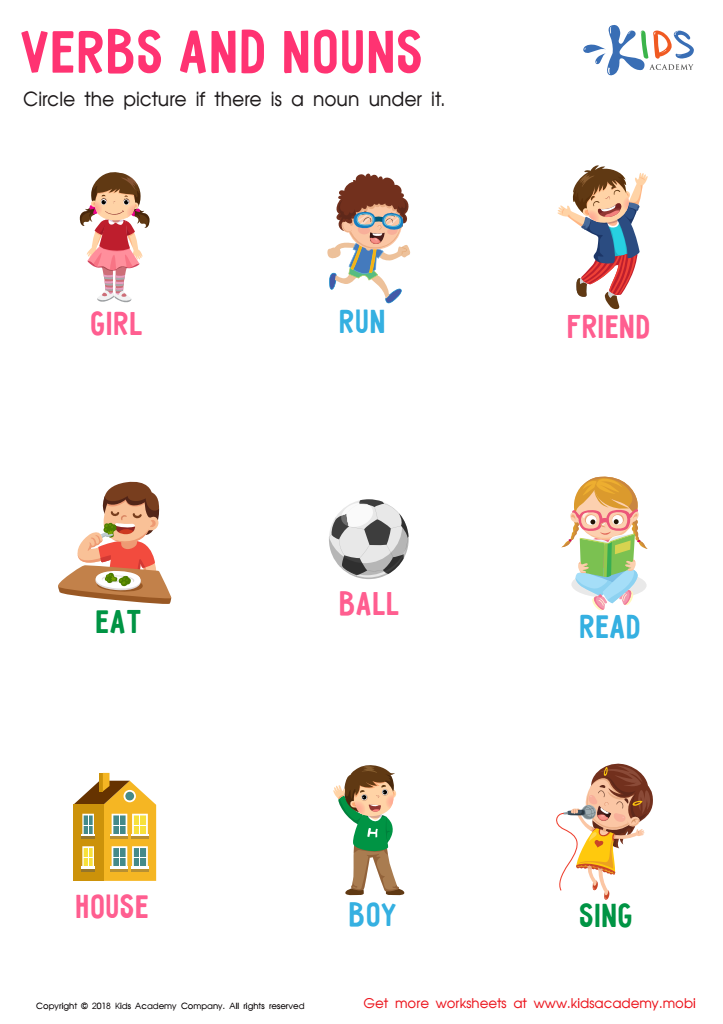
Verbs and Nouns Worksheet








Noun identification is a crucial skill for children aged 4-9, as it forms the foundation of language and literacy development. Parents and teachers should care about this skill because understanding nouns—the names of people, places, things, and ideas—helps children build their vocabulary and enhance their comprehension.
When kids learn to identify nouns, they become more proficient speakers and writers, allowing them to express their thoughts and ideas clearly. This identification also fosters critical thinking, as children learn to categorize and understand the world around them.
Furthermore, noun identification plays a pivotal role in reading comprehension. Children who recognize nouns in sentences can better grasp the content and context of what they read, laying the groundwork for more complex literacy skills.
Additionally, engaging with nouns in fun and interactive ways can make learning enjoyable and less intimidating for kids. When parents and teachers actively support noun recognition through games, storytelling, and creative activities, they help cultivate a love for language and learning. In essence, noun identification is not just a school subject; it is a powerful tool that opens doors to communication, creativity, and lifelong learning.