
Alphabet Learning Normal Worksheets for 4-Year-Olds
4 filtered results
Difficulty Level
Grade
Age
-
From - To
Subject
Activity
Standards
Our Alphabet Learning Worksheets for 4-Year-Olds are designed to make learning fun and engaging for young minds. These worksheets offer a range of activities that help children recognize, trace, and write letters while enhancing their fine motor skills and cognitive development. Each exercise is crafted to keep kids motivated, from vibrant letter coloring pages to simple matching games. Perfect for at-home learning or classroom use, these worksheets provide a solid foundation for reading and writing. Foster your child's early literacy skills with our carefully structured and child-friendly resources. Start your child’s alphabet journey today!
Favorites
With answer key
Interactive
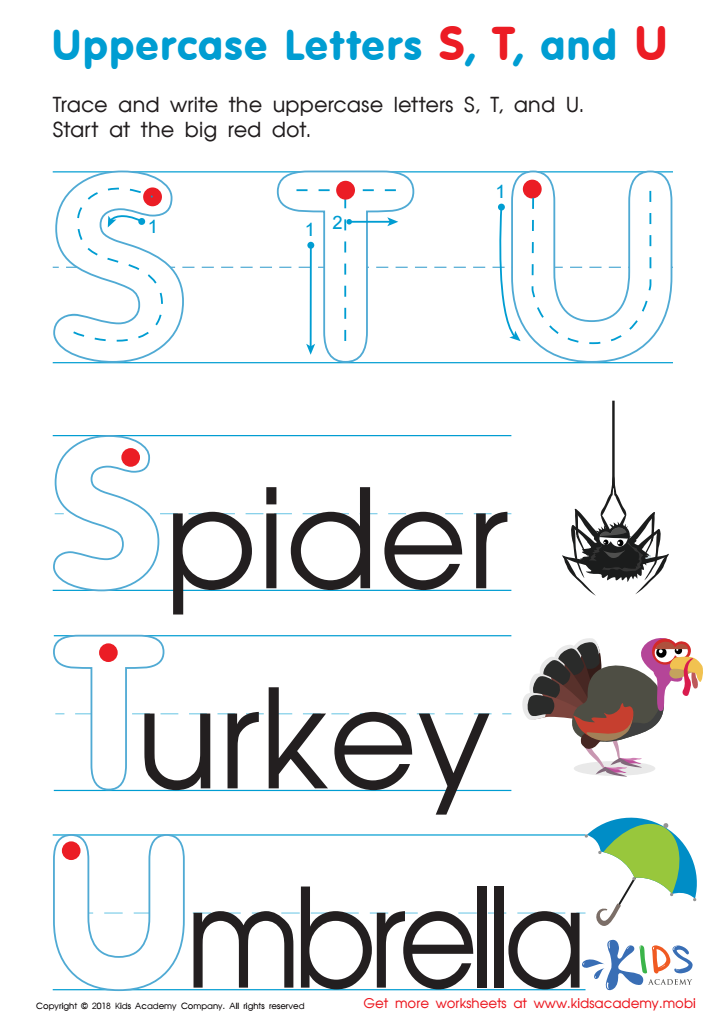
Uppercase Letters S, T, and U Worksheet
Help your kids learn to write upper-case letters with this fun tracing sheet. Start at the big red dot for each letter: S, T, and U. Show them the pictures and ask what letter each word starts with. Guide their hand and watch them learn!
 Assign to My Students
Uppercase Letters S, T, and U Worksheet
Worksheet
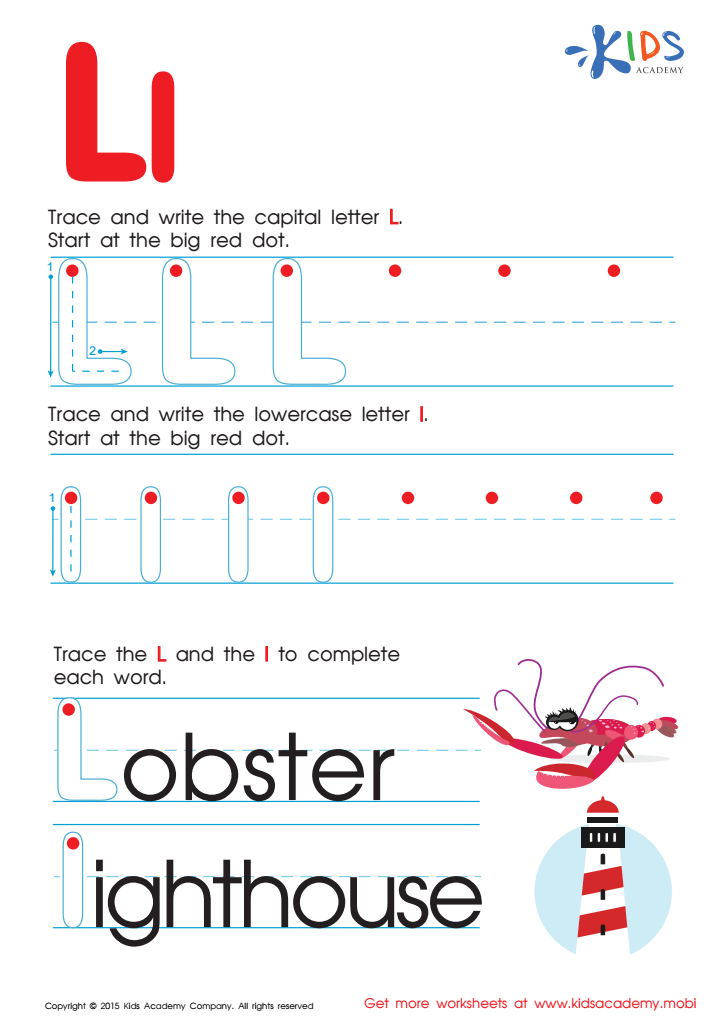
Letter L Tracing Page
Trace uppercase and lowercase letters to practice writing. Pay attention to the lowercase letters, like the "L", that are not as tall as an uppercase "I" or as short as a lowercase "i". Words like "lobster" and "lighthouse" are waiting to be completed. Enjoy!
Letter L Tracing Page
Worksheet
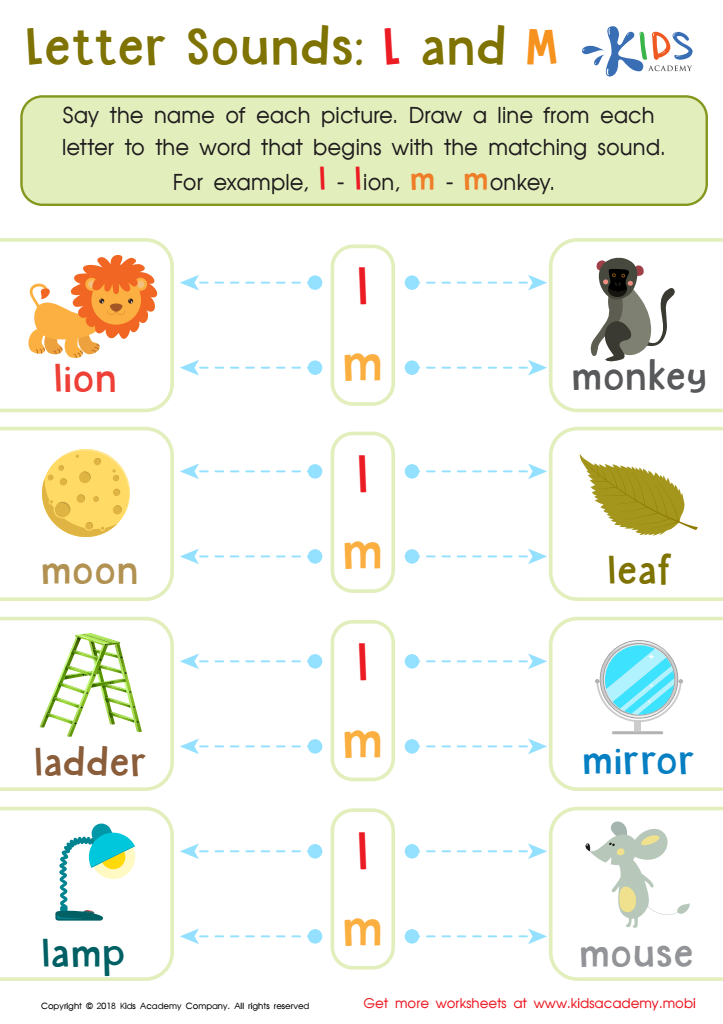
Letter l and M Sounds Worksheet
Our Kids Academy phonics practice pages give clear instructions and captivating pictures to pique children's interest. This fun worksheet helps kids identify a picture, then match its beginning sound. Listen and say each word - does it start with "L" or "M"? Trace the dotted line from the letter to the correct match and listen closely to the sound it makes.
Letter l and M Sounds Worksheet
Worksheet
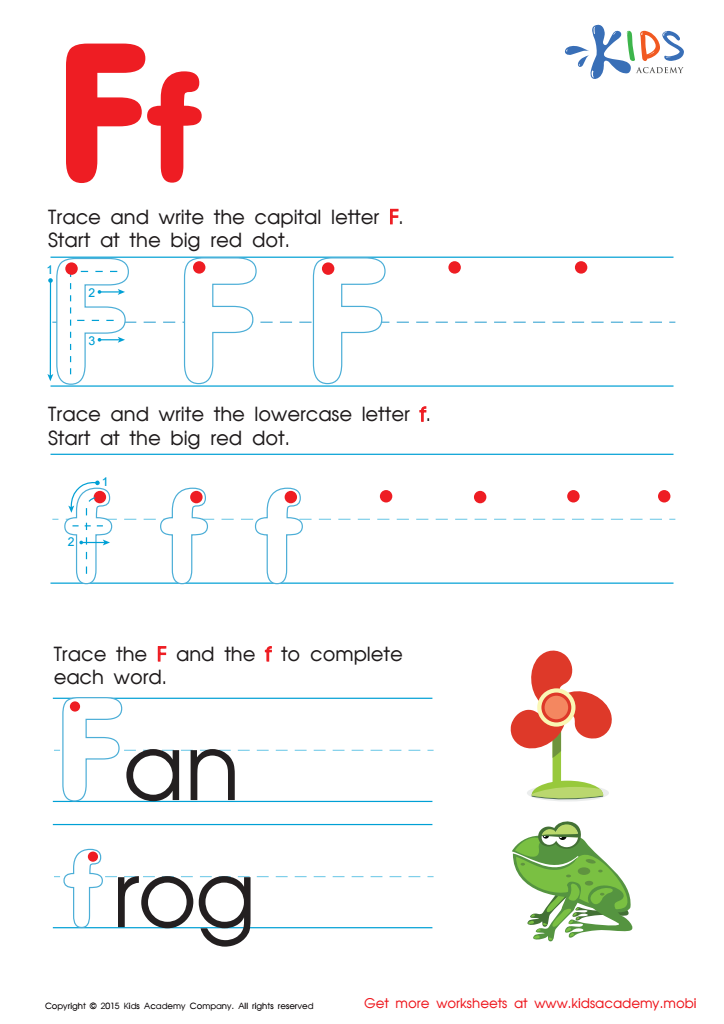
Letter F Tracing Page
Trace "F" with your pencil! Start at the red dot and draw lines — it's fun! Check it out — it looks great! Keep practicing to make it even better. Then, try completing words. Help out the broken fan and funny frog! Get free alphabet worksheets and activities for your kids. Come see our new tracing pages!
Letter F Tracing Page
Worksheet
Join Kids Academy for Free
Who is primarily going to use this learning content?








Alphabet learning is crucial for 4-year-olds as it lays the intrinsic groundwork for literacy development. By recognizing and understanding letters, children can make meaningful connections to sounds, ultimately aiding in the acquisition of reading and writing skills.
For parents and teachers, ensuring that children achieve Alphabet Learning Normal—a developmental milestone indicating typical progress in letter recognition and phonetic comprehension—is vital for several reasons. Firstly, it fosters cognitive development by enabling children to differentiate and categorize letters, forming a basis for complex language skills. Secondly, it enhances communication abilities; children who grasp the alphabet are better at expressing themselves and understanding others. This forms the foundation for future academic success.
Early mastery of the alphabet helps prevent potential learning difficulties. Identifying letters correlates with later reading fluency, comprehension, and spelling skills. As children progress in their education, a solid understanding of the alphabet ensures they don't fall behind in more advanced literacy tasks, which can be harder to remediate later on.
Above all, engaging children in playful and interactive alphabet activities nurtures a love for learning. Songs, games, and storytelling make the experience enjoyable, fostering a positive attitude towards education that can last a lifetime. Therefore, focusing on alphabet learning at this formative age equips children with essential tools for their educational journey and beyond.








