
Letter identification Normal Worksheets for 4-Year-Olds
4 filtered results
Difficulty Level
Grade
Age
-
From - To
Subject
Activity
Standards
Unlock your child's potential with our Letter Identification Normal Worksheets designed specifically for 4-year-olds! These engaging and colorful worksheets help young learners recognize and identify letters in a fun and interactive way. With a variety of activities that promote letter recognition, sound association, and fine motor skills, your child will develop a solid foundation for reading and writing. Ideal for preschool settings or at-home learning, our resources support early literacy skills in an enjoyable format. Watch your little one thrive as they embark on this exciting journey of discovering the world of letters! Download now and start their learning adventure today!
Favorites
With answer key
Interactive
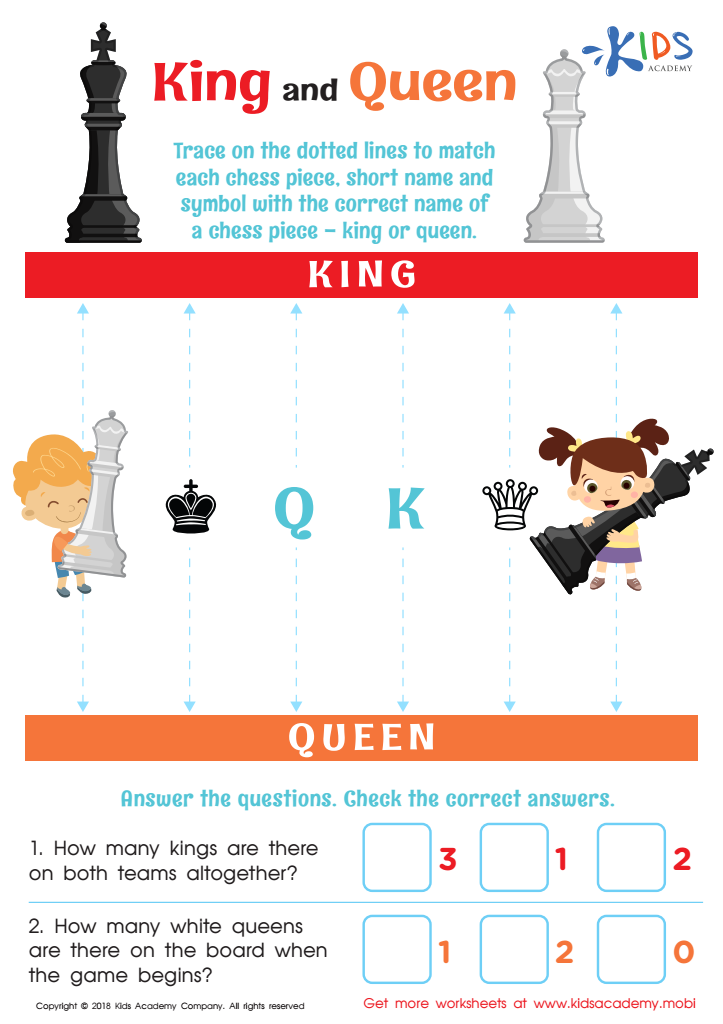
King and Queen Worksheet
Instruct your kids to trace the dotted lines to match each chess piece, short name, and symbol with either king or queen.Answer the questions at the bottom and check the answers. This exercise will help your children to differentiate between a king and queen chess piece and know their symbols.
 Assign to My Students
King and Queen Worksheet
Worksheet
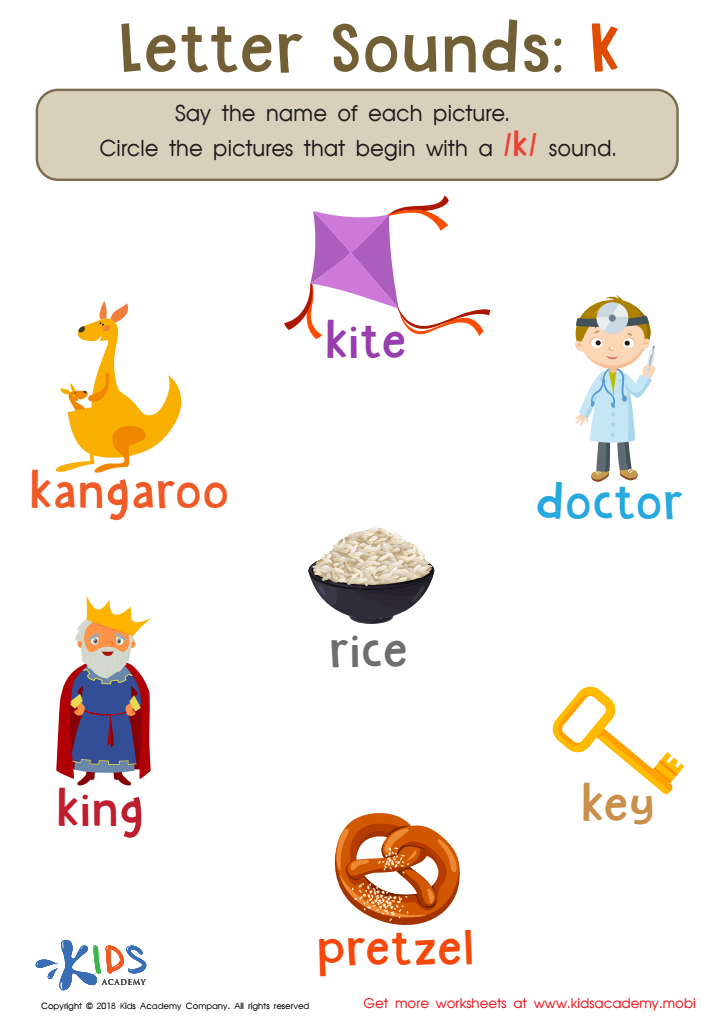
Letter K Sounds Worksheet
Help your child practice phonics with Kids Academy's illustrated worksheet! Have them look at the pictures, read the words and say them aloud. Only circle those that start with a hard 'K' sound. Perfect for preschoolers and kindergarteners! Plus, they'll learn the silent K used in a few words.
Letter K Sounds Worksheet
Worksheet
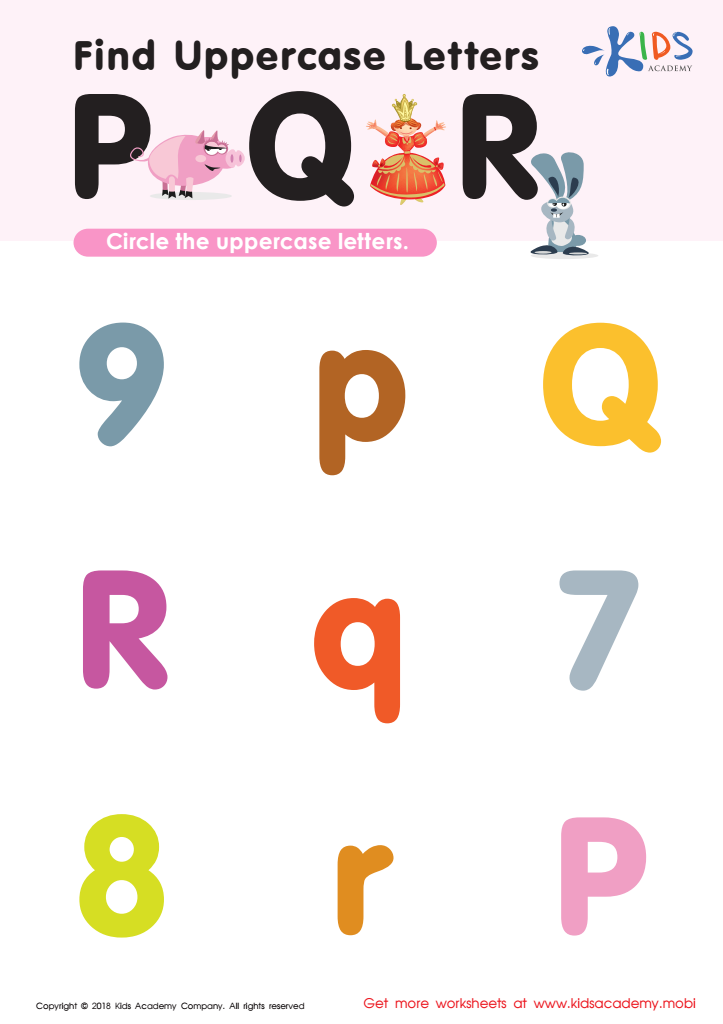
Find Uppercase Letters P, Q, and R Worksheet
Kids learn best when they can make connections. This free printable worksheet guides kids to solve the puzzle using the example letters P, Q, and R, supported by graphics and colors. Point out the page is pink, like the pig (which starts with P!) and solve by finding and circling the uppercase letters – be careful of the numbers!
Find Uppercase Letters P, Q, and R Worksheet
Worksheet
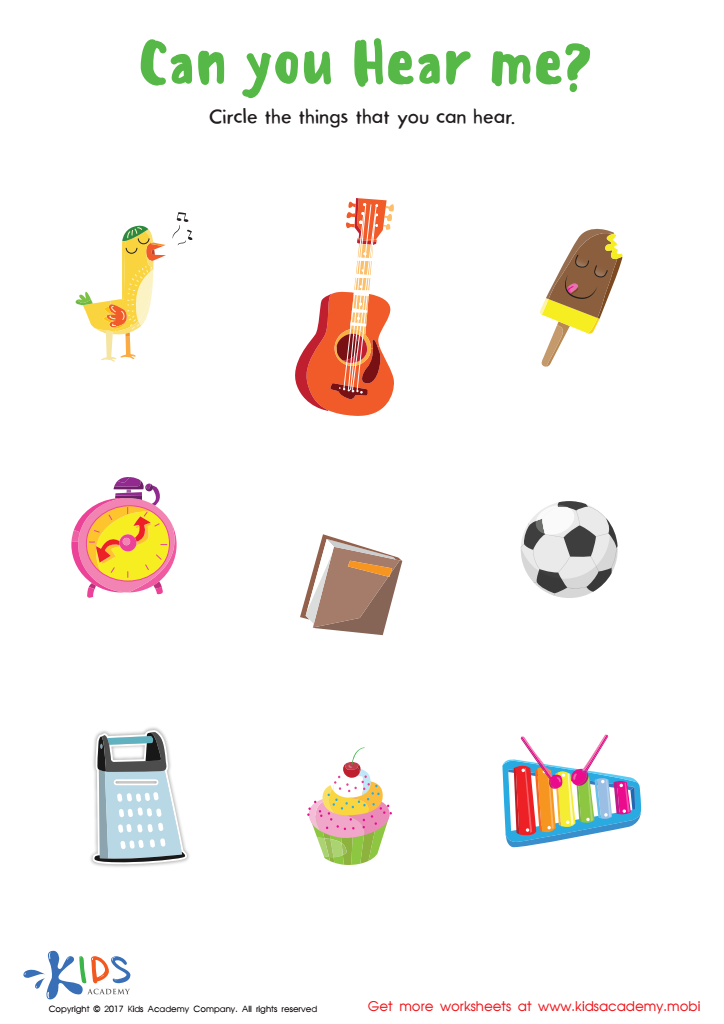
Can You Hear Me Worksheet
Challenge your child's thinking and help them learn by using this cute "Can You Hear Me?" worksheet. It encourages use of prior knowledge to identify objects that make sounds, developing critical thinking skills. As they imagine balls and cupcakes making sounds, your child will have plenty of laughs. Extend learning by talking about the sounds and why certain objects make them.
Can You Hear Me Worksheet
Worksheet
Join Kids Academy for Free
Who is primarily going to use this learning content?




.jpg)



Letter identification is a crucial milestone in early childhood literacy development, making it essential for parents and teachers to prioritize it for 4-year-olds. At this age, children begin to develop foundational language skills that pave the way for reading and writing proficiency. Recognizing letters helps children understand that letters are symbols representing sounds, forming the basis of effective communication.
Incorporating letter identification practices into daily routines can enhance cognitive development and build confidence. Children who can identify letters are more likely to grasp phonics concepts later on, leading to smoother transitions into formal reading instruction. This skill also supports their vocabulary expansion and overall language comprehension.
Moreover, parents and teachers who actively engage in letter activities—such as reading together, playing alphabet games, or using letter-themed art—can strengthen the child’s interest in literacy. Such engagement fosters a positive attitude towards learning and promotes readiness for Kindergarten and beyond.
Ultimately, investing time in letter identification now not only supports academic success but also nurtures a lifelong love for reading, enabling children to express themselves creatively and engage with the world around them. Therefore, it is vital for caregivers to incorporate fun and educational letter activities into their interactions with young learners.








