Phonics recognition Normal Worksheets for 4-Year-Olds
6 filtered results
-
From - To
Explore our engaging Phonics Recognition Normal Worksheets designed specifically for 4-year-olds! These worksheets provide a fun and interactive way for children to develop essential phonics skills necessary for early literacy. Featuring colorful illustrations and age-appropriate activities, kids will enjoy sounding out letters, identifying letter sounds, and matching pictures to words. Our resources are tailored to spark a child's interest in reading while supporting their cognitive development. Download these printable worksheets today to give your little learners a head start in phonics recognition and ensure they lay a solid foundation for their future reading success! Perfect for home or classroom use.
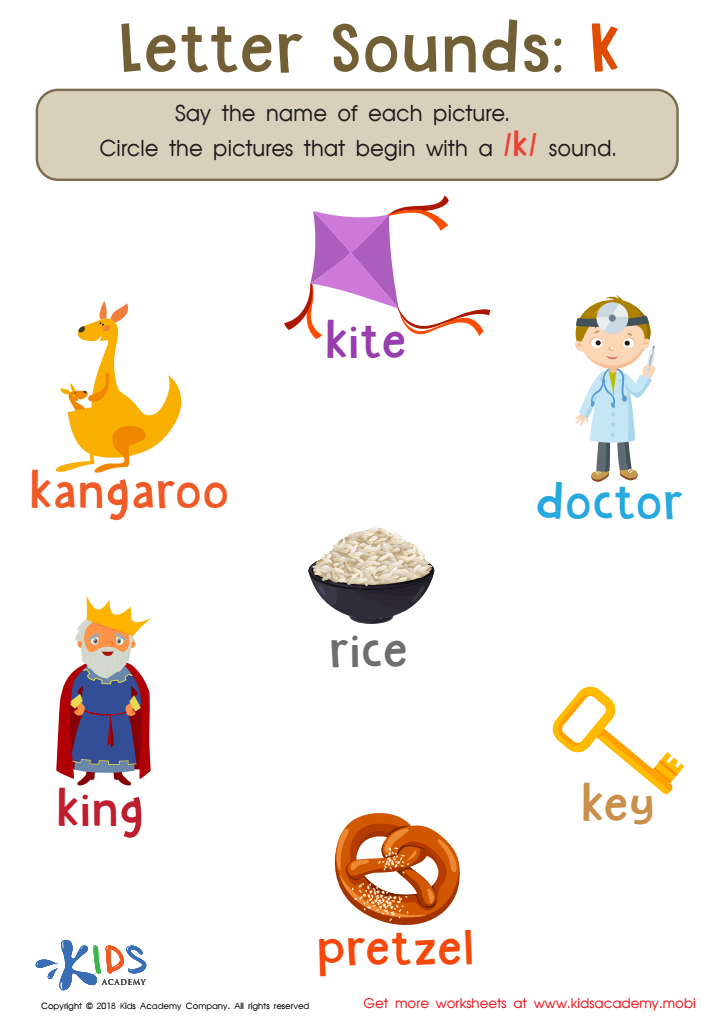
Letter K Sounds Worksheet
 Assign to My Students
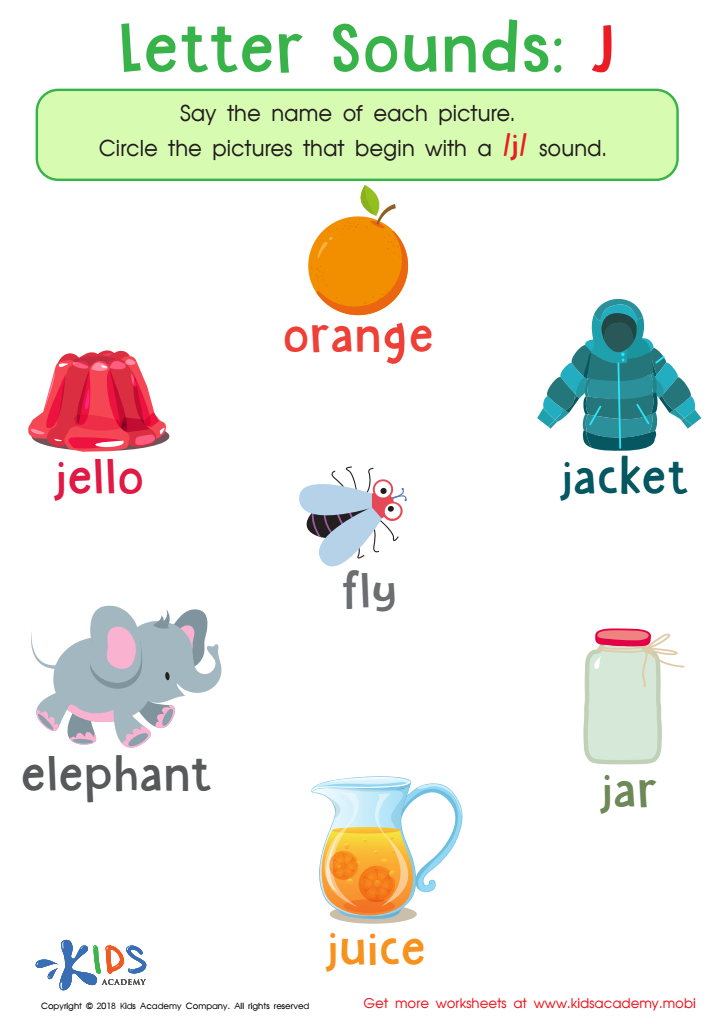
Letter Sounds: J Printable Worksheet
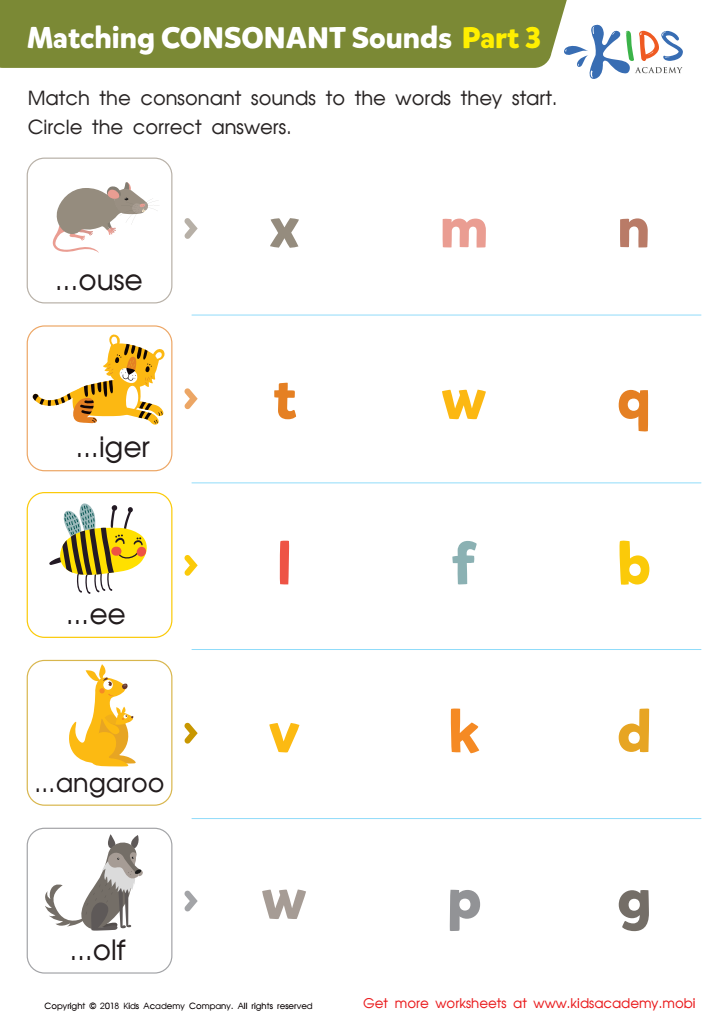
Matching Consonant Sounds: Part 3 Worksheet
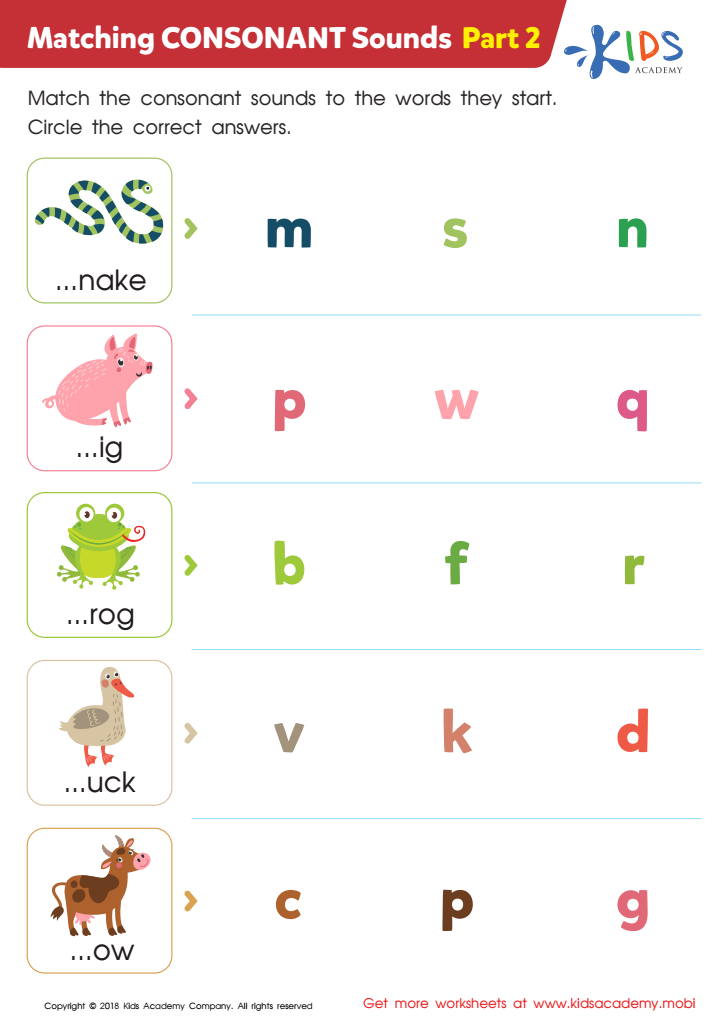
Matching Consonant Sounds: Part 2 Worksheet
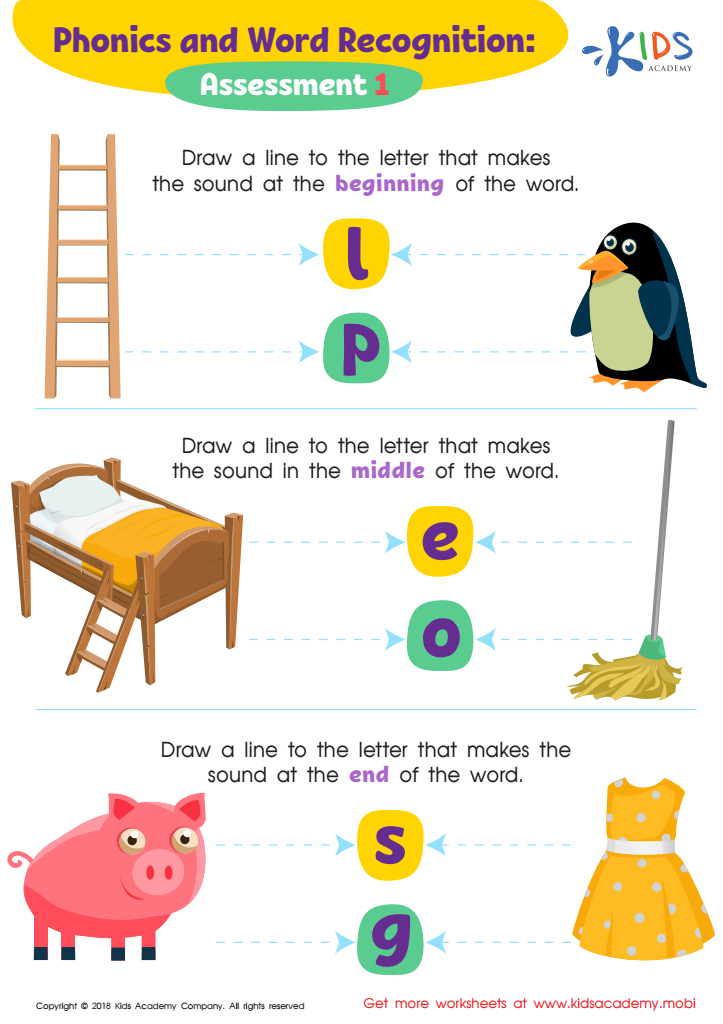
Phonics and Word Recognition: Assessment 1 ELA Worksheet
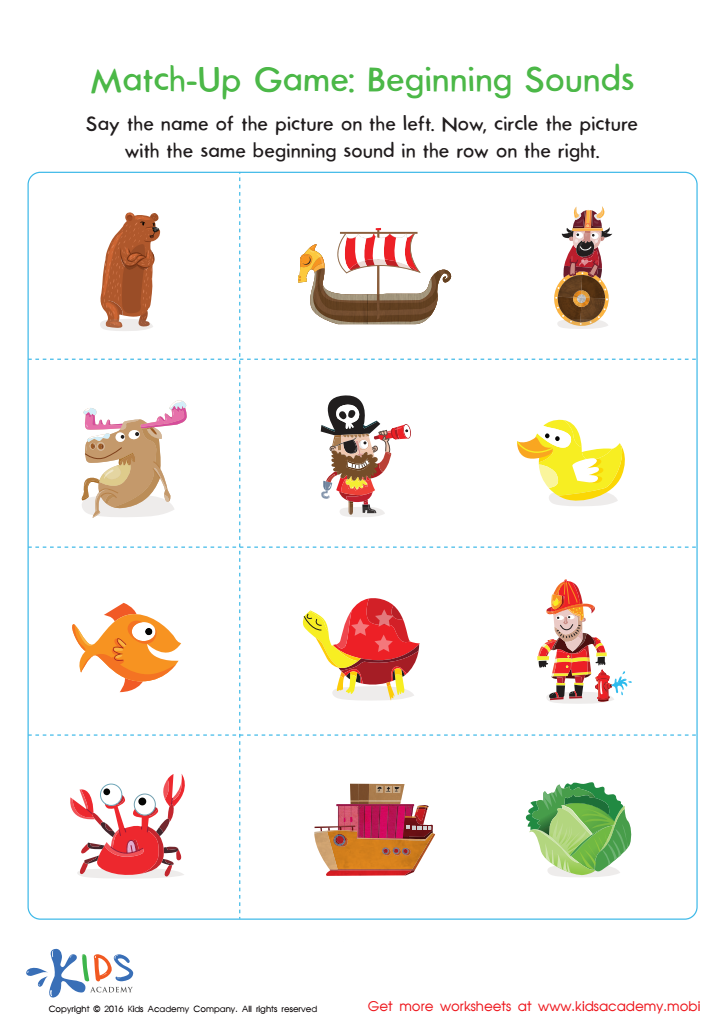
Match–Up Game: Beginning Sounds Worksheet








Phonics recognition is a foundational step in early literacy development for 4-year-olds, making it essential for parents and teachers to prioritise. At this age, children are typically beginning to make connections between sounds and the letters that represent them. Understanding phonics enables them to decode words, a skill crucial for reading fluency and comprehension later on.
Furthermore, phonics recognition supports language development, encouraging vocabulary growth and oral communication skills. When children can recognize sounds in words, they gain confidence in their ability to read and interact with texts, setting a positive trajectory for their academic journey.
Moreover, incorporating phonics through playful activities, songs, and games makes learning enjoyable, which is vital in keeping young learners engaged. Early phonics can also contribute to closing achievement gaps; children who have a solid grasp of phonics recognition are often better prepared for the challenges of kindergarten and beyond.
In summary, effective phonics instruction lays the groundwork for successful reading, nurtures language skills, fosters confidence, and ultimately contributes to a lifetime love for learning. Parents and teachers' investment in phonics recognition at this stage can have enduring benefits for children’s educational experiences.








