Lowercase identification Normal Worksheets for 4-Year-Olds
4 filtered results
-
From - To
Explore our engaging lowercase identification worksheets designed specifically for 4-year-olds! These fun and interactive printable resources help young learners master their lowercase letters through enjoyable activities. Each worksheet focuses on enhancing letter recognition skills, boosting reading readiness, and building a strong foundation for future literacy. With a variety of exercises that include tracing, matching, and coloring, children will love practicing their lowercase letters while developing fine motor skills. Perfect for home or classroom use, these worksheets make learning letter identification an exciting adventure. Start your child’s literacy journey today with our colorful and easy-to-follow lowercase identification worksheets!
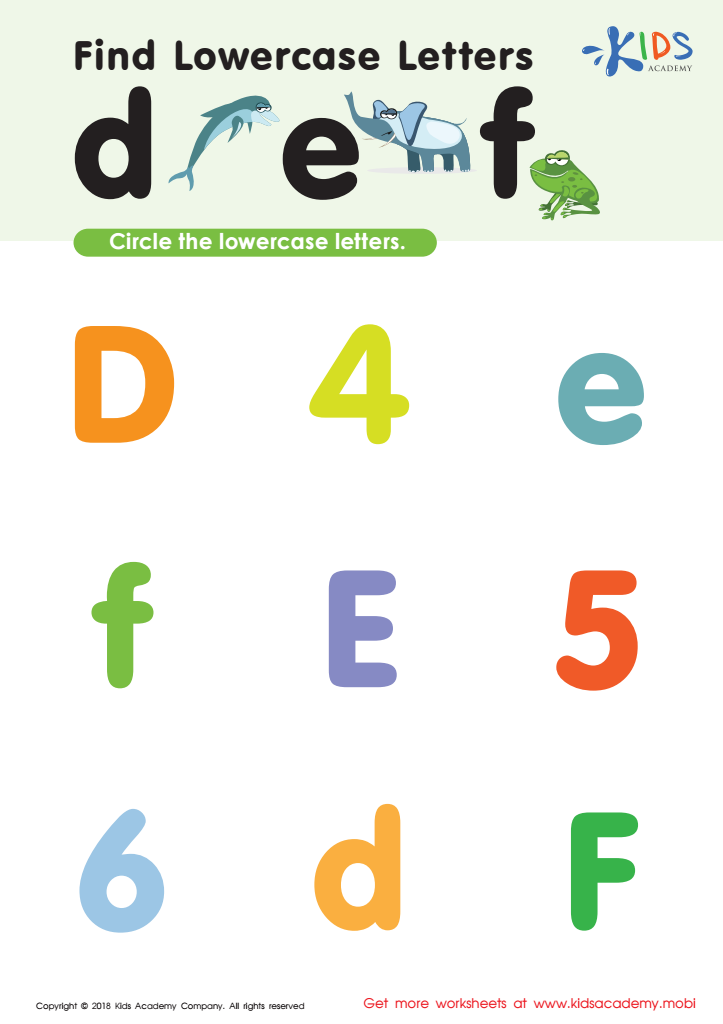
Find Lowercase Letters d e f Worksheet
 Assign to My Students
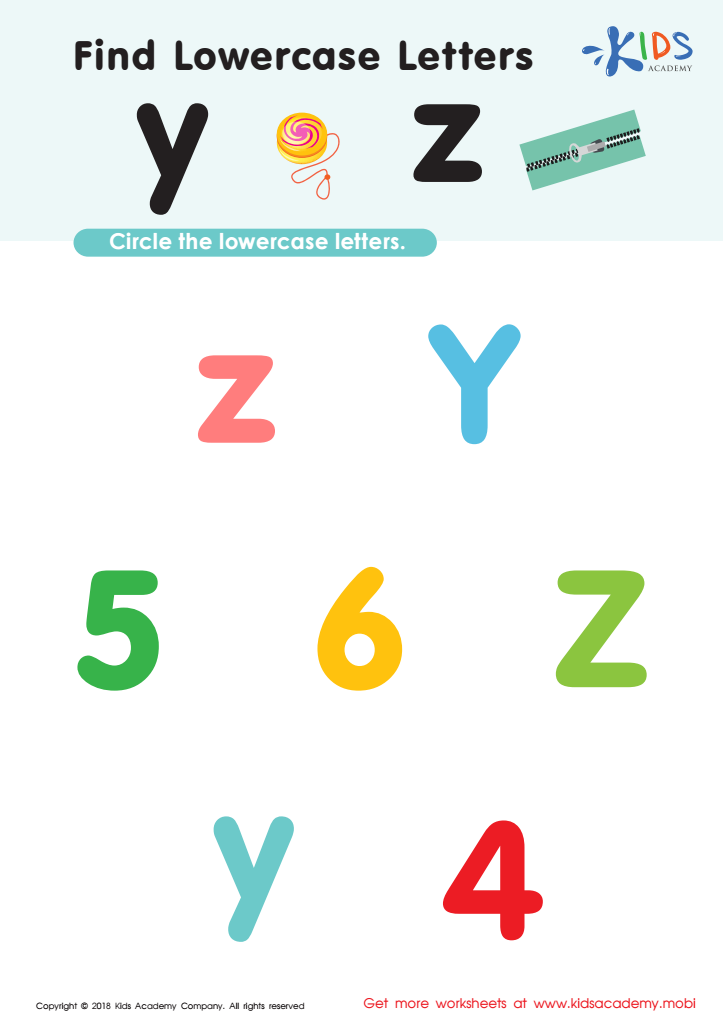
Find Lowercase Letters y z Worksheet
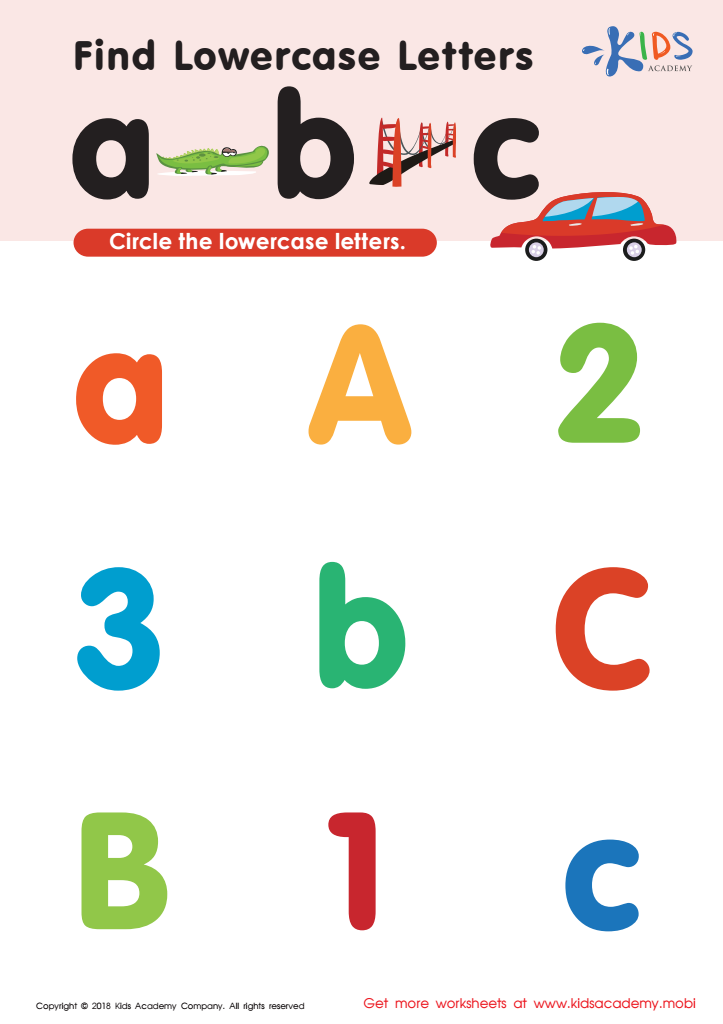
Find lowercase letters a b c Worksheet
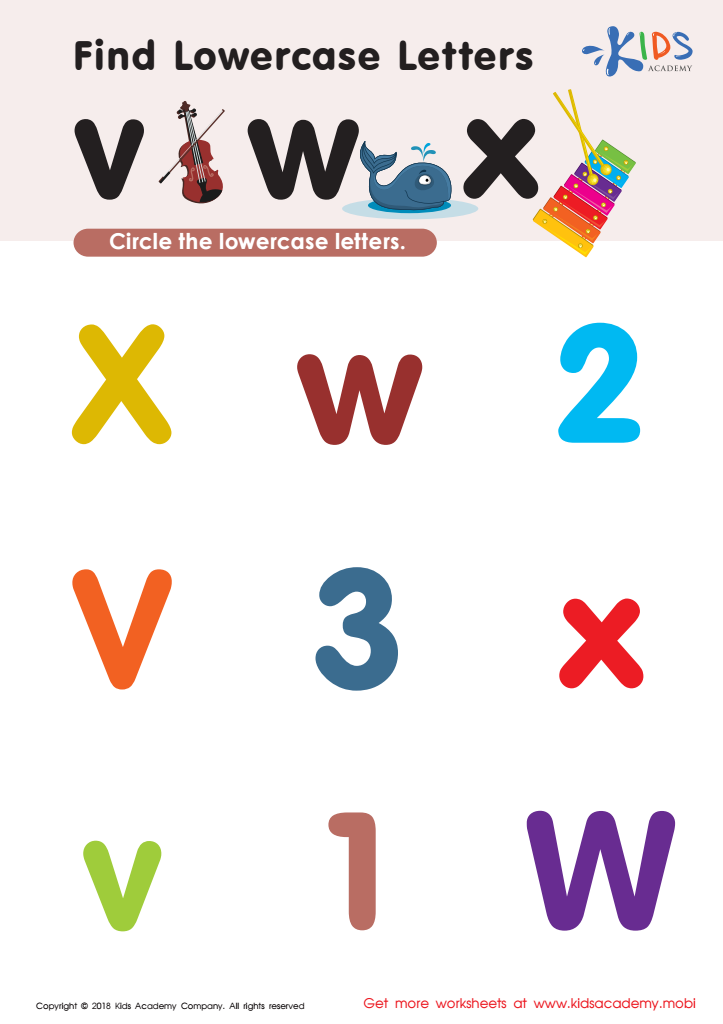
Find Lowercase Letters v w x Worksheet








Lowercase letter identification is a fundamental skill that supports a child's literacy development and academic success. For 4-year-olds, recognizing lowercase letters is crucial, as most text is written in this format. Understanding these letters enhances reading skills and lays the groundwork for phonics knowledge and writing. When children can identify lowercase letters, they become more confident as they engage in reading activities.
Moreover, lowercase identification is directly linked to language development. It helps children make connections between sounds and symbols, which is essential for mastering the alphabetic principle. Recognizing lowercase letters allows children to decode words more easily, promoting reading fluency.
Parents and teachers should also consider that early literacy skills contribute significantly to overall cognitive development. Engaging children in fun and interactive activities that involve identifying lowercase letters—such as games, songs, and storybooks—can foster a love for reading.
Finally, children who develop strong literacy skills early on are better prepared for later academic challenges, ensuring they have a solid foundation for success in school and beyond. Therefore, it is essential for both parents and teachers to prioritize lowercase letter recognition in their early educational strategies.








