Visual discrimination skills Normal Worksheets for 4-Year-Olds
5 filtered results
-
From - To
Develop essential visual discrimination skills in your 4-year-old with our carefully crafted worksheets from Kids Academy. These activities are designed to help young learners differentiate between shapes, sizes, patterns, and colors, enhancing their ability to identify similarities and differences. Perfect for preschool preparation, each worksheet offers engaging exercises that support cognitive development and observational abilities. By promoting focus and attention to detail, our worksheets provide a strong foundation for future academic success. Foster your child's learning and growth with our fun, effective visual discrimination worksheets, tailored specifically for early learners. Visit Kids Academy to explore more resources!
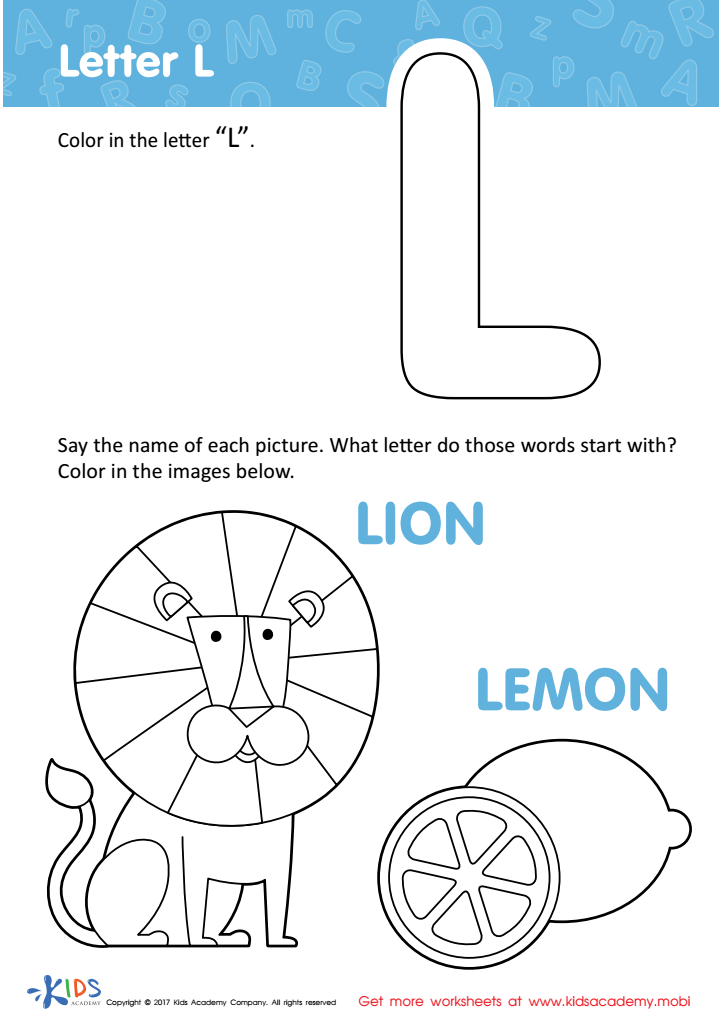
Letter L Coloring Sheet
 Assign to My Students

Find Uppercase Letters A, B, and C Worksheet
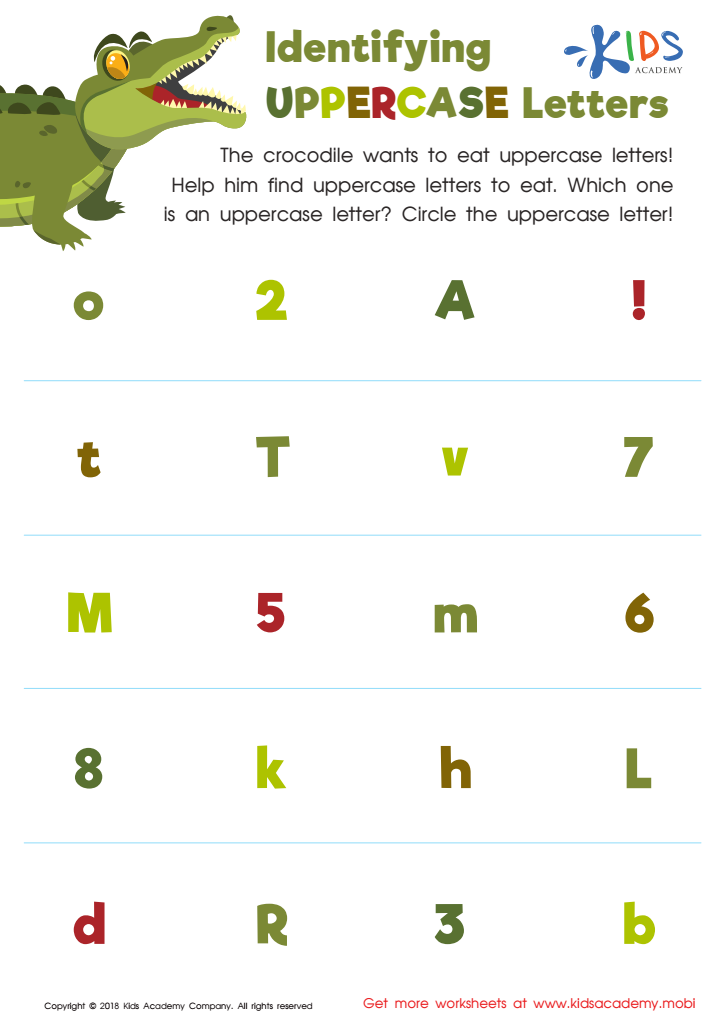
Identifying Uppercase Letters Worksheet
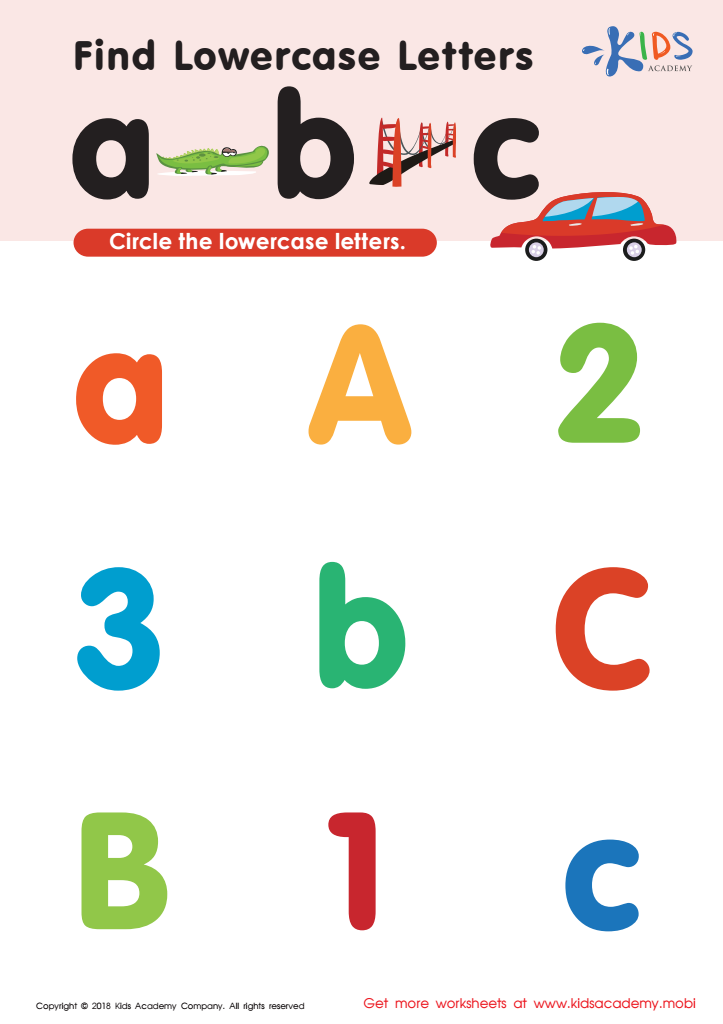
Find lowercase letters a b c Worksheet
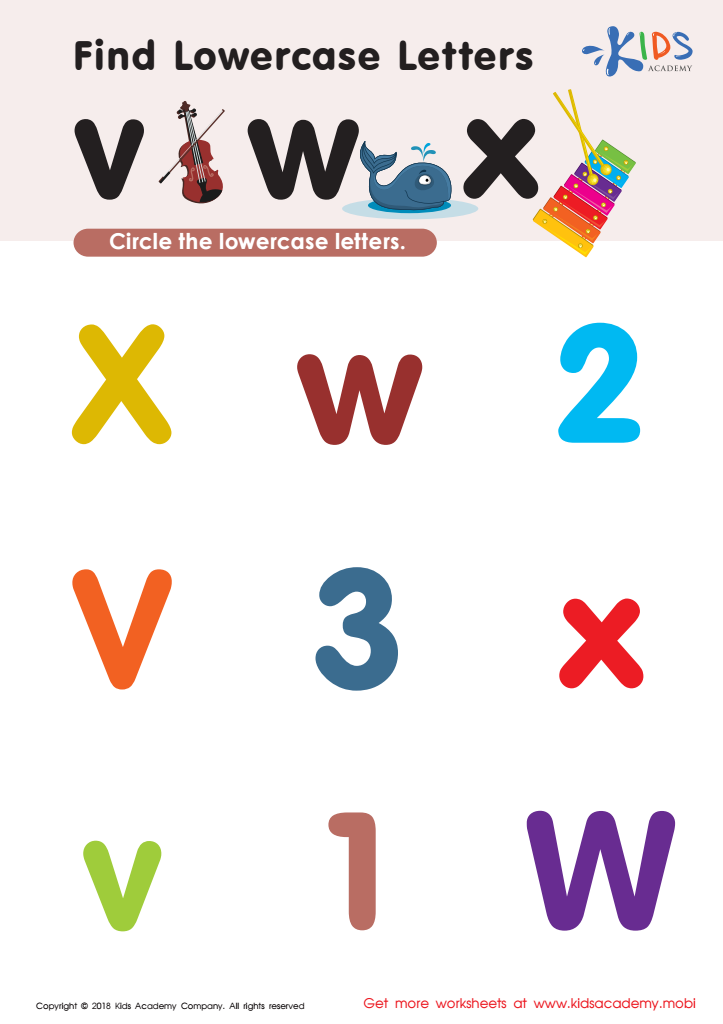
Find Lowercase Letters v w x Worksheet





.jpg)
Visual discrimination skills are critical in a child's early development, playing a pivotal role in both academic success and daily life activities. At 4 years old, children are honing their ability to notice and differentiate between various visual stimuli, such as shapes, letters, numbers, colors, and patterns. Parents and teachers should be keen to support and nurture these skills for several reasons:
Firstly, visual discrimination is foundational for reading and writing. Recognizing and distinguishing between different letters and words helps in developing literacy. A child who can differentiate between 'b' and 'd' or 'p' and 'q' will find learning to read and write much easier.
Secondly, these skills contribute to mathematical understanding. Children need to identify and distinguish between different numerical symbols and patterns, which is crucial for early math skills like counting and recognizing numbers.
Thirdly, effective visual discrimination aids in navigating their environment safely. Ability to distinguish between different objects and obstacles is essential for tasks ranging from playing with toys to participating in organized activities.
Furthermore, helping children develop these skills can foster confidence and encourage a love for learning by making educational activities more accessible and enjoyable. Through simple games, puzzles, and guided practice, parents and teachers can significantly enhance these critical capabilities. Focusing on visual discrimination skills prepares children for future learning challenges and success.








