Understanding patterns Normal Math Worksheets for 4-Year-Olds
3 filtered results
-
From - To
Explore our "Understanding Patterns Normal Math Worksheets for 4-Year-Olds," designed to make learning fun and engaging for young minds! These worksheets introduce essential pattern recognition skills through colorful visuals and engaging activities. Perfect for preschoolers, our resources stimulate creativity, enhance critical thinking, and lay a strong foundation for future math concepts. With easy-to-follow exercises, children will enjoy identifying, creating, and extending patterns in various forms. Ideal for home or classroom use, our worksheets help kids develop early math proficiency while fostering a love for learning. Discover the joy of patterns and watch your child's confidence soar as they master this fundamental skill!
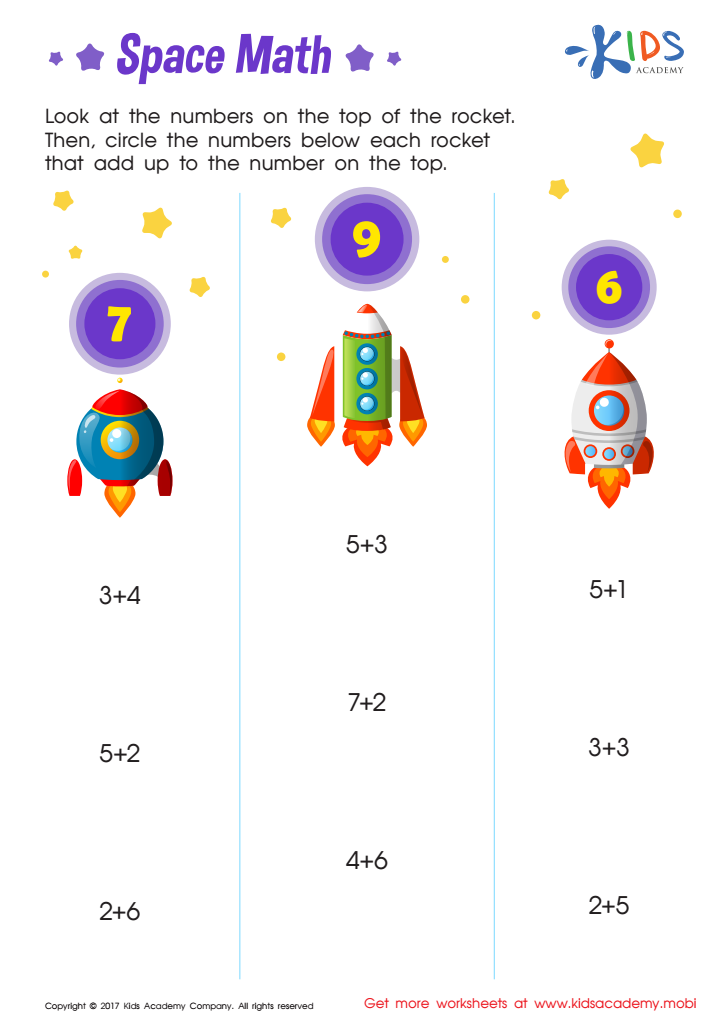
Addition: Space Math Worksheet
 Assign to My Students
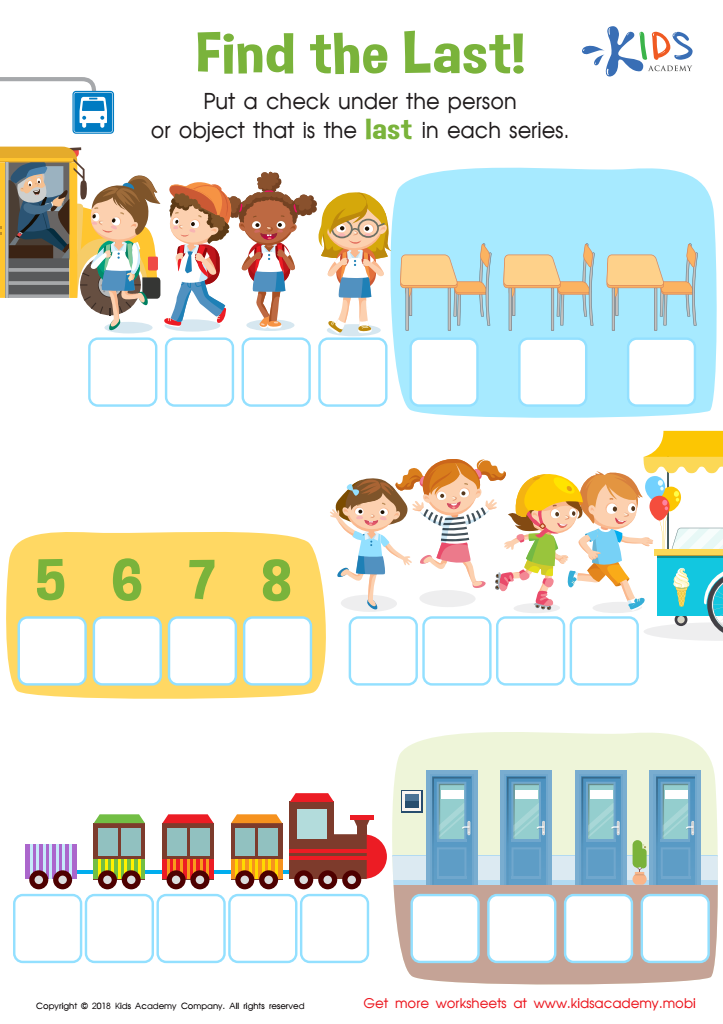
Find the Last! Worksheet
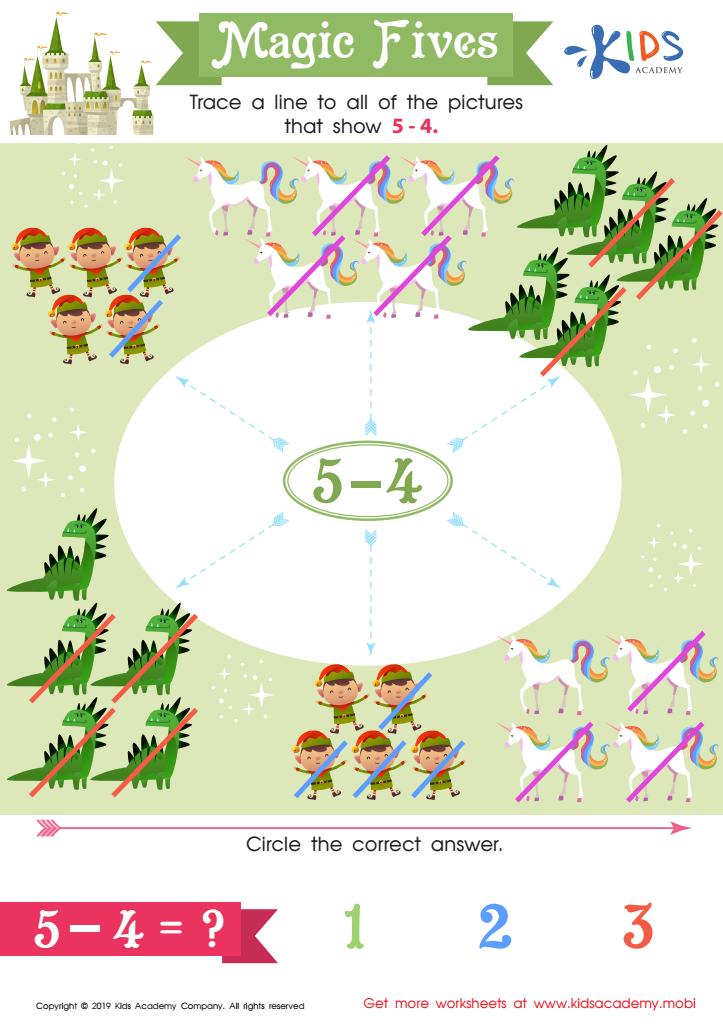
Magic Fives Worksheet



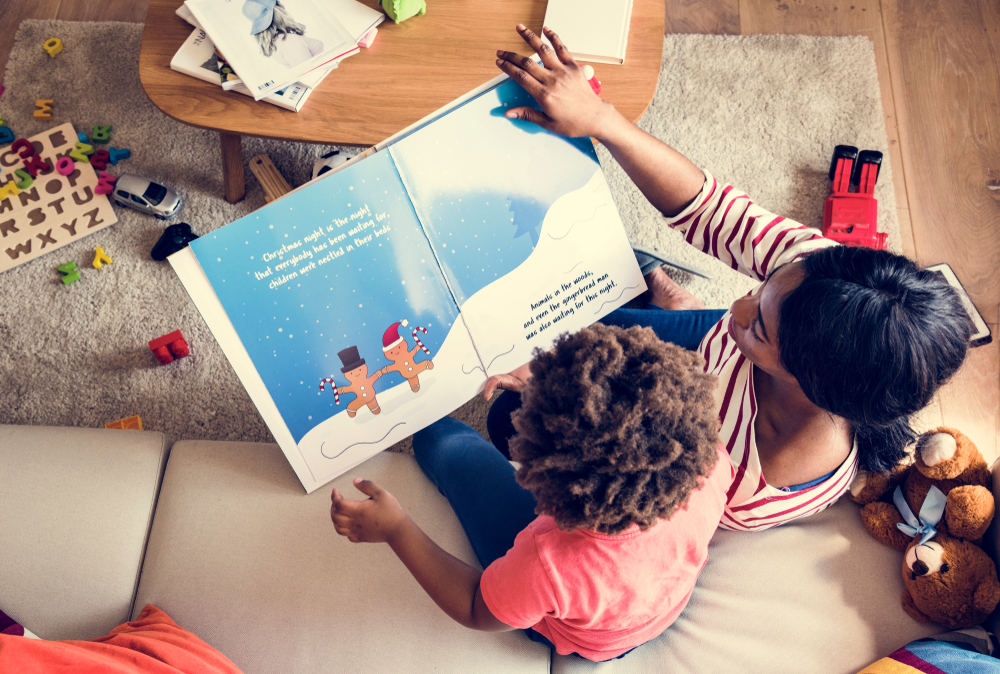




Understanding patterns is a critical foundational skill in early math education, especially for 4-year-olds. At this age, children are naturally curious and eager to explore their environment, making it an ideal time to introduce pattern recognition. Parents and teachers should care about this because recognizing and creating patterns lays the groundwork for more complex mathematical concepts, including addition, subtraction, and problem-solving later in their education.
Engaging with patterns helps children develop essential cognitive skills, such as critical thinking and logical reasoning. It promotes their ability to predict and analyze, which are key components of mathematical understanding. As they recognize patterns, children learn to categorize and make connections in their surroundings, enhancing both their cognitive and language skills.
Moreover, patterns can be found everywhere: in nature, music rhythms, and even everyday routines. By incorporating pattern activities—like sorting objects, clapping to a beat, or creating sequences with colors—parents and teachers make learning enjoyable and relevant. This approach not only sparks a love for math but also fosters confidence in their abilities. As children's comfort with patterns grows, it can significantly influence their overall success in math in later years, encouraging a lifelong appreciation for learning.








