Sorting skills Normal Sorting Worksheets for 4-Year-Olds
5 filtered results
-
From - To
Enhance your child's sorting skills with our engaging Normal Sorting Worksheets, specially designed for 4-year-olds! These interactive worksheets introduce preschoolers to the concept of categorizing items based on attributes such as color, shape, and size. Our thoughtfully crafted activities encourage critical thinking, fine motor development, and observational skills, making learning fun and effective. Each worksheet features vibrant illustrations and relatable objects to capture children's interest while promoting early math literacy. Perfect for both home and classroom settings, these sorting worksheets are a valuable resource to prepare young learners for more advanced concepts ahead. Start their sorting adventure today!
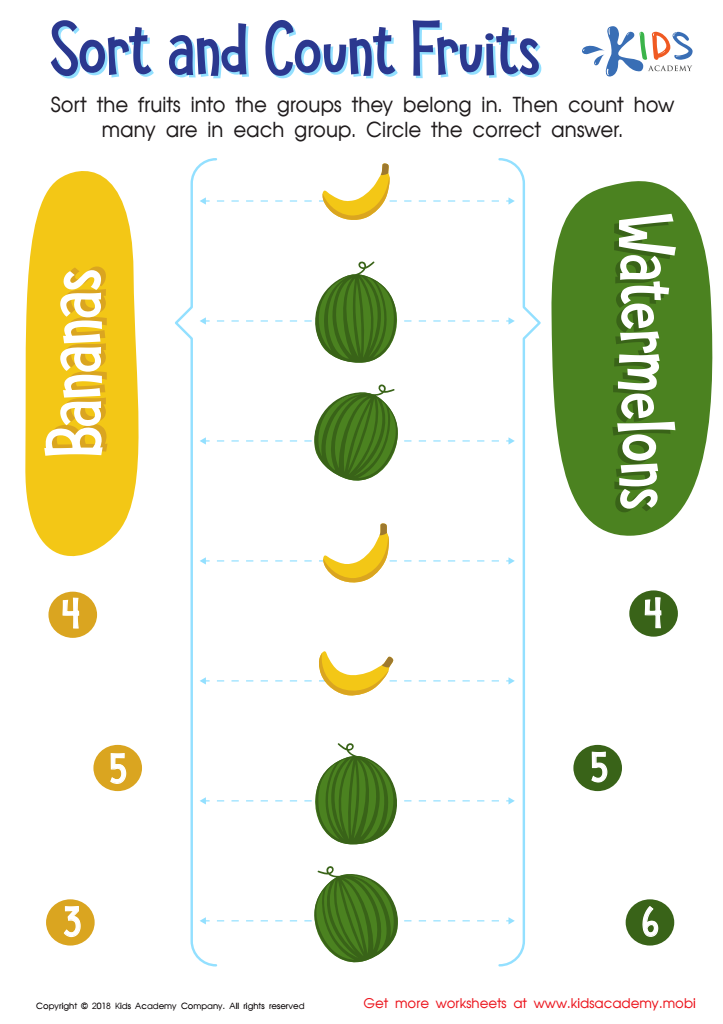
Sort and Count Fruits Worksheet
 Assign to My Students
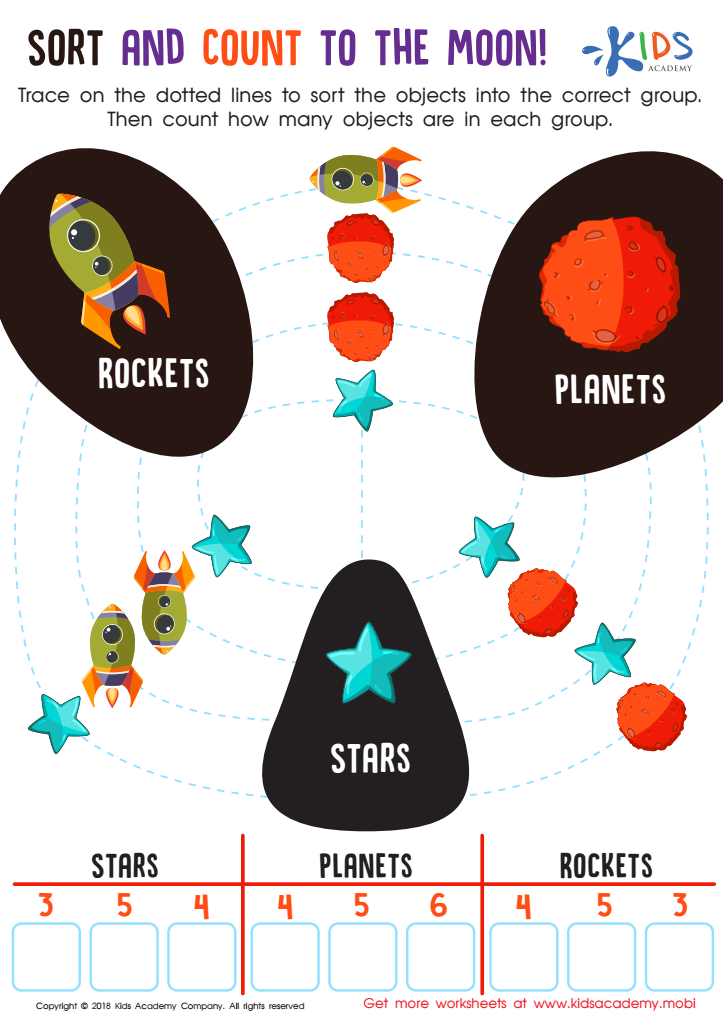
Sort and Count to the Moon Worksheet
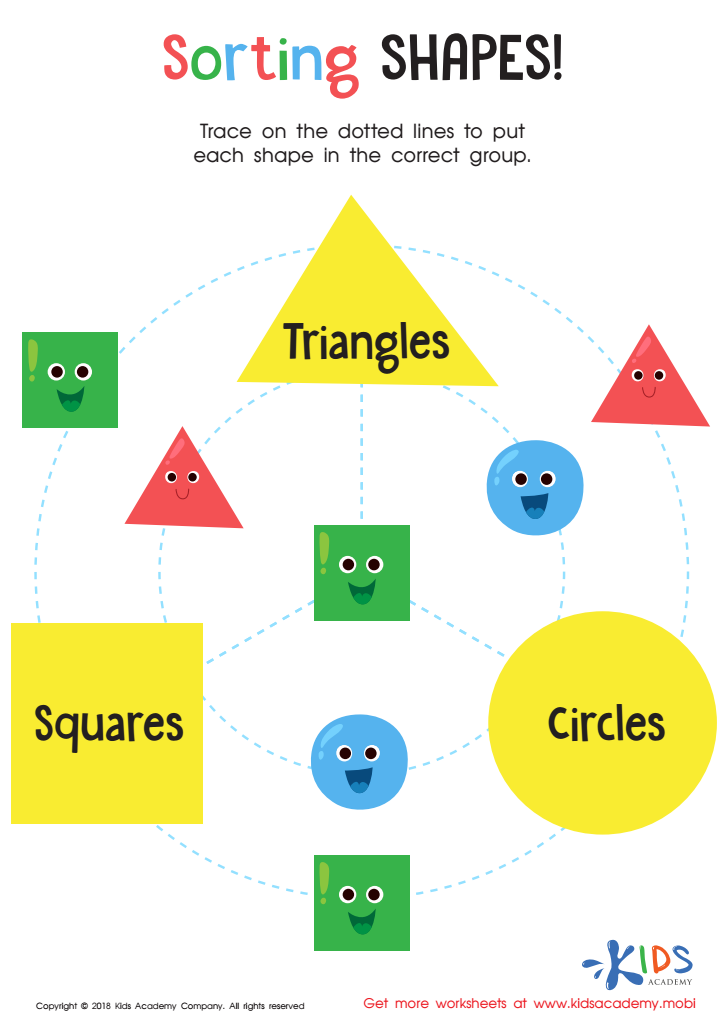
Sorting Shapes - Part 3 Worksheet
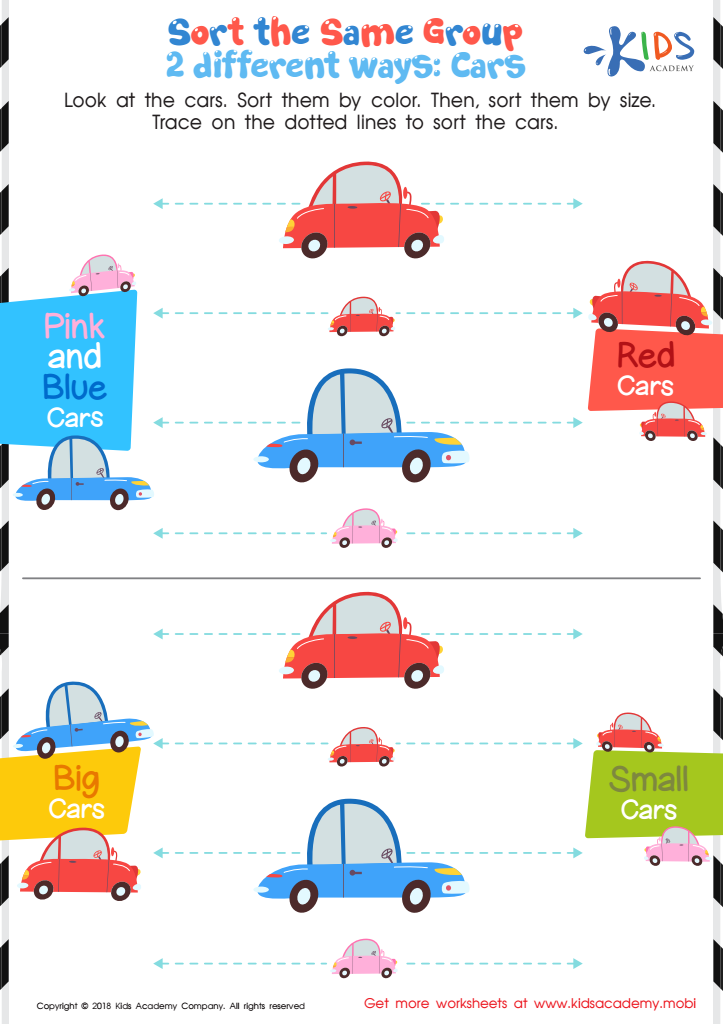
Sort the Same Group 2 Different Ways: Cars Worksheet
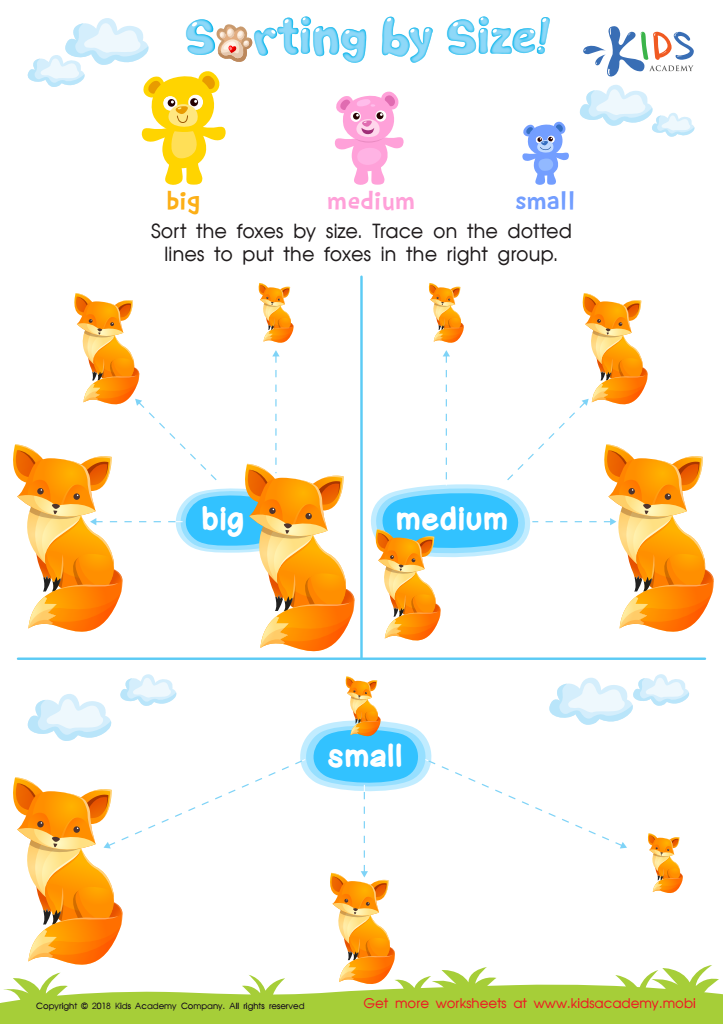
Sorting by Size Worksheet







Sorting skills are essential for 4-year-olds as they lay the foundation for powerful cognitive and organizational skills. When children engage in sorting activities, they learn to categorize items based on their attributes such as size, color, shape, or function. This process enhances their critical thinking and problem-solving abilities, as they must analyze and make decisions about how to group objects effectively.
Moreover, sorting activities encourage fine motor skills development, as children manipulate different items, improving their dexterity and control. Engagement in sorting can also prepare children for more complex concepts in mathematics, as it fosters early numeracy skills and an understanding of patterns, which are vital for later math success.
For teachers and parents, promoting sorting skills also aids in social development, as it often involves collaborative play, where children learn to communicate, share, and respect different perspectives. Additionally, these skills help establish organizational habits that benefit children later in their academic journey.
Overall, supporting the development of sorting skills is not only about educational advancement but also about nurturing independent thinkers and collaborative learners who are prepared for future challenges in learning and life. Thus, both parents and teachers should prioritize these foundational skills to support comprehensive child development.








