
Animal recognition Normal Reading Worksheets for 4-Year-Olds
3 filtered results
Difficulty Level
Grade
Age
-
From - To
Subject
Activity
Standards
Discover our engaging Animal Recognition Normal Reading Worksheets for 4-Year-Olds, designed to promote early literacy skills and enhance animal knowledge. These worksheets feature vibrant illustrations and age-appropriate activities, helping young learners recognize and identify various animals while developing their reading comprehension. Your child will enjoy matching animals to their names, completing fun fill-in-the-blank exercises, and participating in exciting quizzes. Our resources provide a perfect balance of education and entertainment, making learning a delightful experience. Encourage your child’s curiosity and build foundational reading skills with our delightful and interactive worksheets, ideal for at-home learning or classroom activities. Start exploring today!
Favorites
With answer key
Interactive
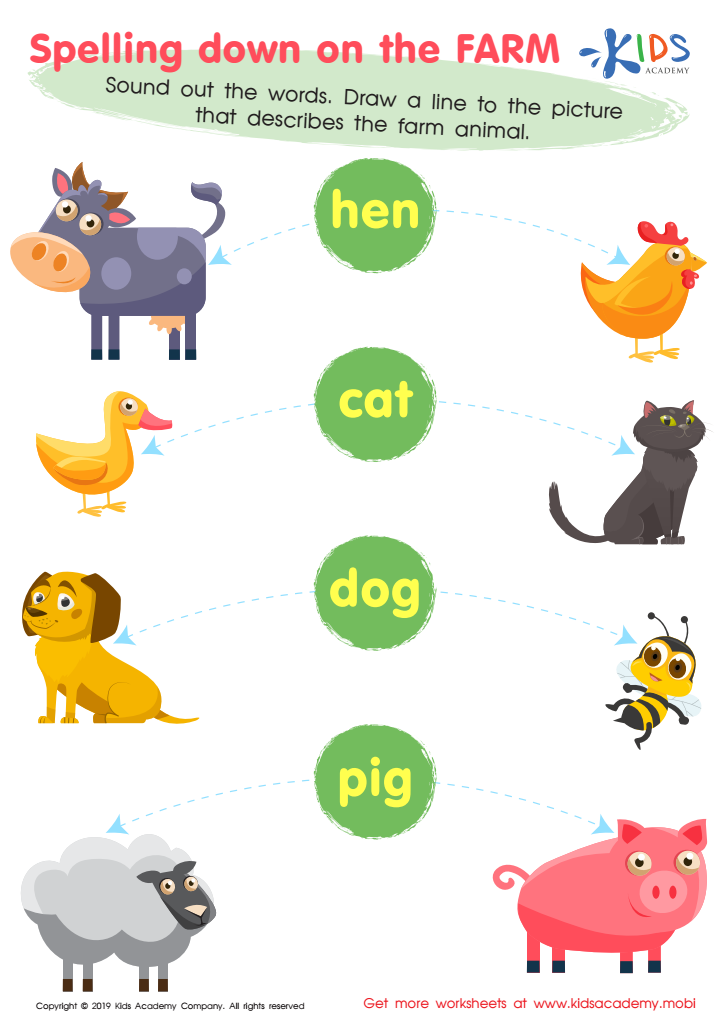
Spelling Down on the Farm Worksheet
Want to help your kids nail their spelling? Introduce them to this farm animal worksheet! Get them to look at the animals in the tracing sheet, name them and then sound out the words. Have them draw a line to the picture that describes it. You'll be surprised at how quickly their skills improve.
 Assign to My Students
Spelling Down on the Farm Worksheet
Worksheet
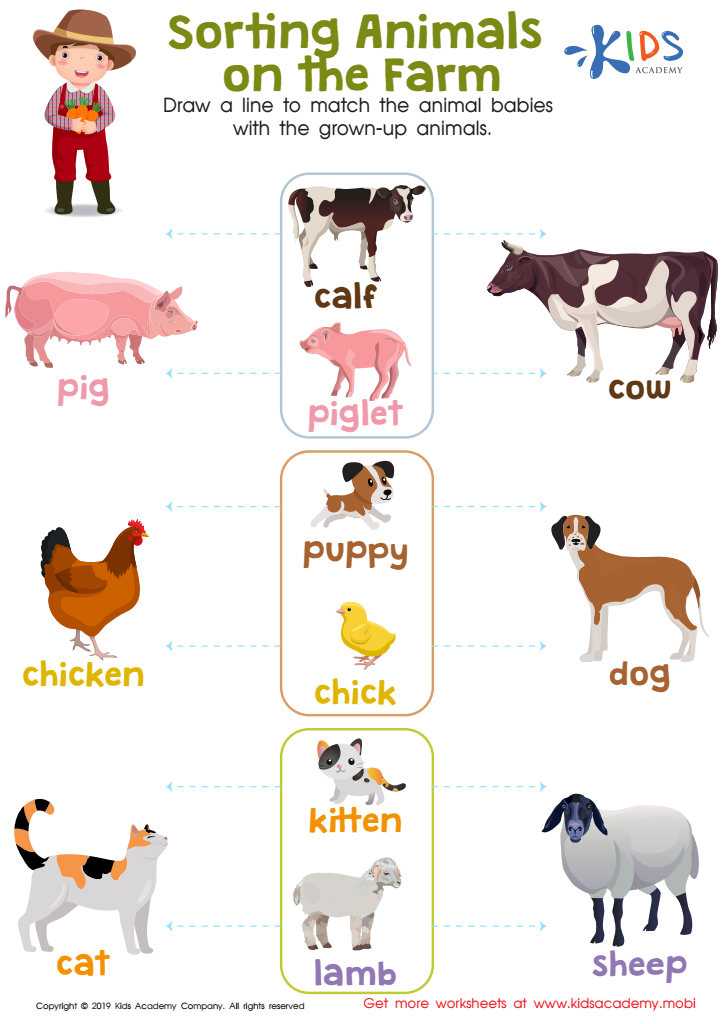
Sorting Animals on the Farm Worksheet
This PDF worksheet engages preschoolers in a fun activity to match Mama farm animals with their babies, strengthening their sorting and patterning skills. They'll learn to recognize rules and relationships, while gaining familiarity with animal-related words.
Sorting Animals on the Farm Worksheet
Worksheet
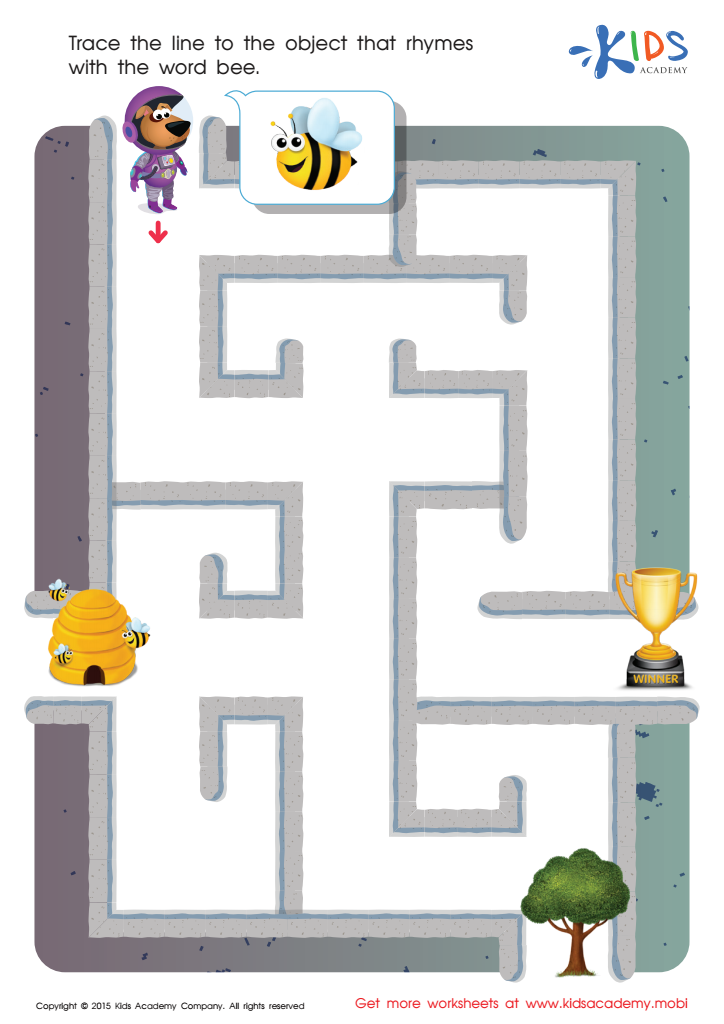
Bee Rhyming Words Worksheet
Download our new vocab builder worksheet and help our pup find rhymes. See how easy it is to trace the root between words! Make learning fun with our collection of English materials and worksheets. Get them now on our web site.
Bee Rhyming Words Worksheet
Worksheet
Join Kids Academy for Free
Who is primarily going to use this learning content?







Animal recognition is an essential skill for 4-year-olds that goes beyond mere identification. Parents and teachers should care about fostering this ability because it engages children's natural curiosity and enhances their overall development. Recognizing animals helps children build vocabulary as they learn names, characteristics, and sounds of different species. This enriches their language skills, setting a strong foundation for effective communication.
Moreover, animal recognition plays a vital role in cognitive development. When children categorize animals, they develop critical thinking skills as they learn to distinguish similarities and differences. These foundational skills are crucial for subjects like science and mathematics later in their education.
Social-emotional learning also benefits from animal recognition. Learning about various animals fosters empathy and connection to nature. Children resonate with animal stories and behaviors, enhancing their understanding of friendships, kindness, and caring for living beings.
Finally, animal recognition encourages imaginative play. Children can engage in creative storytelling, role-playing, or art based on their new knowledge. By incorporating animal recognition into learning activities, parents and teachers not only support literacy development but also nurture holistic growth in their little ones. Thus, prioritizing this simple yet impactful skill can lead to significant benefits for young learners.








