Filters

6 filtered results

Clear all filters
Favorites
With answer key
Interactive

6 filtered results

Difficulty Level

Grade


Enhance your child's vocabulary with our engaging Normal Reading Fiction Worksheets designed specifically for 4-year-olds. These worksheets are crafted to build language skills through fun and interactive reading activities. Children will explore captivating stories while learning new words in context, fostering comprehension and language development. Each worksheet promotes essential vocabulary enhancement through playful exercises and illustrations that ignite your child's imagination. Perfect for home or classroom use, our resources aim to make learning an enjoyable experience. Help your young learners expand their vocabulary and spark a lifelong love for reading with our thoughtfully designed fiction worksheets today!

Check out this FREE Trial Lesson on Reading Fiction for age 4!

Describe Connection Between Two Events/ Pieces of Information in a Text

Favorites
With answer key
Interactive
  • 4
  • Vocabulary enhancement
  • Reading Fiction
  • Normal
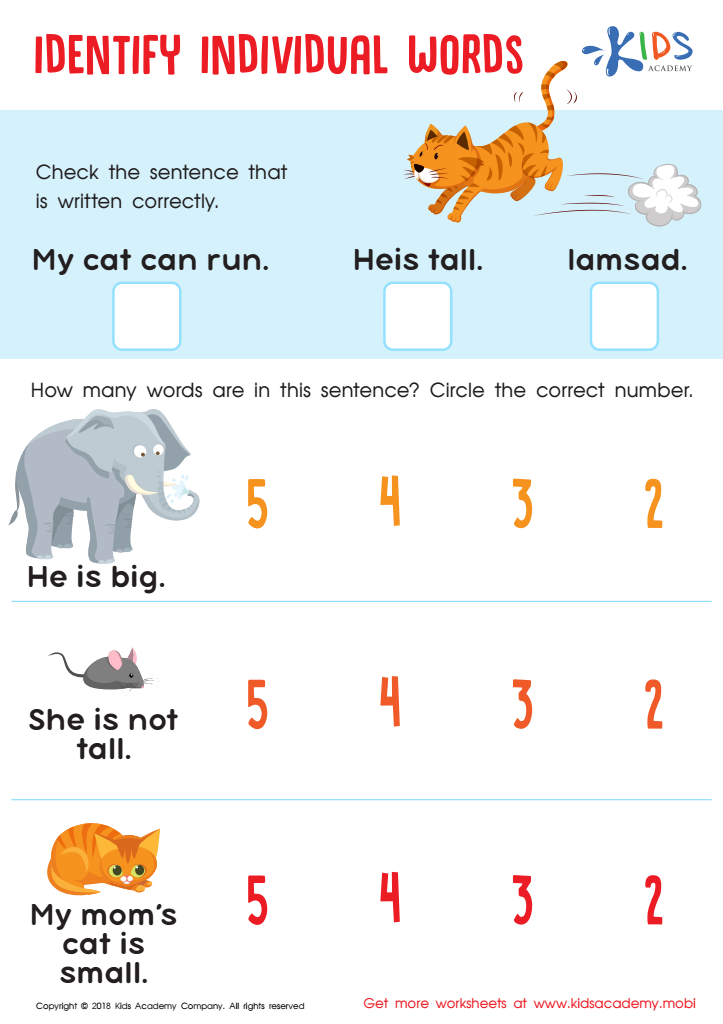
Identify Individual Words Worksheet

Identify Individual Words Worksheet

Does your child have trouble constructing sentences? Check out this worksheet! It will help them identify words that make up sentences and assess how well they can read and answer questions. The first part tests how well they can recognize a written sentence. The second part has them read questions and circle the correct number of words. Give it a try!
Identify Individual Words Worksheet
Worksheet
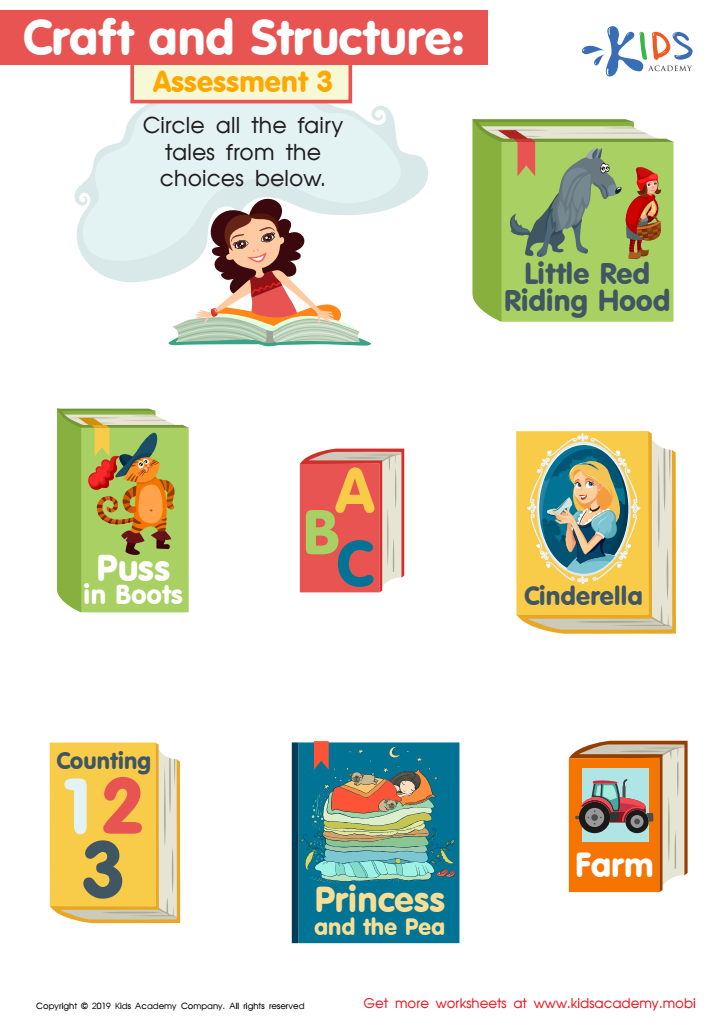
Craft and Structure: Assessment 3 Worksheet

Craft and Structure: Assessment 3 Worksheet

Before starting the worksheet, ask your kids to recall their favorite bedtime stories. What characters and events can they remember? Four popular children's stories are hidden among pictures of other objects - help them search and circle the fairy tales in this PDF.
Craft and Structure: Assessment 3 Worksheet
Worksheet
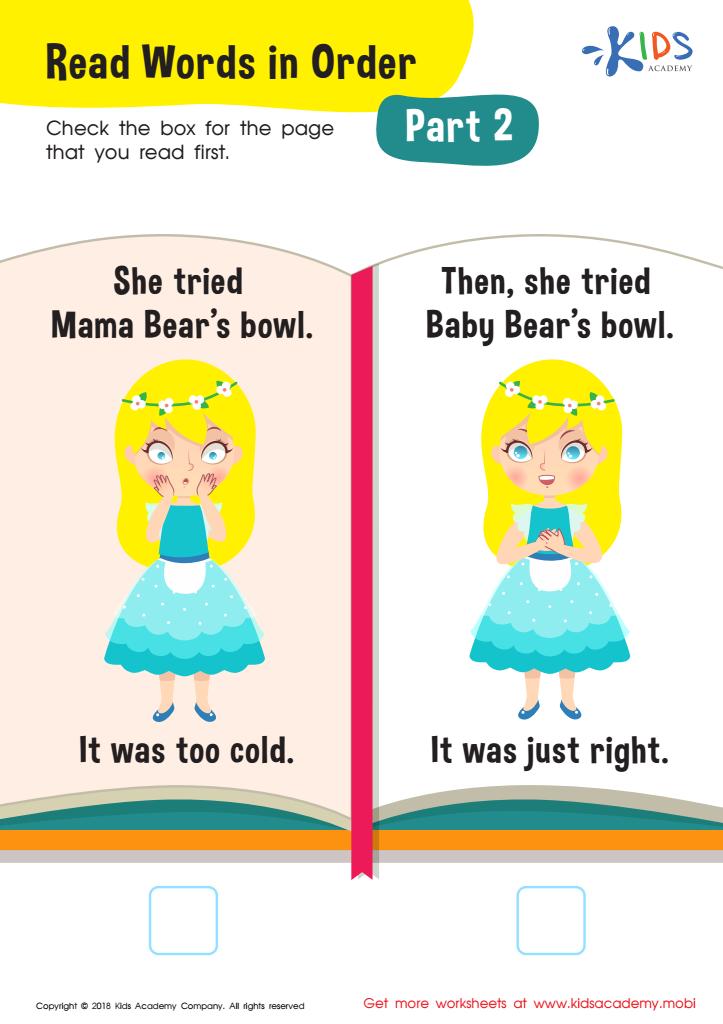
Read Words Order Part 2 Worksheet

Read Words Order Part 2 Worksheet

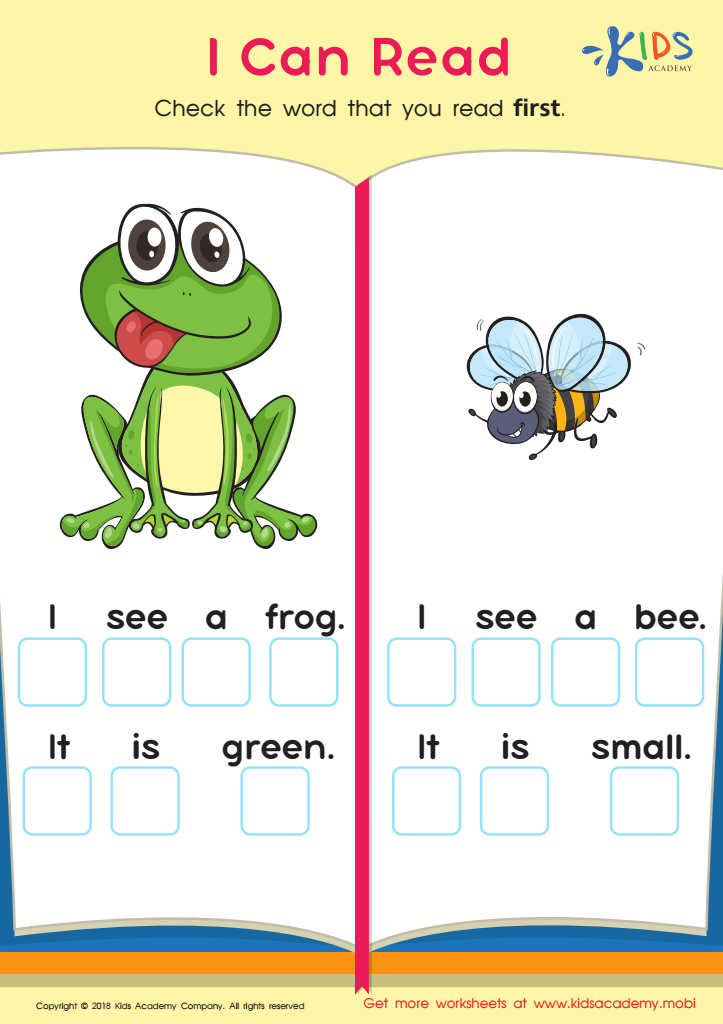
Help your students make progress with reading by using this easy worksheet. It includes two pictures with short sentences your child should be able to read. Ask them to read these out loud, and if they're struggling, help them. Then, they should check the box that shows the page they'd read first.
Read Words Order Part 2 Worksheet
Worksheet
I Can Read Worksheet

I Can Read Worksheet

Test your child's reading skills with this fun worksheet. See how well they know one-letter, two-letter, and five-letter words. Ask your little one to read the sentences and tick the word they identify first. It's a great way to track their progress and help them become more confident readers.
I Can Read Worksheet
Worksheet
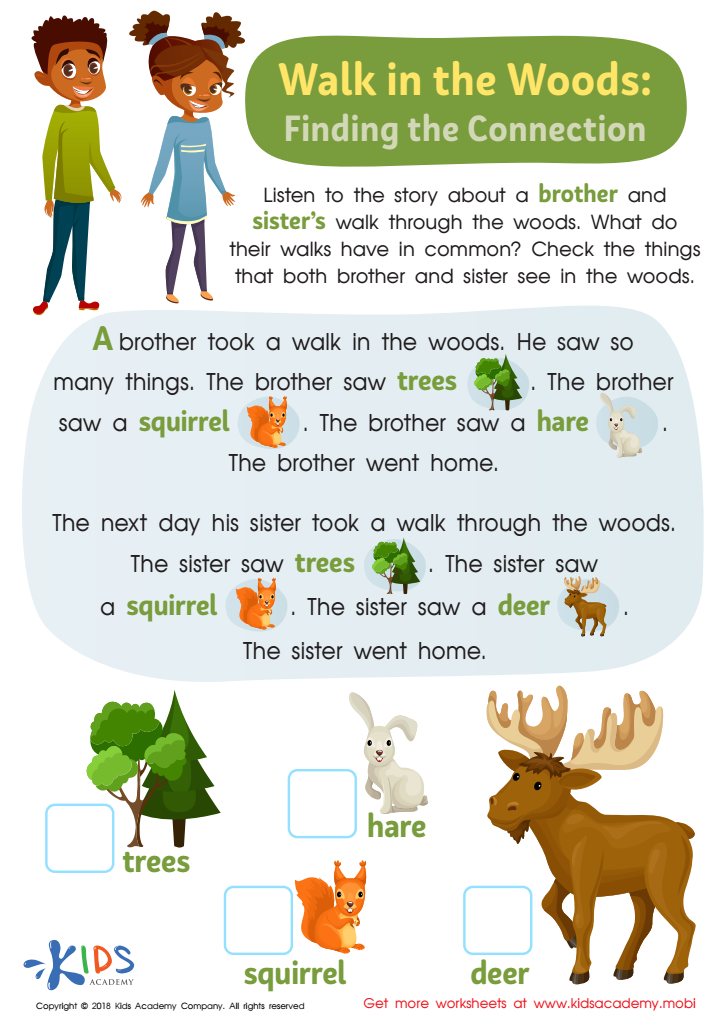
Walk In the Woods: Finding Connections Worksheet

Walk In the Woods: Finding Connections Worksheet

Brother and sister took a walk in the woods to connect with nature and get some exercise. As they went, they noted different things like birds and plants, which they share in this story. Read it to your little ones, and help them check off the items the two saw. It's a great way to learn about nature and enjoy the outdoors.
Walk In the Woods: Finding Connections Worksheet
Worksheet
Down by the Bay: Choose the Noun Worksheet


Down by the Bay: Choose the Noun Worksheet

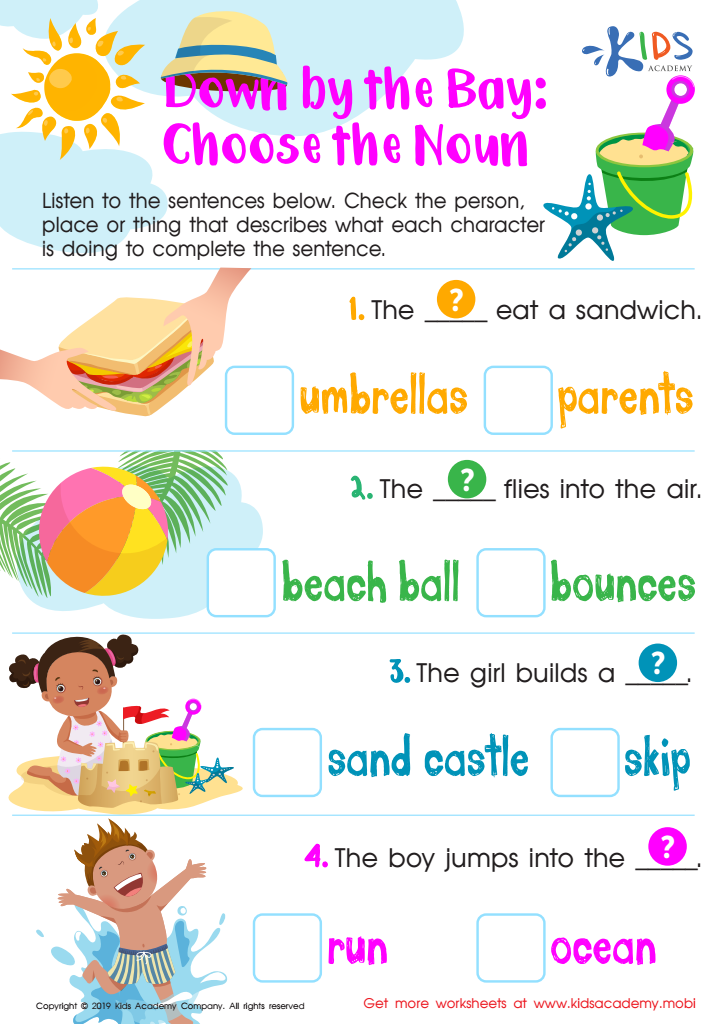
Teach your child the basics of speaking and constructing English, like the parts of speech. Nouns are especially important; they are names of people, animals, objects, places, or things. Go through this worksheet with your kids and have them identify the nouns in the sentences. This exercise will help them understand the concept better.
Down by the Bay: Choose the Noun Worksheet

Worksheet


Vocabulary enhancement through normal reading fiction for 4-year-olds is crucial for several reasons. At this age, children are at a vital stage of language development, and introducing them to rich, varied vocabulary through engaging stories helps build their language skills significantly. When parents and teachers prioritize reading fiction, they expose children to new words, phrases, and concepts that they may not encounter in daily conversation. This exposure not only boosts their vocabulary but also enhances their comprehension and critical thinking skills.

Furthermore, reading fiction fosters imagination and creativity. Children are drawn into various narratives, helping them understand different perspectives, cultures, and experiences. This broadens their worldview and encourages empathy, making it an essential source of emotional education.

Additionally, shared reading time strengthens the bond between adults and children, promoting communication and creating a positive association with literacy. This collaborative experience fosters a love for reading that can last a lifetime. By investing time in reading fiction, parents and teachers help lay a strong foundation for future academic success and articulate expression, equipping children with the language skills critical for both academic achievement and social interaction. Therefore, prioritizing vocabulary enhancement is an investment in their future.