
Categorization skills Normal Animals Worksheets for 4-Year-Olds
3 filtered results
Difficulty Level
Grade
Age
-
From - To
Subject
Activity
Standards
Enhance your child's learning experience with our "Categorization Skills Normal Animals Worksheets" designed specifically for 4-year-olds. These engaging worksheets focus on developing essential categorization skills by inviting young learners to sort animals based on various characteristics, such as habitat, size, and type. Each worksheet is colorful and child-friendly, making the learning process fun and interactive. As children categorize different animals, they will boost critical thinking, enhance vocabulary, and deepen their understanding of the animal kingdom. Perfect for early education settings or home learning, our worksheets pave the way for future scientific exploration. Start nurturing your child's cognitive skills today!
Favorites
With answer key
Interactive
 Assign to My Students
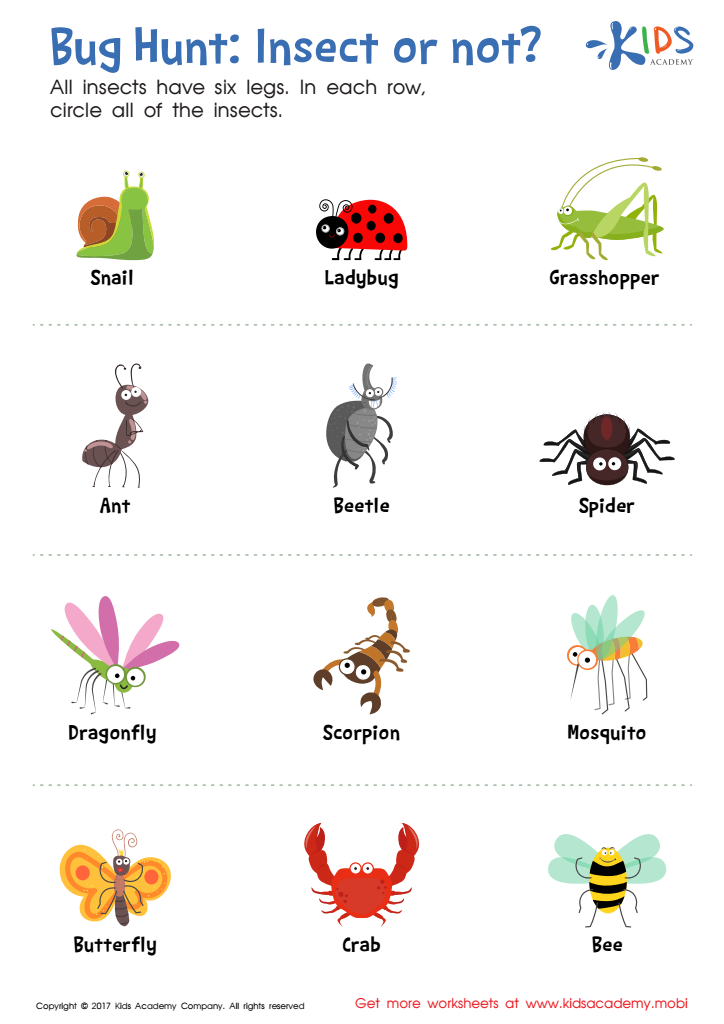
Insect or Not? Worksheet
Worksheet
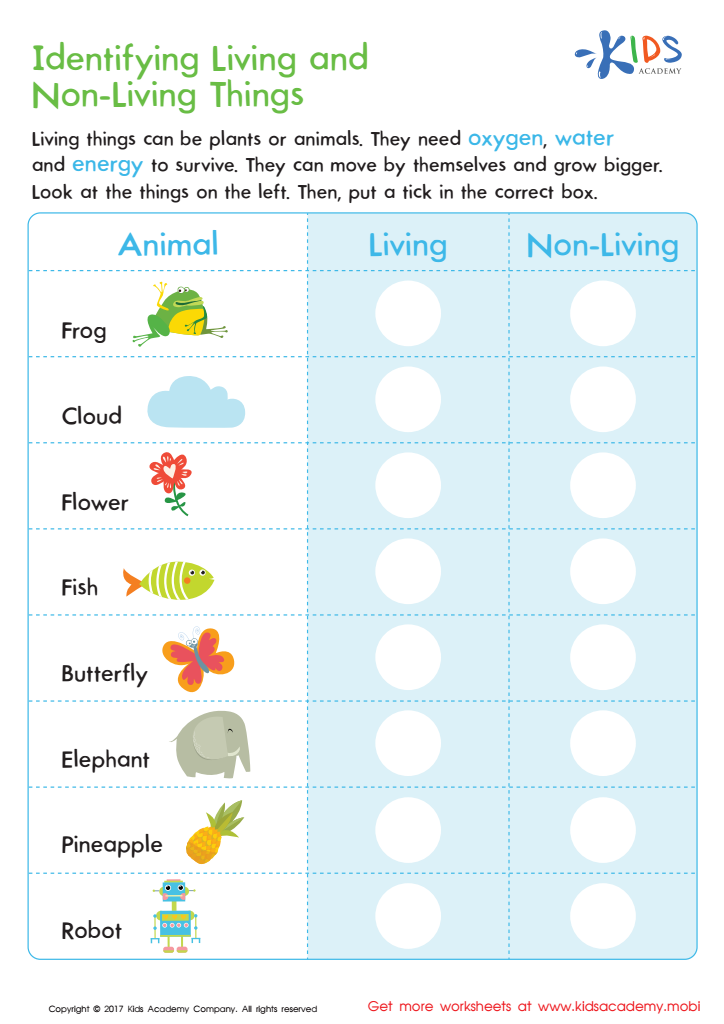
Identifying Living or Non–living Worksheet
Help your child learn to sort and categorize in a new way! Teach them to classify things as living or non-living using this worksheet. It's the perfect way to build their scientific understanding, and to have some learning fun! Print this worksheet and watch them discover the world of science!
Identifying Living or Non–living Worksheet
Worksheet
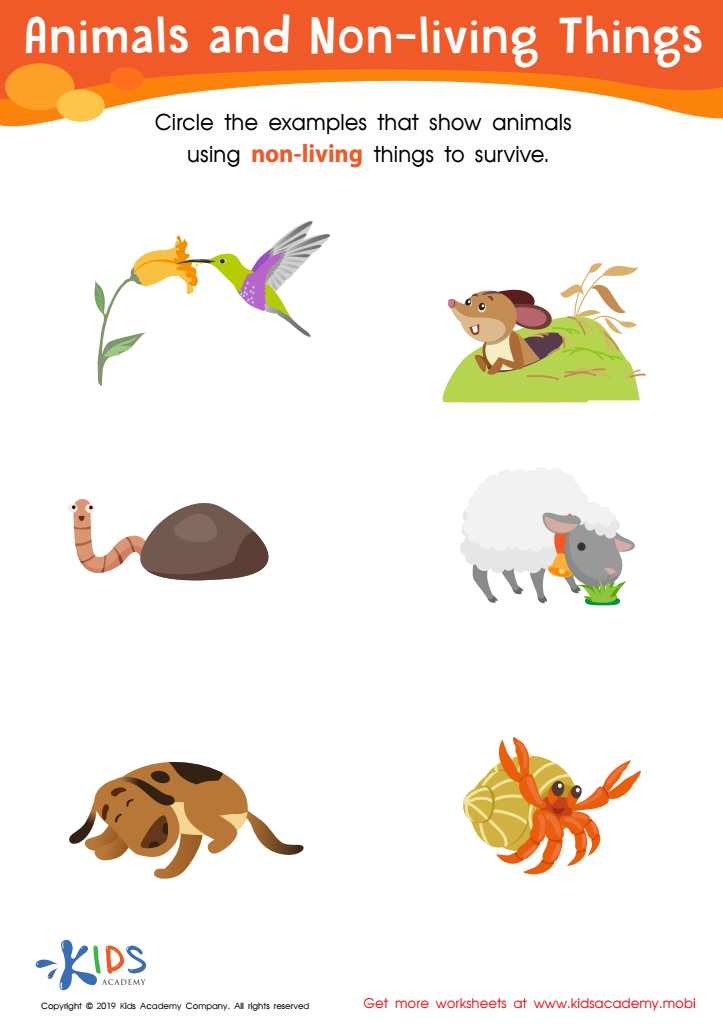
Animals and Non-Living Things Worksheet
People and animals both require more than food to survive. We need shelter, clothing and water, while animals use non-living things like rocks and trees. Ask your kids what else is necessary to survive - then have them identify the objects in the worksheet and circle the examples of animals using non-living things.
Animals and Non-Living Things Worksheet
Worksheet
Join Kids Academy for Free
Who is primarily going to use this learning content?







Categorization skills are essential for 4-year-olds, as they lay the groundwork for logical thinking and problem-solving abilities. When children categorize normal animals, they learn to identify similarities and differences, which plays a key role in their cognitive development. For parents and teachers, fostering these skills can significantly enhance a child's understanding of the world around them.
Engaging children in activities that encourage animal categorization—such as sorting animals by habitat, size, or diet—promotes critical thinking and decision-making. This process helps young learners develop vocabulary and improves their ability to communicate effectively. Additionally, for teachers, incorporating categorization into lessons makes learning dynamic and fun, capturing the imaginations of young children.
Moreover, developing categorization skills supports early literacy and numeracy, as children categorize objects based on different attributes. The ability to classify enhances their academic foundations, benefiting them in subjects like science and math as they progress in school.
Ultimately, nurturing categorization skills can prepare children for a successful educational journey. Therefore, both parents and teachers should prioritize these skills to help children build confidence and foster a love for learning.








