Normal Consonant Blends Worksheets for Ages 5-6
5 filtered results
-
From - To
Discover our engaging Normal Consonant Blends Worksheets designed specifically for children ages 5-6! These worksheets provide young learners with valuable practice in recognizing and using common consonant blends, essential for budding readers. Each worksheet features fun and interactive activities, including coloring, matching, and tracing, all tailored to captivate their attention while promoting literacy skills. Ideal for both home and classroom settings, our resources help reinforce phonemic awareness, improve spelling, and enhance vocabulary development. Encourage your child’s journey to reading fluency with these stimulating and educational worksheets that make learning exciting and effective! Get started today and watch them thrive!
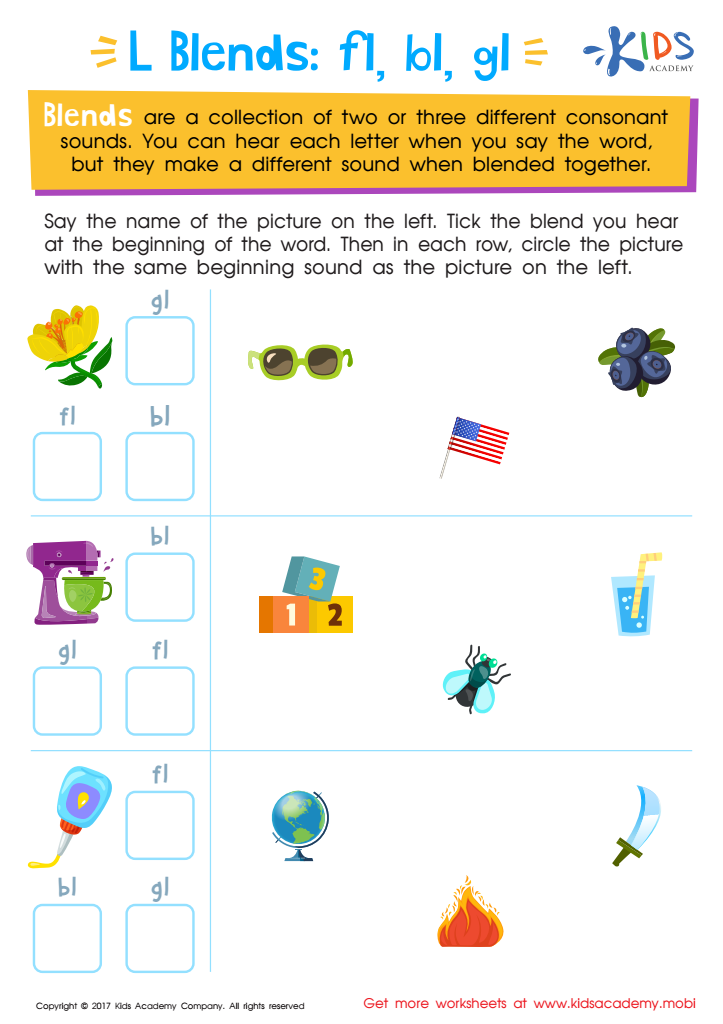
Blending Consonants: "Fl", "Bl" and "Gl" Printable
 Assign to My Students
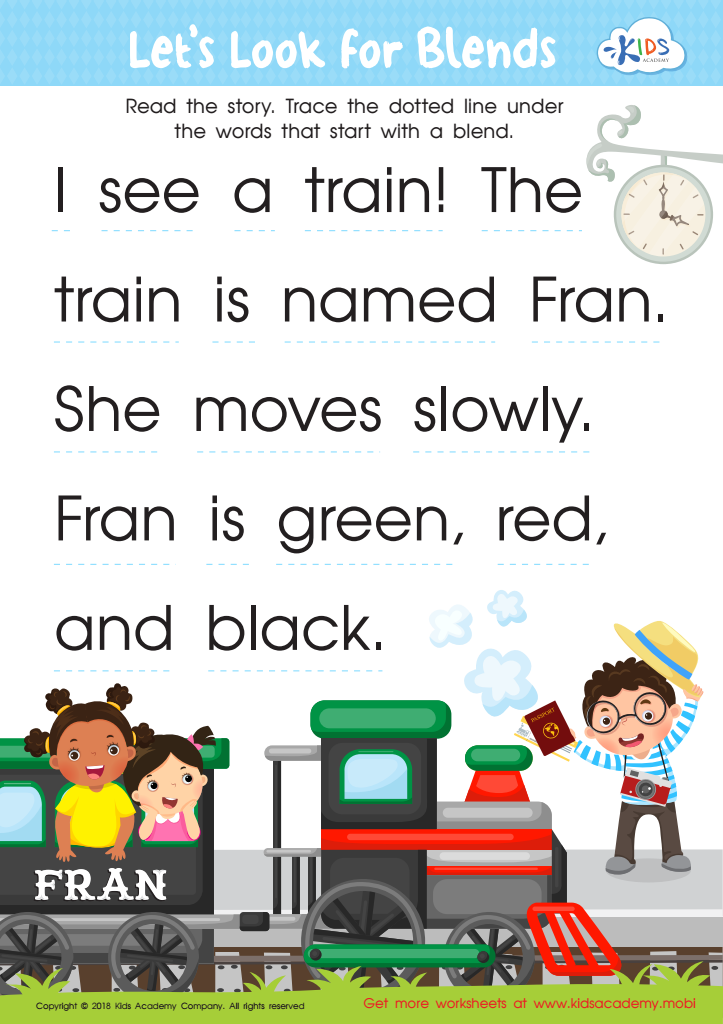
Let's Look for Blends Worksheet
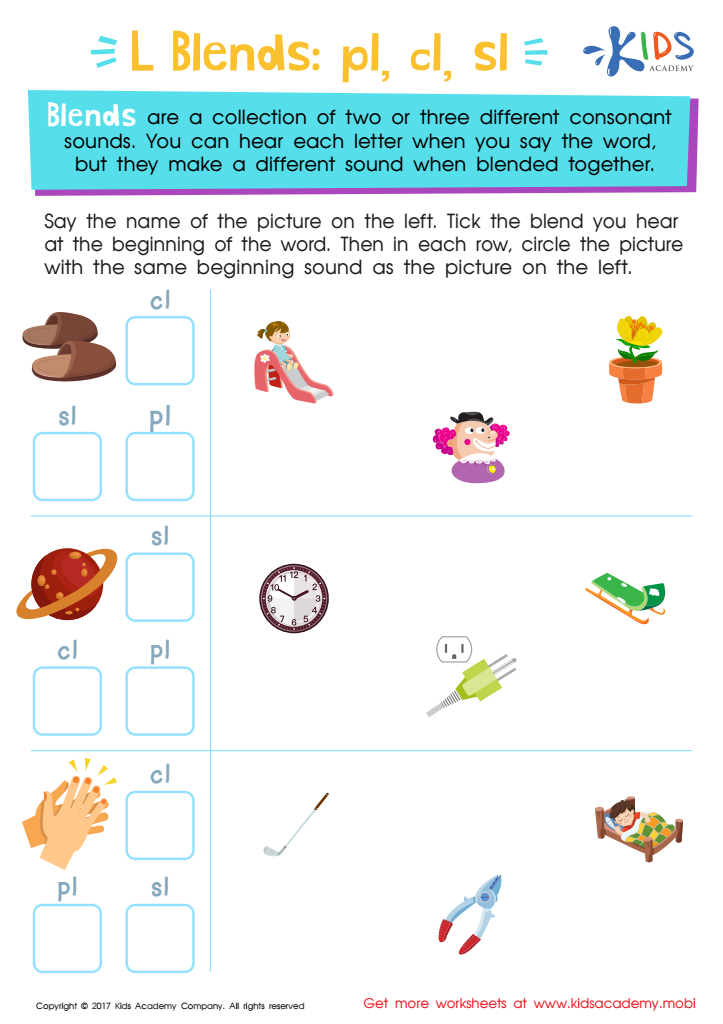
L Blends: "Pl", "Cl" and "Sl" Printable
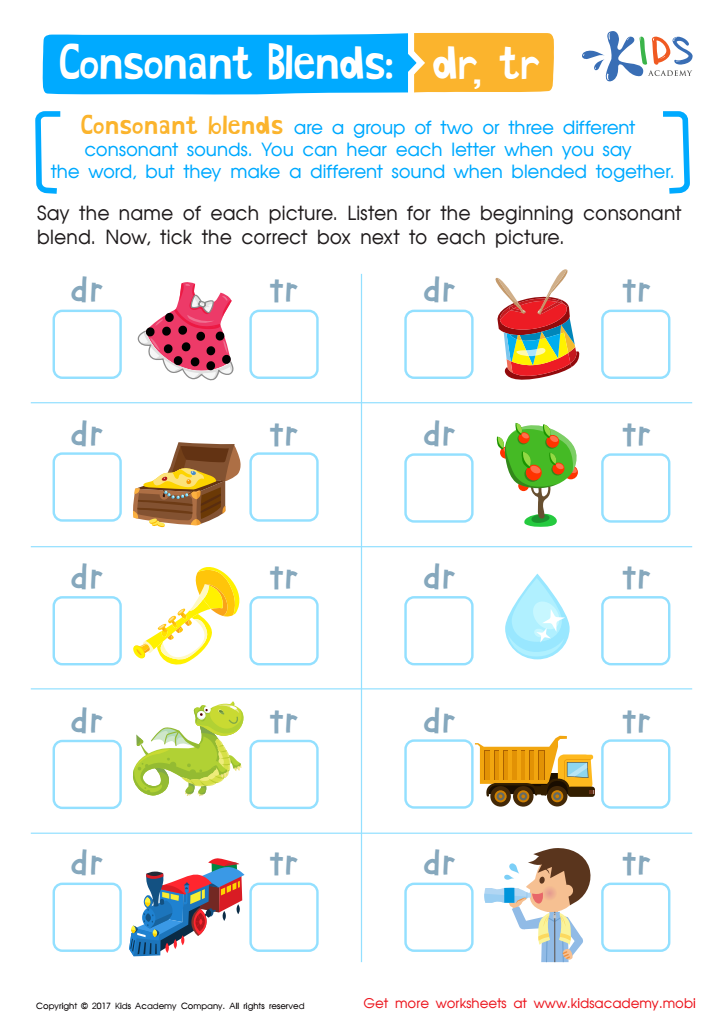
Consonant Blends: "Dr" and "Tr" Printable
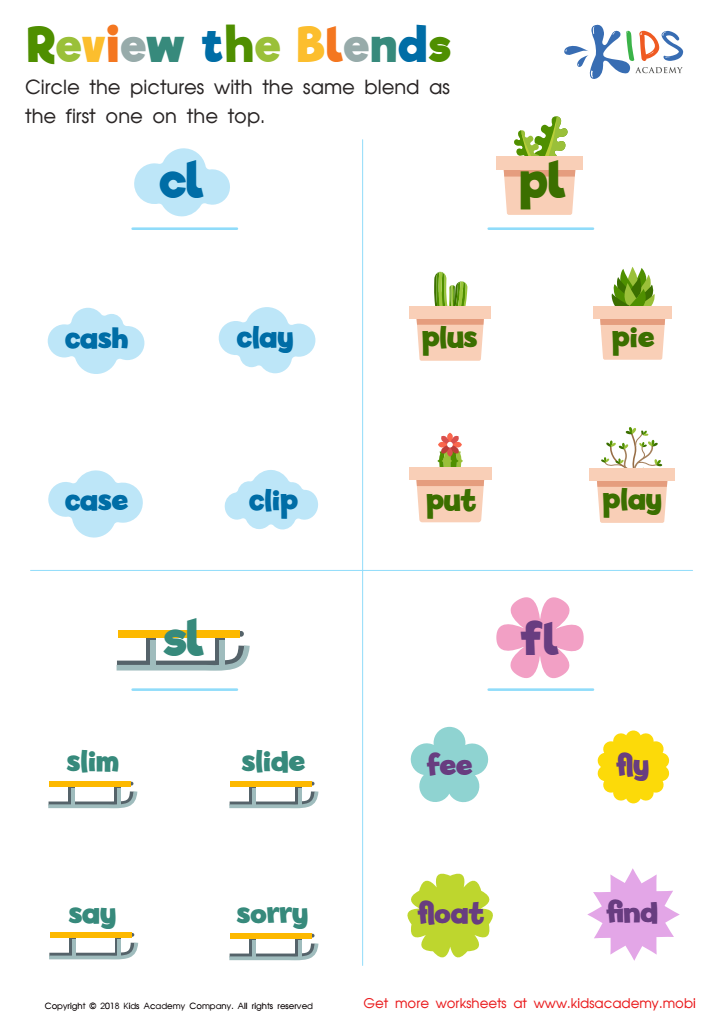
Review the Blends Worksheet





Normal consonant blends, consisting of two or more consonants that appear together in a word, are crucial for children aged 5-6 as they lay the foundation for early literacy skills. Understanding these blends—such as "bl," "st," and "tr"—enhances phonemic awareness, which is the ability to hear, identify, and manipulate individual sounds in words.
When children learn about consonant blends, they become more proficient in decoding words when reading. This early exposure helps them identify familiar sound patterns, making it easier to read new or unfamiliar words. Strong decoding skills not only build a child's confidence in reading but also foster a love for books and learning.
Additionally, cultivating an awareness of consonant blends assists children in spelling. By understanding how sounds combine, they can improve their writing and express their ideas more clearly.
Parents and teachers play an essential role in guiding children through this phase of language development. Engaging activities—such as phonics games, reading aloud, and blending exercises—can make learning fun and interactive. Investing time in teaching these skills ensures children develop a solid literacy foundation, setting them up for academic success in the future.