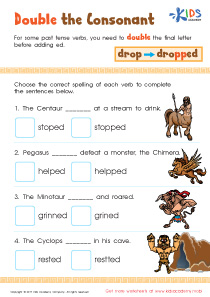
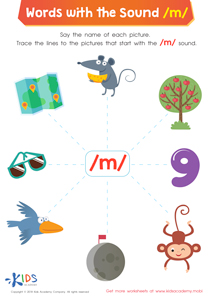
Word Recognition Normal Consonant Digraphs Worksheets for Ages 5-6
5 filtered results
-
From - To
Discover our "Word Recognition Normal Consonant Digraphs Worksheets" designed specifically for children aged 5-6. These engaging worksheets are perfect for young learners who are beginning to recognize and understand consonant digraphs like "ch," "sh," "th," and "ph." Each worksheet offers playful and educational activities that help kids build essential word recognition skills, enhancing their reading fluency and confidence. Through colorful illustrations, fun exercises, and interactive lessons, children will master these vital phonetic skills. Equip your child with the tools they need for reading success with our expertly crafted resources, available now at Kids Academy.
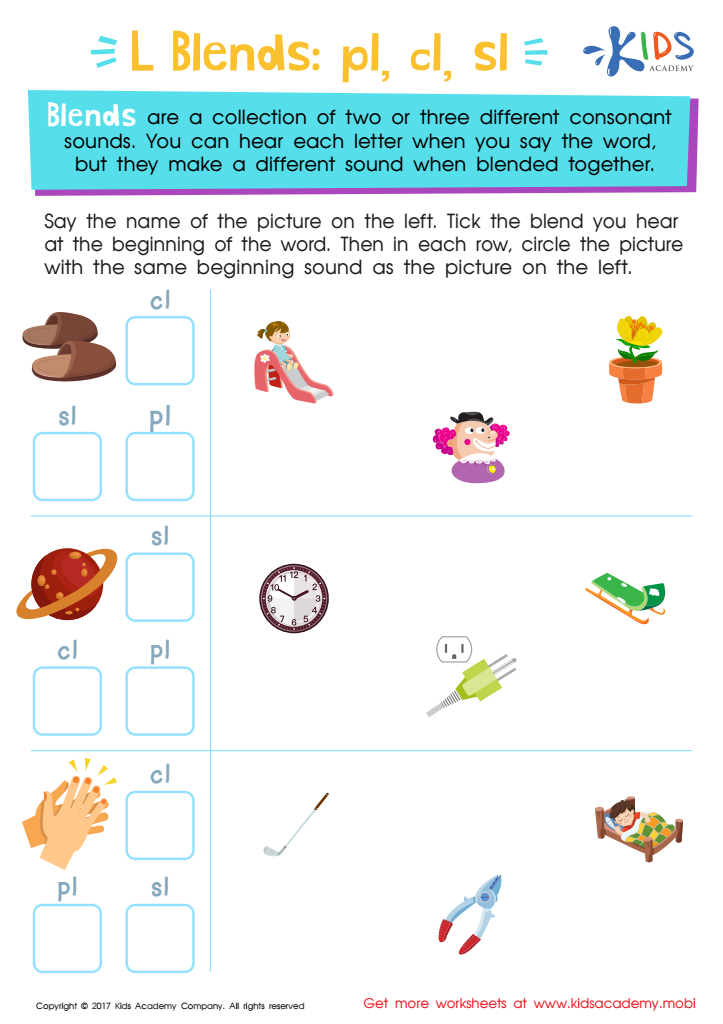
L Blends: "Pl", "Cl" and "Sl" Printable
 Assign to My Students
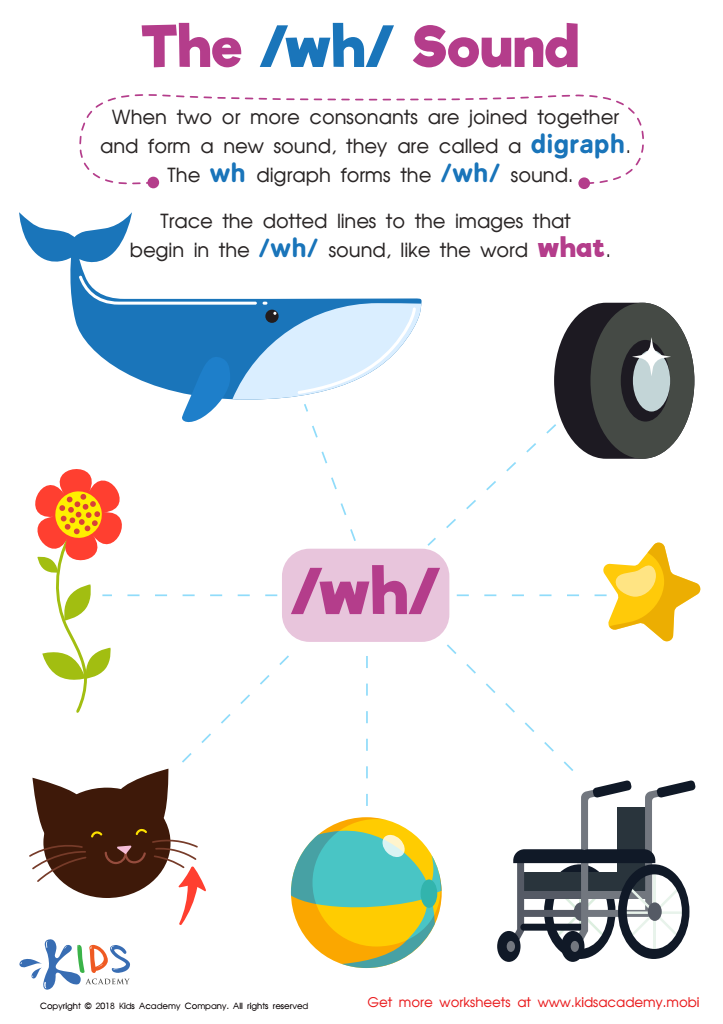
The /wh/ Sound Worksheet
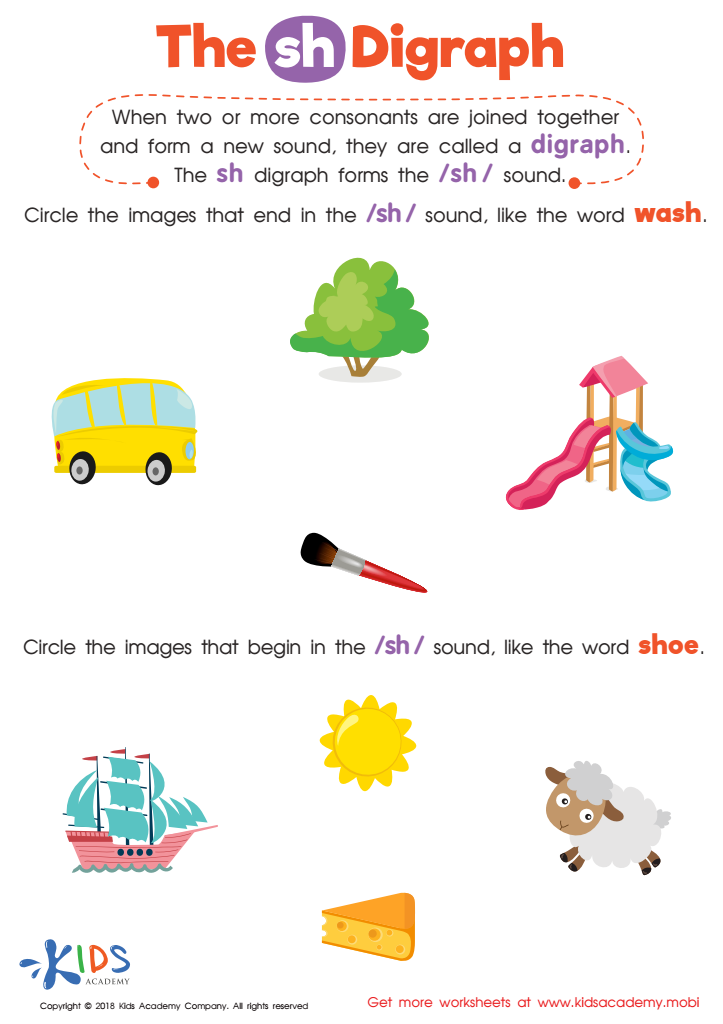
The SH Digraph Worksheet
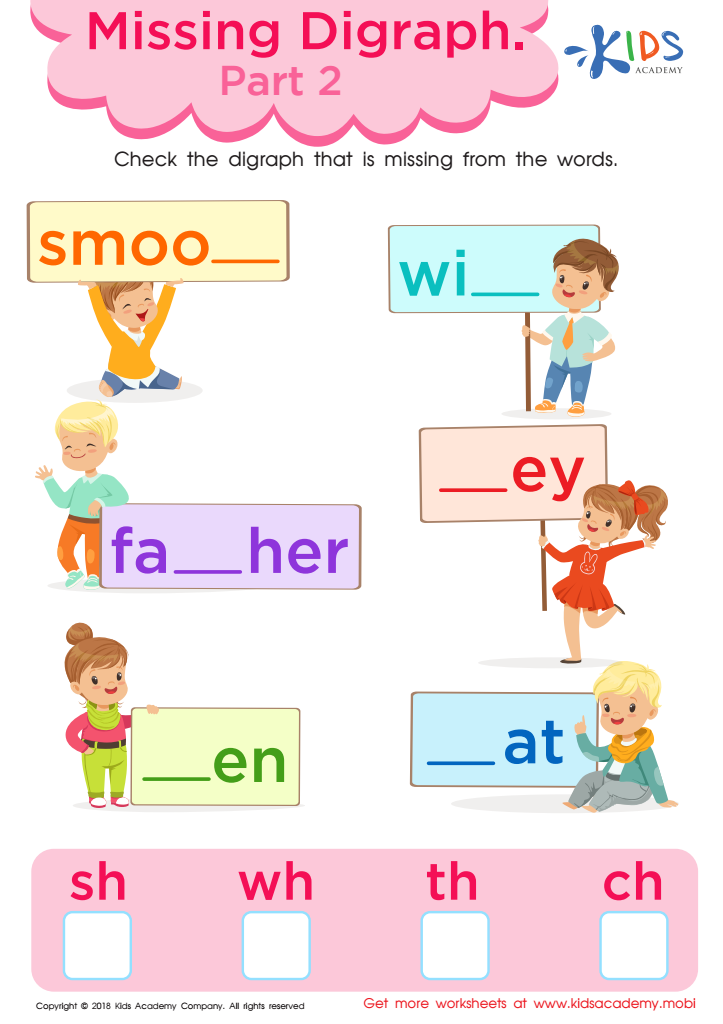
Missing Digraph: Part 2 Worksheet
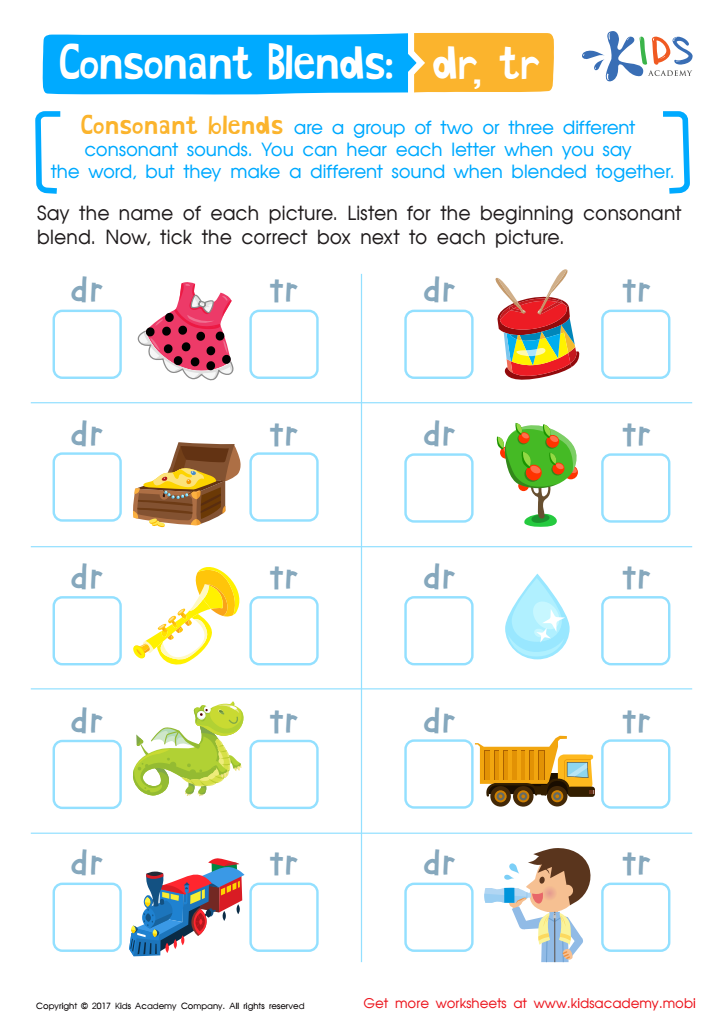
Consonant Blends: "Dr" and "Tr" Printable


Word recognition and understanding basic phonics concepts, such as consonant digraphs, are crucial for early readers aged 5-6. Parents and teachers should care deeply about these building blocks because they form the foundation for reading fluency and comprehension. Consonant digraphs, combinations of two consonants that produce a single sound (e.g., "sh," "ch," "th"), are common in the English language. Mastering them enables children to decode words more efficiently and accurately, facilitating smoother transitions from sounding out words to reading them fluently.
As children begin to recognize and understand these phonics rules, they gain confidence in their reading abilities. This confidence is critical, as positive early experiences with reading promote a lifelong interest in and love for literature. Neglecting to focus on these fundamental skills can lead to struggles later in a child’s academic journey, as gaps in basic reading knowledge can impede comprehension of more complex texts.
Moreover, strong word recognition and decoding skills enhance vocabulary development. When children "crack the code" of consonant digraphs and other phonetic elements, they can more easily recognize and learn new words, enriching their language skills and aiding overall communication. Thus, prioritizing these early literacy skills ensures a solid educational foundation, benefiting children throughout their learning experiences.