Cognitive Development Normal Phonics Worksheets for Ages 5-6
5 filtered results
-
From - To
Enhance your child's cognitive development with our engaging Normal Phonics Worksheets, specifically designed for ages 5-6. These worksheets offer a fun and interactive way to foster early reading skills while promoting critical thinking and problem-solving abilities. Children will explore the world of phonics through playful activities that encourage letter recognition, sound matching, and word formation. Each worksheet is crafted to align with early learning standards, making it an ideal resource for both parents and educators. Boost your child's confidence in literacy with activities that stimulate their curiosity and deepen their understanding of language through exciting phonics practices.
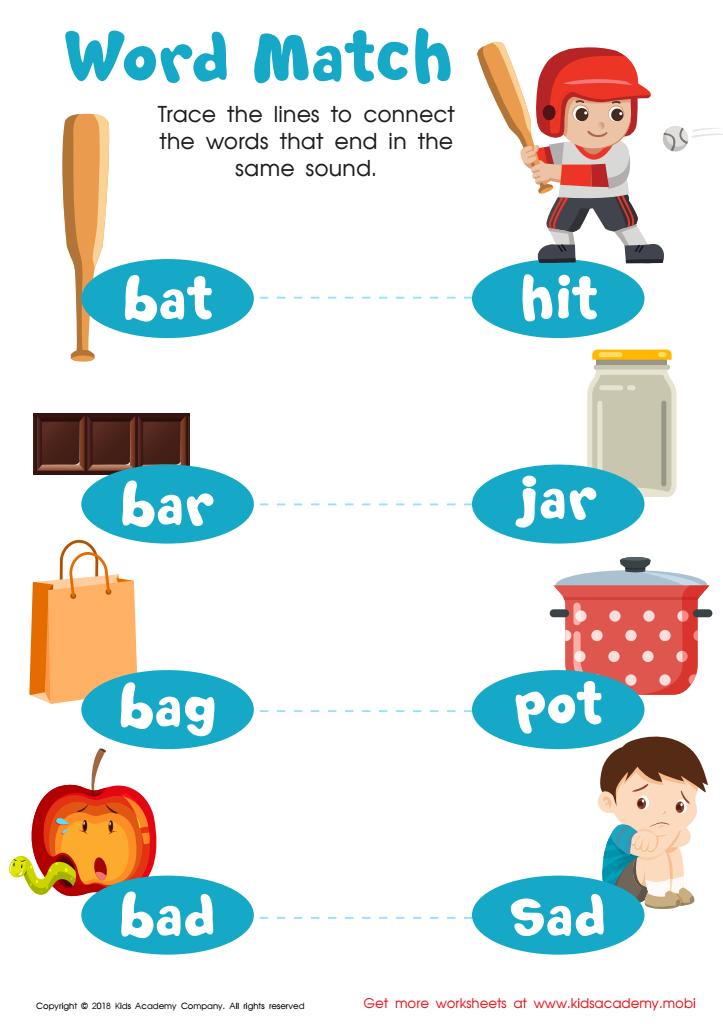
Word Match Reading Worksheet
 Assign to My Students
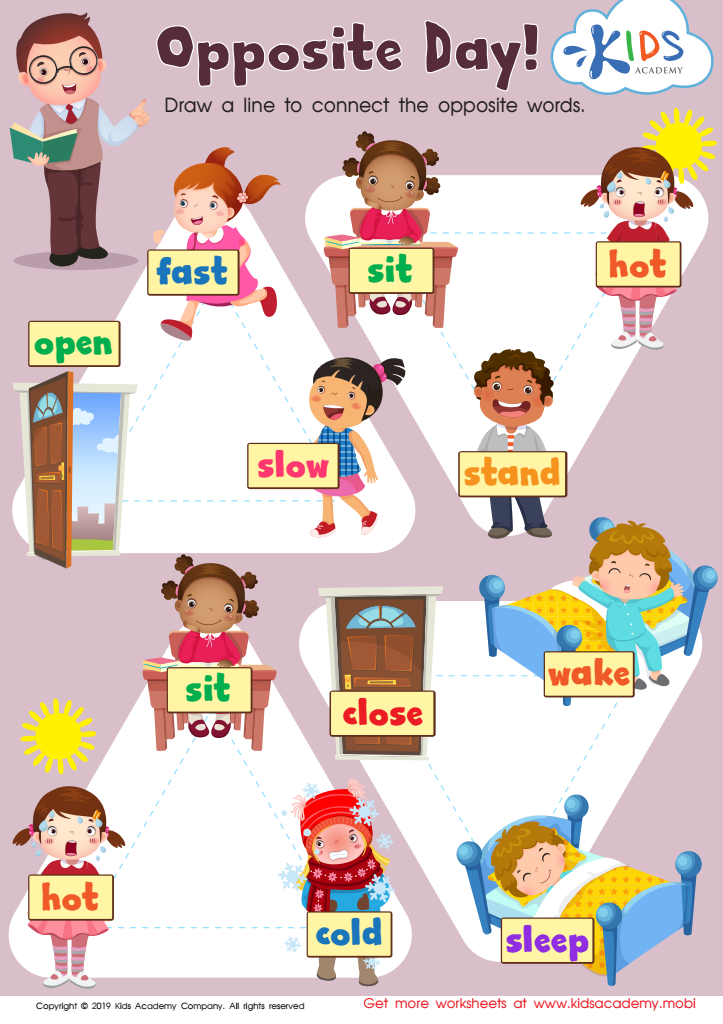
Opposite Day Worksheet
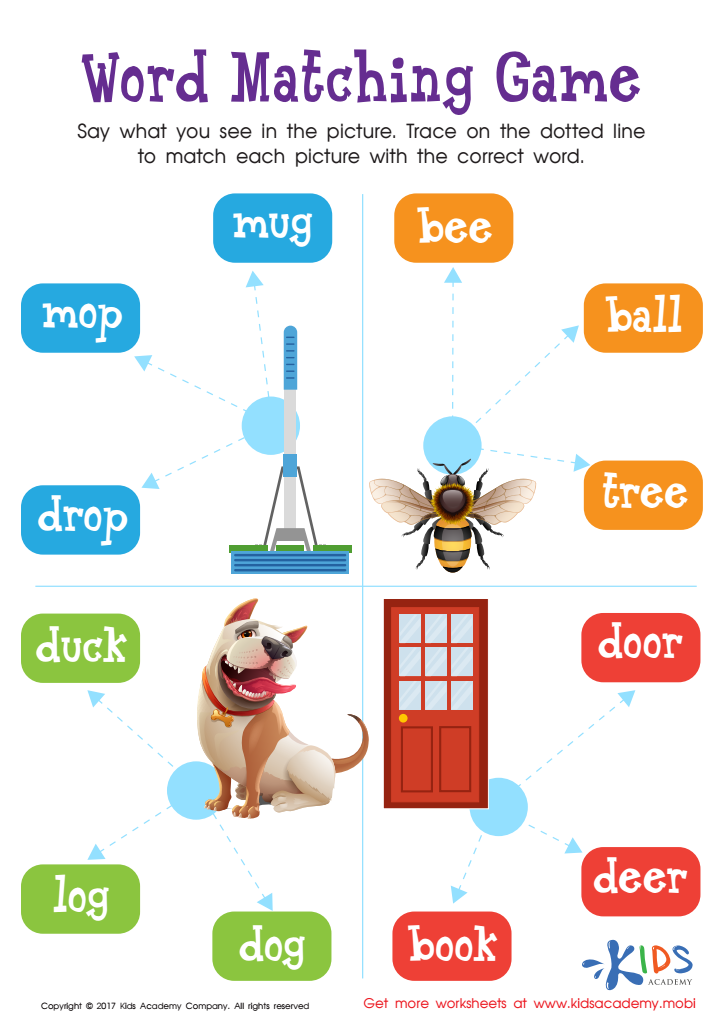
Word Matching Game Worksheet
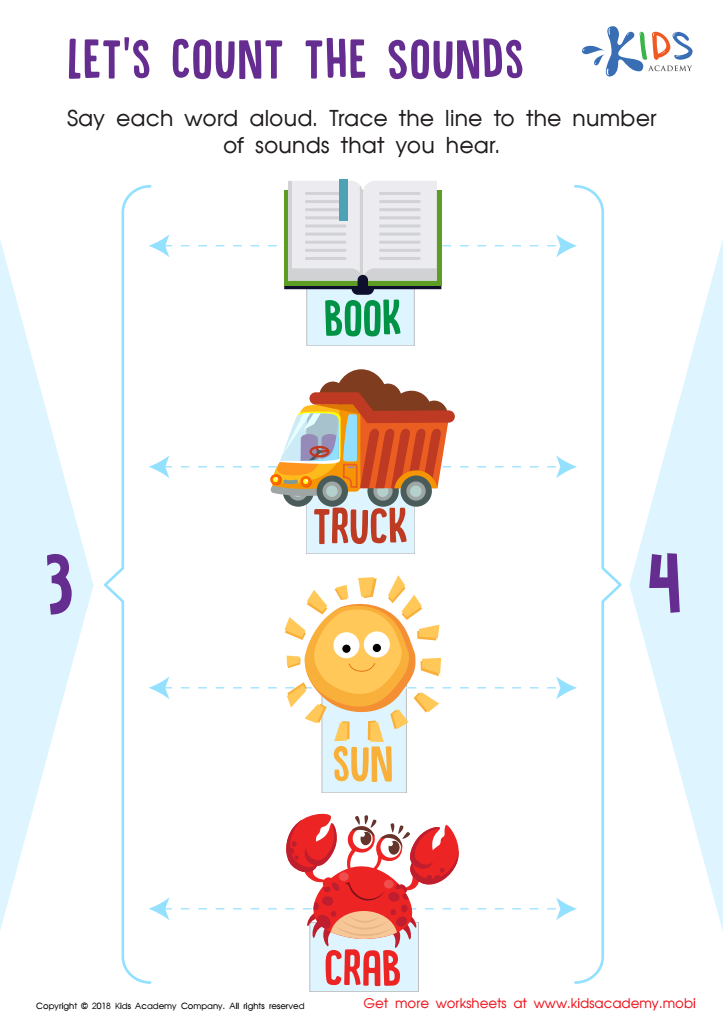
Let's Count the Sounds Worksheet
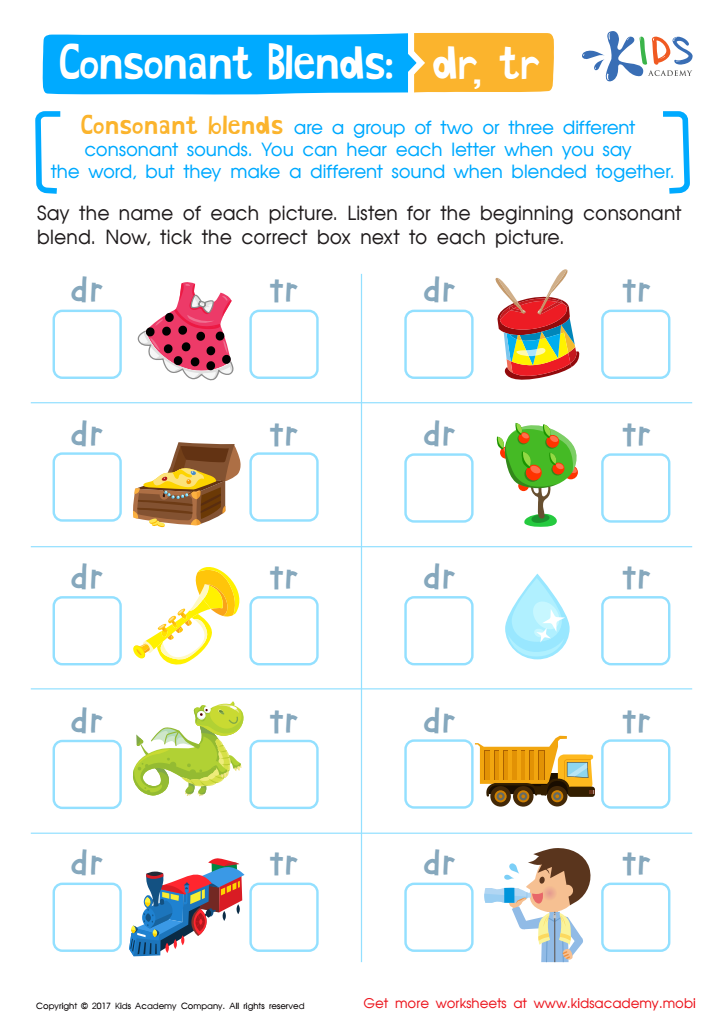
Consonant Blends: "Dr" and "Tr" Printable








Cognitive development during early childhood, particularly in the age group of 5-6 years, is crucial for laying a strong foundation in literacy skills, including phonics. Parents and teachers should care about cognitive development normal phonics at this stage because it directly supports a child's ability to read and comprehend text, which is essential for academic success.
At ages 5-6, children experience significant growth in areas such as memory, attention, and problem-solving abilities. Phonics instruction is key in helping children interpret the sounds of letters and letter combinations, forming a bridge to reading fluency. Understanding phonics not only allows children to decode new words but also enhances their vocabulary and comprehension skills as they are better equipped to tackle diverse reading materials.
Moreover, incorporating phonics into learning builds a child's confidence and motivation, as successful reading experiences encourage a lifelong love for literature. It fosters critical thinking, enabling children to relate letters and sounds in meaningful contexts. By prioritizing cognitive development through phonics, parents and teachers significantly contribute to nurturing independent readers who will thrive in their educational journeys and beyond. Therefore, investing in phonics education is a vital step in promoting literacy and cognitive growth during these formative years.







