Handwriting practice Normal Uppercase Letters Worksheets for Ages 5-6
6 filtered results
-
From - To
Enhance your child's handwriting with our Handwriting Practice Normal Uppercase Letters Worksheets for ages 5-6. These fun, engaging worksheets are designed to build essential writing skills through structured practice, tracing, and writing activities. Each sheet boosts letter recognition, fine motor coordination, and teaches proper stroke order. Perfect for early learners, these resources prepare children for school and instill confidence in their writing abilities. Our worksheets feature clear, easy-to-follow instructions and delightful illustrations to maintain your child’s interest. Give your little one the tools for handwriting success with these comprehensive learning aids!
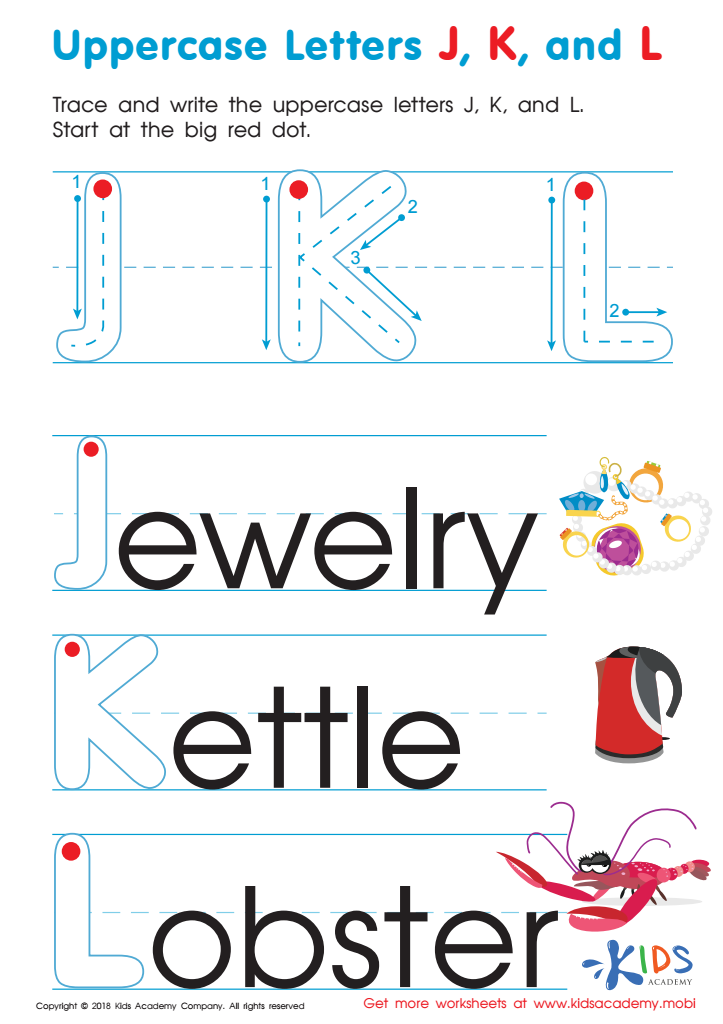
Uppercase Letters J, K, and L Worksheet
 Assign to My Students
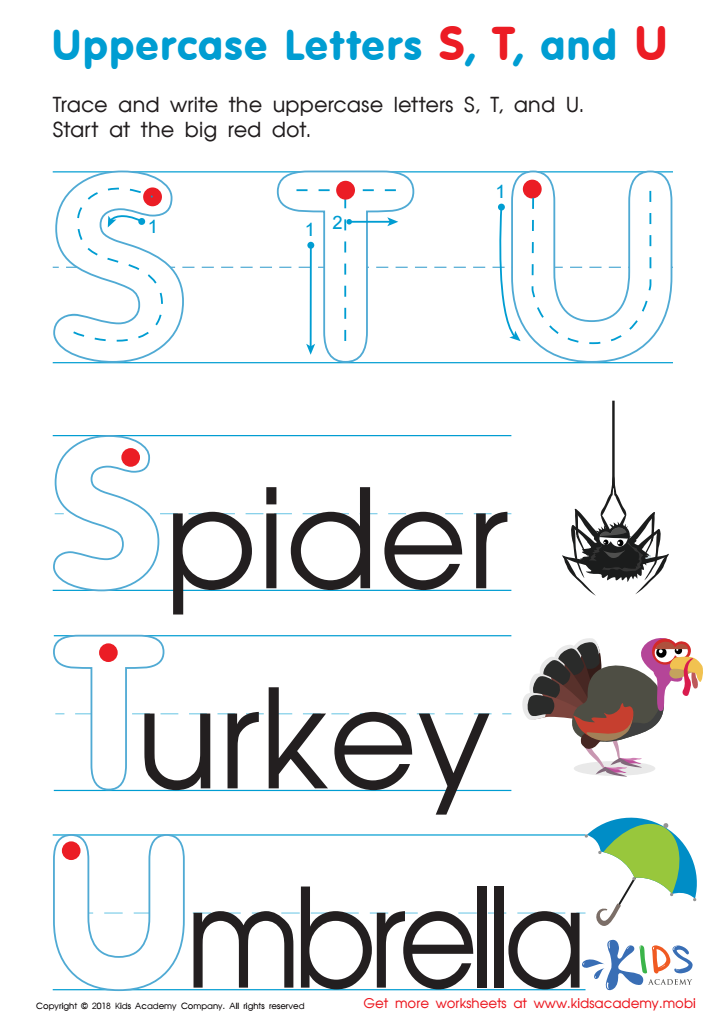
Uppercase Letters S, T, and U Worksheet
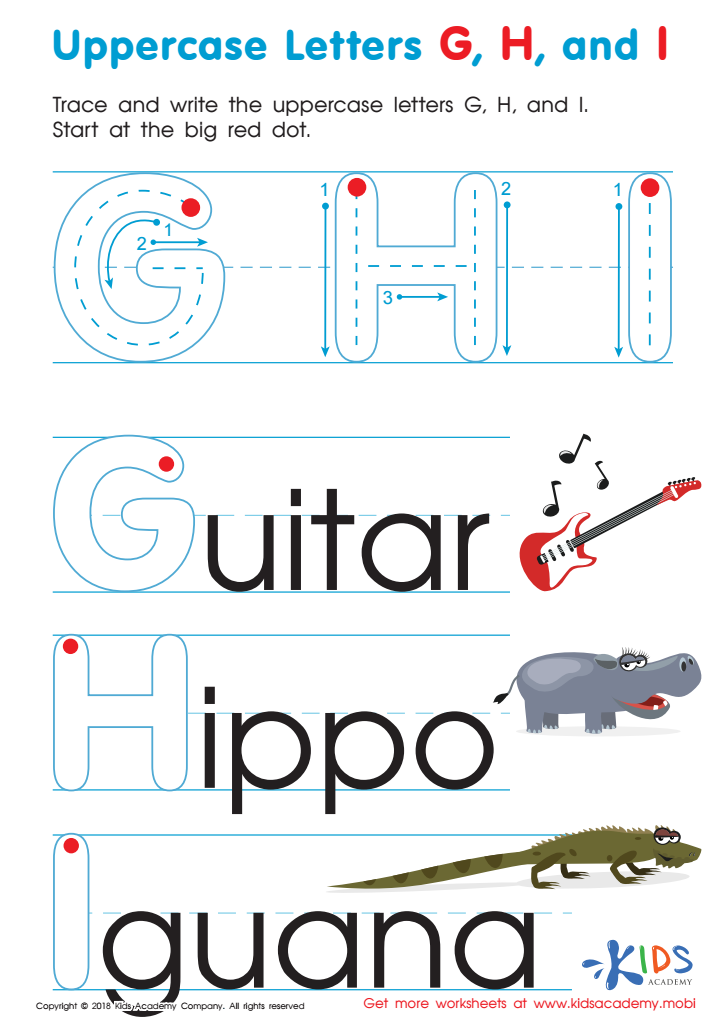
Uppercase Letters G, H, and I Worksheet
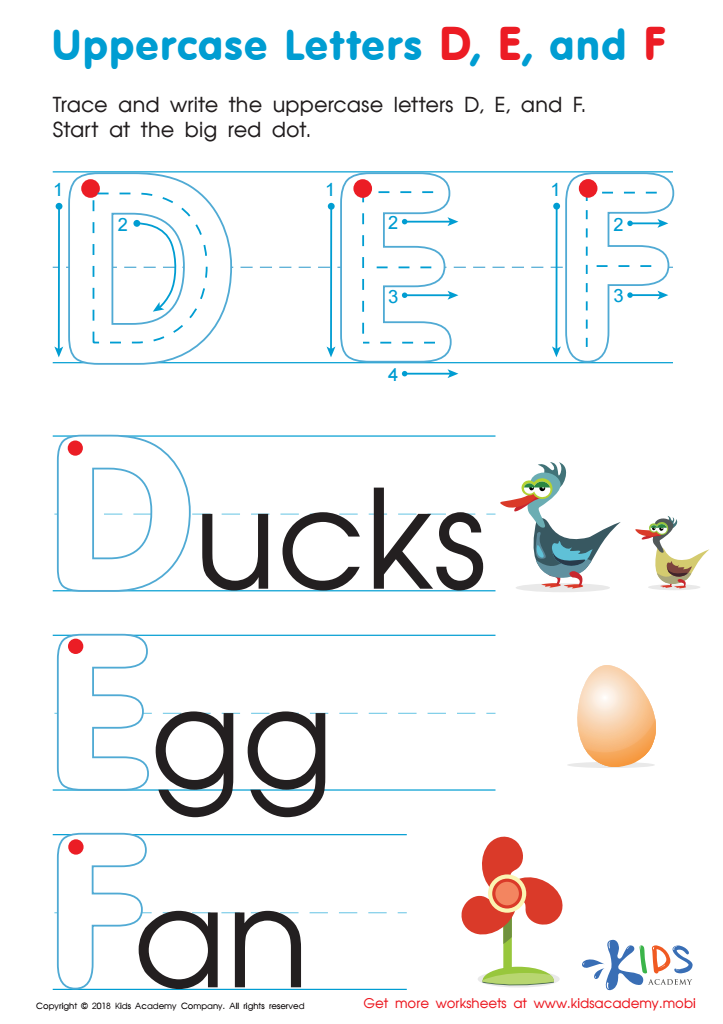
Uppercase Letters D, E, and F Worksheet
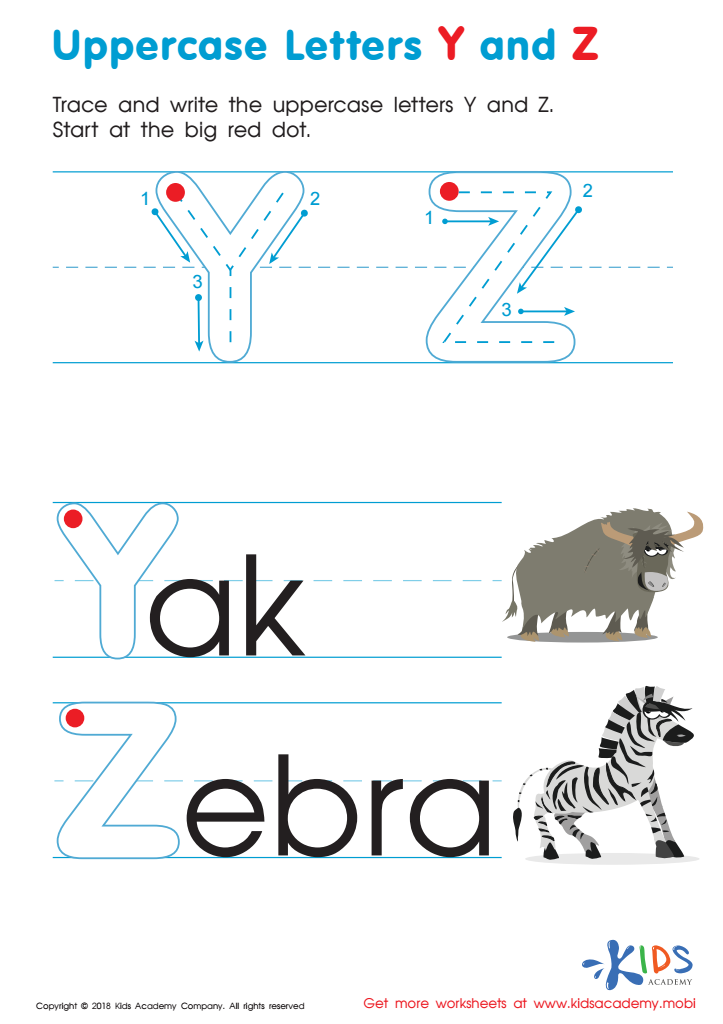
Uppercase Letters Y Z Worksheet
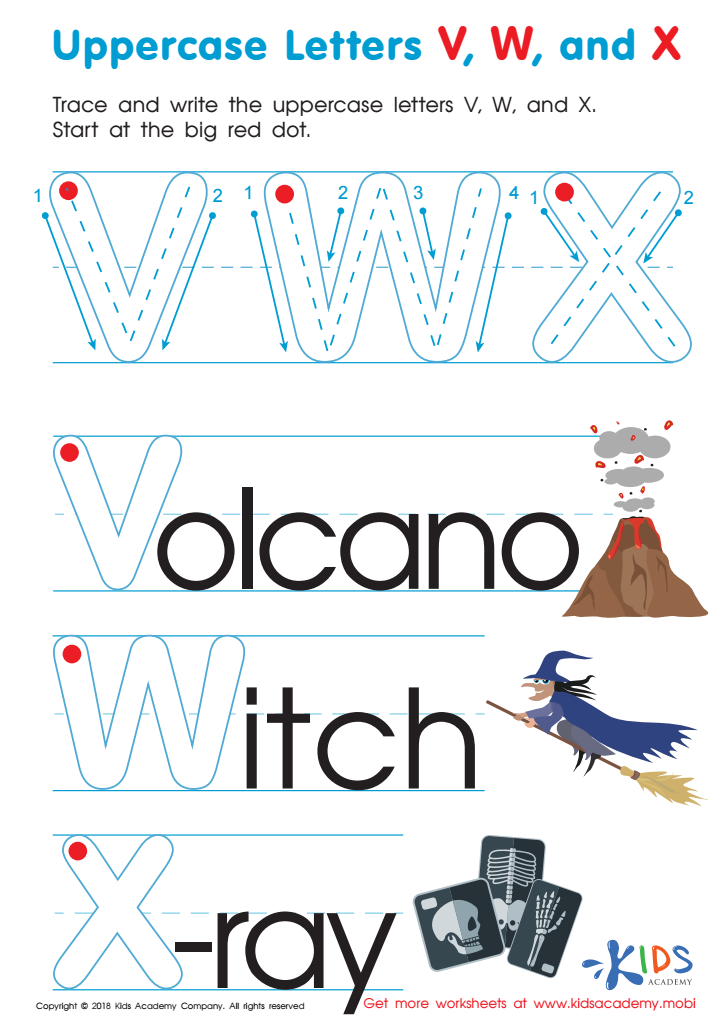
Uppercase Letters V, W, and X Worksheet








Handwriting practice, especially focusing on normal uppercase letters, is crucial for young children aged 5-6 for several fundamental reasons. First and foremost, it lays the groundwork for essential motor skills development. As children practice forming each uppercase letter, they refine their hand-eye coordination, fine motor skills, and dexterity necessary for tasks both in school and everyday life.
Moreover, learning to write uppercase letters is often simpler for young children since they typically involve fewer complex strokes than lowercase letters. This simplicity makes it an excellent starting point to build confidence and literacy skills. Uppercase letters are often used in headings, names, and the beginnings of sentences; hence, mastering them aids early reading and writing proficiency.
Consistent handwriting practice also reinforces cognitive development, including memory and focus. As children learn to write, they simultaneously engage their minds in activities that boost concentration and retention capabilities. Additionally, forming letters helps with understanding shapes and spatial relationships, supporting mathematics and logic skills.
from a socio-emotional perspective, being able to write legibly allows children to communicate more effectively, fostering self-expression, self-esteem, and confidence. Teachers and parents should prioritize and support handwriting practice, ensuring children develop the foundational skills needed for future academic success.