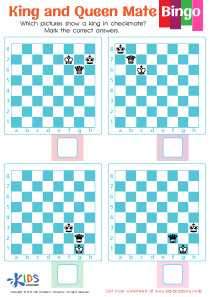
Understanding chess rules Normal Chess Worksheets for Ages 5-6
5 filtered results
-
From - To
Discover the essentials of chess with our "Understanding Chess Rules" worksheets designed specifically for ages 5-6. These engaging and interactive resources introduce young learners to the fundamental rules of chess in a fun, accessible way. Each worksheet encourages critical thinking and enhances problem-solving skills, allowing children to grasp the basics of piece movement, the importance of strategies, and the concept of winning and losing. Perfect for both classroom settings and home learning, these worksheets help pave the way for a lifelong love of chess. Start your child's chess journey and watch their confidence and cognitive abilities grow as they learn the game!
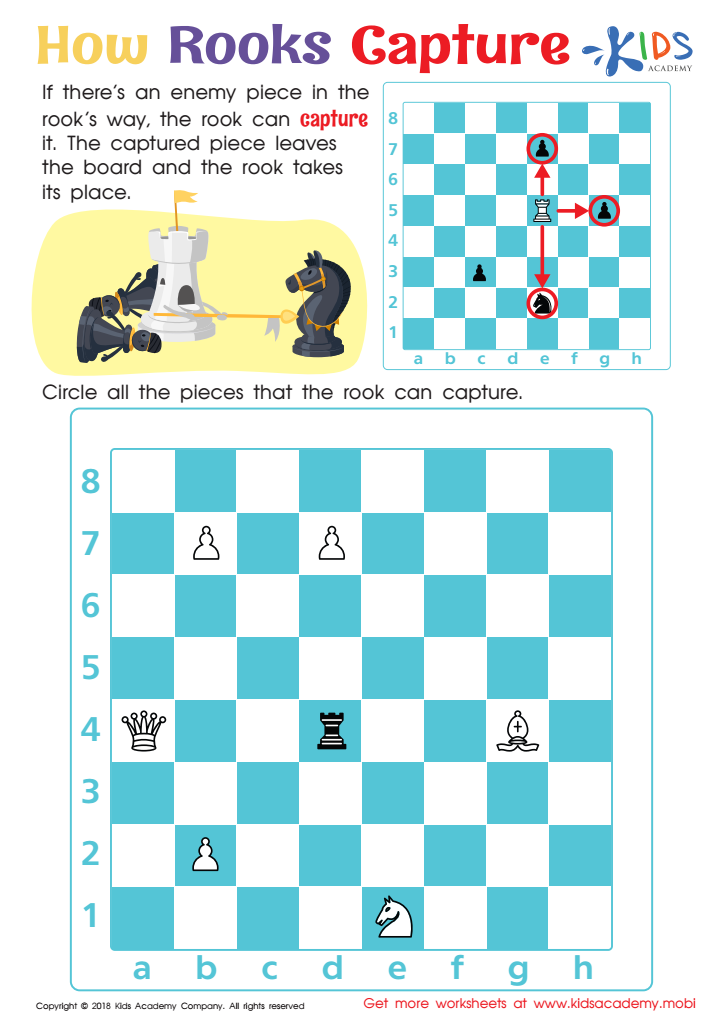
How Rooks Capture Worksheet
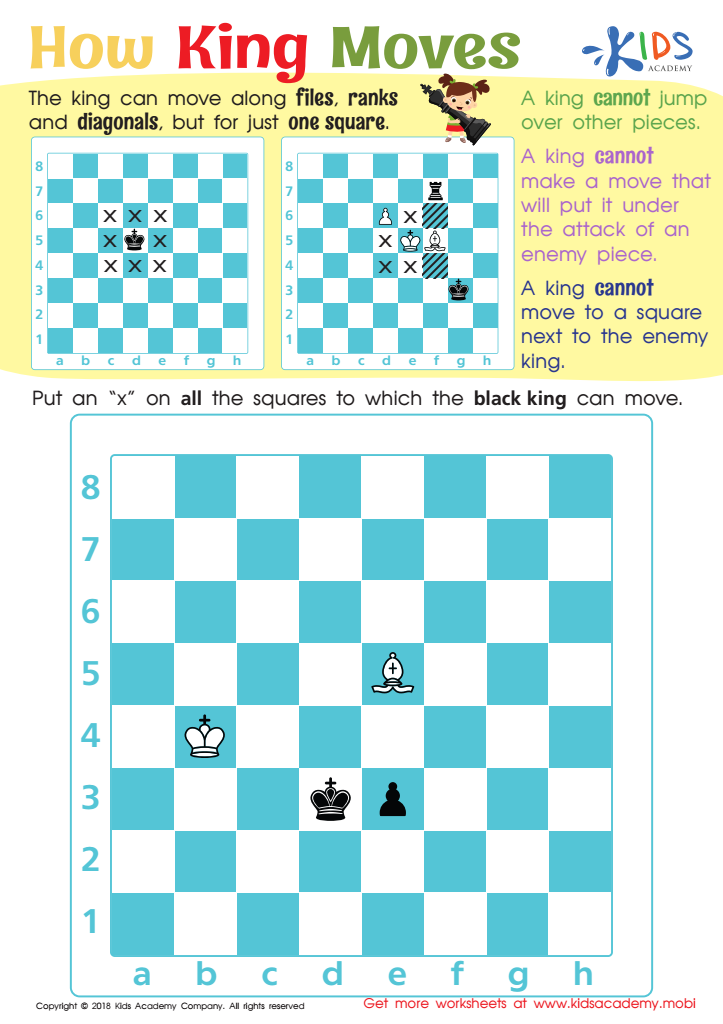
How King Moves Worksheet
 Assign to My Students
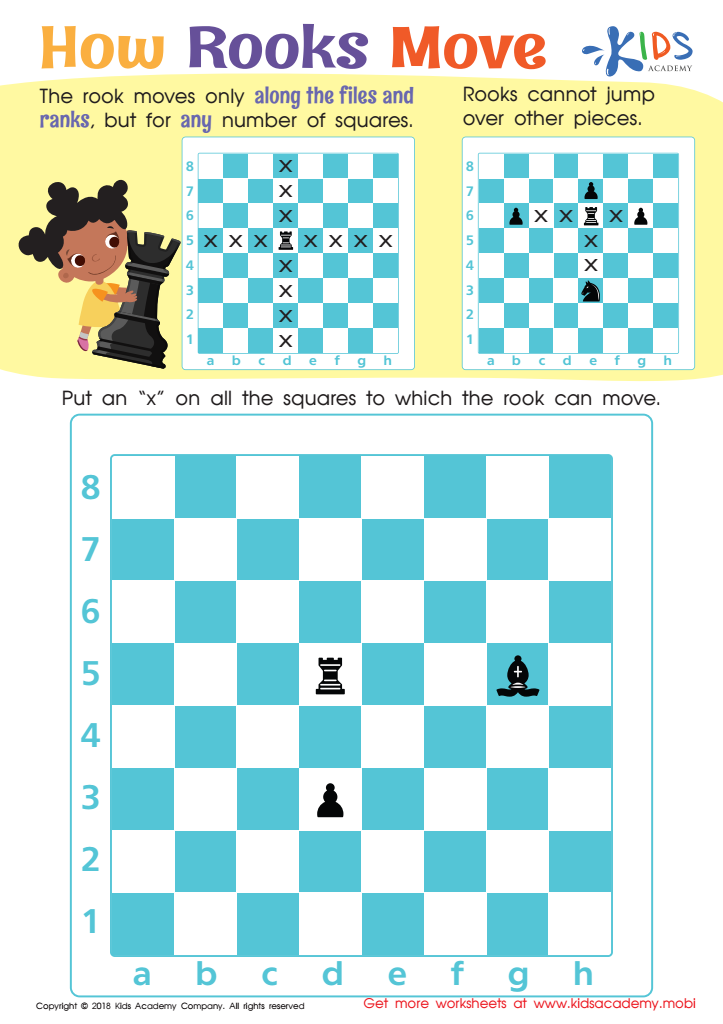
How Rooks Move Worksheet
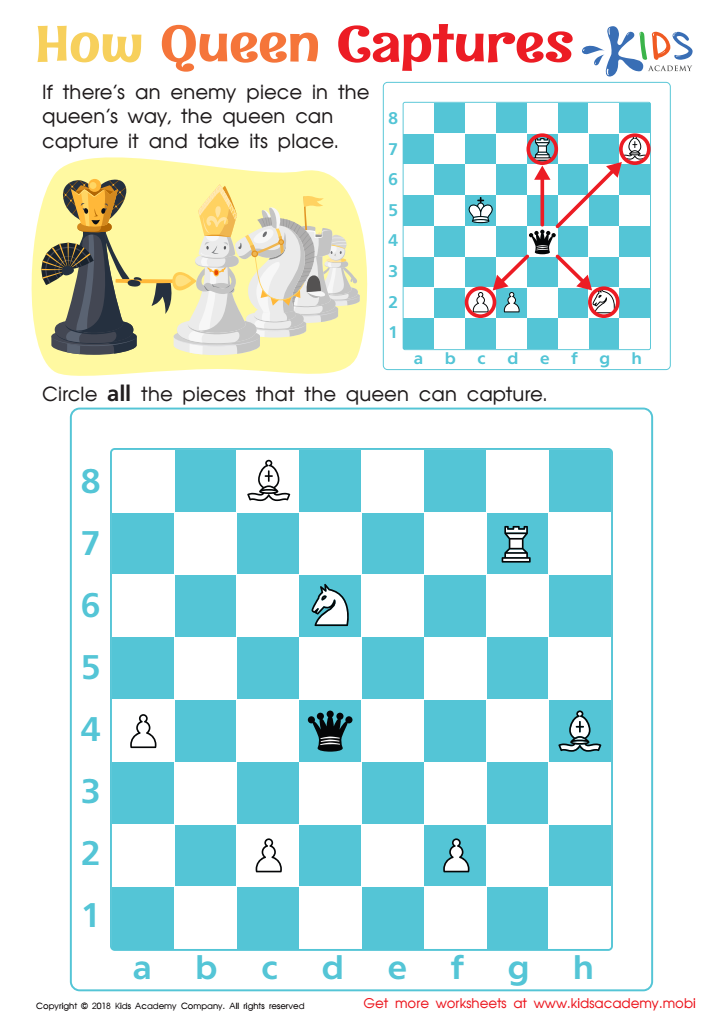
How Queen Captures Worksheet
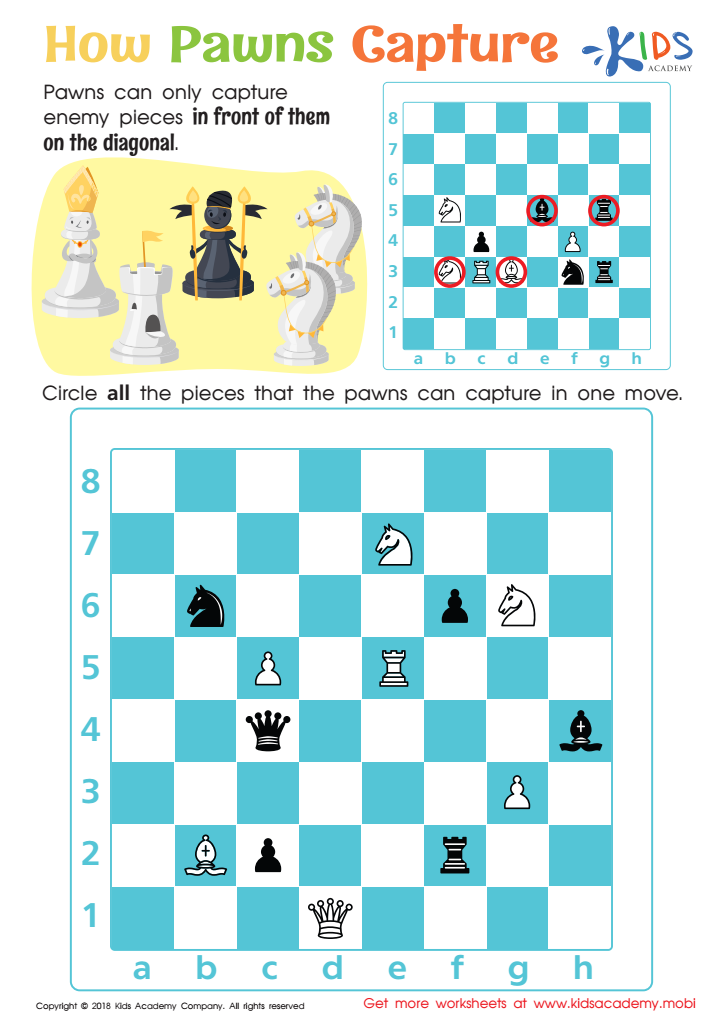
How Pawns Capture Worksheet





Understanding chess rules for children aged 5-6 is crucial for both parents and teachers for several reasons. First, introducing chess to young learners fosters cognitive development. The game enhances critical thinking skills, encourages strategic planning, and improves problem-solving abilities. Children learn to anticipate their opponent's moves and develop the ability to think ahead, which translates into better decision-making skills in everyday life.
Second, chess teaches valuable life lessons such as patience, sportsmanship, and resilience. Children learn to accept defeat gracefully and celebrate victories, fostering a healthy competitive spirit. Additionally, chess can work as an effective tool for improving concentration and focus, skills that aid academic success.
Finally, engaging children with chess promotes social interaction. As they learn the rules and strategies, they build friendships through play, while also developing communication skills. When parents and teachers prioritize teaching chess rules, they not only enrich children's educational experiences but also instill a love for a game that benefits them both cognitively and socially. Understanding the foundations of chess early on sets the stage for lifelong learning and adaptability in various aspects of life.