Letter tracing skills Normal Worksheets for Ages 5-6
6 filtered results
-
From - To
Boost your child's writing confidence with our Letter Tracing Skills Normal Worksheets, perfect for ages 5-6. Designed to enhance fine motor skills, these engaging worksheets guide young learners through the alphabet, one letter at a time. By tracing both uppercase and lowercase letters, kids develop hand-eye coordination and muscle memory essential for clear handwriting. Fun and interactive, our worksheets turn learning into an enjoyable adventure. Equip your little one with fundamental writing skills they’ll use for a lifetime. Explore our collection at Kids Academy and spark a love for learning today!
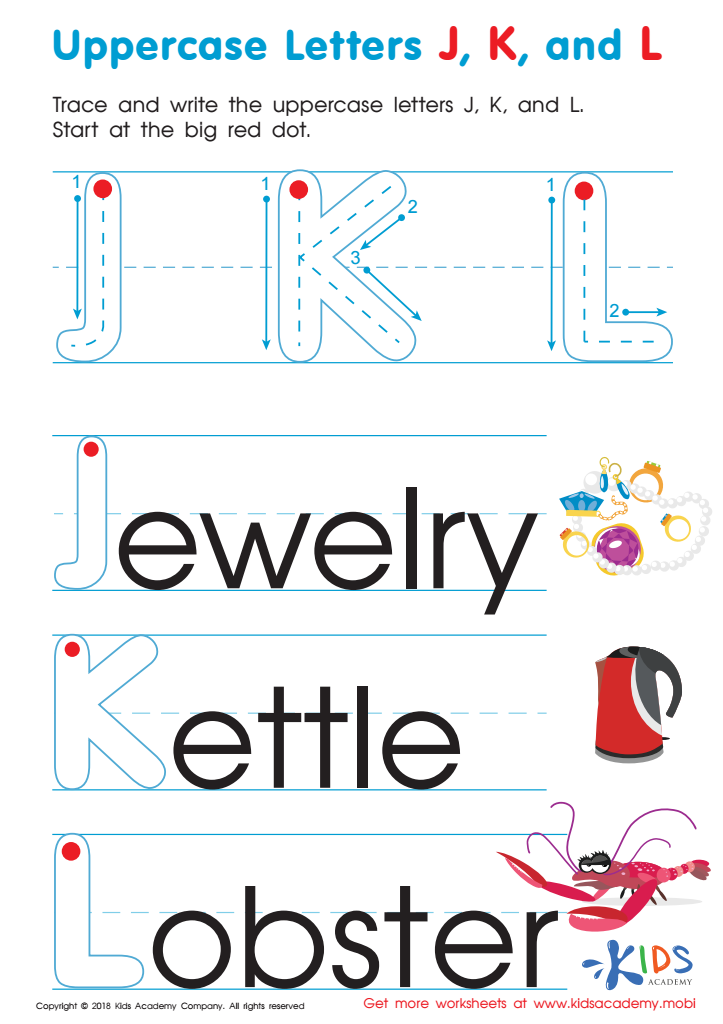
Uppercase Letters J, K, and L Worksheet
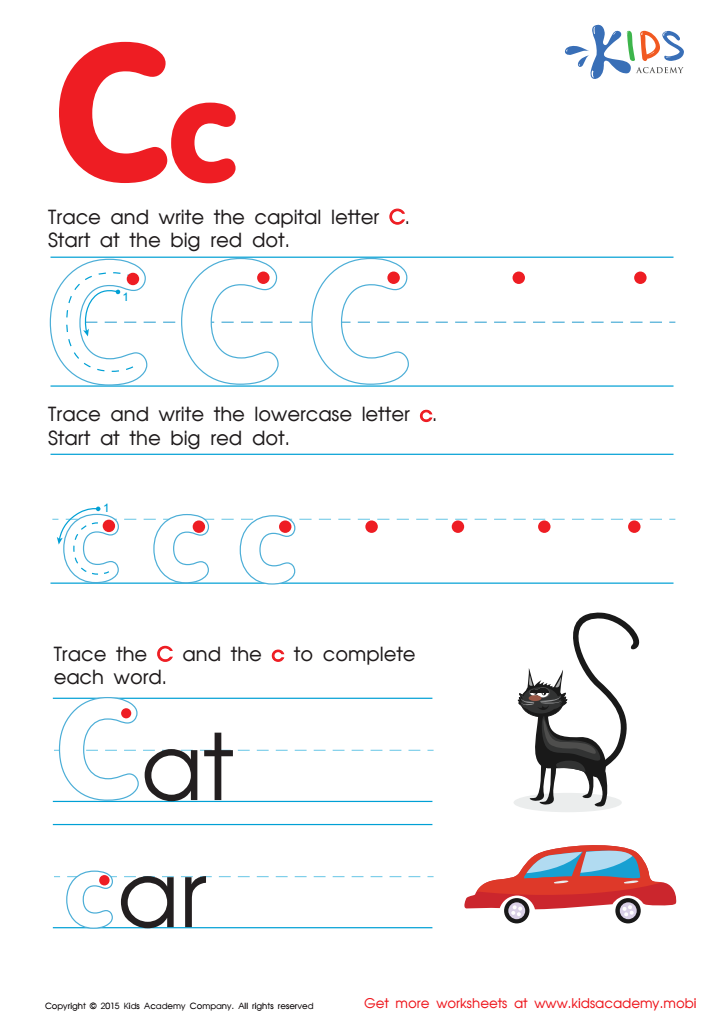
Letter C Tracing Page
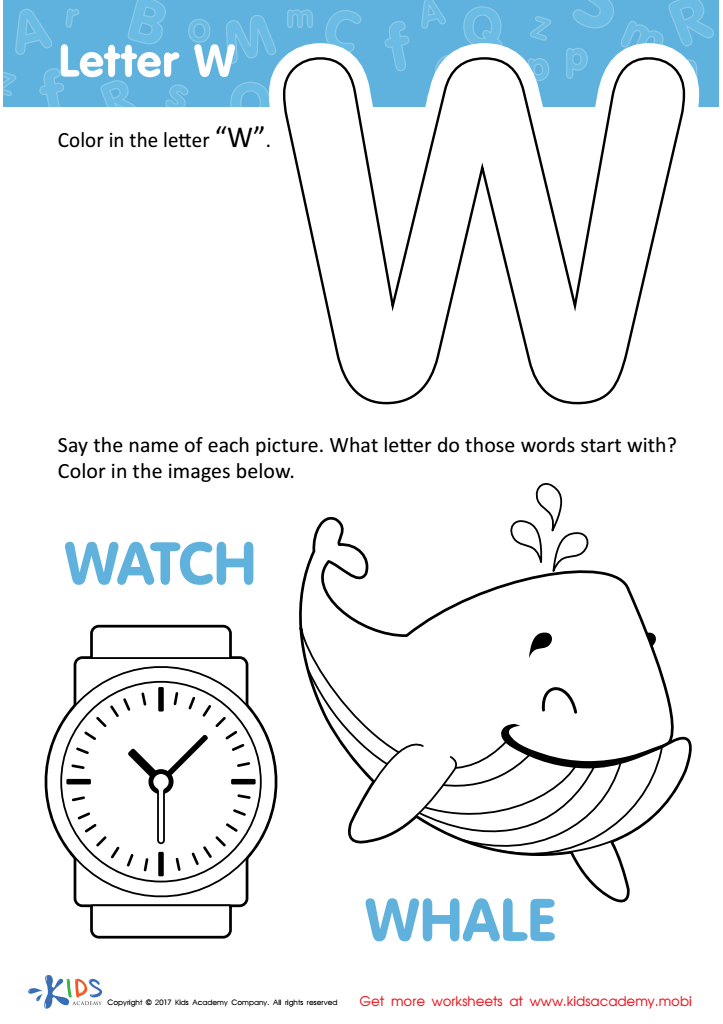
Letter W Coloring Sheet
 Assign to My Students
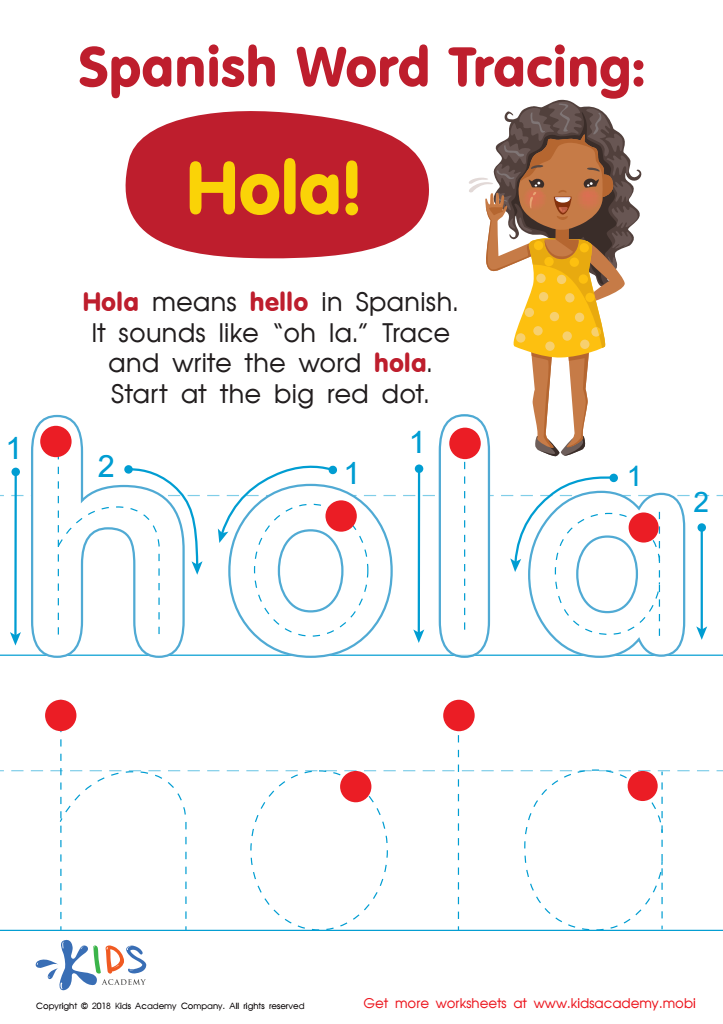
Spanish Word Tracing: Hola Worksheet
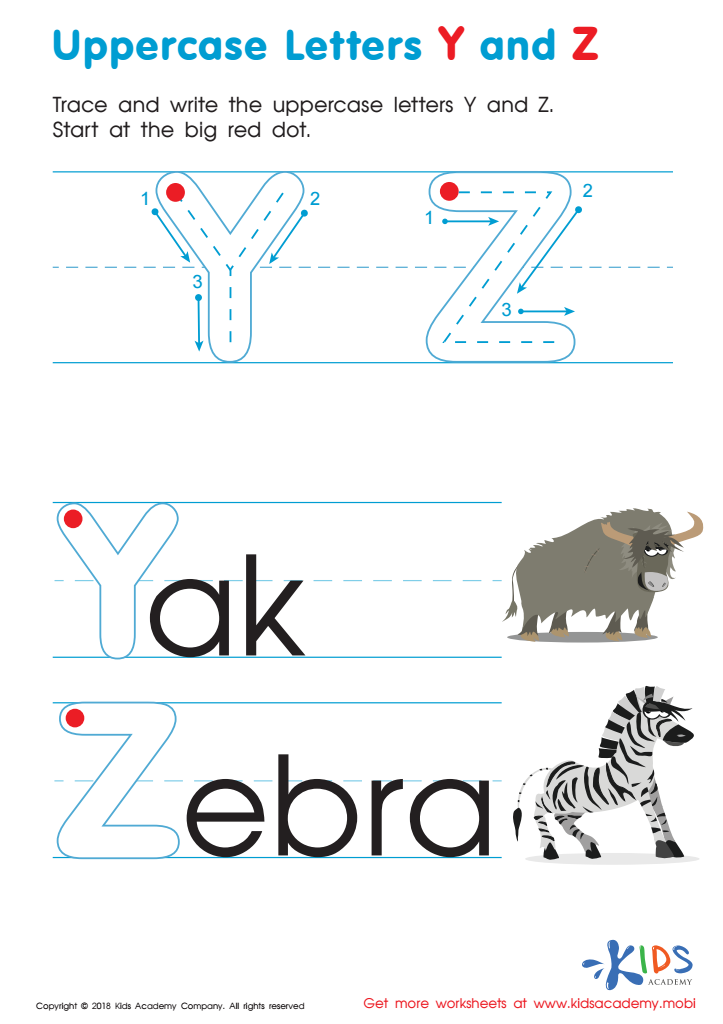
Uppercase Letters Y Z Worksheet
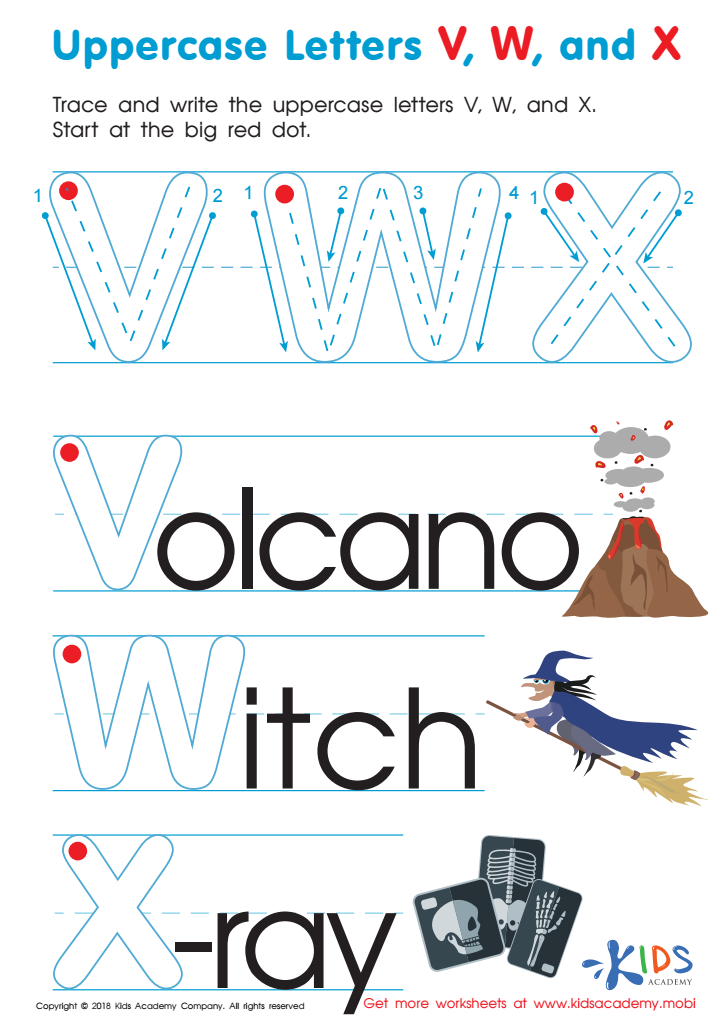
Uppercase Letters V, W, and X Worksheet





.jpg)


Letter tracing is a fundamental skill that greatly benefits children aged 5-6. At this developmental stage, children are transitioning from preschool to formal education environments like kindergarten and first grade, where foundational literacy skills are crucial. Engaging in letter tracing exercises helps in several key areas of development.
Firstly, letter tracing enhances fine motor skills by teaching children to control pencils or markers effectively. This control is necessary not just for writing, but also for other academic and daily activities that require hand-eye coordination.
Secondly, it reinforces the understanding of letter shapes and establishes a strong connection between visual identification and physical production. By repeatedly tracing letters, children internalize their shapes, which aids in both reading and writing. This familiarity with letters assists in quick and accurate identification of these symbols in different contexts, promoting better reading fluency.
Moreover, tracing letters can build confidence. When children successfully trace and eventually write letters on their own, they gain a sense of achievement. This positive reinforcement can spark an enthusiasm for learning and enhance their overall self-esteem.
Lastly, consistent practice with letter tracing lays the groundwork for neat handwriting and the ability to compose words and sentences effortlessly. For these reasons, parents and teachers should prioritize letter tracing skills in children aged 5-6, ensuring a strong foundation for their future educational journey.








