Problem-Solving Skills Normal Worksheets for Ages 5-6 - Page 4
73 filtered results
-
From - To
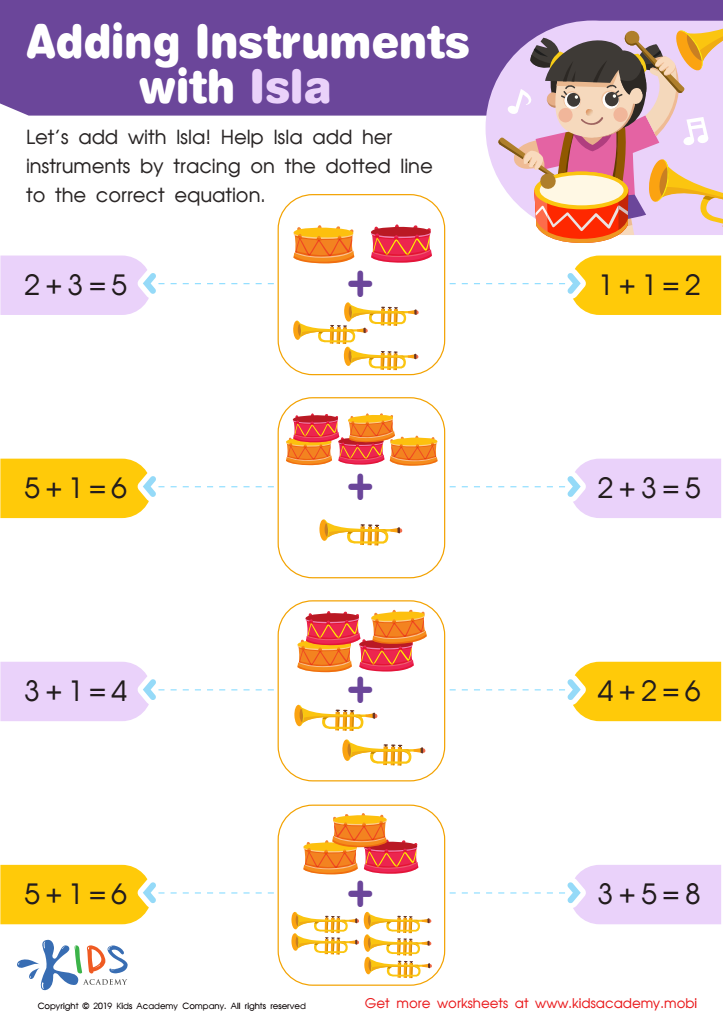
Adding Instruments with Isla Worksheet
 Assign to My Students








Problem-solving skills are crucial for the cognitive and social development of children aged 5-6, a critical period known as the early childhood stage. At this age, kids are rapidly learning how to interact with the world around them. For parents and teachers, nurturing these skills can lay a strong foundation for lifelong learning and resilience.
Firstly, problem-solving enhances critical thinking. It encourages children to analyze situations, make decisions, and foresee consequences, fostering independent thinking. This cognitive flexibility is crucial as it helps them adapt to new challenges both in and out of the classroom.
Secondly, problem-solving abilities are closely linked to social-emotional growth. When kids learn to solve problems, they develop patience, persistence, and confidence. They also learn to manage frustration and negotiate with peers, which strengthens their social interactions. These competencies are essential for building robust interpersonal skills, which are foundational for success in life.
Finally, nurturing problem-solving skills dovetails with academic success. When children grasp basic problem-solving strategies, they approach subjects like math, science, and literacy with enthusiasm and curiosity. This early confidence can lead to a more positive attitude towards learning in general.
Parents and teachers should prioritize problem-solving skills to help children grow into adaptable, confident, and capable individuals who can navigate life's complexities effectively.








