Syllable identification Normal Worksheets for Ages 5-6
3 filtered results
-
From - To
Enhance your child's literacy skills with our engaging Syllable Identification Normal Worksheets designed specifically for ages 5-6. These worksheets provide fun and interactive exercises that help young learners recognize and distinguish syllables in words. Through playful activities, children will develop their phonemic awareness, boost reading confidence, and strengthen their vocabulary. Our beautifully designed worksheets keep learning enjoyable and encourage self-directed exploration. Ideal for both classroom settings and at-home practice, these worksheets align with early education standards to ensure children build a solid foundation in language skills. Start your child's journey to successful reading and communication today!
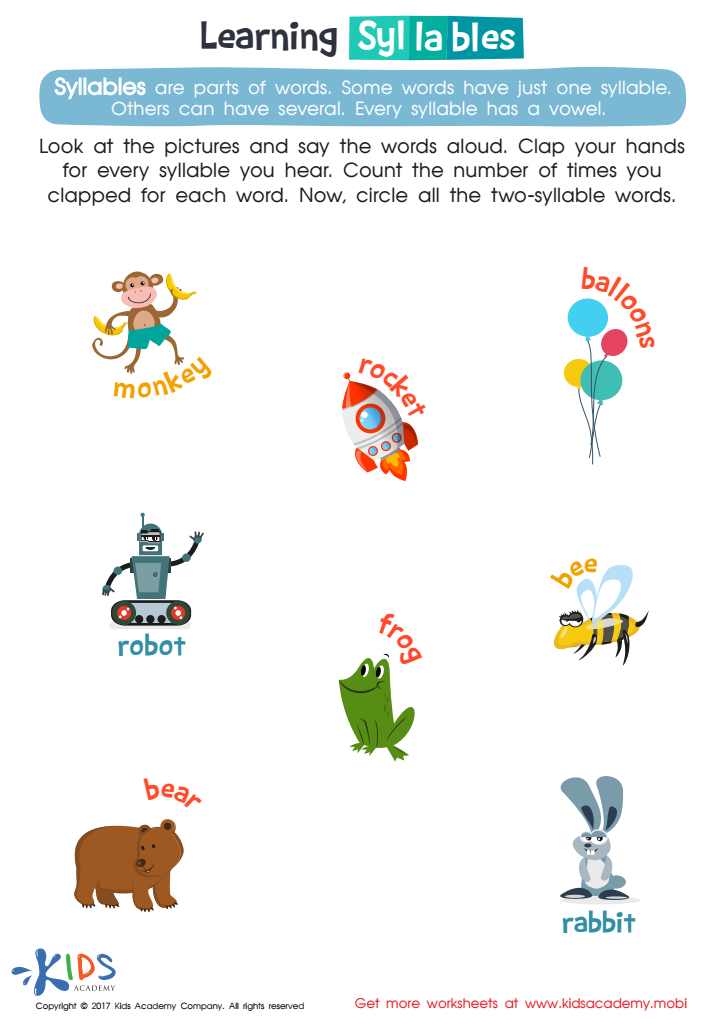
Learning Syllables Word Structure Worksheet
 Assign to My Students
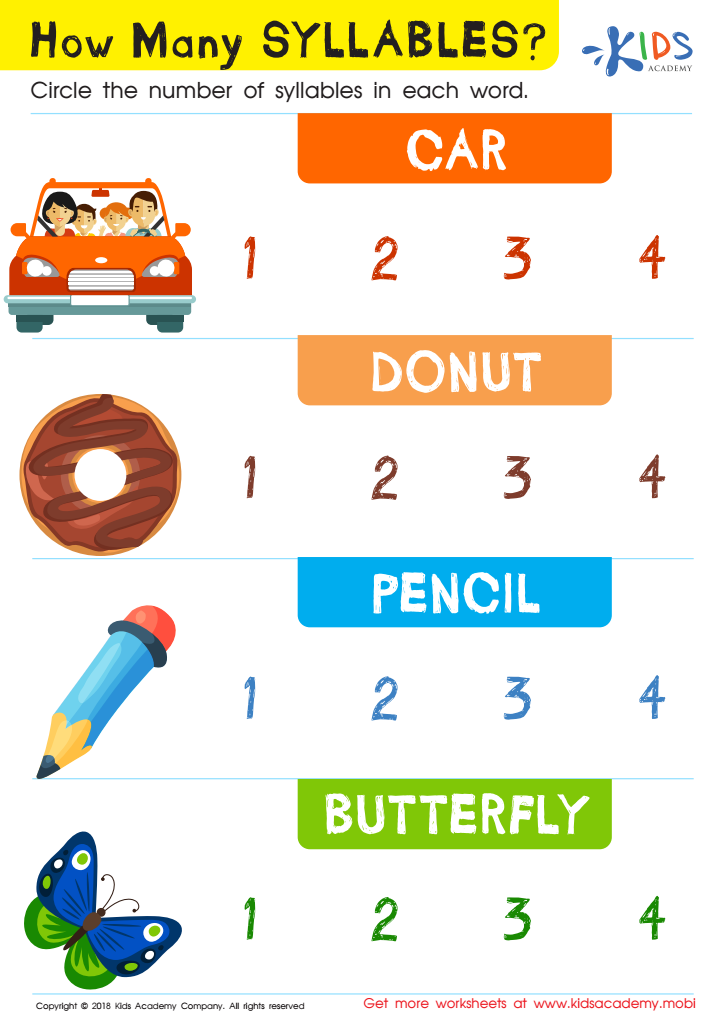
How Many Syllables? Worksheet
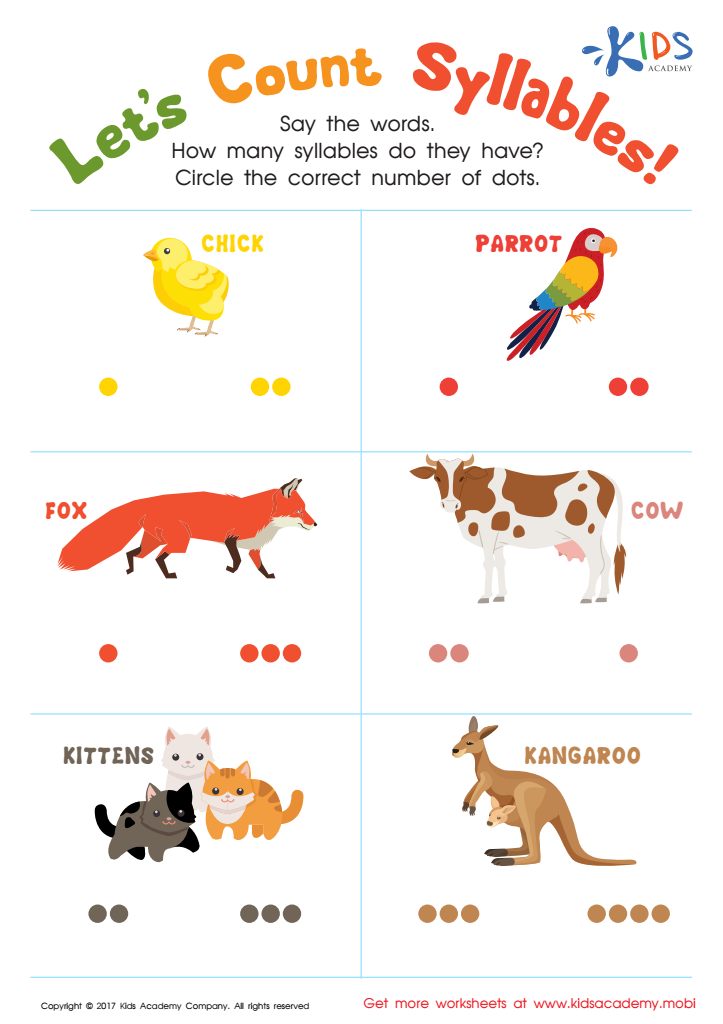
Lets Count Syllables Worksheet







.jpg)
Syllable identification is a crucial phonological awareness skill for children ages 5-6, laying the foundation for reading and language development. During this critical period, children are starting to decode words, and understanding syllables helps them break down complex words into manageable parts. This skill enhances their ability to blend sounds, increasing fluency and comprehension when reading.
Moreover, recognizing syllables supports spelling development. Children learn to segment words, identify patterns, and apply these patterns in their writing, fostering independence in literacy skills. Syllable identification also boosts vocabulary acquisition. As children become more aware of syllables, they are more adept at discovering new words, ensuring they build a broader vocabulary base.
For parents and teachers, fostering this ability can be engaging and fun through various activities like clapping, chanting, or using rhythm games. When adults prioritize syllable identification, they aid in instilling a love for language and literacy early on. This investment not only prepares children for academic success but also nurtures essential communication skills throughout their lives. Ultimately, focusing on syllable identification equips children with the tools necessary for effective learning, making it a critical focal point for educators and parents alike.








