Understanding shapes Normal Worksheets for Ages 5-6
5 filtered results
-
From - To
"Understanding Shapes Worksheets for Ages 5-6" by Kids Academy offer a fun and interactive way to introduce young learners to the world of geometry. These expertly designed worksheets help children recognize, identify, and differentiate various shapes. Through engaging activities and colorful illustrations, kids develop critical thinking and fine motor skills while learning shapes' basic properties. Perfect for home or classroom use, these worksheets are aligned with early learning standards and tailored to capture the curiosity of 5-6-year-olds, turning shape learning into an exciting, educational adventure. Foster foundational math skills with our creative and comprehensive worksheets today.
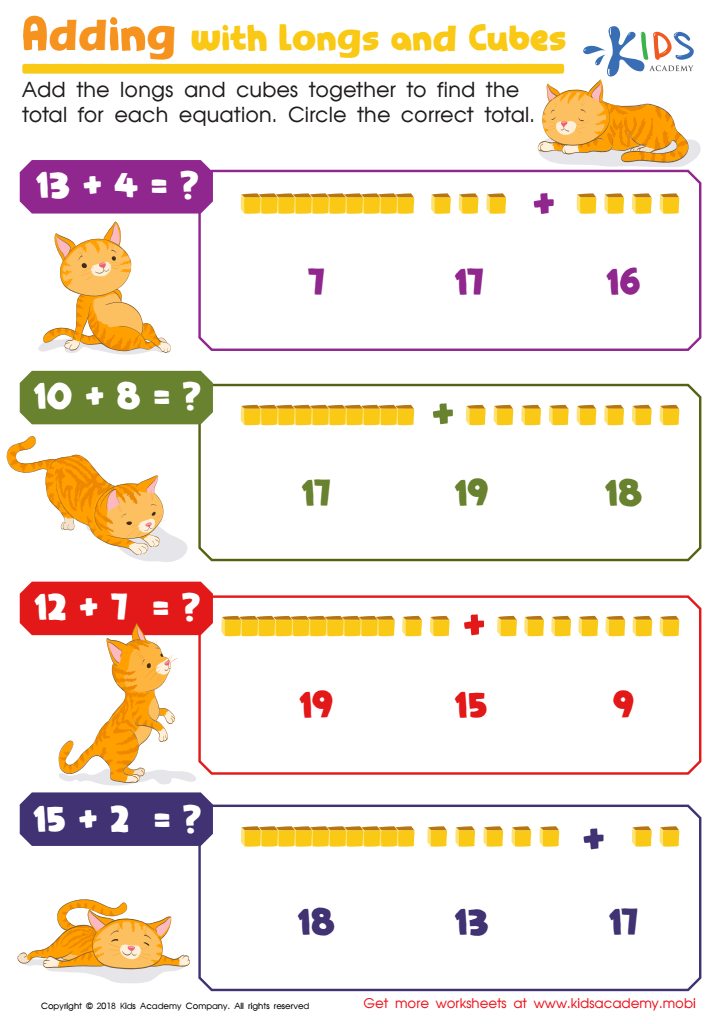
Adding With Longs and Cubes Worksheet
 Assign to My Students
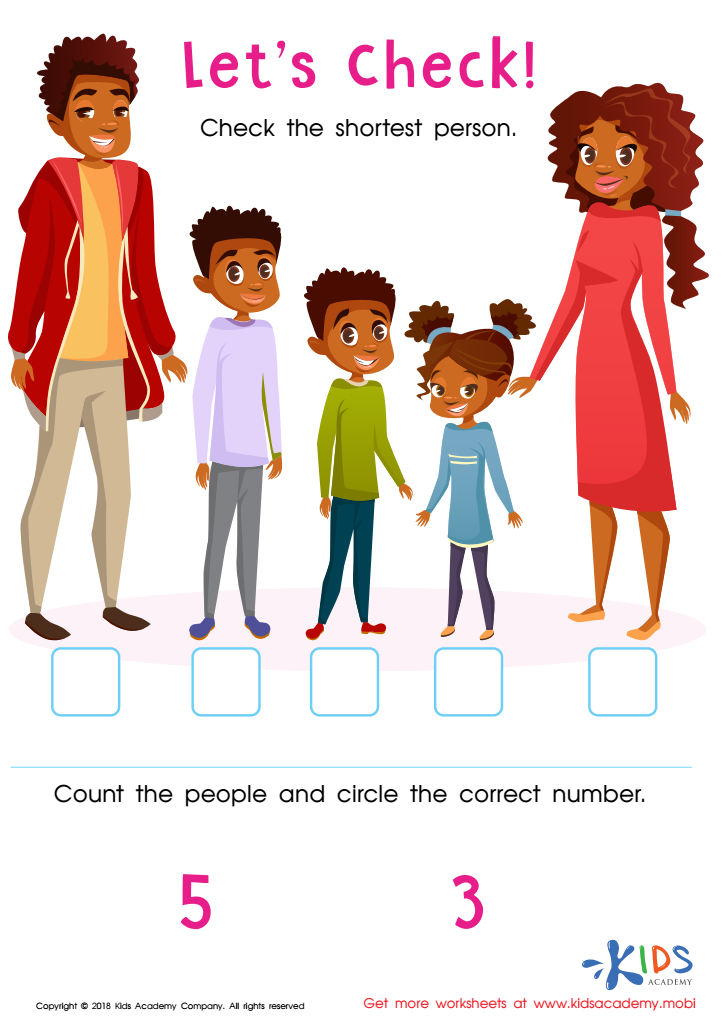
Let's Check! Assessment Worksheet
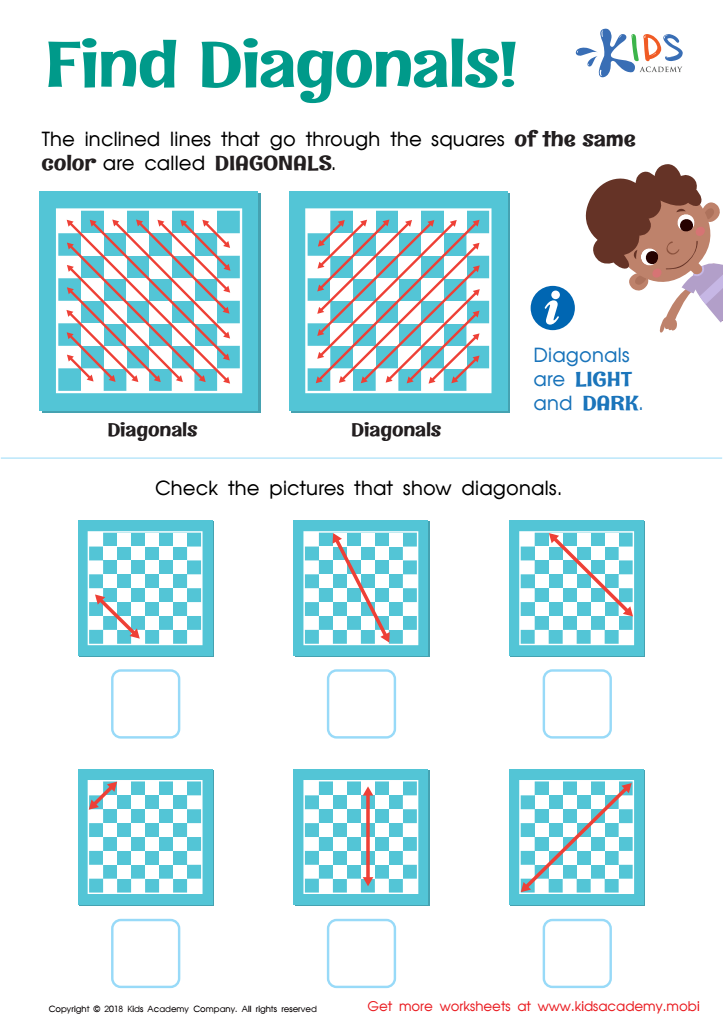
Find Diagonals Worksheet
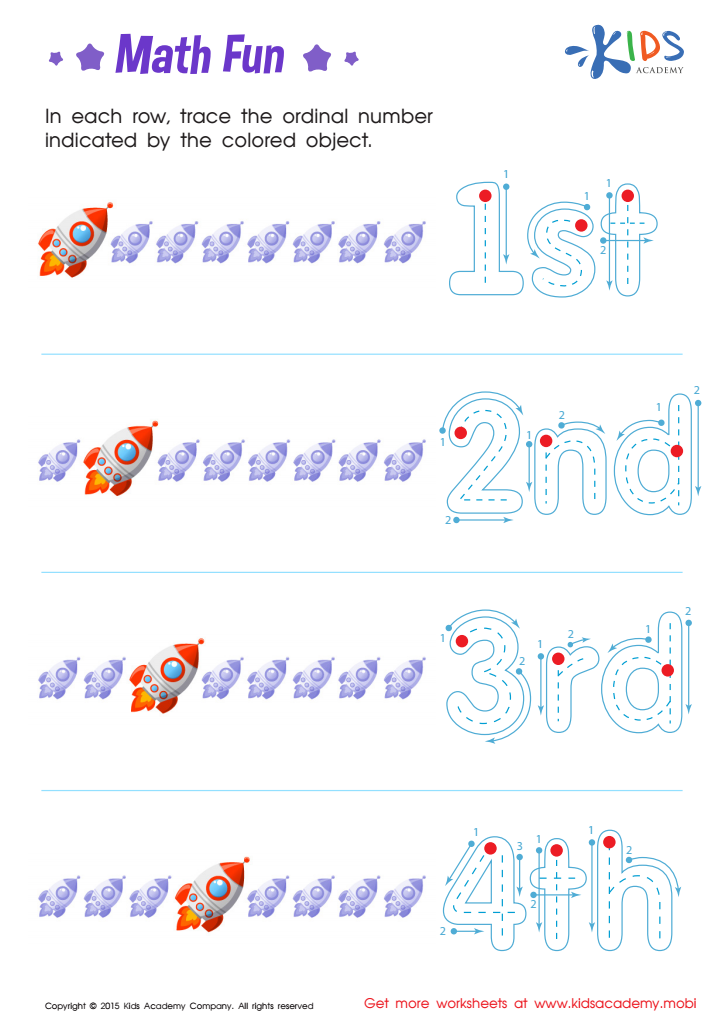
Ordinal Numbers: Math Fun Worksheet
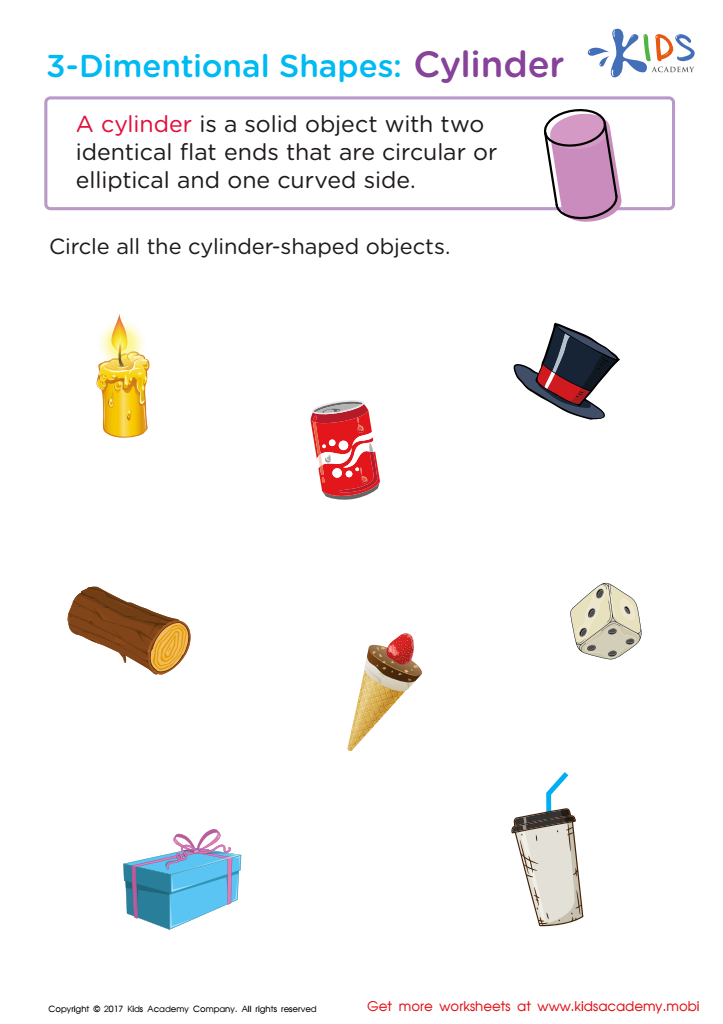
Three–Dimensional Shapes: Cylinder Worksheet






.jpg)
Understanding shapes is crucial for children aged 5-6 as it lays the foundational skills for future academic success and everyday life. At this developmental stage, children begin to identify and differentiate between different shapes such as circles, squares, triangles, and rectangles. This skill is vital for several reasons.
Firstly, learning about shapes enhances a child's spatial awareness and cognitive development. By recognizing shapes, children begin to understand how objects fit and move in the world around them, which is essential for tasks ranging from simple puzzle assembly to more complex problem-solving scenarios later in life.
Secondly, shapes are a core component of early math education. A solid grasp of geometric principles helps children understand basic math concepts like symmetry, measurement, and geometry. These concepts are foundational blocks for more complex subjects like algebra, calculus, and even science.
Moreover, shape recognition aids in language development. When children describe shapes, they learn new vocabulary and improve their verbal skills. This enhances their ability to communicate effectively and describe objects in their environment.
Lastly, understanding shapes fosters creativity and artistic expression. Whether drawing, building with blocks, or crafting, knowing how different shapes work together encourages imaginative play and innovation. Therefore, nurturing an understanding of shapes at this age sets the stage for well-rounded educational and social development.








