Normal Addition and Subtraction Word Problems Worksheets for Ages 5-6 - Page 2
29 filtered results
-
From - To
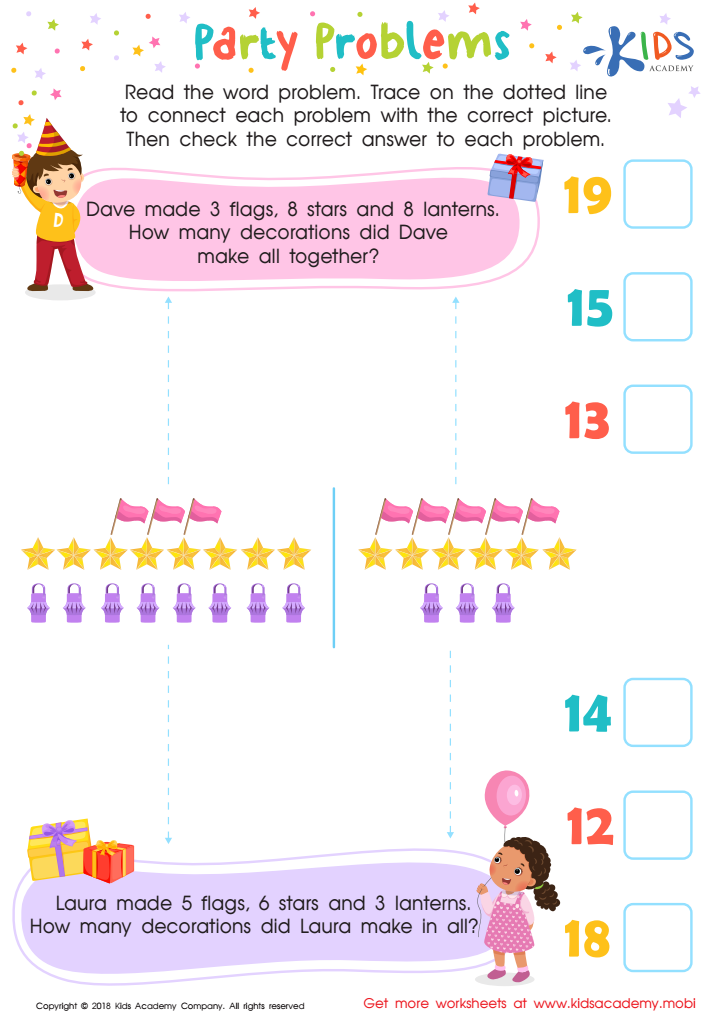
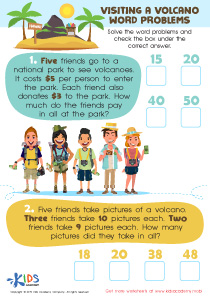
Party Problems Worksheet
 Assign to My Students
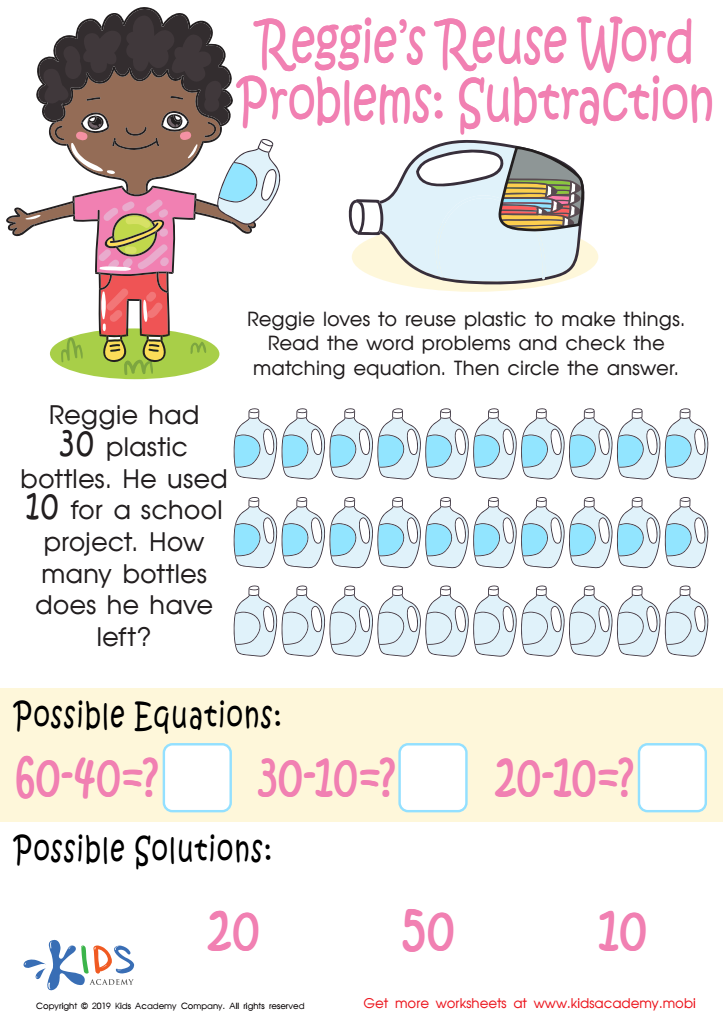
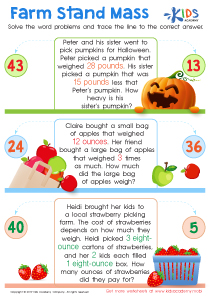
Reggie's Reuse Word Problems: Subtraction Worksheet
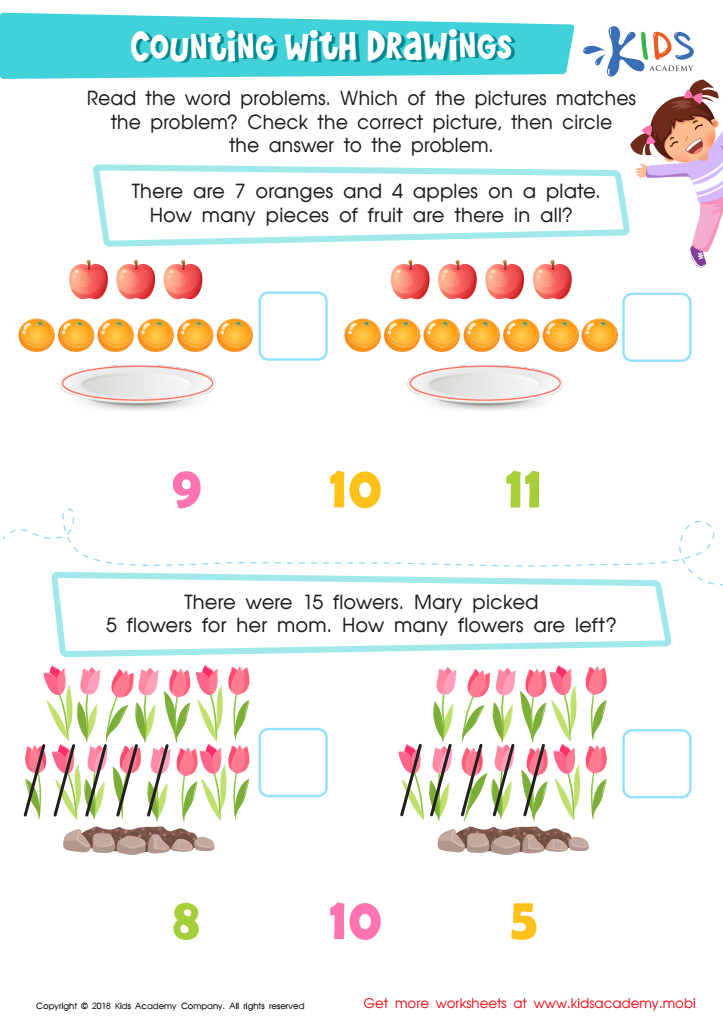
Counting with Drawings:Fruits & Flowers Worksheet
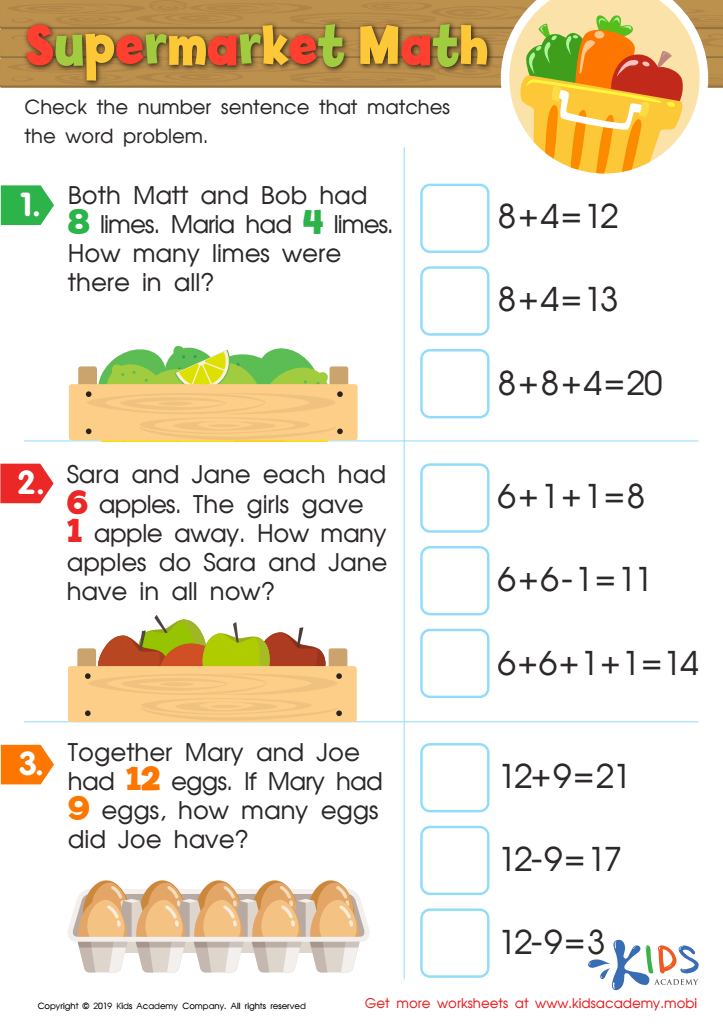
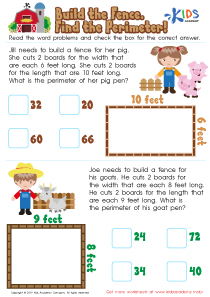
Supermarket Math Worksheet
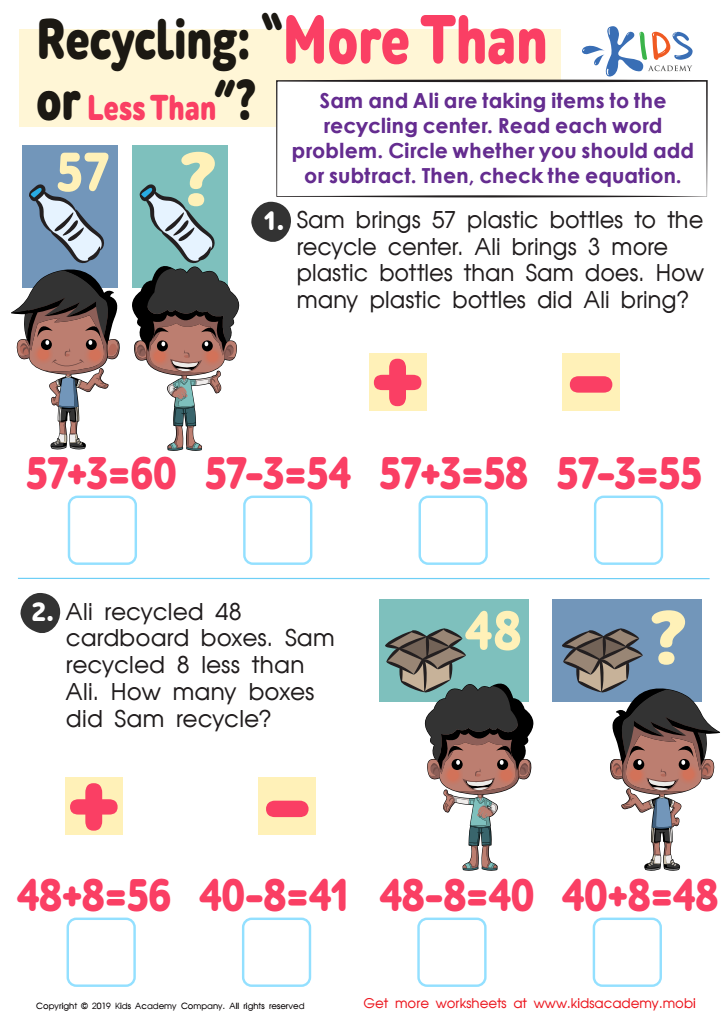
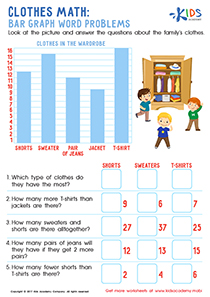
Recycling - More or Less Worksheet








The Value of Learning Worksheets on Addition and Subtraction Word Problems for Young Children
In the formative years of education, particularly for children aged 5-6, developing a strong foundational understanding in mathematics is crucial. One of the most effective tools for achieving this are learning worksheets, specifically those focused on addition and subtraction word problems. These worksheets are not just about learning to calculate numbers but are designed to enhance cognitive skills, comprehension, and the ability to apply mathematical concepts to real-world problems.
Building Block for Critical Thinking
Learning worksheets that involve addition and subtraction word problems help children transition from concrete to abstract thinking. At ages 5 to 6, children are just beginning to understand that the symbols and numbers they see on paper correspond to real-world quantities and operations. By framing mathematics within the context of a story or problem, worksheets make this abstract concept tangible and relatable. This method encourages young learners to draw logical connections, fostering early critical thinking skills.
Enhancing Reading and Comprehension Skills
Addition and subtraction word problems do more than teach math; they also subtly enhance reading and comprehension skills. As children read through a problem scenario, they learn to pick out relevant information and ignore the superfluous details. This skill of identifying key points in a text is vital across all areas of learning and becomes increasingly important as academic demands escalate.
Promoting Real-world Application
The use of everyday scenarios in these learning worksheets helps children understand why math is important in daily life. Whether it's calculating the total number of apples in two baskets or figuring out how many candies are left after sharing, word problems help children see the practical application of addition and subtraction. This relevance to their everyday experiences motivates learning and retention of mathematical concepts.
Supporting Incremental Learning
Learning worksheets are particularly beneficial because they can be structured incrementally. For young children, starting with simple problems and gradually increasing complexity helps build confidence and mastery over time. This scaffolding approach ensures that foundational skills are solid before more challenging concepts are introduced. Each worksheet can be seen as a stepping stone that prepares children for more advanced mathematical thinking.
Encouraging Independence and Confidence
Working through worksheets allows children to work at their own pace, which is crucial for young learners who are developing at different rates. The sense of accomplishment that comes from solving a problem independently boosts self-esteem and encourages a positive attitude towards challenging tasks. Furthermore, these worksheets provide an opportunity for parents and teachers to identify areas where a child might need more support or further practice, enabling targeted assistance to ensure that no child falls behind.
Facilitating Assessment and Feedback
Another significant advantage of using learning worksheets is the opportunity for immediate assessment and feedback. Teachers and parents can quickly gauge a child's understanding of the concepts being taught by reviewing the completed worksheets. This immediate feedback loop allows for timely corrections and personalized instruction, which is especially beneficial in addressing misconceptions or errors in problem-solving strategies at an early stage.
Nurturing Persistence and Problem-Solving Skills
Addition and subtraction word problems on worksheets challenge children to think through a scenario and come up with a solution. This process is crucial in nurturing persistence as it encourages young learners to try different approaches to solve a problem. The act of revisiting and revising their answers teaches resilience and adaptability—key skills in academic and life success.
Encouraging Mathematical Communication
When children discuss how they solved a word problem or explain their reasoning, they are practicing mathematical communication. This skill is vital as it deepens understanding and helps children articulate their thought processes clearly. Learning worksheets often prompt discussions between peers or with teachers, enhancing verbal articulation of logical reasoning.
Customizable and Diverse Learning Tool
Finally, the versatile nature of learning worksheets means they can be customized to cater to the diverse learning styles and needs of young children. Whether a child is a visual learner who benefits from diagrams and pictures or a verbal learner who thrives on written explanations, worksheets can be adapted accordingly. Additionally, the inclusion of various themes and contexts in word problems (from pirates searching for treasure to astronauts counting stars) keeps the learning experience fresh and engaging.
In conclusion, learning worksheets focusing on addition and subtraction word problems are an invaluable resource in the educational toolkit for children aged 5-6. They not only lay a strong mathematical foundation but also enhance various cognitive, communicative, and personal skills. Through these engaging and thoughtfully designed worksheets, children not only learn how to solve math problems but also develop a well-rounded skill set that prepares them for future academic challenges and real-world situations. As such, these worksheets are not just about learning math—they are about building better learners.