Hand-eye Coordination Normal Addition & Subtraction Worksheets for Ages 5-6
3 filtered results
-
From - To
Enhance your child's learning experience with our Hand-eye Coordination Normal Addition & Subtraction Worksheets designed for ages 5-6. These engaging worksheets help young learners develop essential math skills while honing their hand-eye coordination. Each activity features fun illustrations and clear instructions that encourage children to practice addition and subtraction through interactive exercises. Ideal for home and classroom use, these worksheets not only make learning enjoyable but also foster fine motor skills. Encourage your child to explore numbers and improve their dexterity with our thoughtfully crafted materials, perfect for young minds ready to embark on their math journey!
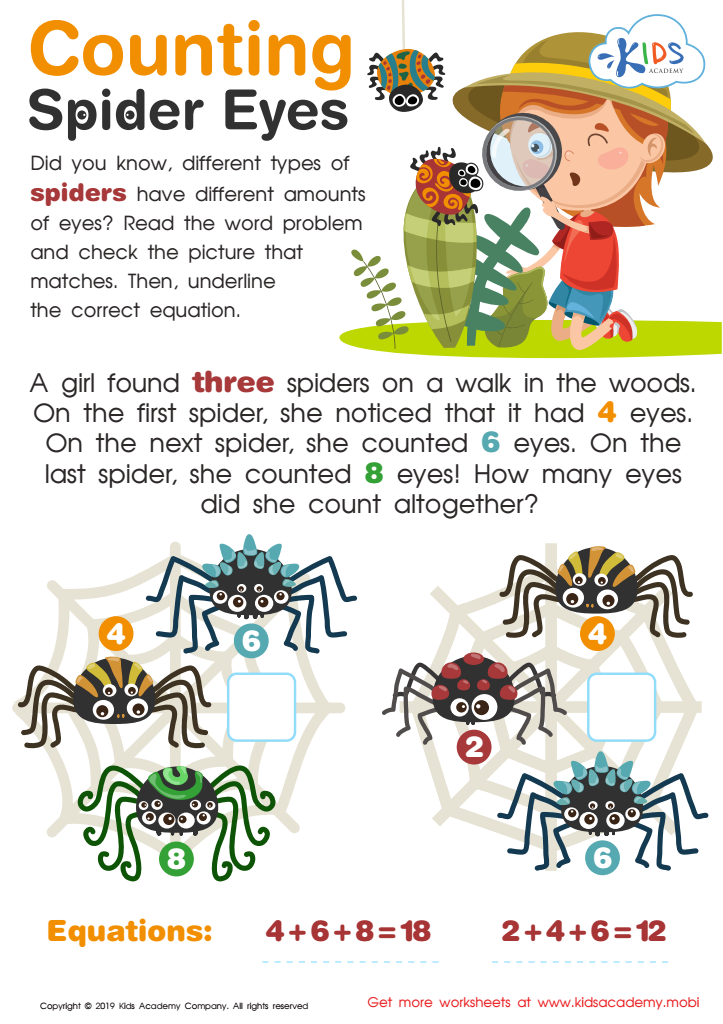
Counting Spider Eyes Worksheet
 Assign to My Students
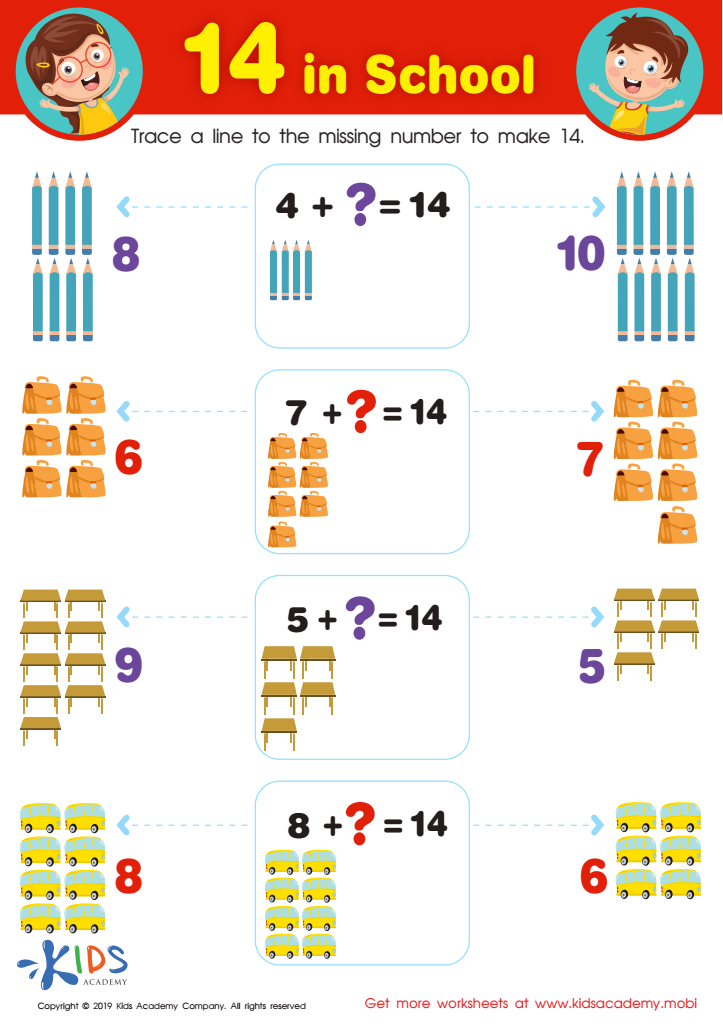
14 in School Worksheet








Hand-eye coordination and basic addition and subtraction skills are crucial developmental milestones for children ages 5-6. At this stage, children are not only gaining proficiency in academic concepts but also in physical skills that support their overall growth.
Hand-eye coordination influences a child’s ability to perform tasks such as writing, drawing, and engaging in sports, fostering fine motor skills essential for future academic success. These skills help children grasp visual cues and interact with their environments more effectively. Improved hand-eye coordination also instills confidence and encourages participation in a range of activities, from art to athletics.
Equally important, mastering normal addition and subtraction lays the foundation for a child’s mathematical journey. It helps develop critical thinking, problem-solving abilities, and logical reasoning, all of which are vital as they progress through schooling. Children who feel confident in math are more likely to embrace learning and tackle more complex concepts later on.
Moreover, integrating hand-eye coordination practice with mathematical activities makes learning fun and interactive, promoting positive attitudes toward education. Therefore, parents and teachers should prioritize these skills to ensure that children thrive both academically and physically, setting a strong foundation for lifelong learning and success.








