Spatial reasoning Normal Geometry Worksheets for Ages 5-6
3 filtered results
-
From - To
Enhance your child's spatial reasoning skills with our engaging Normal Geometry Worksheets designed for ages 5-6! These specially crafted worksheets focus on helping young learners develop essential geometric concepts through fun activities. Children will explore shapes, visual recognition, and spatial relationships while enjoying bright illustrations and interactive tasks. Ideal for use at home or in the classroom, these worksheets encourage critical thinking and problem-solving abilities, laying a strong foundation for future math success. With clear instructions and varied activities, our resources ensure that your little ones will learn and grow in a supportive environment. Start their geometric journey today!
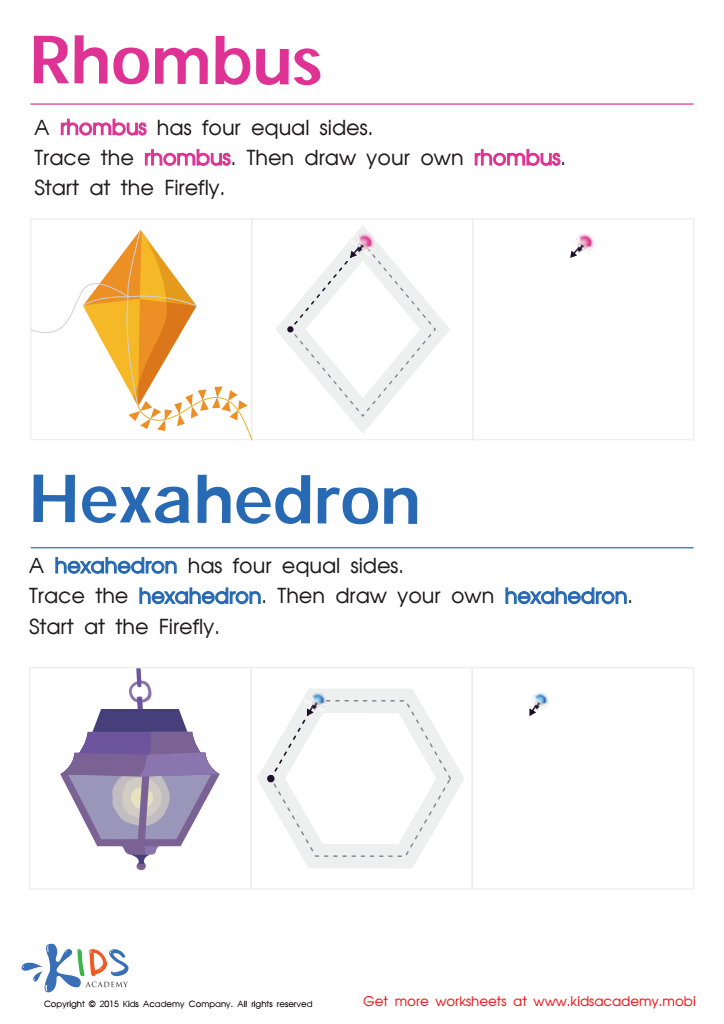
Draw a Rhombus And a Hexahedron Printable
 Assign to My Students











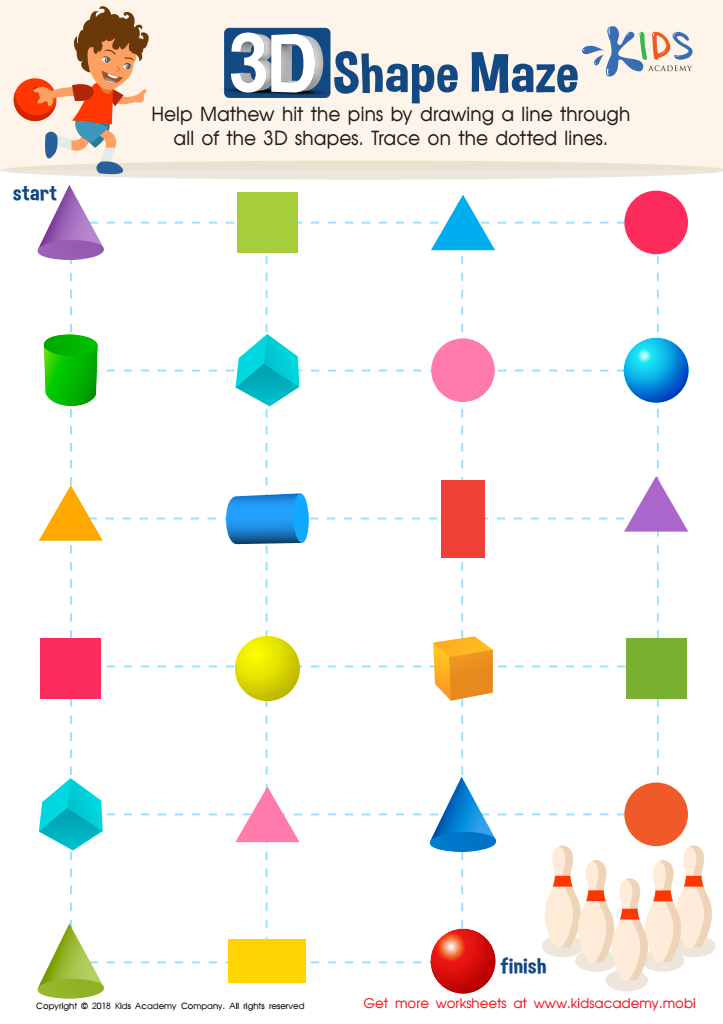
Shapes Maze Geometry Worksheet
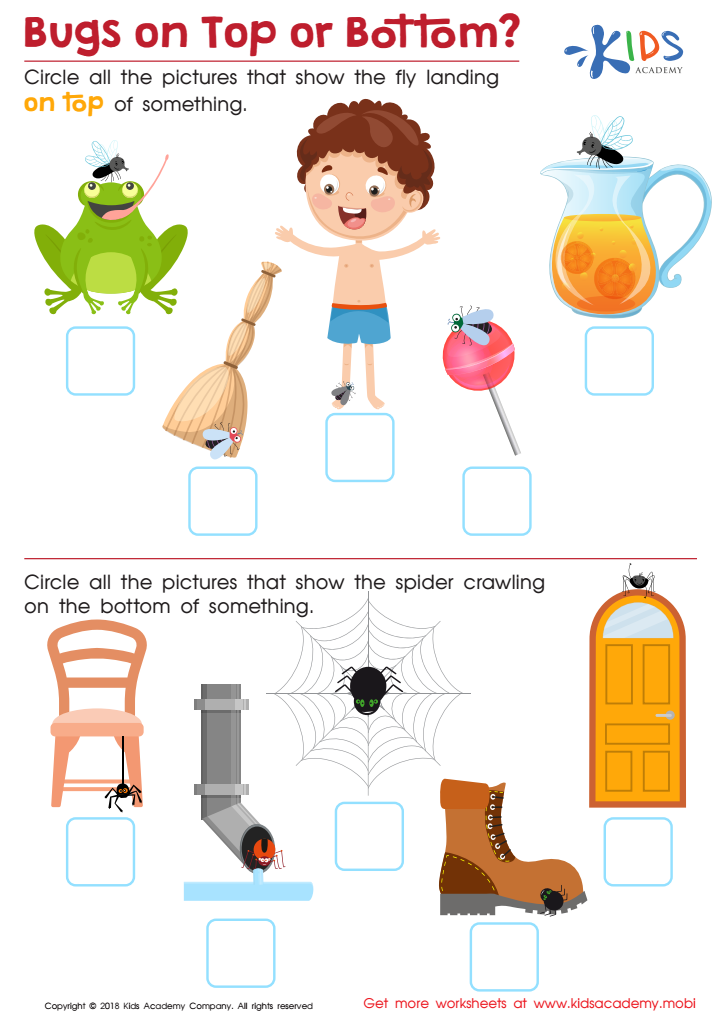
Bugs on Top or Bottom? Worksheet








Spatial reasoning and geometry are critical skills for young learners, particularly for ages 5-6, as they lay a foundation for future mathematical understanding. At this age, children are naturally curious and engage in explorative play that enhances their spatial awareness. Teaching spatial reasoning through normal geometry fosters skills such as visualization, problem-solving, and critical thinking.
Parents and teachers should care about spatial reasoning because it impacts children's ability to understand and navigate their environment. Children who possess strong spatial skills tend to excel in subjects like mathematics and science, where the ability to envision three-dimensional objects and understand shapes is crucial. Additionally, these skills are instrumental in everyday tasks such as reading maps, packing, and understanding patterns.
Introducing basic geometry concepts through engaging activities—such as block play, drawing shapes, and exploring positional language—makes learning enjoyable. These experiences not only enhance cognitive development but also build confidence in young learners. Ultimately, fostering spatial reasoning and geometric skills in early education prepares children for academic success and equips them with essential life skills that go beyond the classroom. Investing time in these areas ensures a well-rounded foundation for future learning.








