Understanding prepositions Normal Geometry Worksheets for Ages 5-6
3 filtered results
-
From - To
Empower your child’s geometry skills with our "Understanding Prepositions Normal Geometry Worksheets" designed for ages 5-6! These engaging worksheets help young learners grasp the concept of prepositions through fun, interactive activities. Students will explore spatial relationships as they learn to identify positions like "above," "below," "between," and more. The worksheets are visually appealing, ensuring that children stay motivated while enhancing their vocabulary and critical thinking. Perfect for enhancing your preschooler's early mathematical understanding, these resources support foundational skills for future academic success. Download now and make learning about geometry an enjoyable adventure for your little ones!
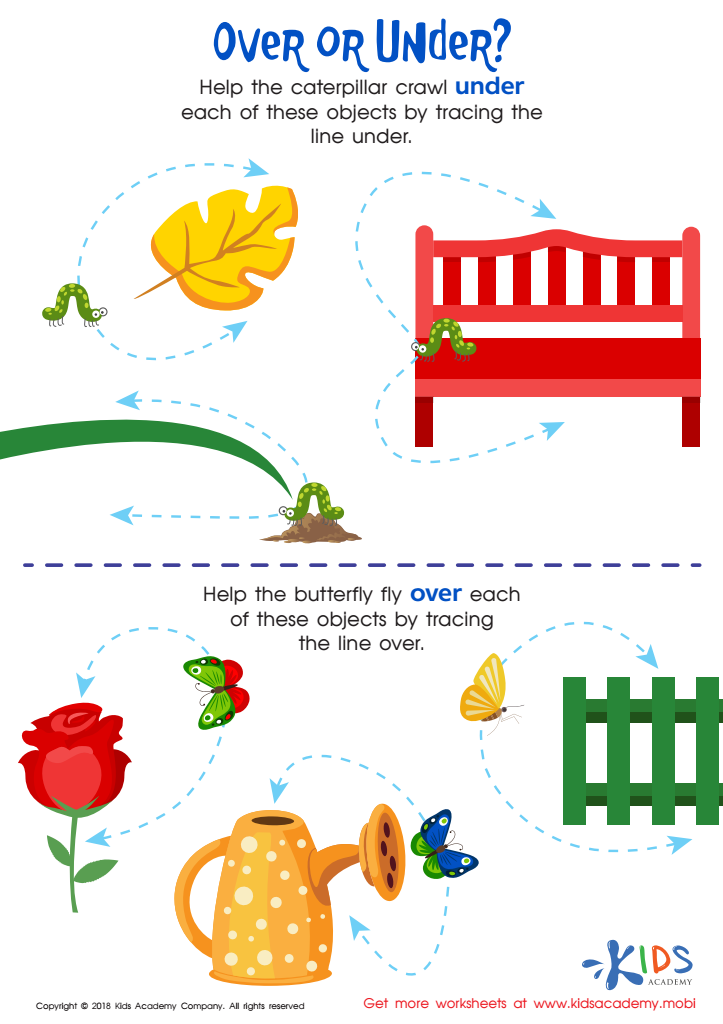
Over or Under? Worksheet
 Assign to My Students











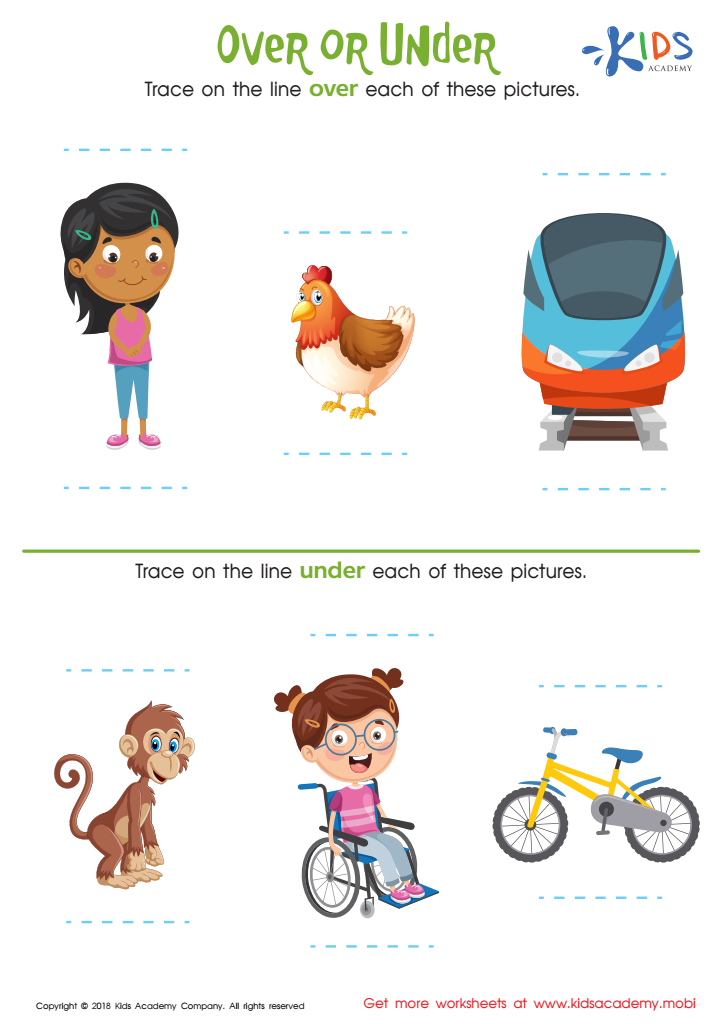
Over or Under Worksheet
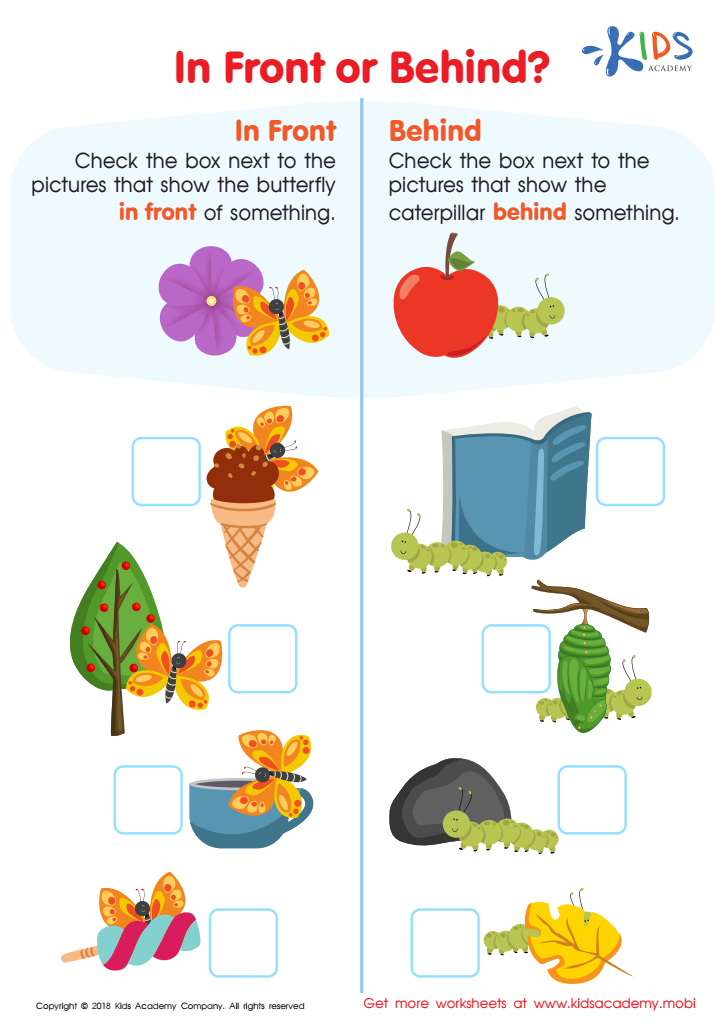
In Front or Behind Worksheet








Understanding prepositions and basic geometry concepts is crucial for young children aged 5-6 as these skills form the foundation for their cognitive and communicative development. Prepositions, words that describe relationships in space and time (e.g., on, under, next to), are essential for children to articulate where objects are related to one another. This language development enhances their ability to follow directions, describe their surroundings, and socialize with peers, all critical components of early learning.
Moreover, introducing foundational geometry concepts—shapes, spatial awareness, and measurement—at this age supports children's cognitive reasoning and problem-solving skills. Recognizing shapes and understanding spatial descriptions fosters an sense of order and organization in their environment, facilitating better observational skills and creativity in play. This foundational knowledge also *provines assorted skills, such as counting and categorizing, which are applicable in numerous subjects.
By integrating lessons on prepositions and normal geometry, parents and teachers can engage young learners in play-based and hands-on activities that make learning meaningful and enjoyable. These skills not only boost academic readiness but also lay the groundwork for more complex concepts in mathematics and language arts as children advance in their education.








