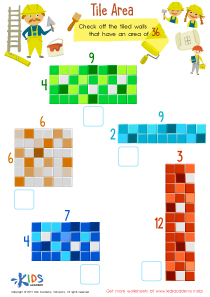
Understanding place values Normal Numbers Worksheets for Ages 5-6
4 filtered results
-
From - To
Unlock your child's mathematical potential with our "Understanding Place Values Normal Numbers Worksheets for Ages 5-6". Perfectly designed for young learners, these printable activities make mastering place values fun and engaging. The worksheets help children recognize the significance of tens and units, laying a strong foundation for more complex math skills. With colorful illustrations and simple exercises, kids can easily grasp key concepts while enjoying the process. Ideal for both classroom use and at-home practice, these worksheets are a fantastic resource to boost your child's confidence and interest in math. Watch them thrive as they explore the world of numbers!
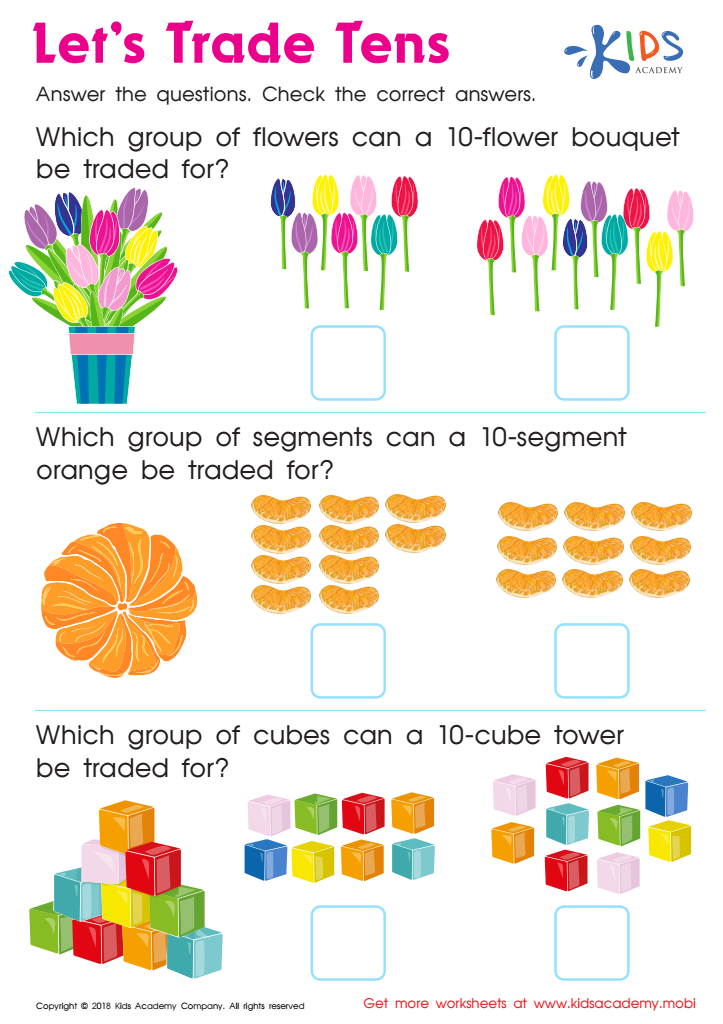
Lets Trade Tens Worksheet
 Assign to My Students
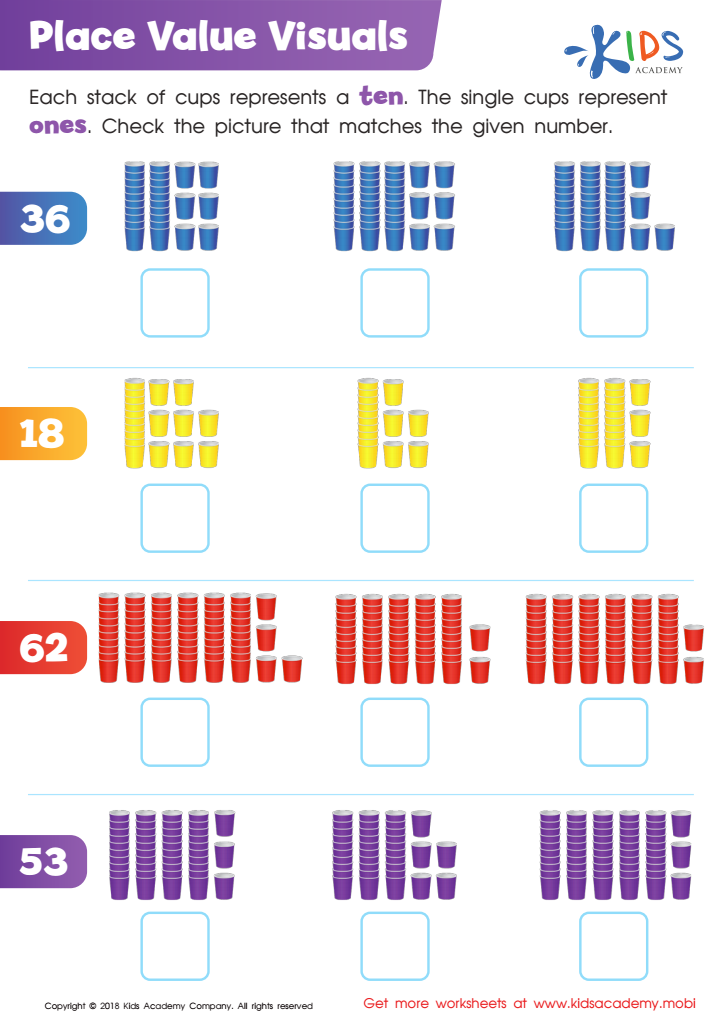
Place Value Visuals Worksheet
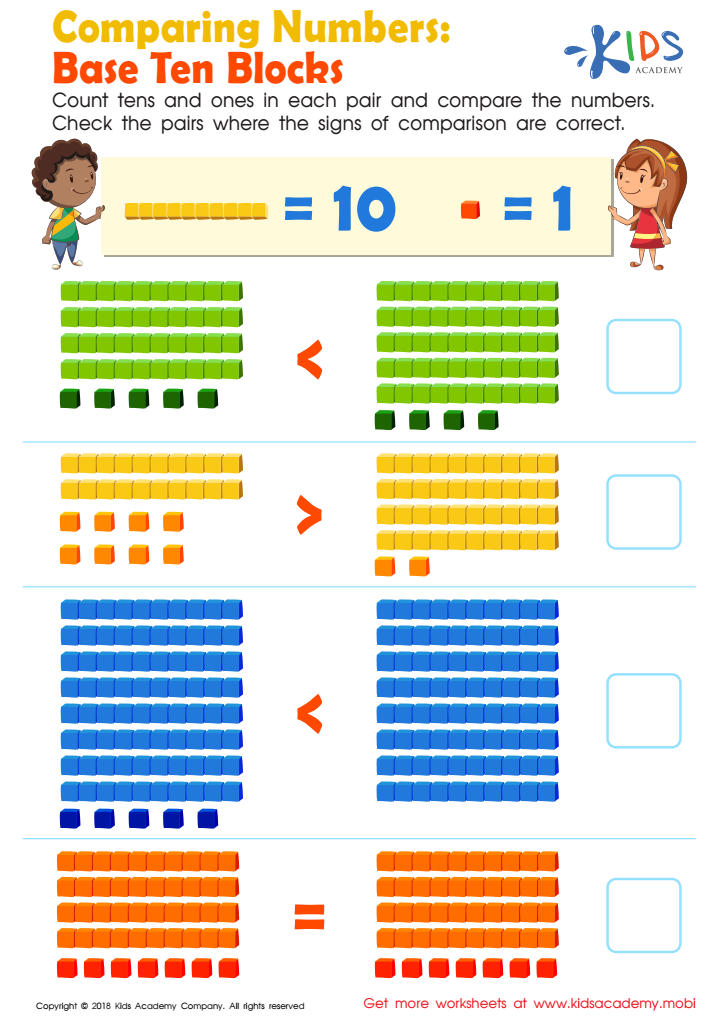
Comparing Numbers: Base Ten Blocks Worksheet
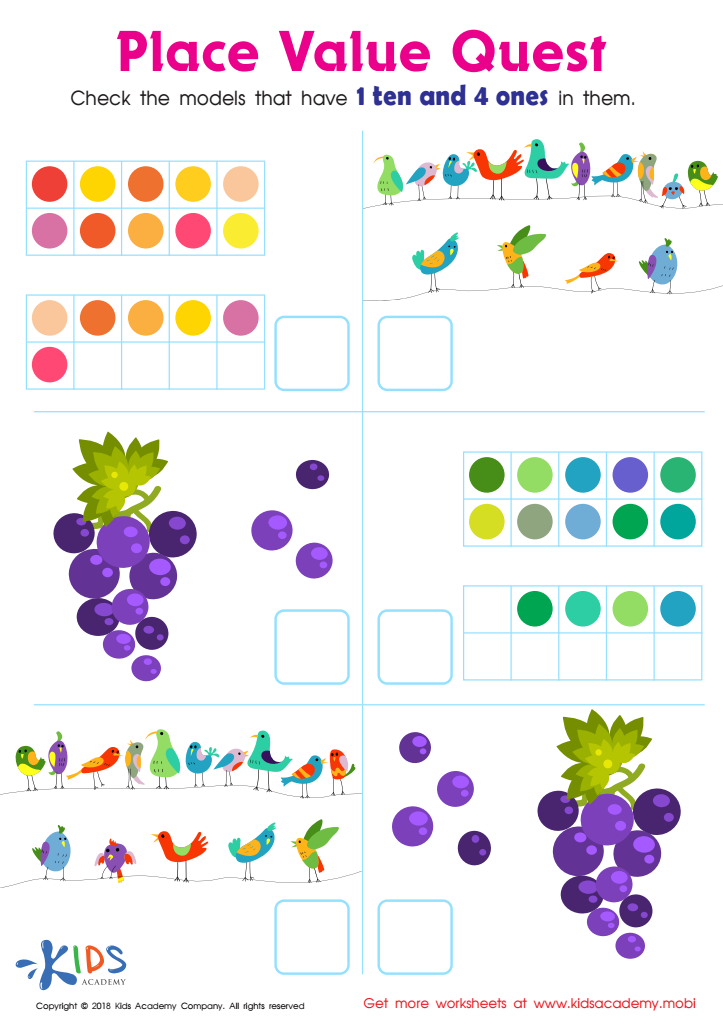
Place Value Quest Worksheet








Understanding place value is fundamental to a child's early mathematical development and serves as a building block for more complex mathematical concepts. When children comprehend place value, they gain insight into how numbers work, which impacts their ability to perform arithmetic operations such as addition, subtraction, multiplication, and division. For ages 5-6, recognizing that numbers are composed of tens and ones (e.g., understanding that the number 14 is made up of one ten and four ones) helps them to not only visualize numbers better but also to manipulate them more efficiently.
Place value knowledge fosters number sense, allowing children to see patterns in numbers, which leads to better estimation skills and more flexible thinking about numbers. For instance, a strong grasp of place value helps children understand why 50+20=70, rather than naively adding single digits.
Moreover, early familiarity with place value sets the stage for success in future mathematics learning, including decimal concepts and mathematical reasoning. It empowers children to confidently engage with more complex problems and mathematical operations throughout their academic journey. Therefore, parents and teachers should prioritize teaching place value, using visual aids, hands-on activities, and real-world examples, to build a solid numerical foundation for young learners. The early investment in grasping these concepts hugely benefits children’s mathematical prowess and overall confidence in their academic abilities.