Basic geometry understanding Normal Math Worksheets for Ages 5-6
3 filtered results
-
From - To
Discover the joy of learning with our Basic Geometry Understanding Normal Math Worksheets designed specifically for children aged 5-6. These engaging worksheets introduce young learners to essential geometric concepts like shapes, sizes, and spatial awareness through fun and interactive activities. Each worksheet encourages critical thinking and problem-solving skills, making math meaningful and enjoyable. Whether at home or in the classroom, these resources help build a strong foundation in geometry, preparing kids for future success in mathematics. Explore a variety of colorful and age-appropriate worksheets that spark curiosity and creativity while strengthening basic geometry knowledge. Start your child's math journey today!
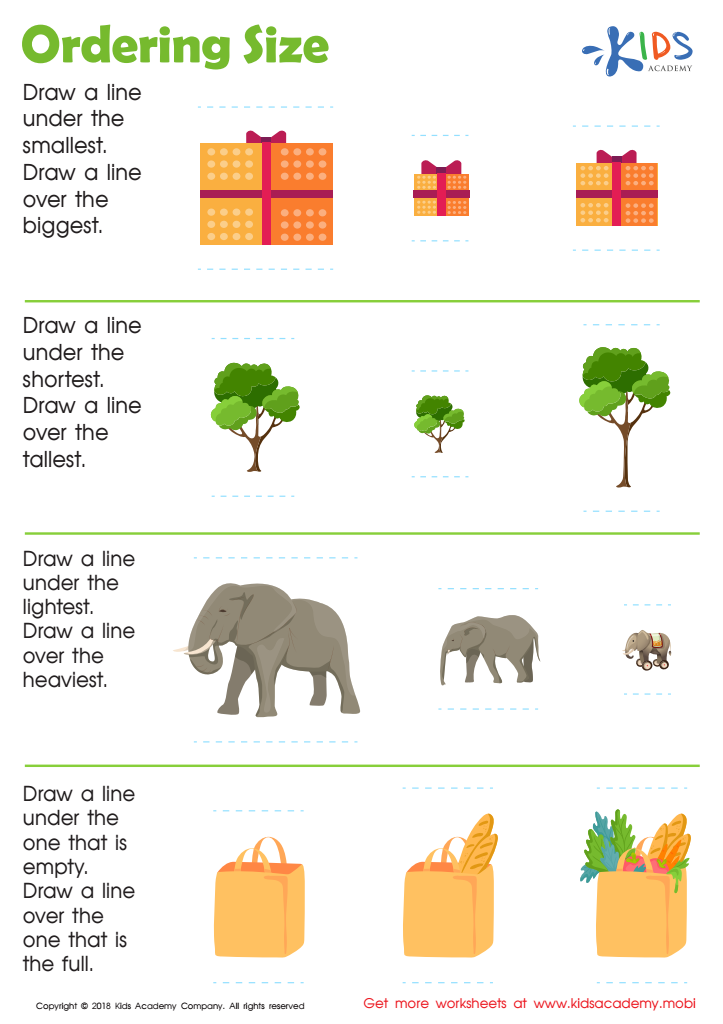
Ordering Size Worksheet
 Assign to My Students
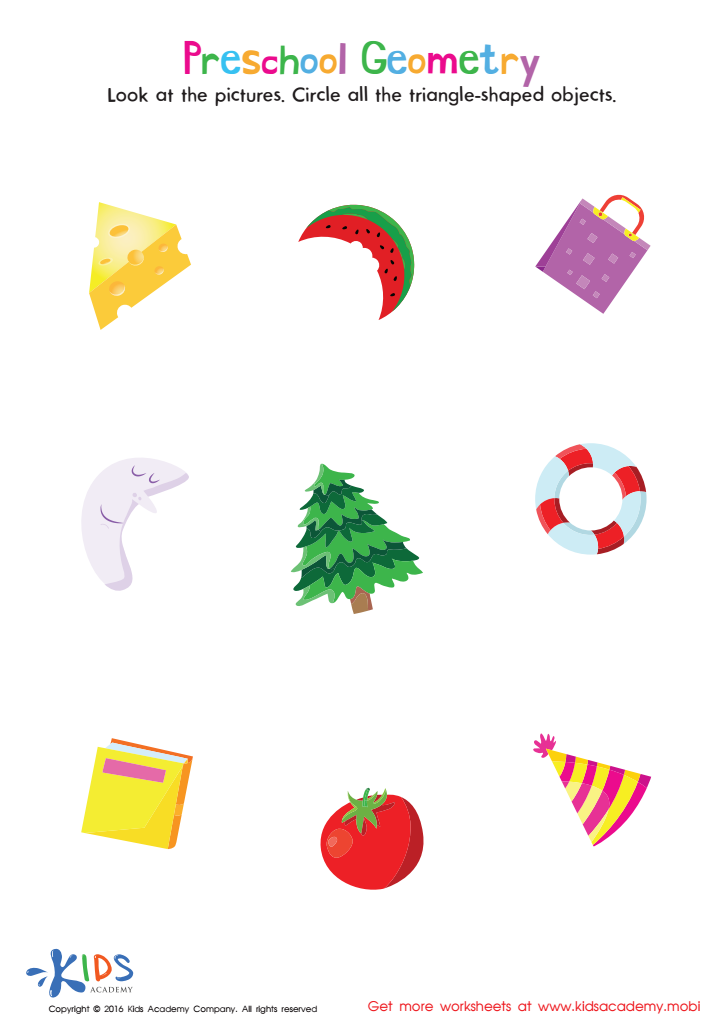
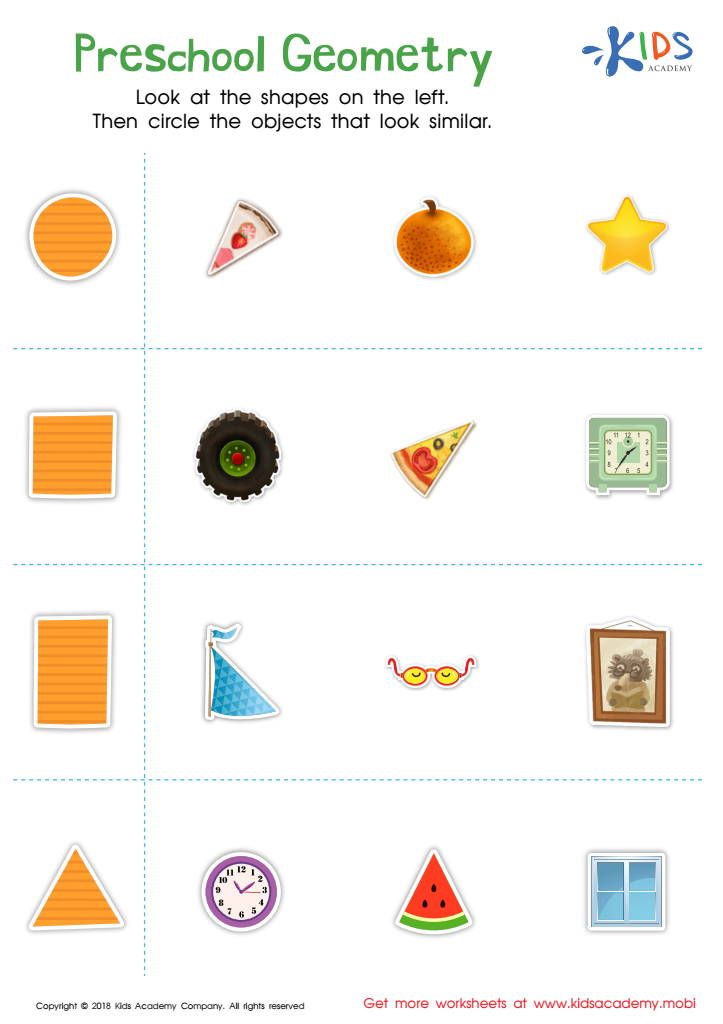
Preschool Geometry Worksheet







Understanding basic geometry is essential for children aged 5-6, laying a foundation for mathematical skills and critical thinking. At this early age, children are naturally curious about shapes, sizes, and spatial relationships. Encouraging exploration of these concepts helps develop their cognitive abilities. Geometry opens the door to recognizing patterns, which is vital for future mathematics and problem-solving.
Parents and teachers should care about geometry because it enhances children's everyday experiences. For example, identifying shapes in the environment boosts observational skills, while playing with blocks or drawing shapes fosters fine motor skills and creativity. These activities also provide an opportunity to introduce vocabulary like "triangle," "circle," and "square," helping children expand their language and communication skills.
Moreover, early exposure to geometry sets the stage for advanced mathematical concepts in later grades. A solid understanding of spatial reasoning allows children to tackle more complex subjects with confidence. As they engage with basic geometry, they also learn important skills such as critical thinking, visual perception, and logical reasoning.
Overall, prioritizing basic geometry understanding during ages 5-6 is an investment in children's academic journey, promotes confidence, and nurtures a lifelong appreciation for math and learning.








