Visual Perception Skills Normal Math Worksheets for Ages 5-6
3 filtered results
-
From - To
Enhance your child's learning experience with our "Visual Perception Skills Normal Math Worksheets" designed specifically for ages 5-6. These engaging worksheets help young learners develop essential visual perception skills crucial for math mastery. Packed with fun activities, your child will practice identifying shapes, patterns, and spatial relationships while improving focus and confidence. Our user-friendly resources support teachers and parents in nurturing foundational skills, ensuring children can grasp mathematical concepts effortlessly. With a variety of colorful exercises, these worksheets make learning fun, interactive, and effective. Discover the joy of learning through visual perception skills—transform math practice into playtime today!
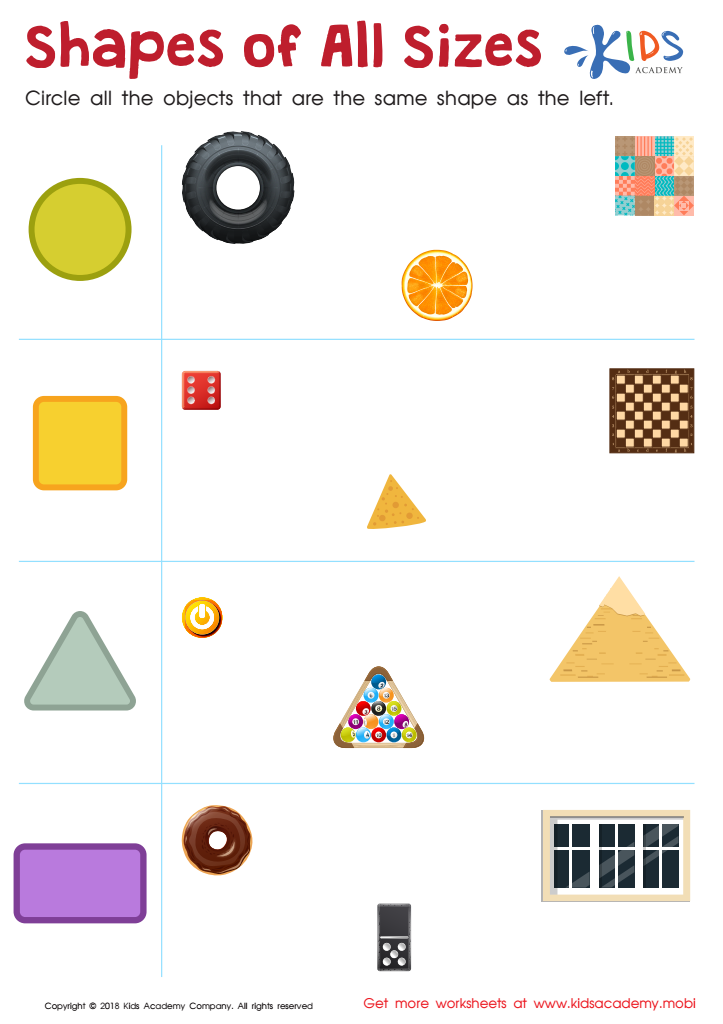
Shapes of All Sizes Worksheet
 Assign to My Students
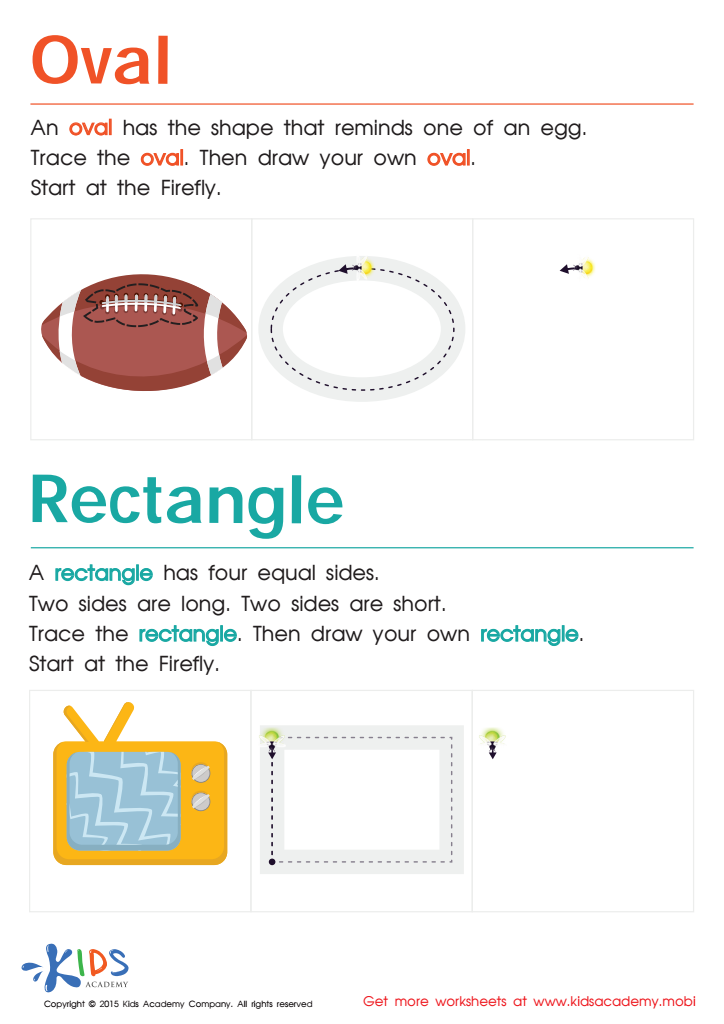
Easy Drawing of Ovals And Rectangles Worksheet
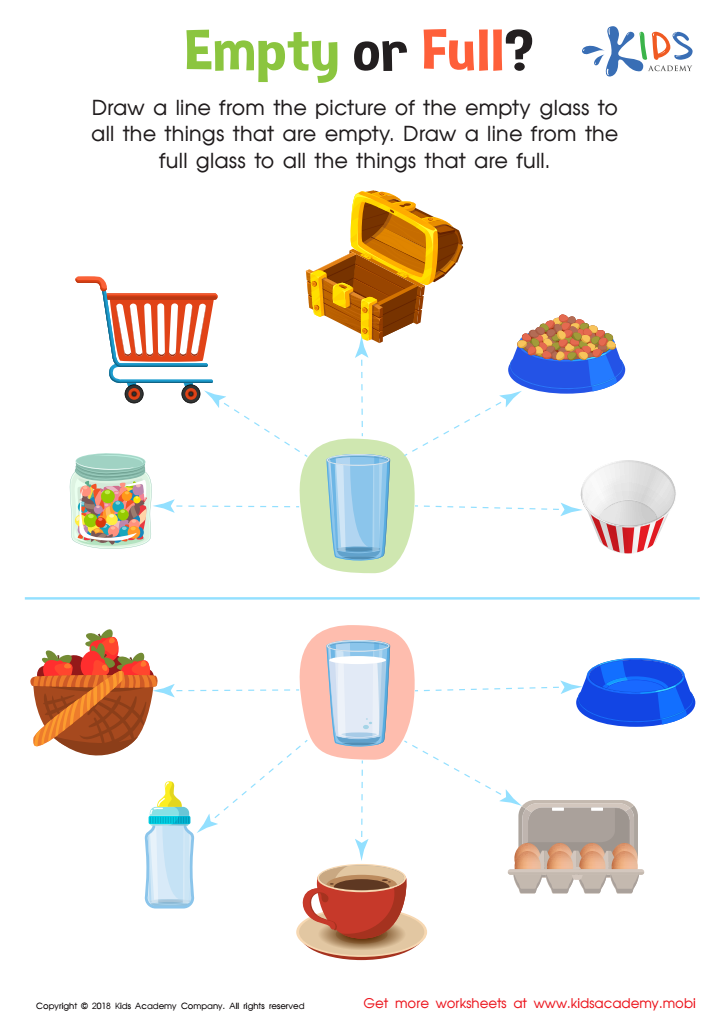
Empty or Full? Worksheet






Parents and teachers should prioritize the development of visual perception skills in children aged 5-6, especially in relation to mathematics. Visual perception is the ability to interpret and organize information from visual stimuli, which plays a crucial role in a child’s cognitive and academic growth. Strong visual perception skills help young learners identify shapes, understand spatial relationships, and discern patterns, all of which are foundational for mathematical skills.
At this age, children are navigating early math concepts such as counting, sorting, and recognizing numbers. Enhanced visual perception allows them to visualize quantities, compare sizes, and understand basic operations like addition and subtraction. Moreover, children with proficient visual skills often demonstrate improved problem-solving abilities and better spatial awareness, both of which are important in math and everyday life.
In addition to cognitive development, fostering these skills can build a child's confidence in their abilities. When children easily recognize and manipulate visual information, they are more likely to engage positively with math activities. Consequently, parents and teachers should collaborate to provide activities that stimulate visual perception—such as puzzles, shape recognition games, and visual sorting tasks—to help children establish a strong foundation for future mathematical success.








