Number Recognition Normal Skip Counting Worksheets for Ages 5-6
3 filtered results
-
From - To
Enhance your child's number skills with our Number Recognition Normal Skip Counting Worksheets designed for ages 5-6. These engaging worksheets are perfect for young learners to practice identifying numbers while mastering the basics of skip counting. With fun illustrations and interactive exercises, kids can effortlessly count by 2s, 5s, and 10s, improving their mathematical foundation. These resources help build essential number recognition skills in an enjoyable and educational way. Ideal for home or school use, they promote confidence and precision in counting, preparing children for future math success. Make learning math a delightful adventure!
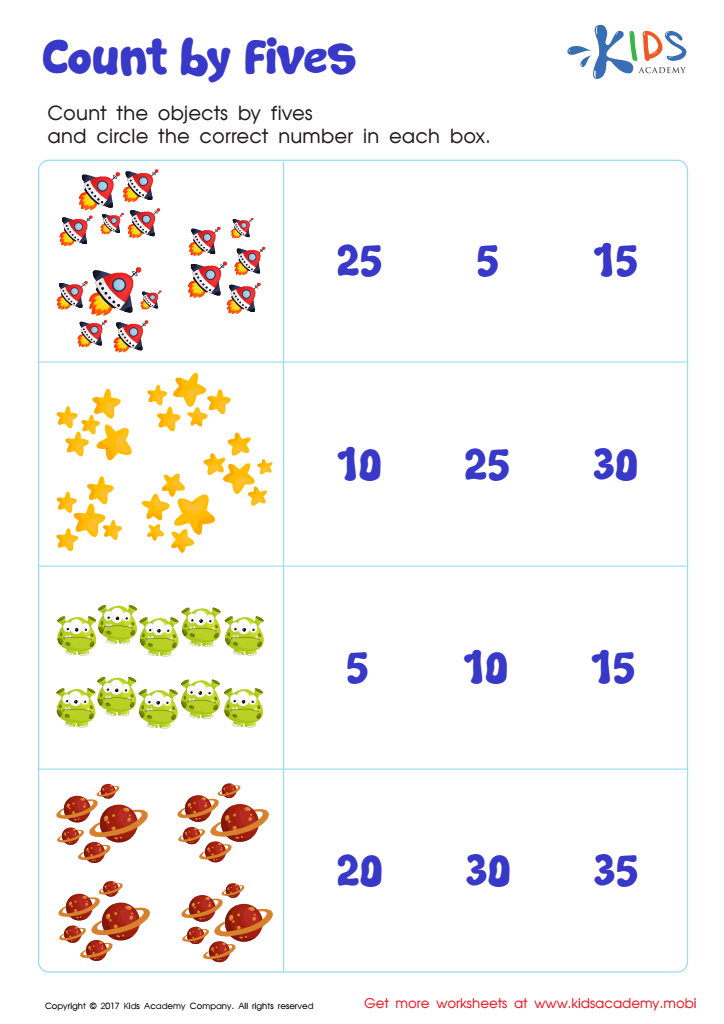
Skip Counting by 5s: Space Math Printable
 Assign to My Students
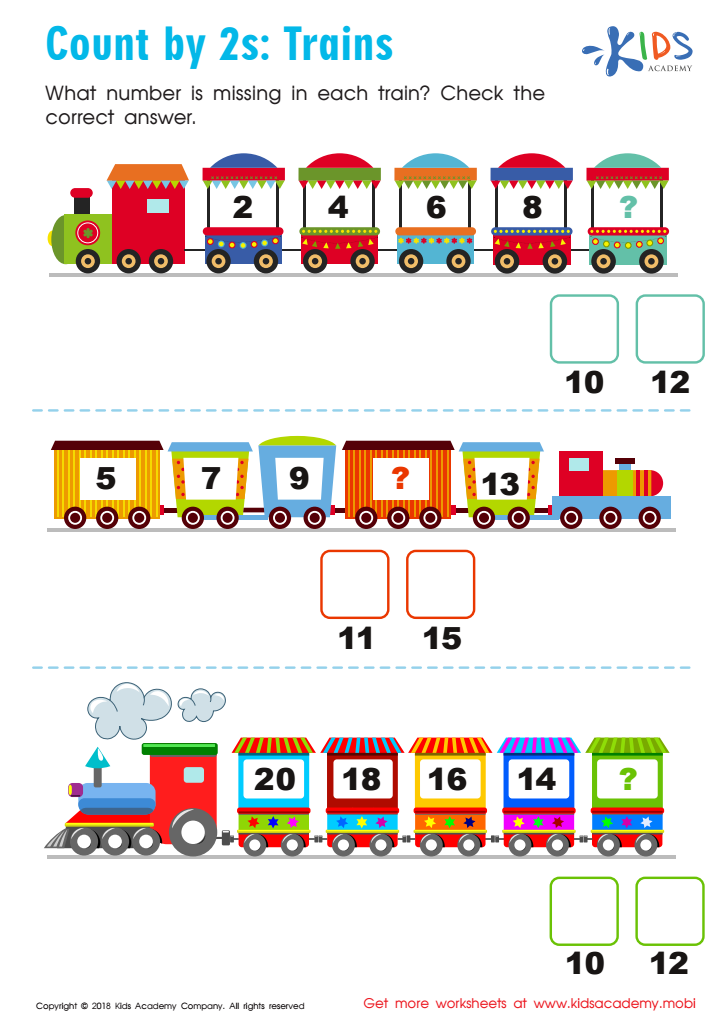
Count by 2's: Trains Worksheet
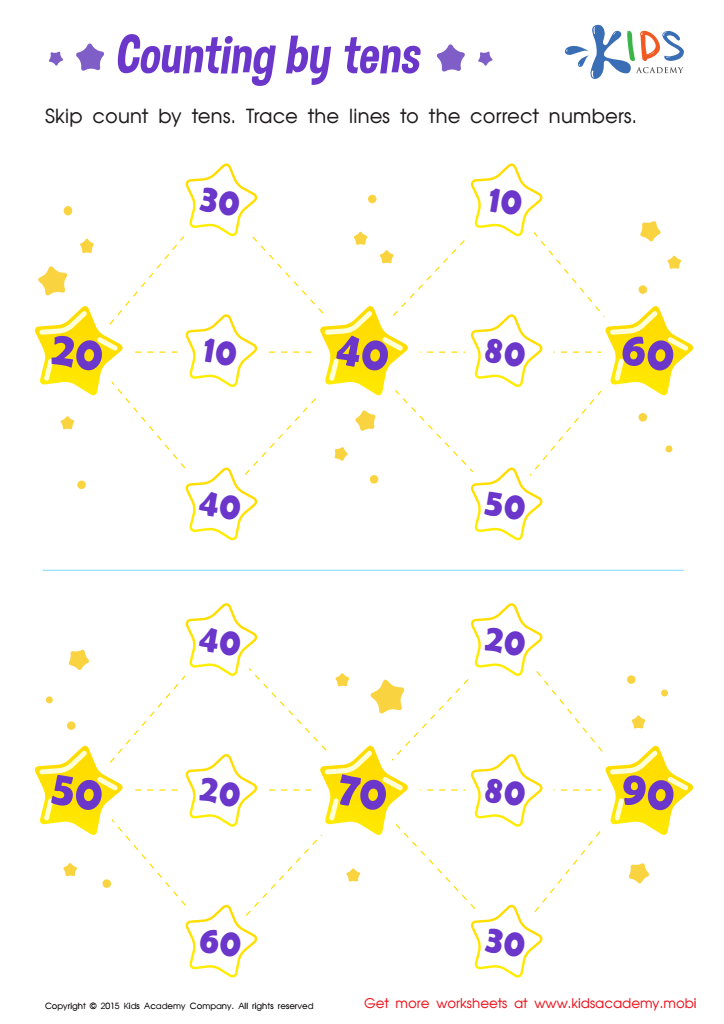
Learn Dozens: Counting by Tens Printable








Number recognition and normal skip counting are foundational skills in early math education, especially crucial for children aged 5-6. Helping children master these skills provides significant educational benefits and sets the stage for their future academic success.
Number recognition allows children to identify and understand numbers, which is fundamental for all subsequent arithmetic learning. When children recognize numbers easily, they can follow instructions, participate in diverse educational activities, and build further numerical understanding, such as counting, addition, and subtraction. It also boosts their confidence in engaging with mathematical tasks, leading to a more positive attitude towards math as they progress through school.
Skip counting, which involves counting by a number other than one (often by 2s, 5s, or 10s), is equally critical. This skill enhances children's understanding of number patterns and sequences, making it easier for them to grasp more advanced math concepts like multiplication and division in the future. It also strengthens their mental math capabilities and problem-solving skills, giving them a quick and efficient way to count groups of objects.
Overall, ensuring that children develop these skills early gives them a robust mathematical foundation, fostering both academic excellence and problem-solving abilities which are essential for their overall cognitive development. Parents and teachers play a crucial role in instilling these skills through supportive and engaging educational experiences.








