Addition skills Normal Word Problems Worksheets for Ages 5-6
4 filtered results
-
From - To
Our "Addition Skills: Normal Word Problems Worksheets for Ages 5-6" are designed to enhance young learners' mathematical abilities through fun and engaging exercises. These worksheets introduce basic addition concepts within practical word problems, encouraging critical thinking and problem-solving skills. Perfect for kindergarten and first-grade students, each worksheet features colorful scenarios and relatable contexts that make learning enjoyable and memorable. By practicing with our expertly crafted worksheets, children will build a solid foundation in addition while developing confidence in their math skills. Support your child's early math journey with these effective and appealing worksheets from Kids Academy.
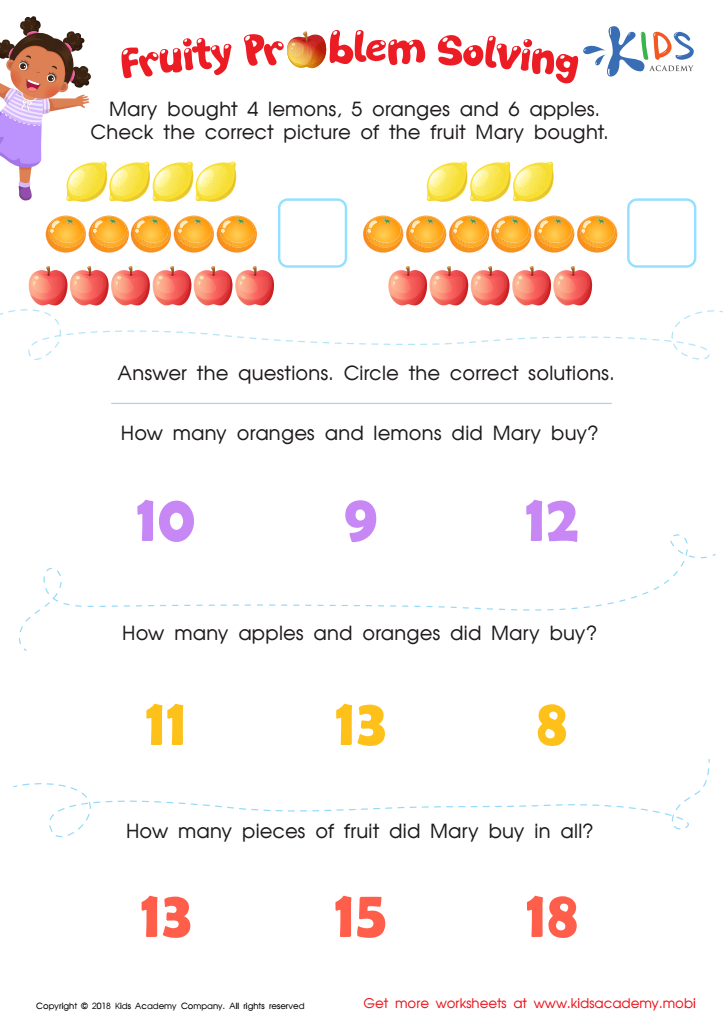
Fruity Problem Solving Worksheet
 Assign to My Students
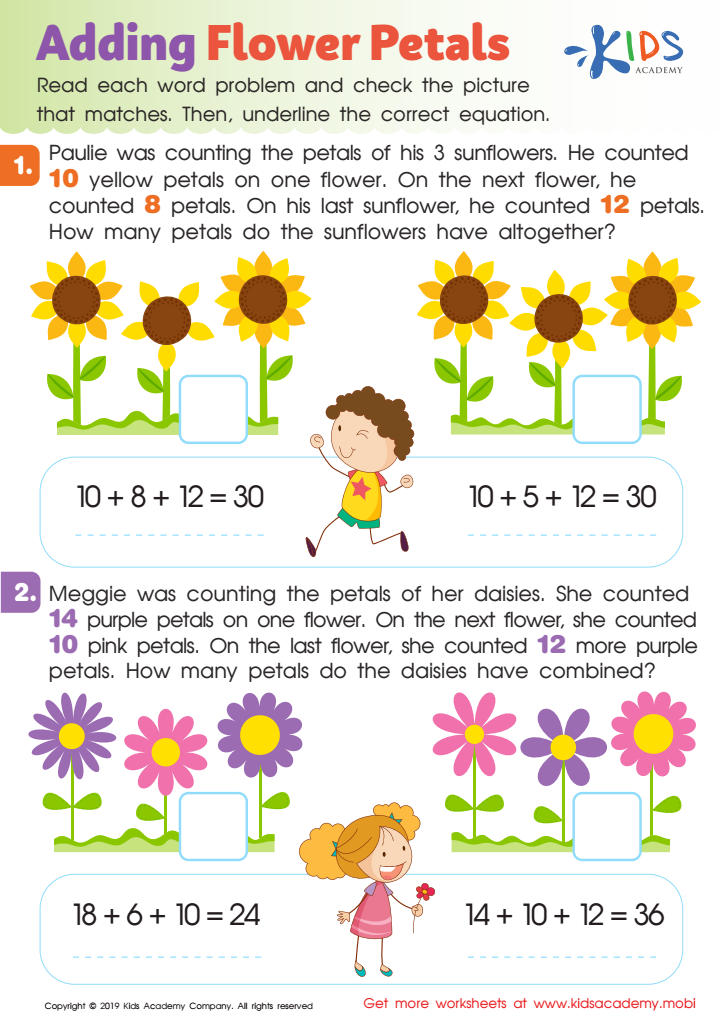
Adding Flower Petals Worksheet
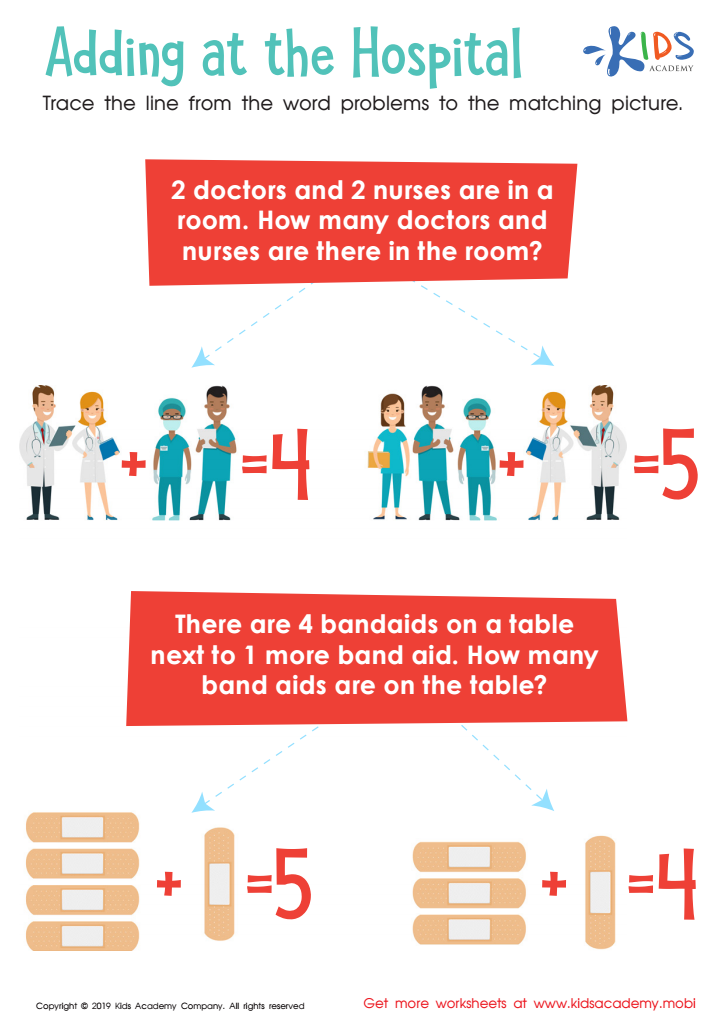
Adding at the Hospital Worksheet
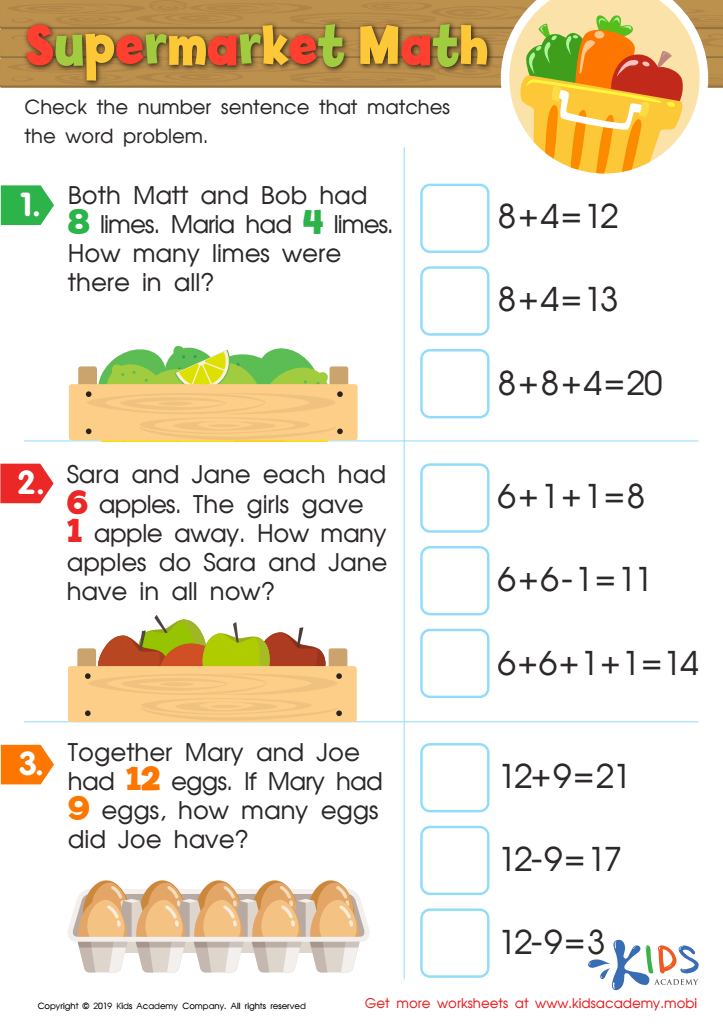
Supermarket Math Worksheet








Addition skills are crucial for children aged 5-6 as they lay the foundation for future mathematical learning. Parents and teachers should prioritize these skills by engaging kids in normal word problems for several reasons. Firstly, addition forms the basis of more complex math operations, such as subtraction, multiplication, and division. Early proficiency in addition will make these future concepts easier to grasp.
Word problems, specifically, help kids apply math to real-life situations, enhancing their critical thinking and problem-solving skills. By contextualizing numbers in everyday experiences, children can better understand and relate to the abstract concept of numbers and operations.
Additionally, solving word problems requires comprehension skills, as children must read, understand, and interpret the problem correctly before solving it. This interlinks math skills with language development, promoting broader educational attainment.
Furthermore, tackling these problems boosts confidence and fosters a growth mindset. Early success in solving word problems empowers kids, instilling a sense of achievement and a positive attitude towards math. Engaging in such activities also nurtures perseverance and the ability to handle challenges, skill sets that are valuable beyond academics.
Overall, early introduction to addition skills and word problems is essential for holistic cognitive development and future academic success. Prioritizing these areas equips children with the tools necessary for lifelong learning and everyday problem-solving.








