Categorizing objects Normal Science Worksheets for Ages 5-6
4 filtered results
-
From - To
Explore the exciting world of categorizing objects with our Normal Science Worksheets, designed especially for ages 5-6. These engaging resources from Kids Academy help young learners enhance their logical thinking and observation skills. Children will delight in sorting items based on different attributes, such as size, shape, color, and function. Our age-appropriate worksheets feature colorful images and fun scenarios that capture the imagination. As they group objects together, kids ignite their curiosity and develop foundational science skills. Perfect for classrooms or at-home activities, these worksheets make learning enjoyable and interactive for budding scientists. Start categorizing today!
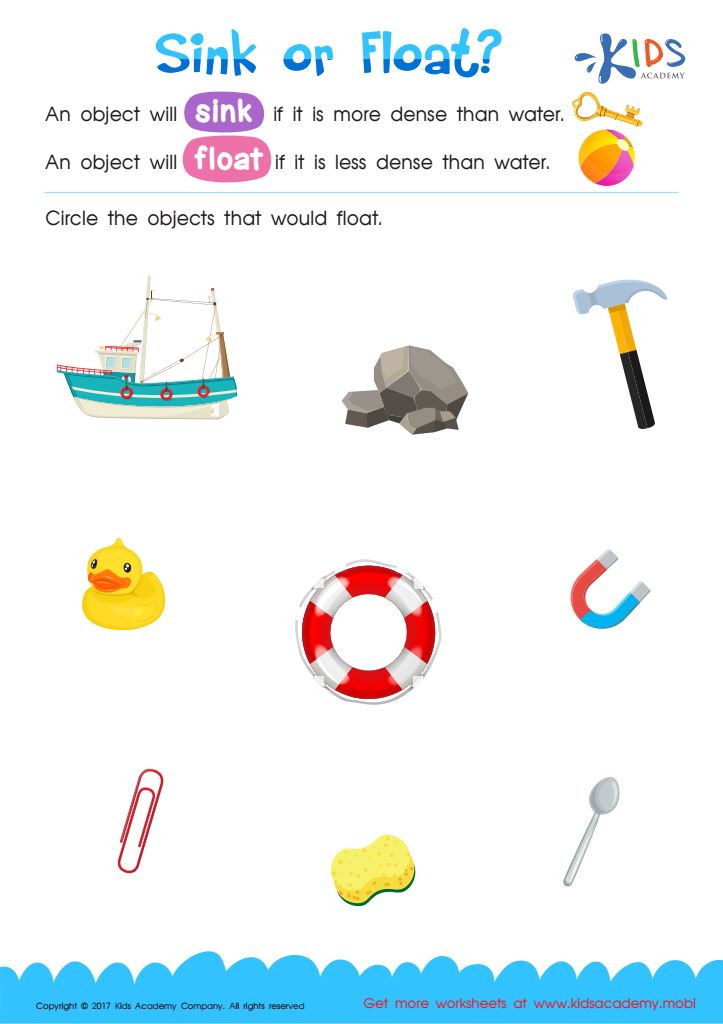
Sink or Float Printable
 Assign to My Students
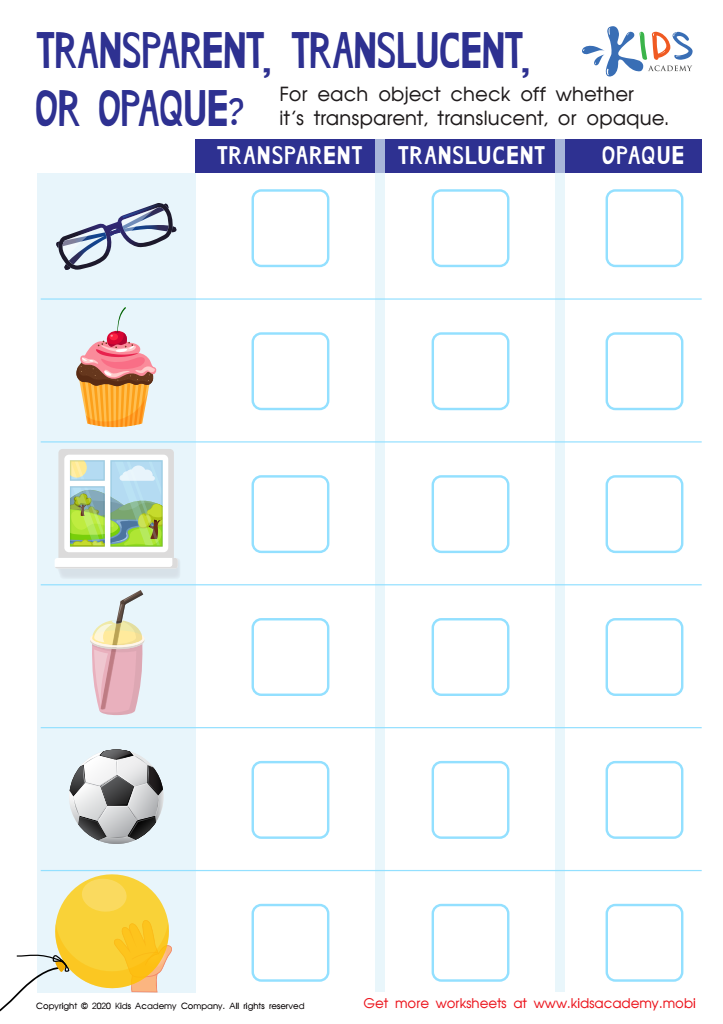
Transparent, Translucent, or Opaque Worksheet
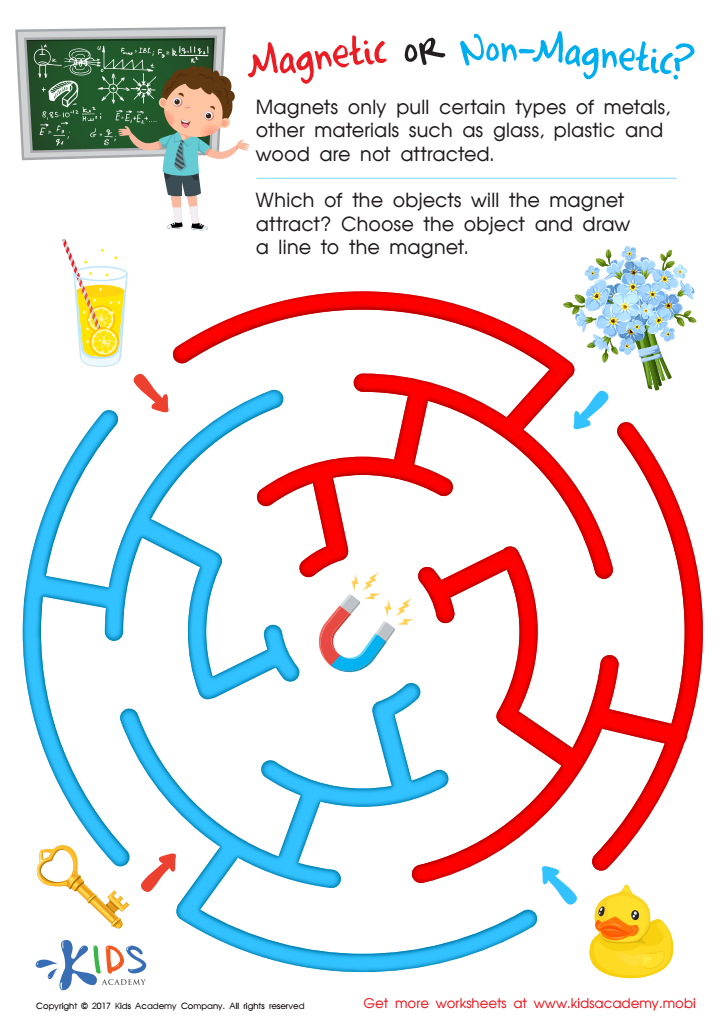
Magnetic or Non–Magnetic Worksheet
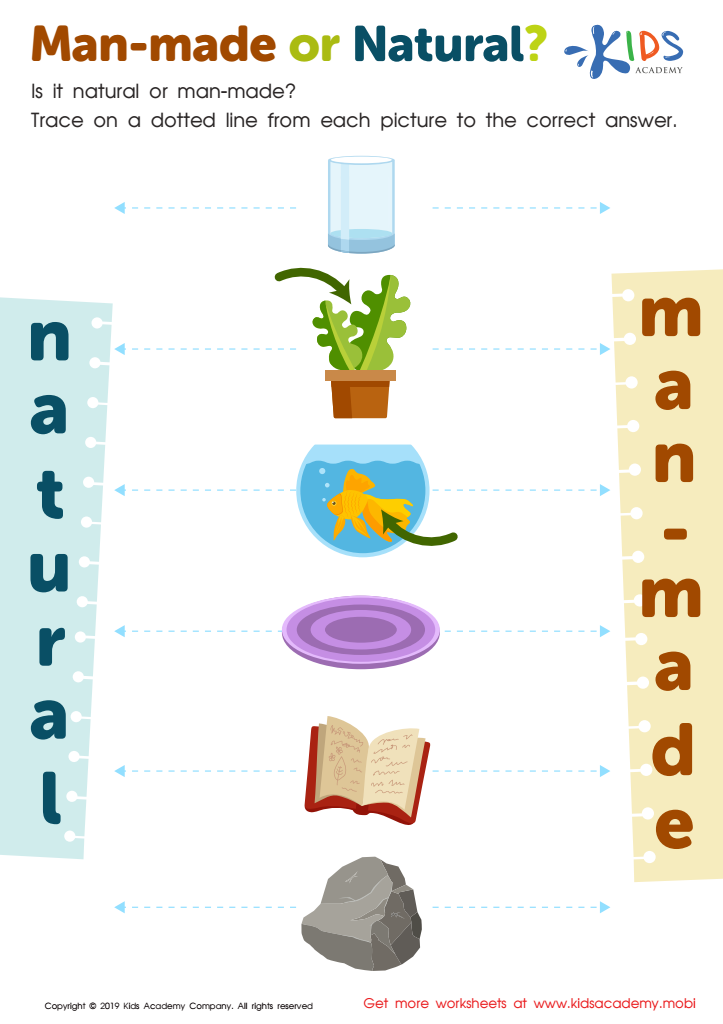
Man-Made or Natural? Worksheet






Categorizing objects is a fundamental aspect of early science education for children aged 5-6, and it should matter greatly to parents and teachers. By learning to group objects based on shared characteristics—such as size, shape, color, or function—children build foundational cognitive skills that are critical for further scientific learning and everyday problem-solving.
Firstly, categorization helps young learners develop observational skills, enhancing their ability to notice and describe subtle differences and similarities in their environment. This skill is vital not just in science, but across all learning areas. For example, being able to categorize helps with language development, as children learn and use specific vocabulary to describe the categories.
Additionally, this practice develops critical thinking and organizational skills. Children learn how to make sense of complex information, breaking it down into manageable chunks. This is a crucial step in understanding more intricate scientific concepts as they progress through their education.
Finally, categorizing objects roots children in a structured way of thinking, promoting their logical reasoning abilities. These skills are not only fundamental to succeeding in science but foster a mindset geared towards inquiry and exploration, encouraging lifelong learning and curiosity about the world around them.
For parents and teachers, supporting categorization helps children build a robust knowledge base, setting them up for success both academically and in navigating their everyday lives.







