Filters

7 filtered results

Clear all filters
Favorites
With answer key
Interactive

7 filtered results

Difficulty Level

Grade


Unlock your child's potential with our Cognitive Development Normal Alphabet Worksheets designed specifically for ages 5-7. These engaging and interactive worksheets provide essential exercises that enhance critical thinking, problem-solving, and letter recognition skills. Each activity encourages cognitive engagement through fun tasks that challenge young minds, fostering a strong foundation for future learning. Ideal for both home and classroom use, our worksheets cater to diverse learning styles, ensuring that every child can thrive. Explore our rich collection of alphabet-related activities and watch your child gain confidence and develop essential literacy skills while having fun! Start their cognitive journey today!

Check out this FREE Trial Lesson on Alphabet for age 5-7!

One-to-one Letter-sound Correspondence

Favorites
With answer key
Interactive
  • 5-7
  • Cognitive Development
  • Alphabet
  • Normal
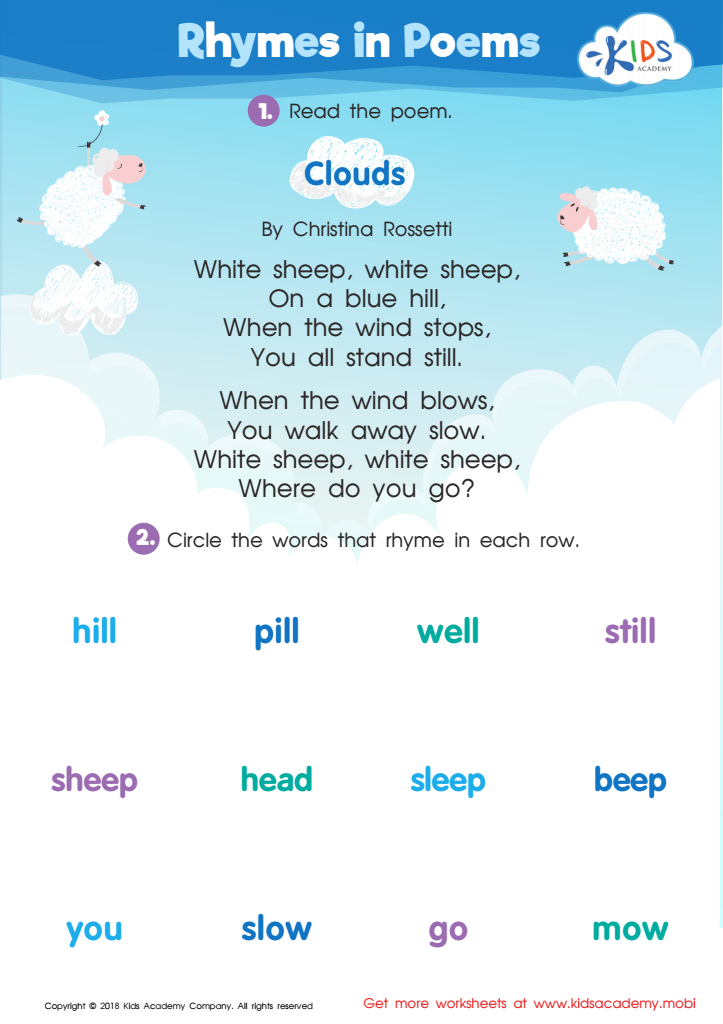
Rhymes in Poems Worksheet

Rhymes in Poems Worksheet

Poems are lovely works of literature; some with rhymes, and some without. This poem for kids is full of rhymes and tells the tale of a sheep. Read it aloud to your kids, then help them circle the rhyming words.
Rhymes in Poems Worksheet
Worksheet
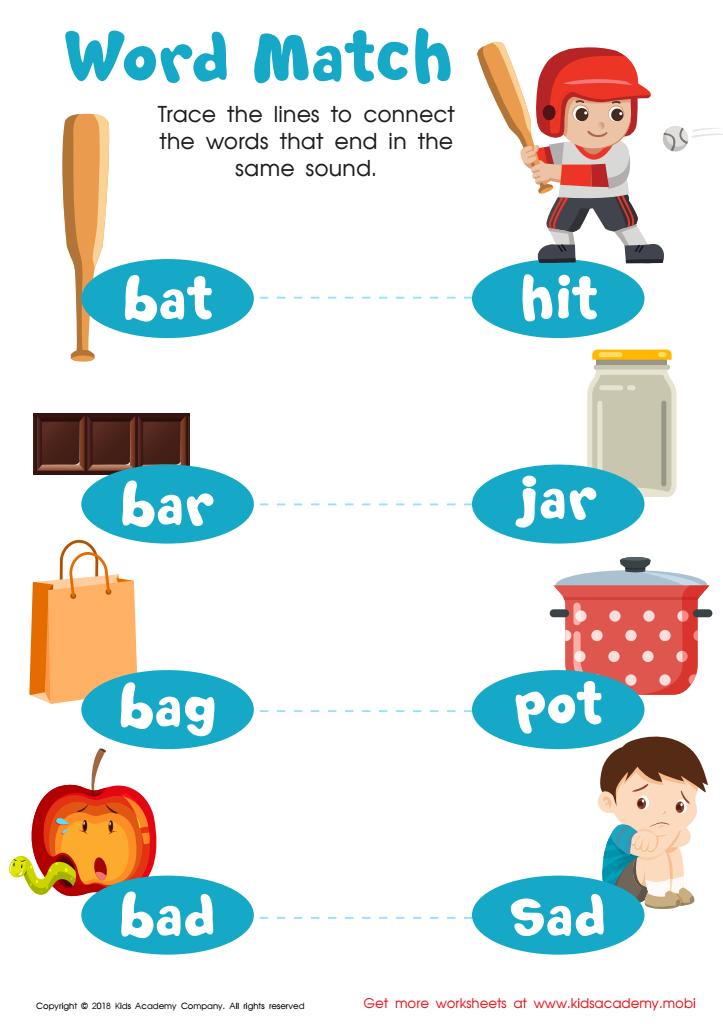
Word Match Reading Worksheet

Word Match Reading Worksheet

This printout helps children learn to read fluently by connecting words with the same sound. Colorful pictures aid understanding and context for kindergarten-level students. Tracing lines, they learn to identify the sounds made by letters of the alphabet and deepen their knowledge of phonics.
Word Match Reading Worksheet
Worksheet
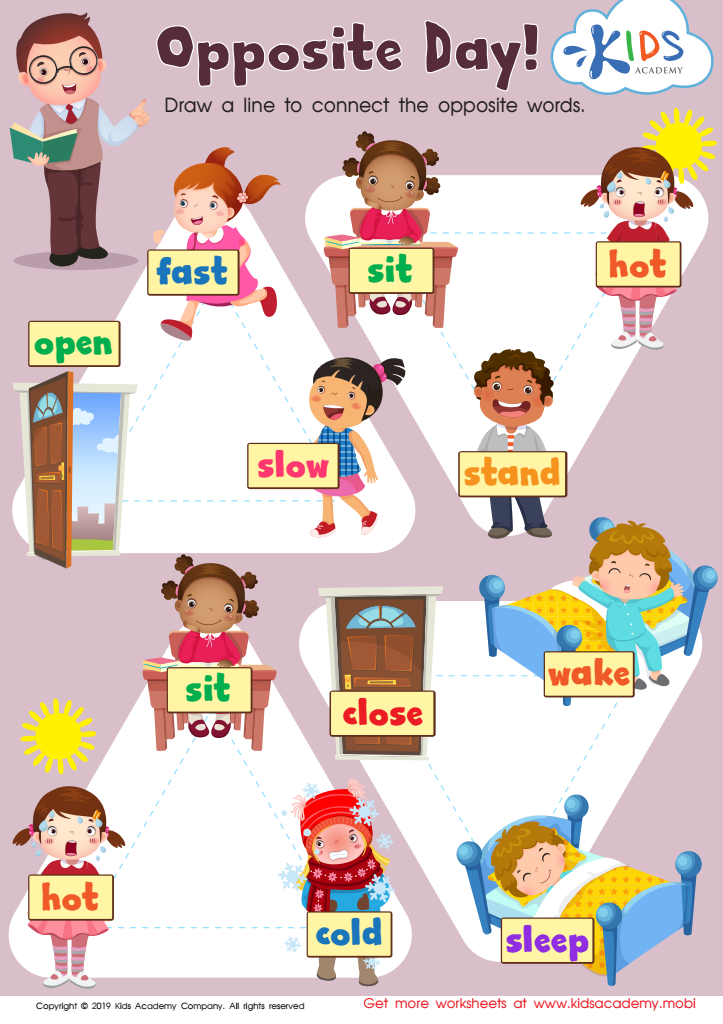
Opposite Day Worksheet

Opposite Day Worksheet

Early learners need to know about opposites to improve their higher-order thinking and critical thinking. This fun worksheet helps them understand the concept, practice opposite words, read high-frequency words and work on fine motor skills. Download the traceable PDF to get started.
Opposite Day Worksheet
Worksheet
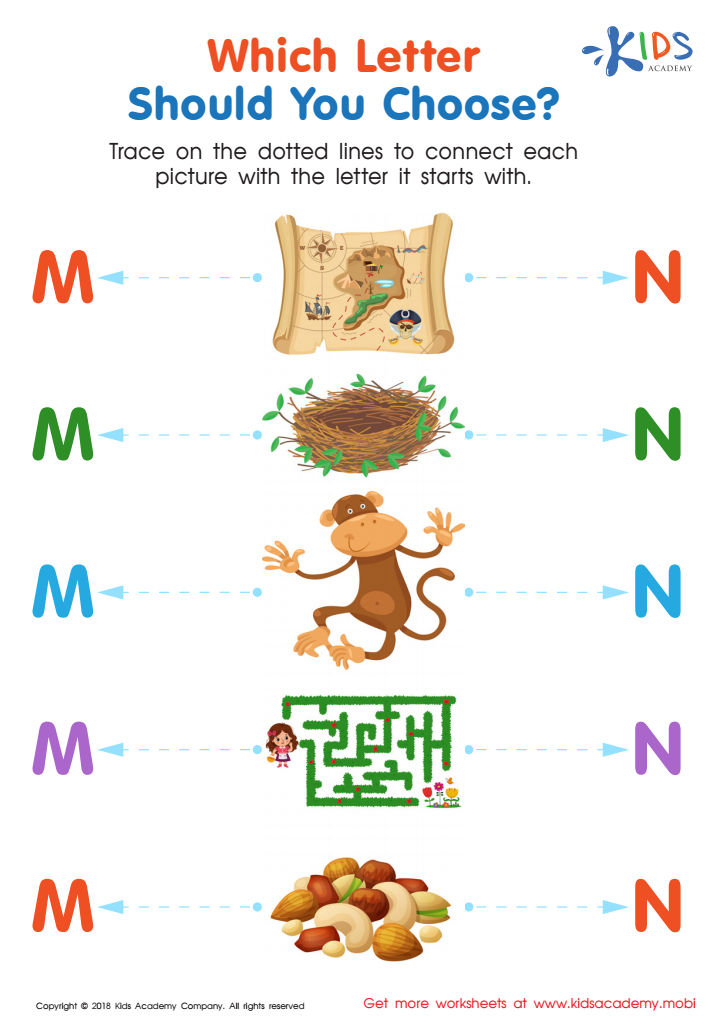
Which Letter Should you Choose? Worksheet

Which Letter Should you Choose? Worksheet

Trace the dotted lines to connect images with their first letter: "n" or "m." Challenge your child to name each picture, then identify the first letter and trace to the right letter! Five images in total.
Which Letter Should you Choose? Worksheet
Worksheet
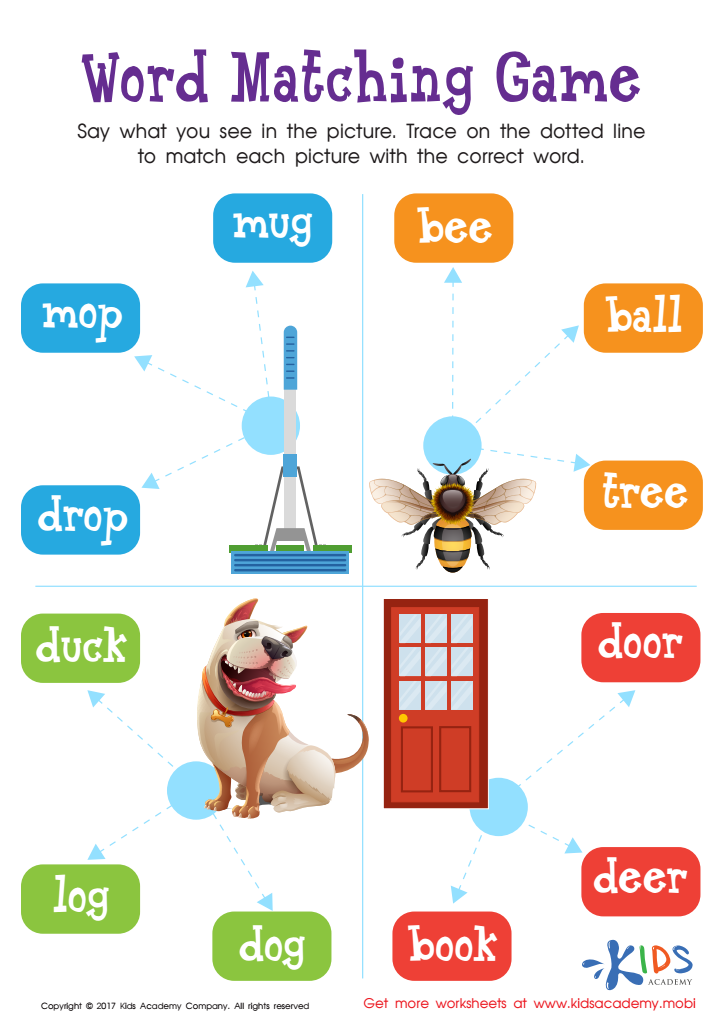
Word Matching Game Worksheet

Word Matching Game Worksheet

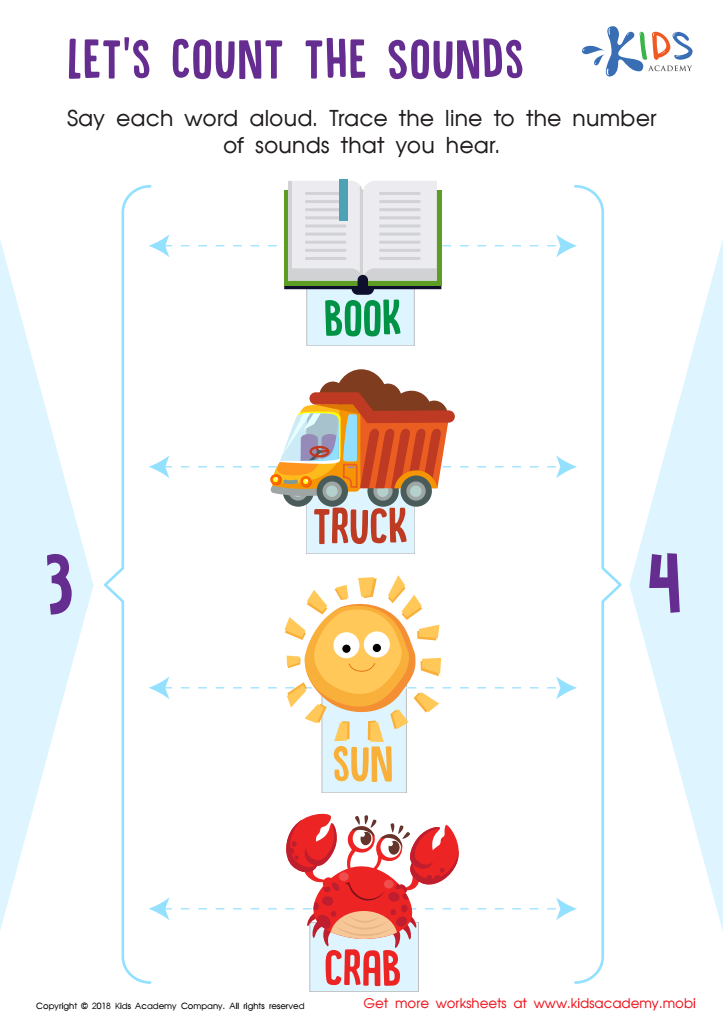
Help your early reader develop prereading skills with this fun matching worksheet! Visual cues help them learn sight words, decode words in word families, and identify phonetic patterns. They'll practice discerning sounds past initial consonants while saying the name of the picture and finding the matching word - and reading at the same time!
Word Matching Game Worksheet
Worksheet
Let's Count the Sounds Worksheet

Let's Count the Sounds Worksheet

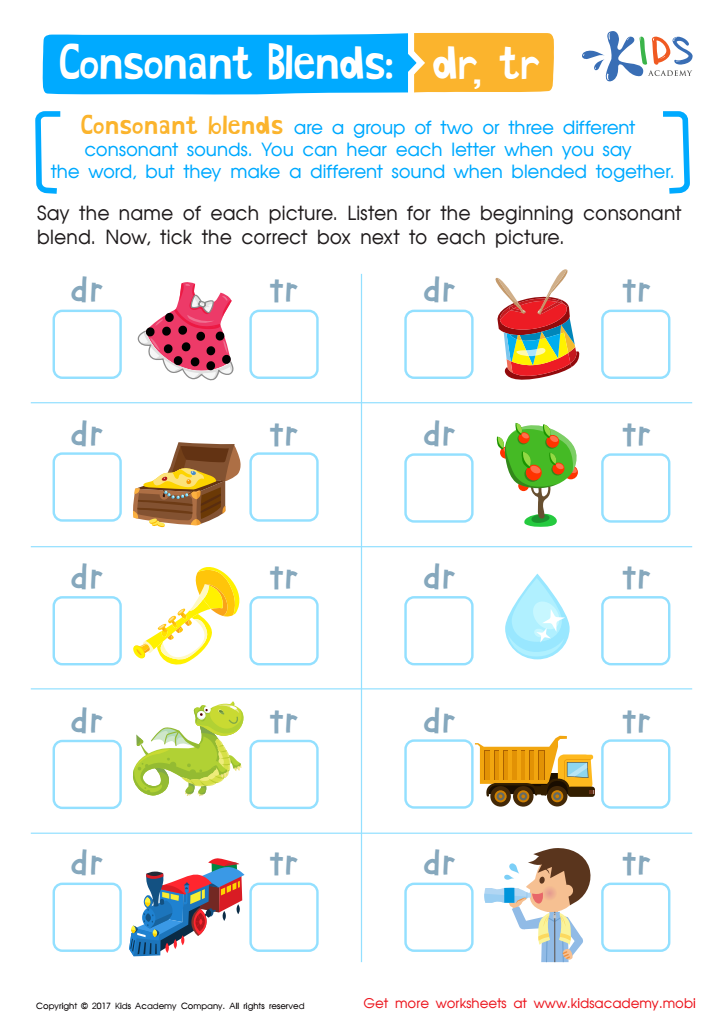
This bright and cheery traceable worksheet encourages children to practice auditory discrimination and phonological awareness. Using picture clues, they read each word and trace the line that represents the number of sounds heard. This builds decoding skills and helps them become successful readers.
Let's Count the Sounds Worksheet
Worksheet
Consonant Blend Dr and Tr Printable Worksheet

Consonant Blends: "Dr" and "Tr" Printable

Pictures of the words provide a visual cue, and sound-outs help with auditory cues.
Consonant Blends: "Dr" and "Tr" Printable

Worksheet


Cognitive development during the ages of 5 to 7 is crucial, as this is a vital period for learning foundational skills. Understanding the normal alphabet progression is essential for parents and teachers as it lays the groundwork for language acquisition and communication abilities. During these years, children expand their vocabulary, learn to recognize letters, and begin forming words and sentences.

Parents and teachers should prioritize supporting this development as it directly impacts academic success and self-confidence. Children who grasp the alphabet and its sounds are better equipped to excel in reading and writing, which are critical skills for future learning. In turn, strong literacy skills open doors to comprehension and critical thinking, providing a solid base for ongoing education.

Moreover, engaging with children in alphabet-related activities promotes their cognitive skills like memory, attention, and problem-solving. Additionally, caring for their cognitive development fosters a love for learning and discovery, which will benefit them throughout their lives. By recognizing and nurturing typical alphabet recognition and early reading skills, caregivers can positively influence a child’s educational journey and future opportunities, making their involvement both vital and rewarding.