Reading readiness Normal Alphabet Worksheets for Ages 5-7
5 filtered results
-
From - To
Unlock your child's reading potential with our "Reading Readiness Normal Alphabet Worksheets" designed specifically for ages 5-7! These engaging and interactive worksheets focus on essential reading skills, providing a fun and effective way for young learners to familiarize themselves with the alphabet. Each worksheet is thoughtfully crafted to promote letter recognition, phonetic awareness, and early reading strategies. Children will enjoy practicing their skills through a variety of activities, including tracing, matching, and coloring. As they complete these worksheets, children build a strong foundation for future literacy success, making reading an exciting adventure. Dive in today and watch your little ones thrive!
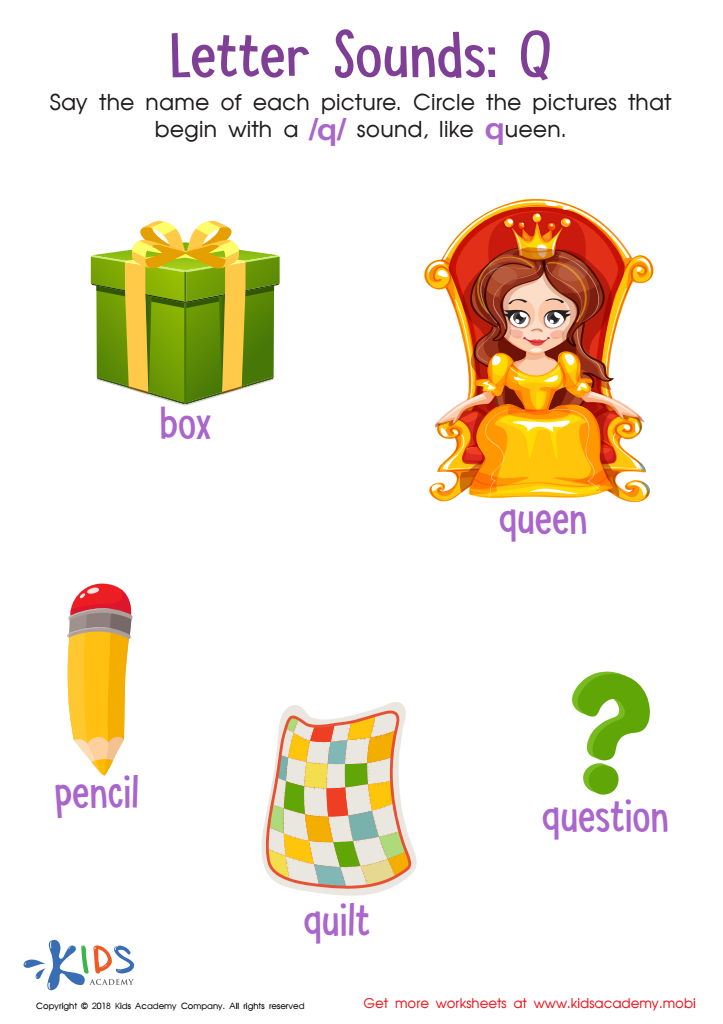
Letter Q Sounds Worksheet
 Assign to My Students
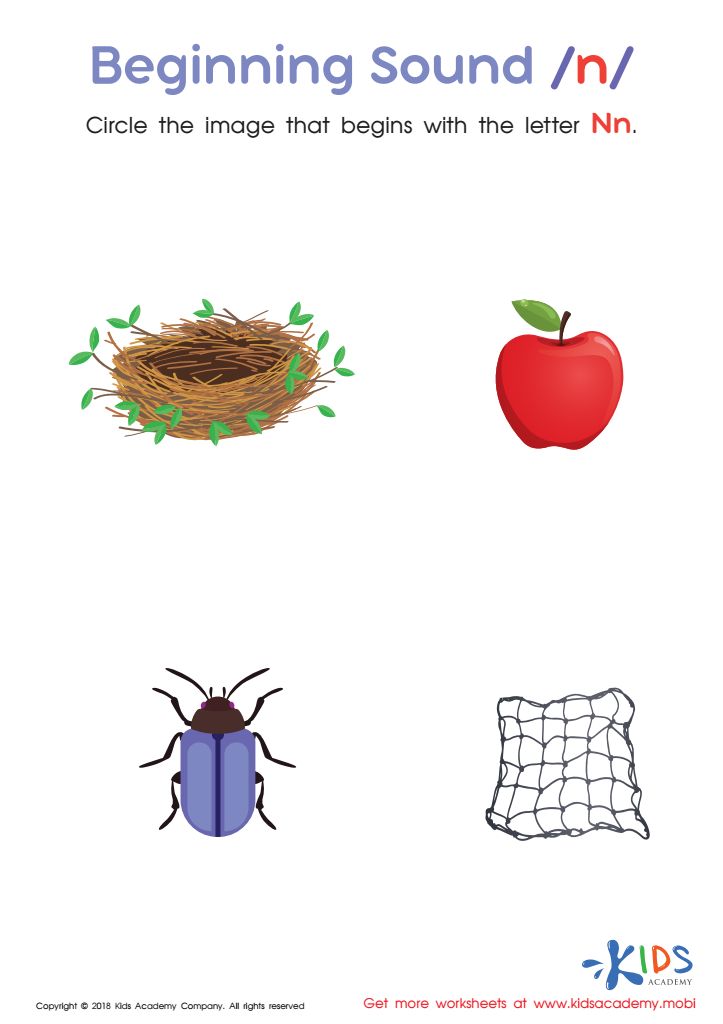
Beginning Sound «n» Worksheet
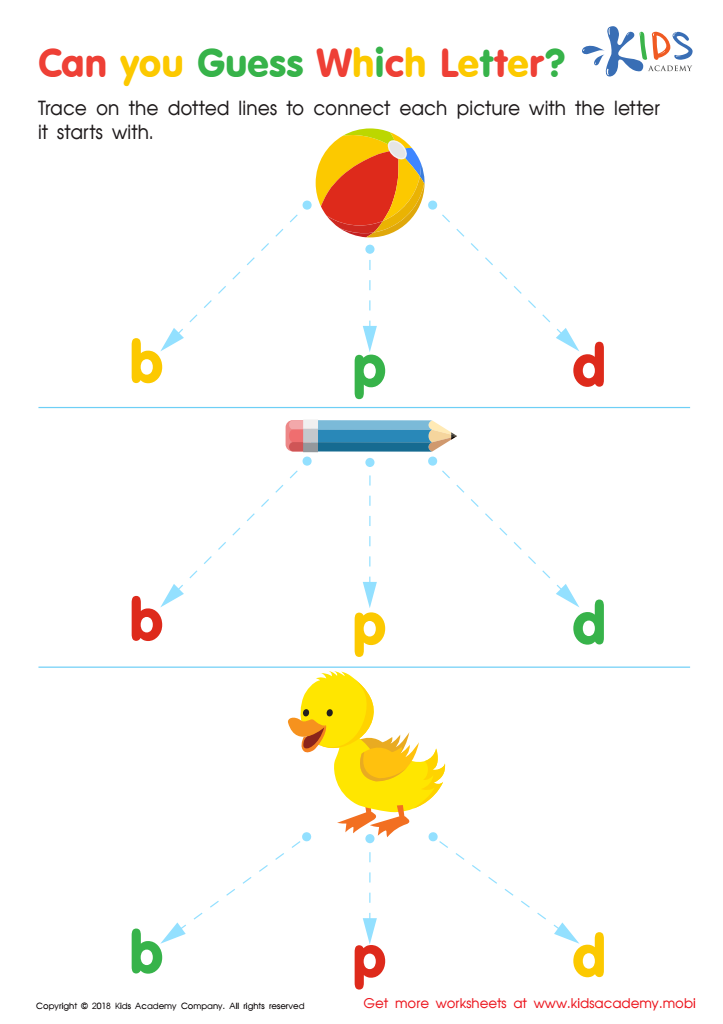
Can you Guess Which Letter? Worksheet
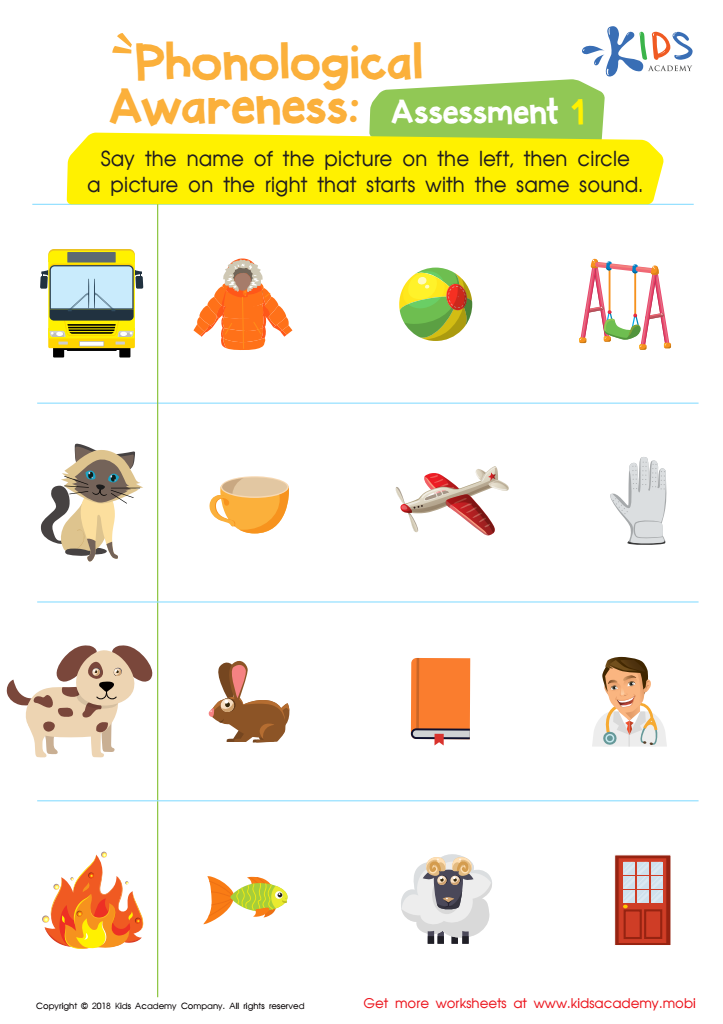
Phonological Awareness: Assessment 1 Worksheet
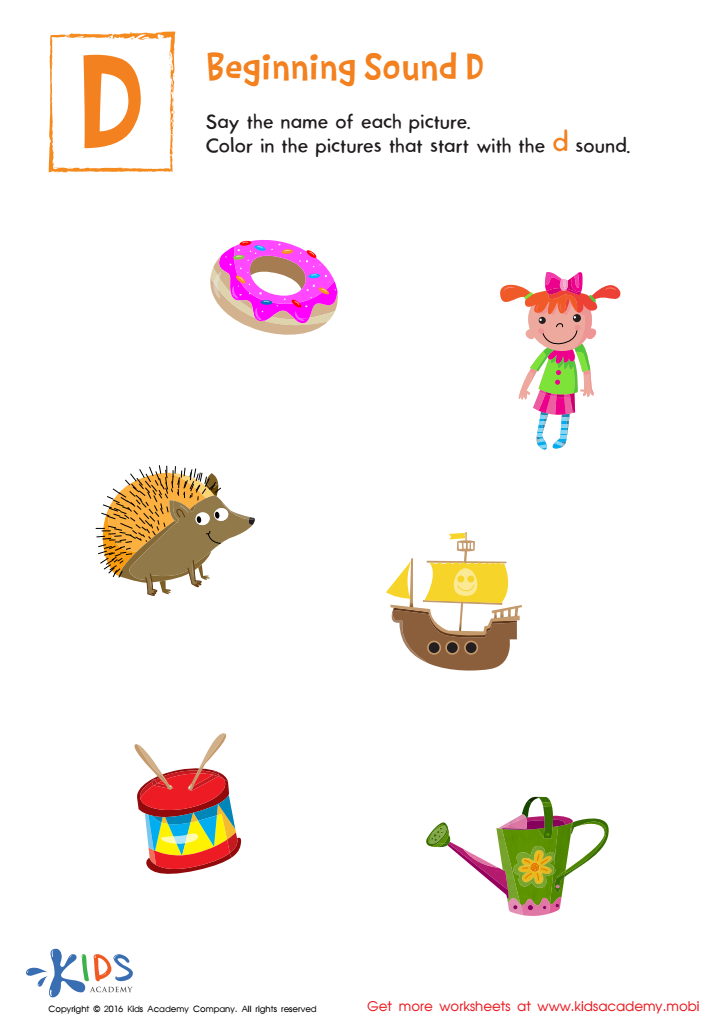
Beginning Sound D Worksheet


.jpg)





Reading readiness is a crucial developmental milestone for children aged 5-7, as it sets the foundation for lifelong literacy skills. Parents and teachers should care about this stage because it encompasses a variety of skills, including phonemic awareness, vocabulary, and comprehension, which are essential for academic success. Children who are reading-ready can better understand instructions and participate actively in classroom activities, fostering a love for learning.
Investing time in activities that promote reading readiness—such as shared reading, interactive storytelling, and phonics games—engages children and cultivates their curiosity about words and stories. This not only improves language skills but also boosts confidence as they begin to decode text independently.
Furthermore, reading readiness is linked to improved social-emotional development. Children who can read often experience better outcomes in school and are more likely to excel in relationships and communication. It also plays a vital role in closing achievement gaps among diverse learners, ensuring that every child has access to opportunities. In a world increasingly driven by text, supporting reading readiness is essential for equipping children with the skills they need to navigate 21st-century challenges. Ultimately, instilling a strong reading foundation fosters a lifelong love for reading and learning.







