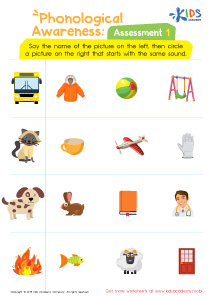
Phonics Skills Normal Vowels Worksheets for Ages 5-7 - Page 2
29 filtered results
-
From - To
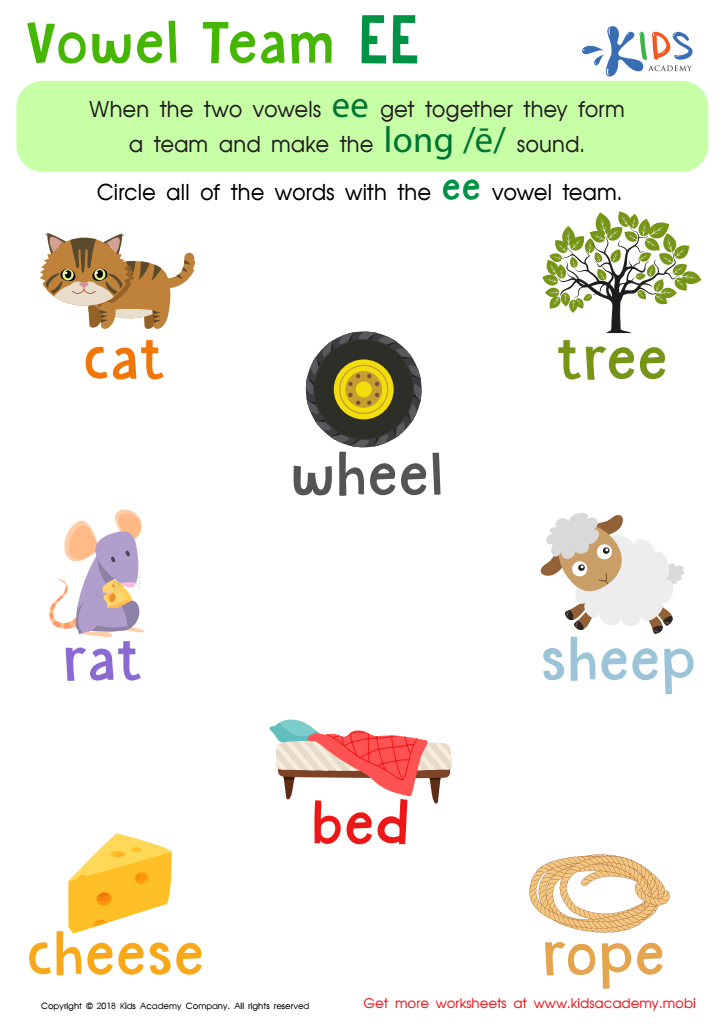
Reading: Vowel Team EE Worksheet
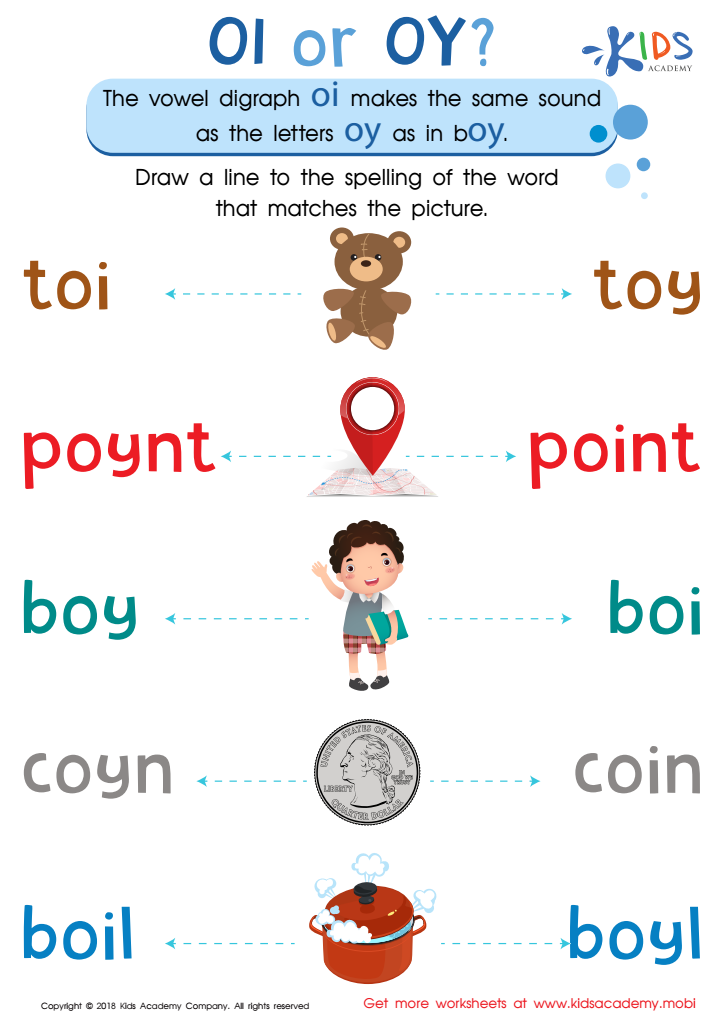
Reading: OI and OY Worksheet
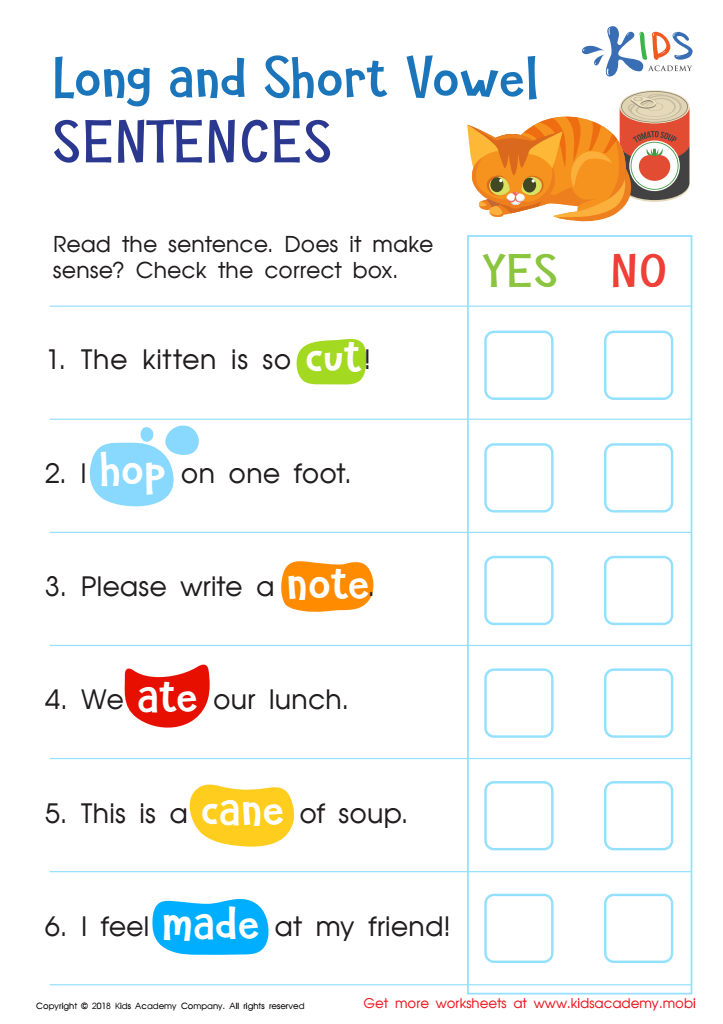
Long and Short Vowel Sentences: Assessment Worksheet

Long and Short E Worksheet
 Assign to My Students
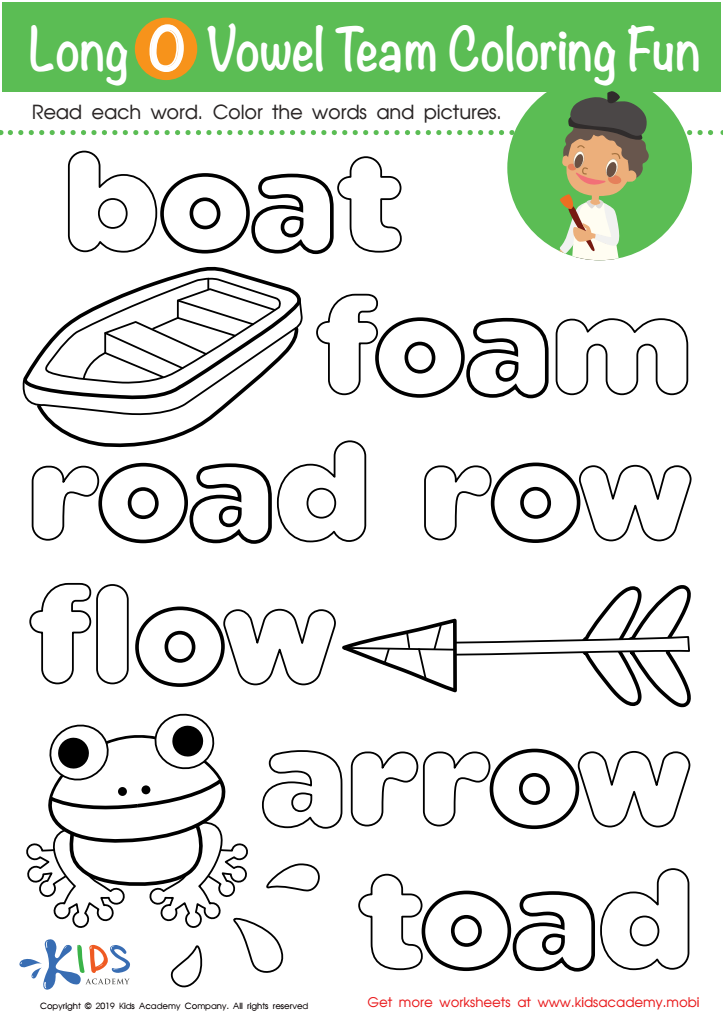
Long O Vowel Team Coloring Worksheet
Assign to My Students





Phonics skills, particularly those involving normal vowels, play a crucial role in the literacy development of children aged 5-7. At this age, children are at a pivotal point in their ability to decode and understand written language effectively. Familiarity with vowels is essential as these sounds pop up frequently in English and are pivotal in forming words.
By emphasizing normal vowels, parents and teachers provide children with the foundational tools they need for reading, spelling, and pronunciation. Mastery of these skills not only supports their academic success, but also enhances their confidence and enjoyment in learning. Children learn to recognize patterns in words, which primes them for more complex phonetic structures later on.
Moreover, early phonics instruction tends to yield long-term benefits. Children who grasp phonics skills have a greater likelihood of becoming proficient readers, which translates to improved performance in all subjects. This is especially important in the early grades, where literacy lays the groundwork for all future learning.
In essence, investing time and attention into developing phonics skills in young children secures a strong educational foundation and fosters a lifelong love for reading and learning.