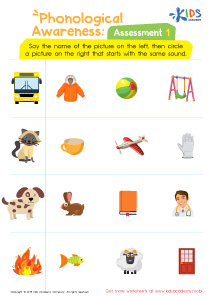
Reading proficiency Normal Vowels Worksheets for Ages 5-7
5 filtered results
-
From - To
Our Reading Proficiency Normal Vowels Worksheets for ages 5-7 help young learners master vowel sounds and reading skills. Designed to build foundational phonics knowledge, these engaging exercises feature fun activities to recognize, pronounce, and use normal vowels correctly. Each worksheet incorporates colorful graphics, games, and stories tailored to keep your child motivated and excited about learning. Perfect for both classroom and at-home practice, these worksheets provide a valuable tool for achieving reading fluency and boosting confidence. Enhance your child’s literacy journey with our expertly crafted vowel worksheets. Empower your child to become a proficient reader today!
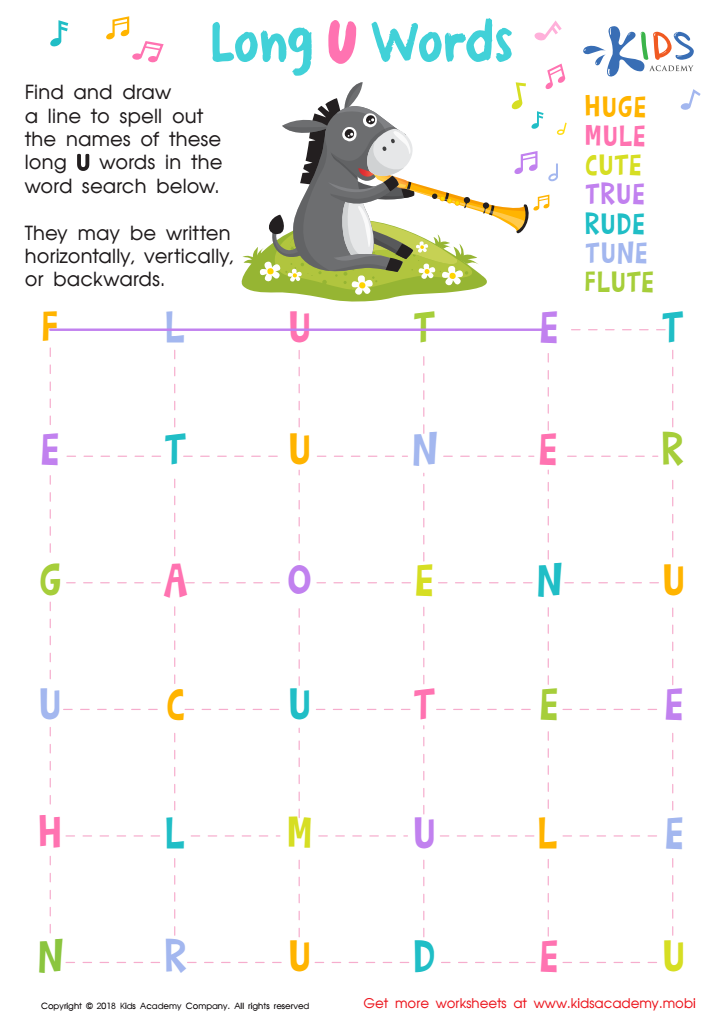
Long /u/ Words Worksheet
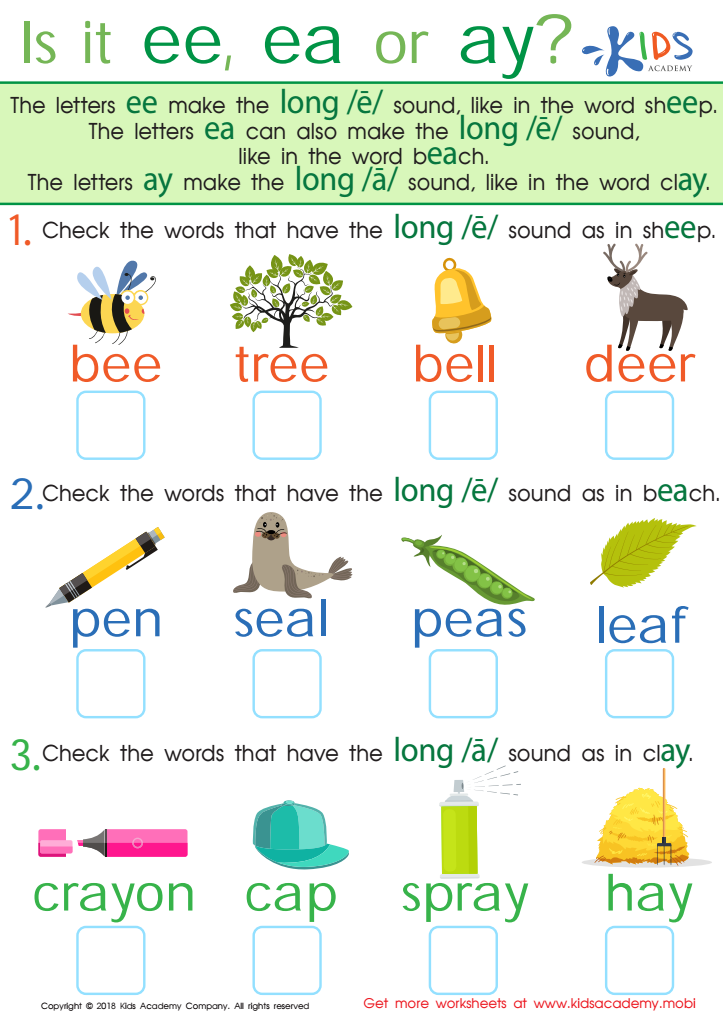
Is It EE, EA, or AY? Worksheet
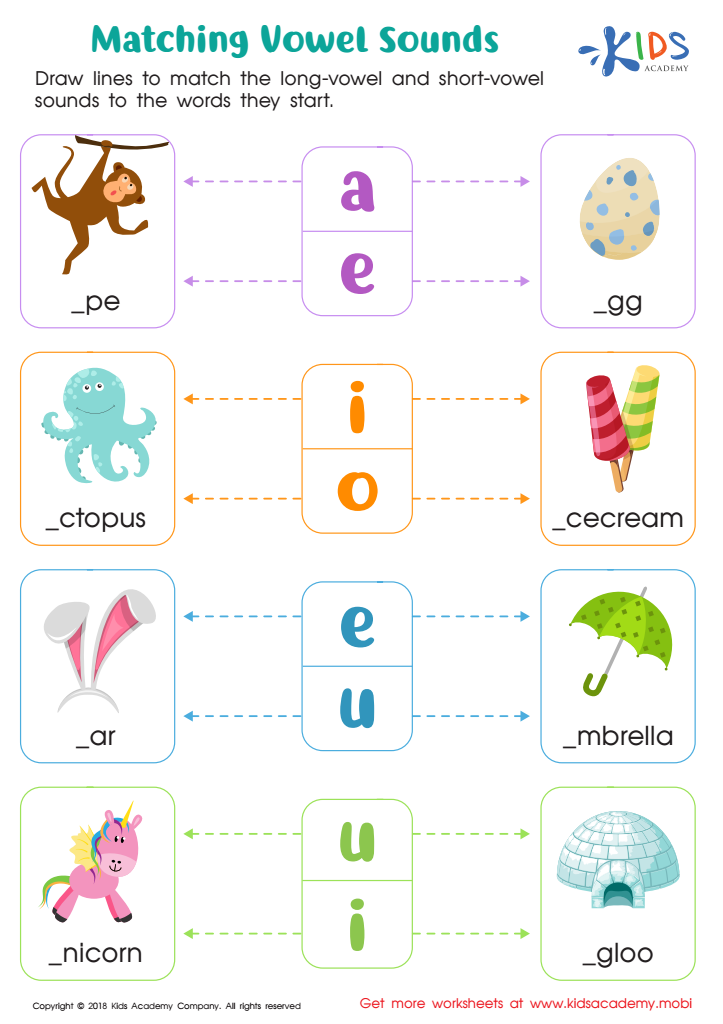
Matching Vowel Sounds Worksheet
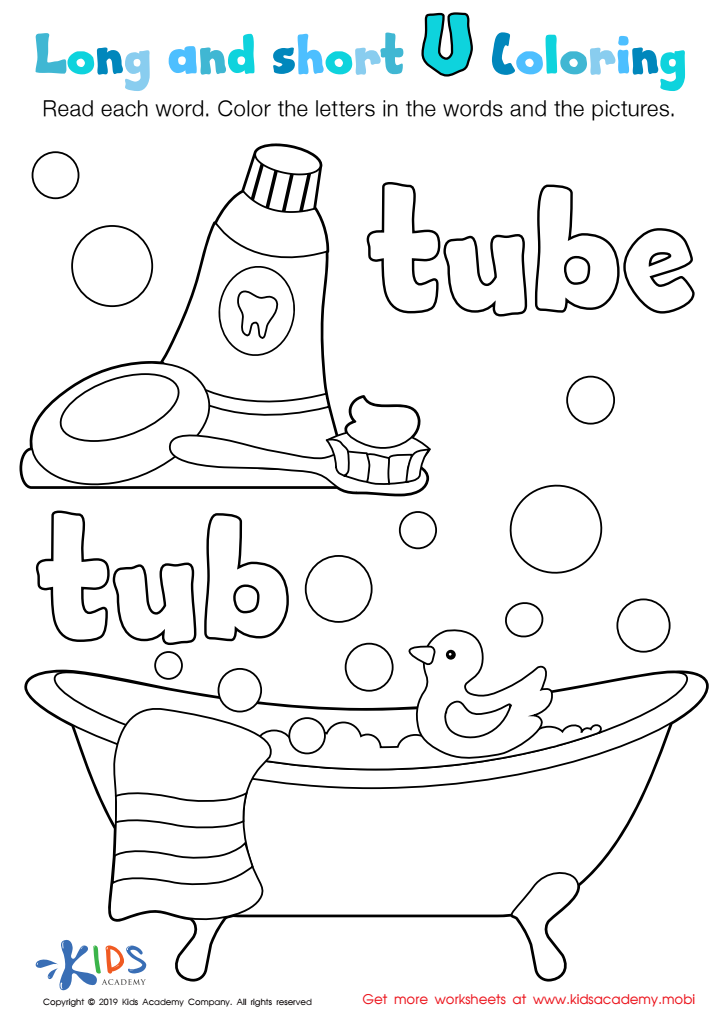
Long and Short U Worksheet
 Assign to My Students
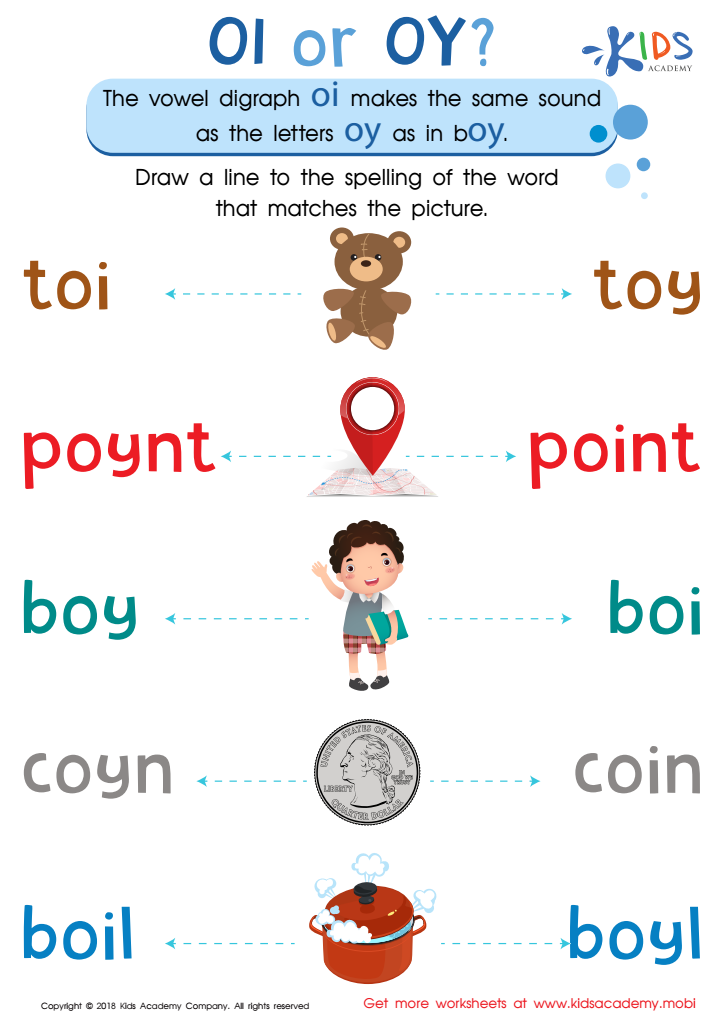
Reading: OI and OY Worksheet





Parents and teachers should care about reading proficiency and normal vowel recognition in children aged 5-7 because it forms the foundation of their literacy and educational success. At this age, children are in a critical period of language development and acquiring essential reading skills. Understanding normal vowels is a key component of phonemic awareness, which is the ability to hear, identify, and manipulate individual sounds in spoken words. This skill is crucial for decoding words, which is the process of translating written text into sounds and recognizing word patterns.
Strong reading proficiency in early grades correlates with better academic performance across all subjects. When children grasp vowel sounds effectively, they can read more fluently, comprehend texts better, and expand their vocabulary. Additionally, early reading proficiency fosters a love of reading, paving the way for lifelong learning.
Early intervention by parents and teachers can identify and address reading challenges, preventing future academic difficulties. Poor reading skills at a young age can lead to frustration, decreased motivation, and lower self-esteem. Conversely, positive reading experiences build confidence and pave the way for future educational achievements. Investing time in helping children master normal vowels and reading not only boosts their academic prospects but also supports their overall cognitive and emotional development.