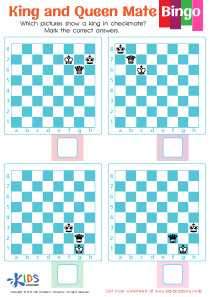
Number Recognition Normal Chess Worksheets for Ages 5-7
3 filtered results
-
From - To
Discover engaging Number Recognition Normal Chess Worksheets designed for kids ages 5-7! These printable worksheets blend the excitement of chess with essential number recognition skills, making learning fun and interactive. With colorful graphics and age-appropriate challenges, children will enhance their numerical understanding while exploring the world of chess. Ideal for home or classroom settings, these resources encourage critical thinking, creativity, and connection-building as kids practice counting, identifying numbers, and associating them with chess concepts. Download our worksheets today to inspire a love for both mathematics and chess in your little learners! Perfectly aligned with early childhood education goals. Play, learn, and grow!
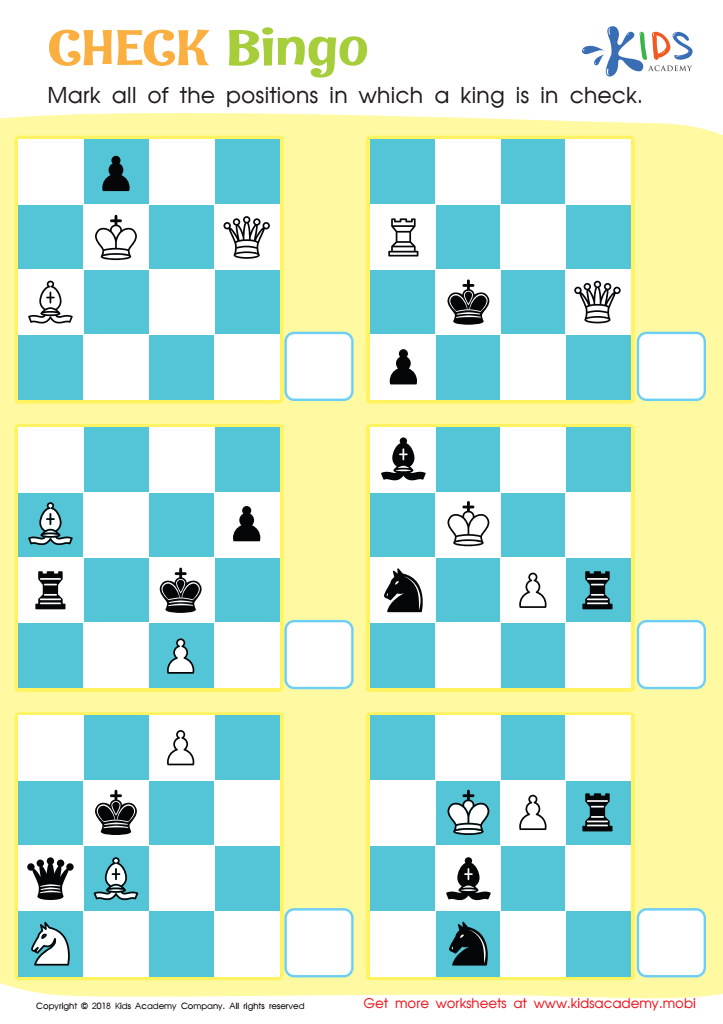
Check Bingo Worksheet
 Assign to My Students
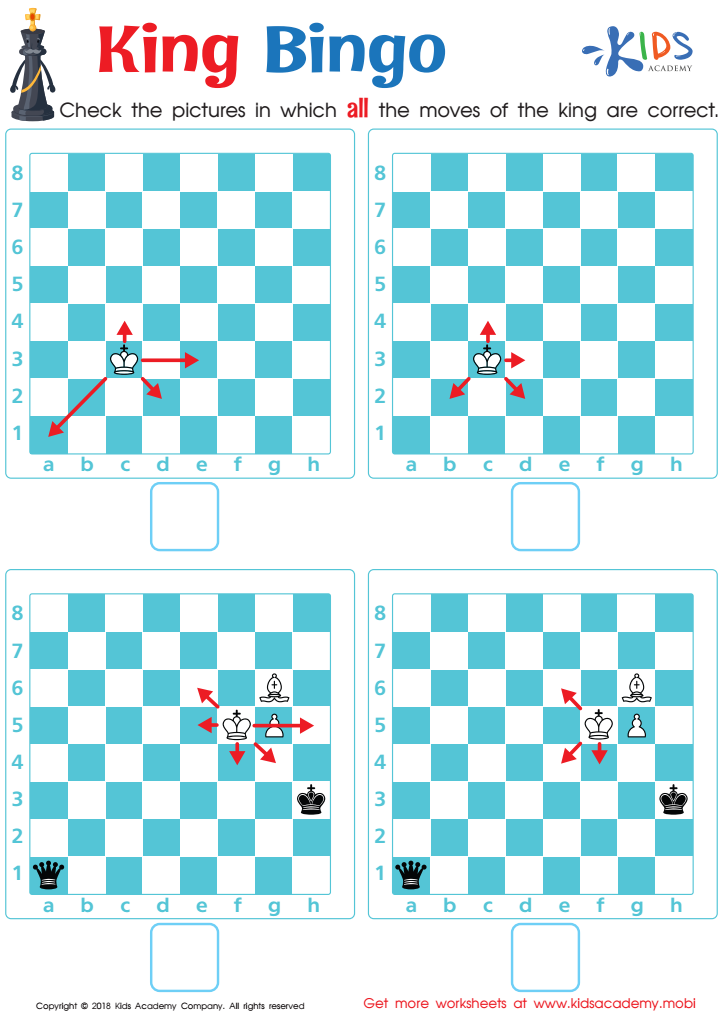
King Bingo Worksheet
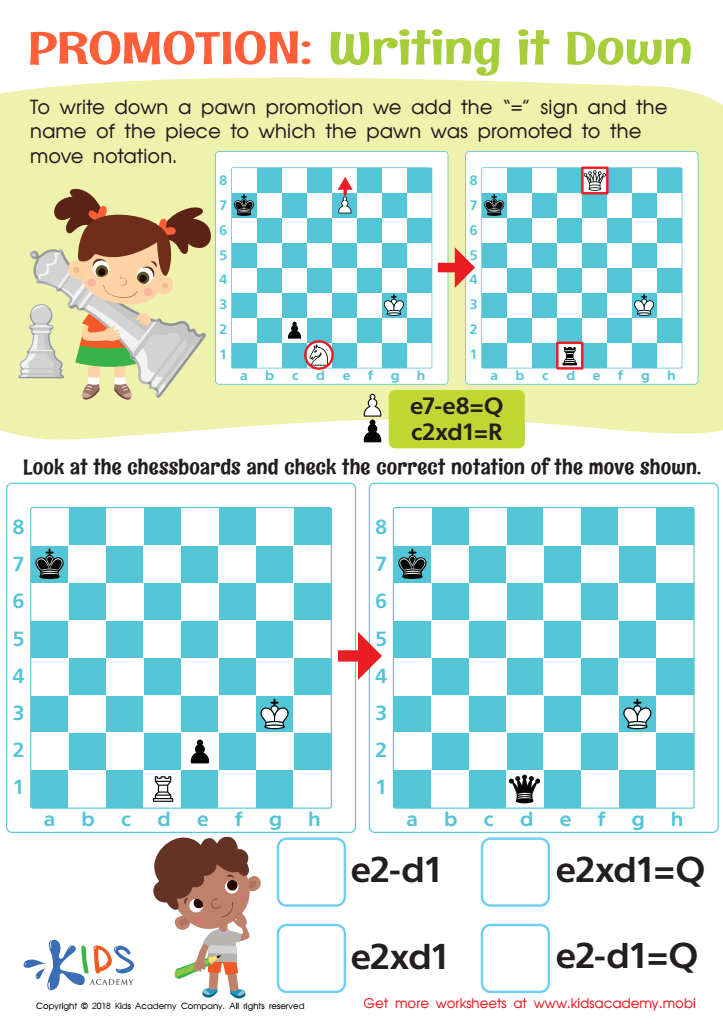
Writing it Down Worksheet



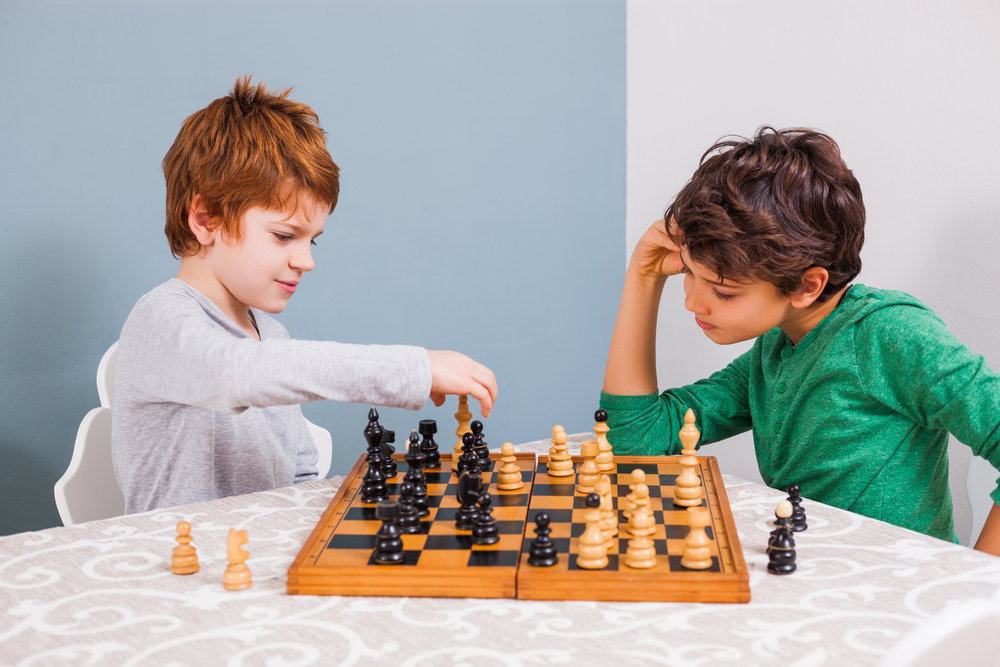

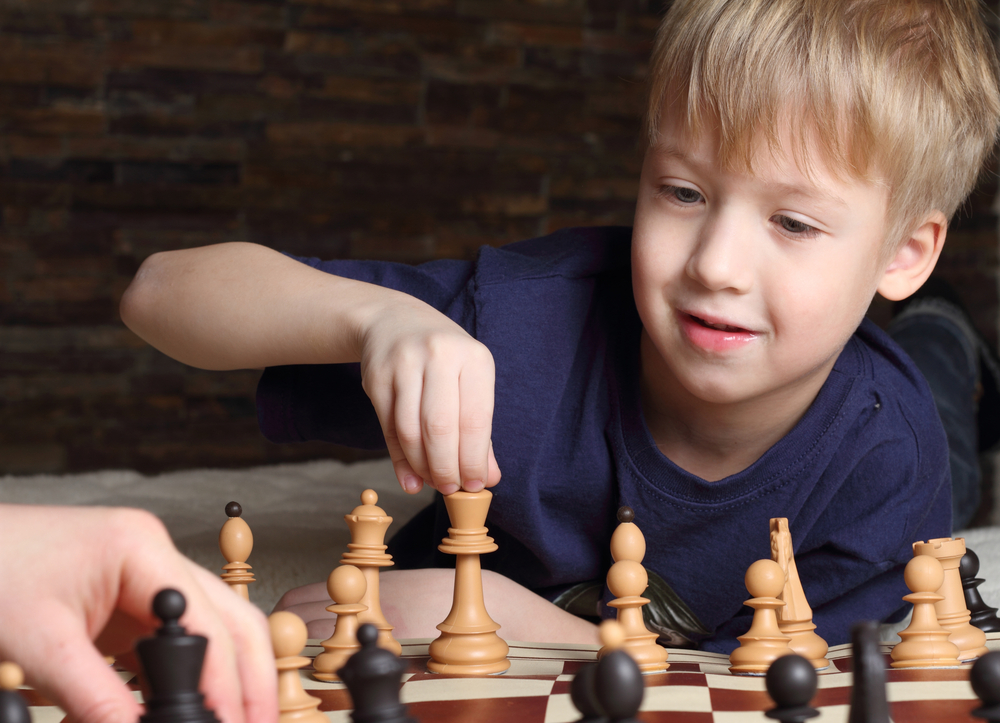

Number Recognition Normal Chess is an engaging way to introduce children aged 5-7 to essential early math concepts through a familiar game format. It blends foundational number recognition with cognitive skills like critical thinking, problem-solving, and strategic planning—skills that are vital in both math and everyday life. For parents and teachers, fostering number recognition is crucial as it serves as a building block for more advanced mathematical understanding.
Chess, with its structured rules and patterns, offers an interactive platform for children to practice counting, recognizing numbers, and associating them with visual representations—like the placement of pieces on the board. By participating in Number Recognition Normal Chess, children develop their ability to identify numbers in various contexts, which links directly to improved numeracy skills.
Additionally, playing chess can enhance concentration, patience, and sportsmanship, teaching children valuable social skills while nurturing a love for learning. For educational practitioners and parents, integrating Number Recognition Normal Chess into playtime provides an enjoyable approach to reinforce math literacy in an innovative way. This fusion not only prepares young learners for future academic success but also builds a solid foundation for lifelong skills.