Enhancing logical thinking Normal Worksheets for Ages 5-7
4 filtered results
-
From - To
Promote critical thinking in children aged 5-7 with our engaging and age-appropriate worksheets. These resources offer fun and interactive ways to develop your child's logical reasoning and problem-solving abilities. Each worksheet is designed to stimulate young minds through puzzles, patterns, and sequencing tasks, making learning both enjoyable and educational. Perfect for parents and teachers, our worksheets provide a solid foundation for mathematical thinking and cognitive skills. From identifying patterns to solving simple puzzles, watch your child’s confidence soar while having fun. Equip your children with essential skills for their academic journey with our expertly crafted materials.
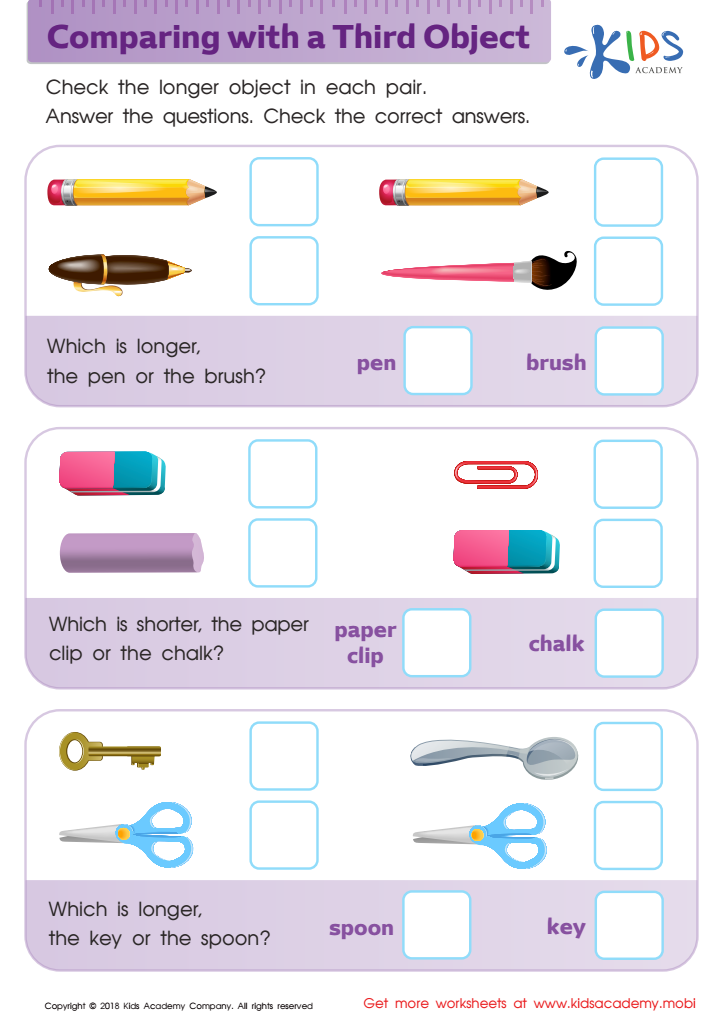
Comparing with a Third Object Worksheet
 Assign to My Students
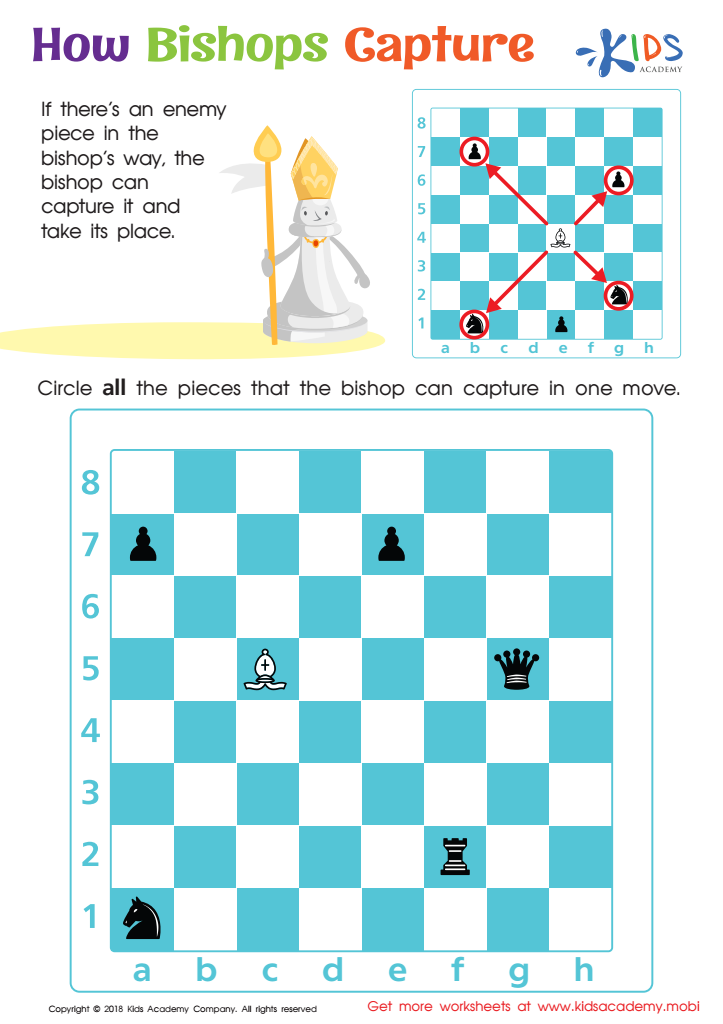
How Bishops Capture Worksheet
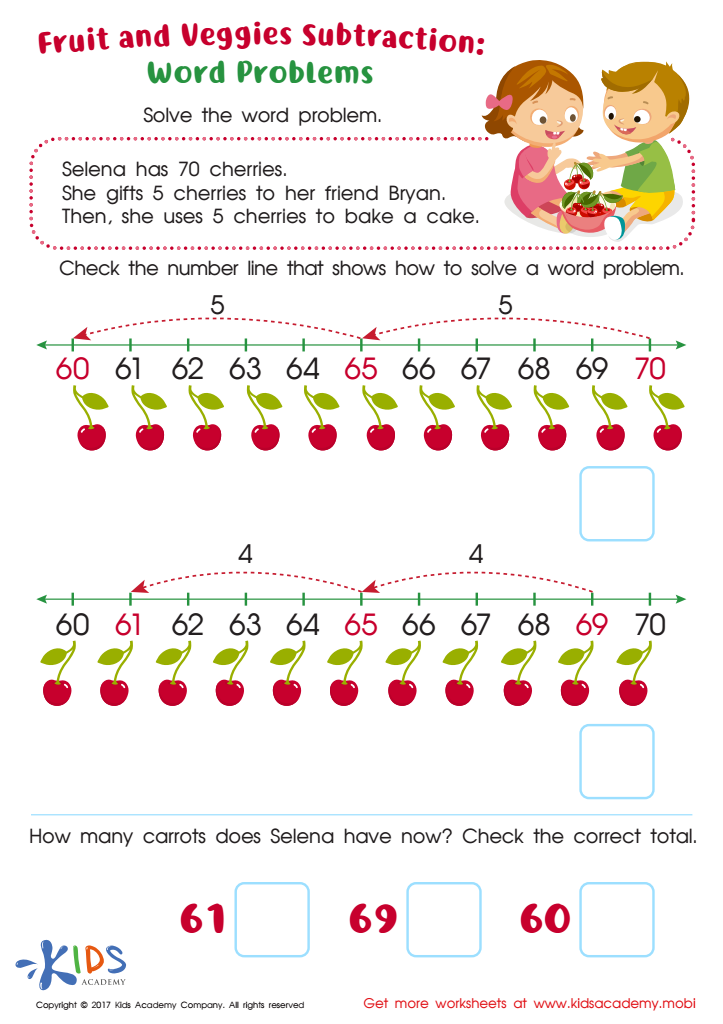
Subtraction Word Problems Free Printable
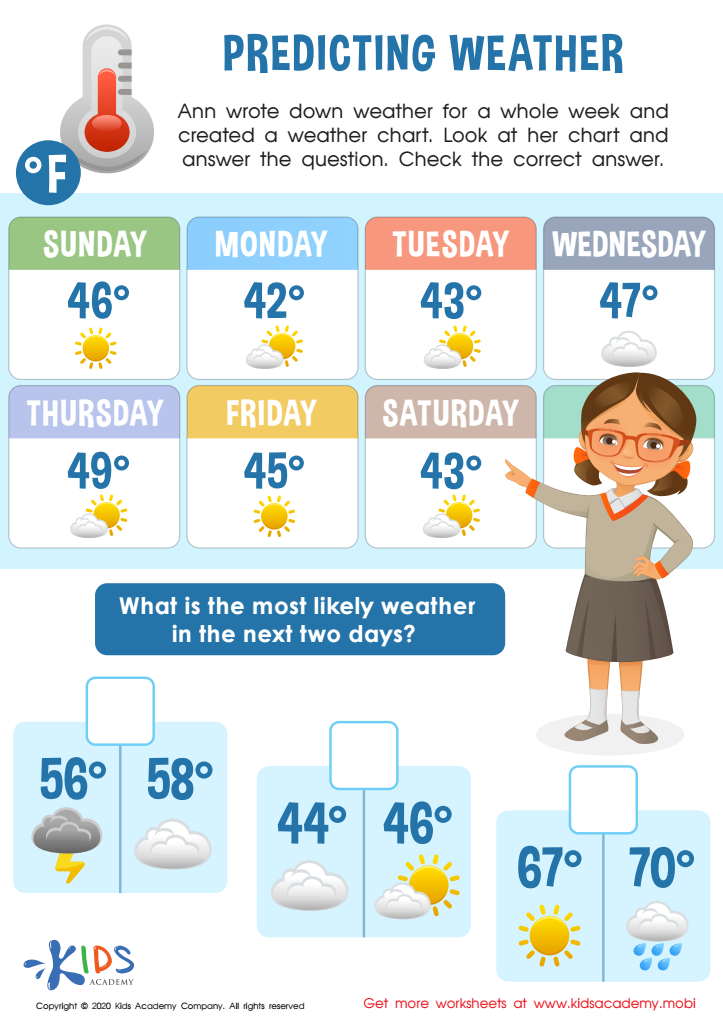
Predicting Weather Worksheet








Enhancing logical thinking in children aged 5-7 is essential for several reasons. Firstly, this developmental stage is a critical period for cognitive growth. Strengthening logical thinking skills helps build a strong foundation for problem-solving and reasoning abilities, which are crucial throughout academic life and beyond.
Logical thinking aids children in making sense of the world around them by allowing them to categorize, make connections, and understand cause-and-effect relationships. For instance, when children sort objects by shape or size, they are practicing categorization, a fundamental element of logical thinking. This skill will later support more complex mathematical concepts and scientific reasoning.
Moreover, fostering logical thinking also enhances early literacy skills. Children begin to understand sequences, such as the order of events in a story, which improves their comprehension and narrative skills. This groundwork assists with future reading and writing tasks, guaranteeing better academic performance.
Parents and teachers play a pivotal role in nurturing these abilities through engaging activities and discussions that challenge children to think critically and make logical connections. This kind of early educational intervention empowers children to develop a lifelong love for learning, encourages curiosity, and cultivates confidence in their intellectual capabilities. Therefore, investing time in enhancing logical thinking at this age can yield substantial long-term benefits.








