Phonics comprehension Normal Worksheets for Ages 5-7
3 filtered results
-
From - To
Our Phonics Comprehension Normal Worksheets are crafted for ages 5-7, providing an engaging way for young learners to build foundational reading skills. These worksheets cover essential topics like vowel and consonant sounds, blending, and word recognition. Each activity is designed to enhance students' phonemic awareness and decoding abilities while keeping them entertained with vibrant visuals and interactive exercises. Perfect for both classroom and home use, our resources aid in the development of strong early reading skills, ensuring kids are on the path to literacy success. Help your child master phonics through fun and educational practice with our expertly designed worksheets!
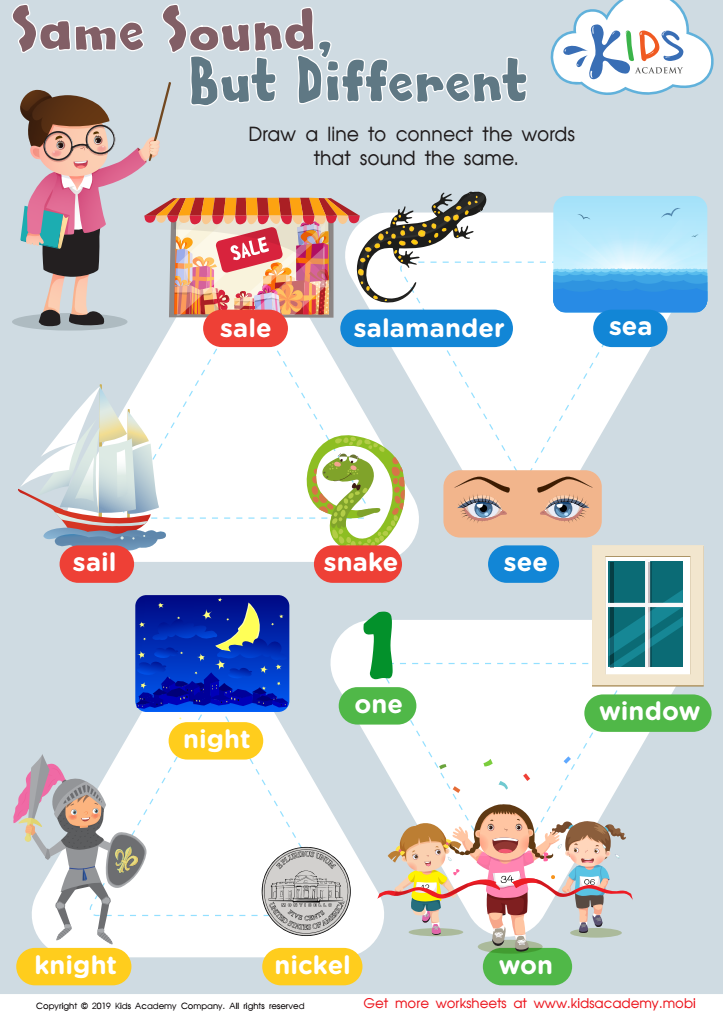
Sound Different Worksheet
 Assign to My Students
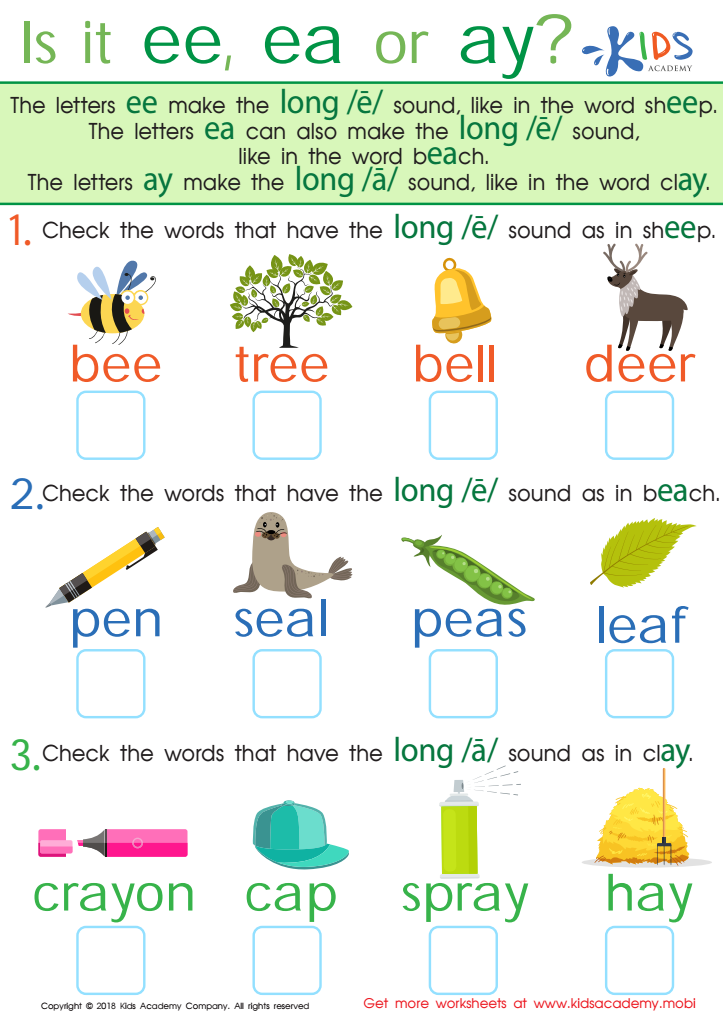
Is It EE, EA, or AY? Worksheet
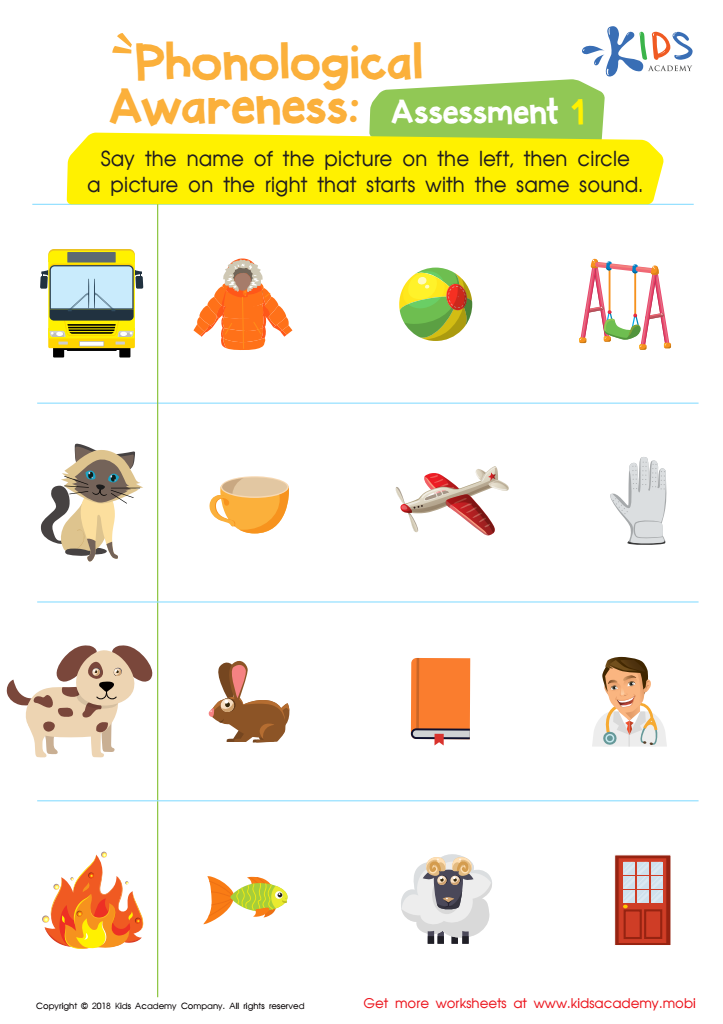
Phonological Awareness: Assessment 1 Worksheet








Phonics comprehension is crucial for children ages 5-7, as this foundational skill significantly impacts their reading and writing development. At this age, children's brains are highly receptive to learning the relationships between letters and sounds, which is the essence of phonics. Mastery of phonics helps kids decode words efficiently, increasing their reading fluency and accuracy. This, in turn, enhances their comprehension skills, allowing them to understand and enjoy a variety of texts.
For parents, supporting phonics comprehension means actively participating in their child’s early education, providing encouragement, and fostering a positive learning environment at home. Simple activities like reading together, playing phonics games, and practicing letter sounds can make a significant difference.
Teachers, on the other hand, play an instrumental role by delivering structured phonics instruction consistently. Through systematic and explicit teaching methods, educators can ensure that children grasp the basic building blocks of language. Continuous assessment and intervention can help identify kids struggling with phonics so they receive the necessary support, preventing potential future literacy challenges.
Ultimately, proper phonics instruction sets the stage for a lifelong love of reading and learning, laying a solid groundwork not just for English language arts, but across all subjects that require reading comprehension. Engaging with phonics now paves the way for confident, capable, and enthusiastic readers, shaping their academic success and personal growth.








