Prefix understanding Normal Worksheets for Ages 5-7
3 filtered results
-
From - To
Unlock the world of prefixes with our engaging worksheets tailored for ages 5-7. Each activity is designed to build foundational language skills by enhancing prefix understanding, making learning fun and effective. Our worksheets not only help children grasp this key concept but also encourage creativity and critical thinking. With colorful, interactive exercises, kids will enjoy exploring the power of prefixes in changing word meanings. Perfect for both classroom and at-home learning, these printable sheets are a valuable resource for young learners. Join us in fostering early literacy skills and watching students grow confident in their reading and writing abilities!
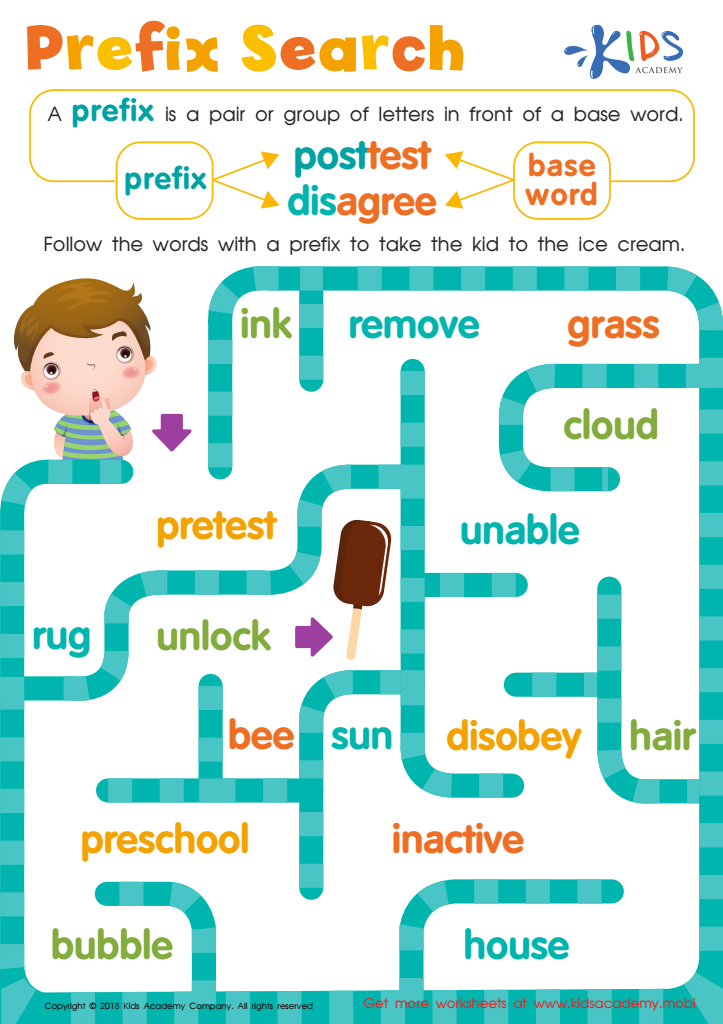
Reading: Prefix Search Worksheet
 Assign to My Students
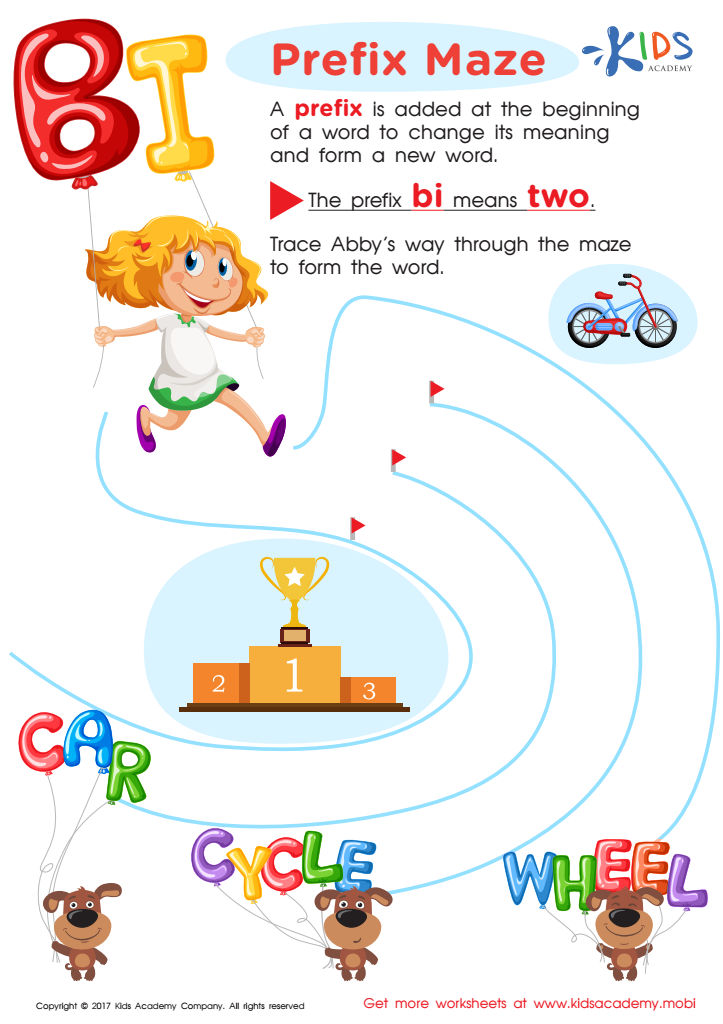
Prefix Bi Words Worksheet
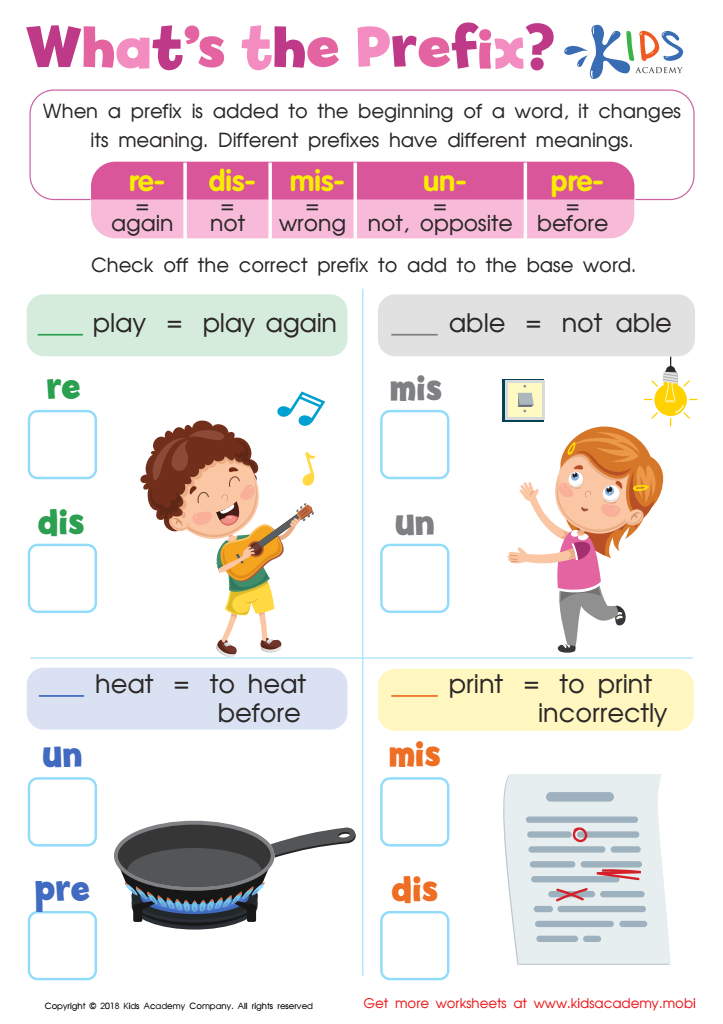
Reading: What Is the Prefix Worksheet







Understanding prefixes is essential for young children, particularly those ages 5-7, because it plays a fundamental role in vocabulary development and comprehension skills. At this formative stage, children's cognitive abilities are rapidly expanding, and grasping the concept of prefixes helps them decode and understand new words. This, in turn, enhances their reading fluency and comprehension.
Prefixes, which are added to the beginning of words to alter their meaning, provide children with a toolkit to broaden their vocabulary without needing to learn completely new words. For example, understanding that "un-" means "not" helps children realize that "happy" and "unhappy" have opposite meanings. This comprehension fosters critical thinking and analytical skills, as children begin to make connections between familiar and unfamiliar words.
Moreover, early prefix education strengthens spelling and writing abilities. As children become adept at recognizing and using prefixes, they gain confidence in their spelling choices and sentence construction, improving their overall literacy. Additionally, as they encounter more complex texts, this foundational knowledge will support better comprehension and less reliance on adult assistance.
Given these benefits, it is important for parents and teachers to focus on prefix education as part of a holistic approach to early literacy, setting children on a path to academic success and lifelong learning.








