Reading analog clocks Normal Worksheets for Ages 5-7
3 filtered results
-
From - To
Time to make learning fun and engaging with our "Reading Analog Clocks Normal Worksheets for Ages 5-7" at Kid's Academy! These expertly designed worksheets help young learners master the foundational skill of telling time on an analog clock. Developed for kids aged 5-7, the worksheets include a variety of exercises that teach the position of the hour and minute hands. With colorful illustrations and easy-to-follow instructions, children will effortlessly learn how to read and interpret analog clocks while boosting their confidence and fine motor skills. Make time-telling enjoyable and educational with Kid's Academy today!
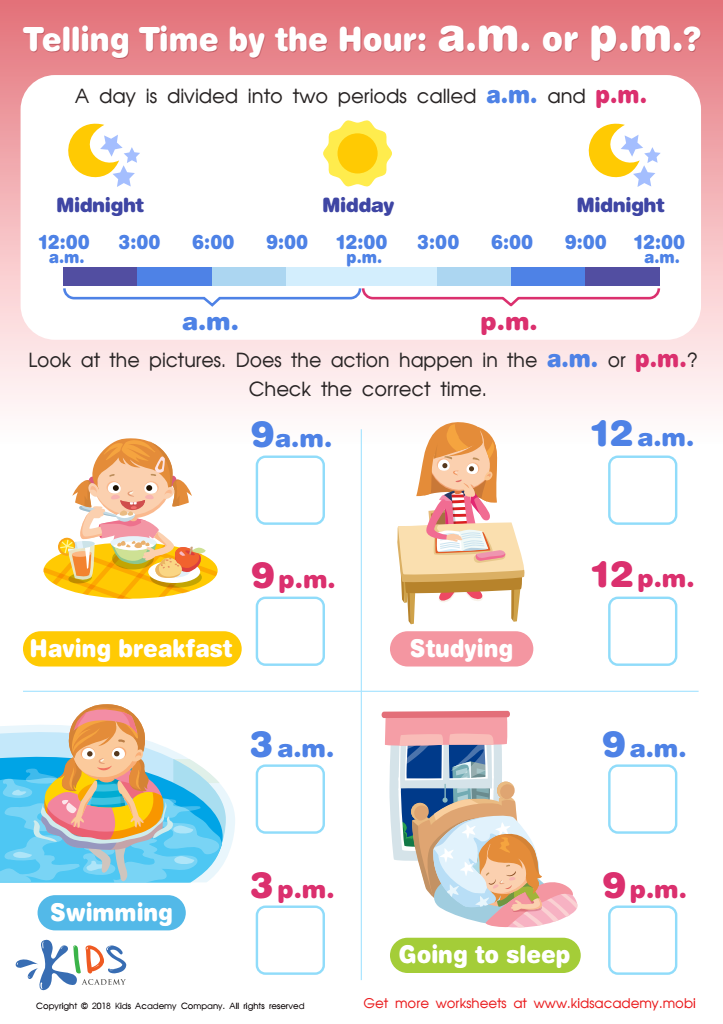
Tilling Time by the Hour: a.m. or p.m.? Worksheet
 Assign to My Students
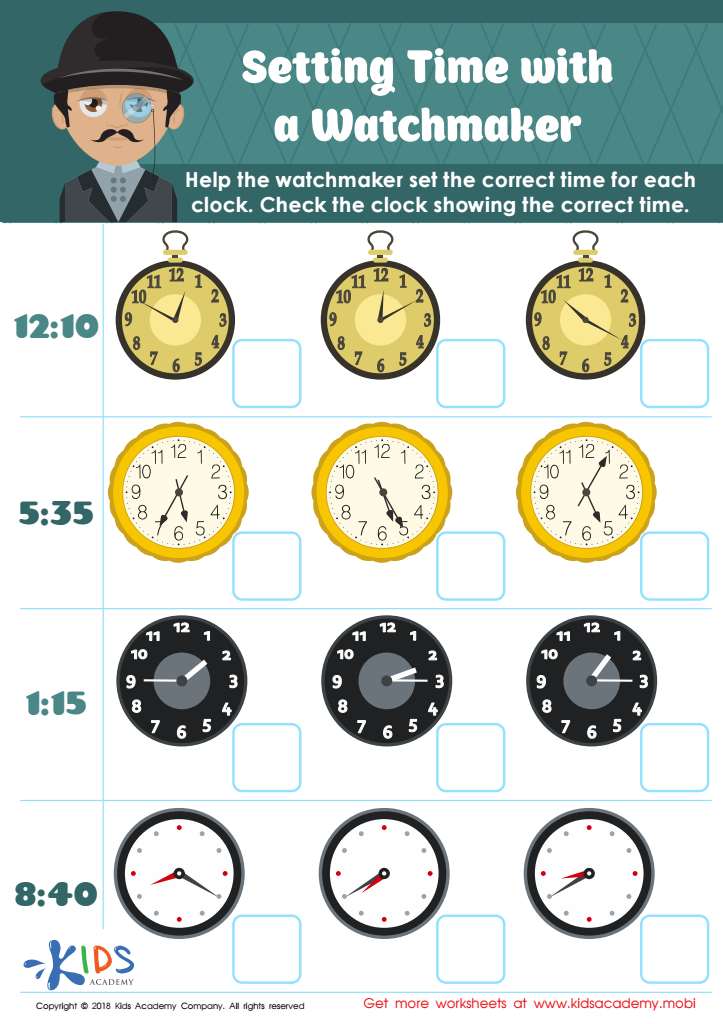
Setting Time with Watchmaker Worksheet
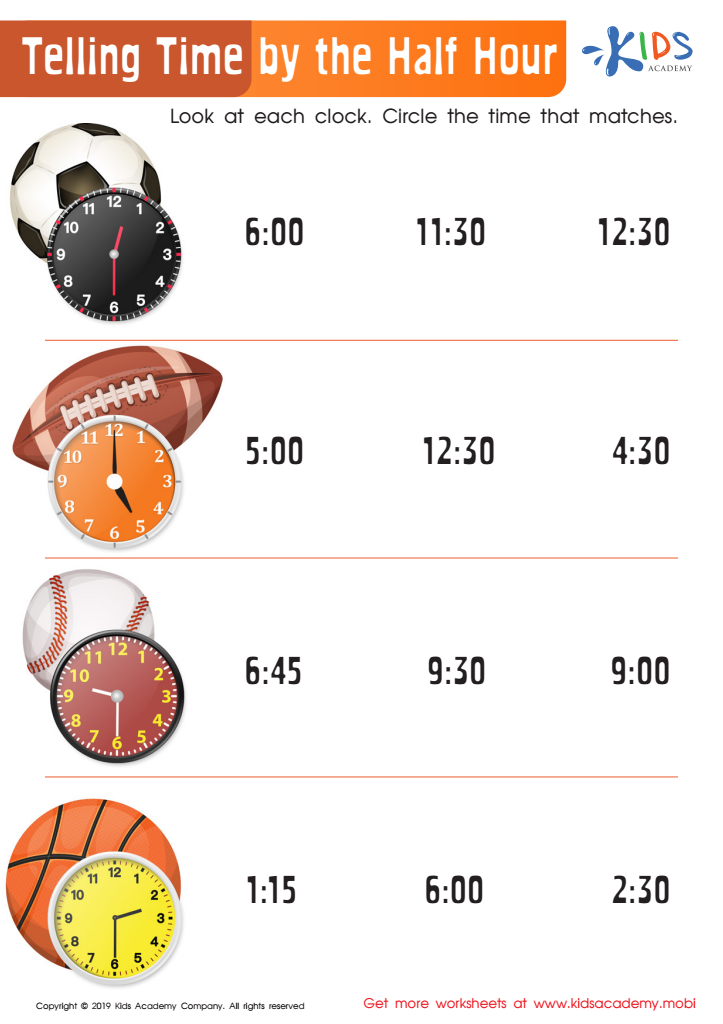
Telling Time by the Half Hour Worksheet








Teaching children aged 5 to 7 to read analog clocks is crucial for their development and daily life skills. For starters, it fosters a sense of time management and responsibility at a young age. Understanding the concept of time helps children structure their day, leading to better organizational skills.
Analog clocks also enhance children's mathematical abilities. When kids learn to tell the time, they practice counting by fives, recognize the passage of minutes and hours, and understand the concept of fractions, such as half-past and quarter-past.
Additionally, reading analog clocks helps with fine motor skills. As children manipulate and move clock hands on educational toys, they improve their hand-eye coordination.
Understanding analog clocks fosters independence. Children can anticipate events and routines, such as meal times, bedtime, and school schedules, enhancing their ability to function autonomously within these frameworks.
Lastly, despite digital clocks being prevalent, analog clocks are still widely used in many contexts such as schools, public places, and household environments. Being proficient in reading both types of clocks ensures that children can interpret time correctly in any setting.
Altogether, teaching young kids to read analog clocks is a combination of nurturing critical-life skills, reinforcing academic learning, and promoting overall autonomy and competence in daily activities.








