Understanding vowel sounds Normal Worksheets for Ages 5-7
4 filtered results
-
From - To
"Understanding Vowel Sounds Normal Worksheets for Ages 5-7" offered by Kids Academy is designed to enhance your child's phonics skills through engaging and educational activities. These printable worksheets focus on recognizing and manipulating vowel sounds, fostering early reading proficiency. Tailored for young learners aged 5-7, each worksheet creatively reinforces sound and letter relationships through fun exercises. By mastering vowel sounds, children build a strong foundation for reading and spelling success. Boost your child’s literacy journey today with our expertly curated resources, perfect for preschool and early elementary school students. Explore the full selection of vowel sound worksheets at Kids Academy!
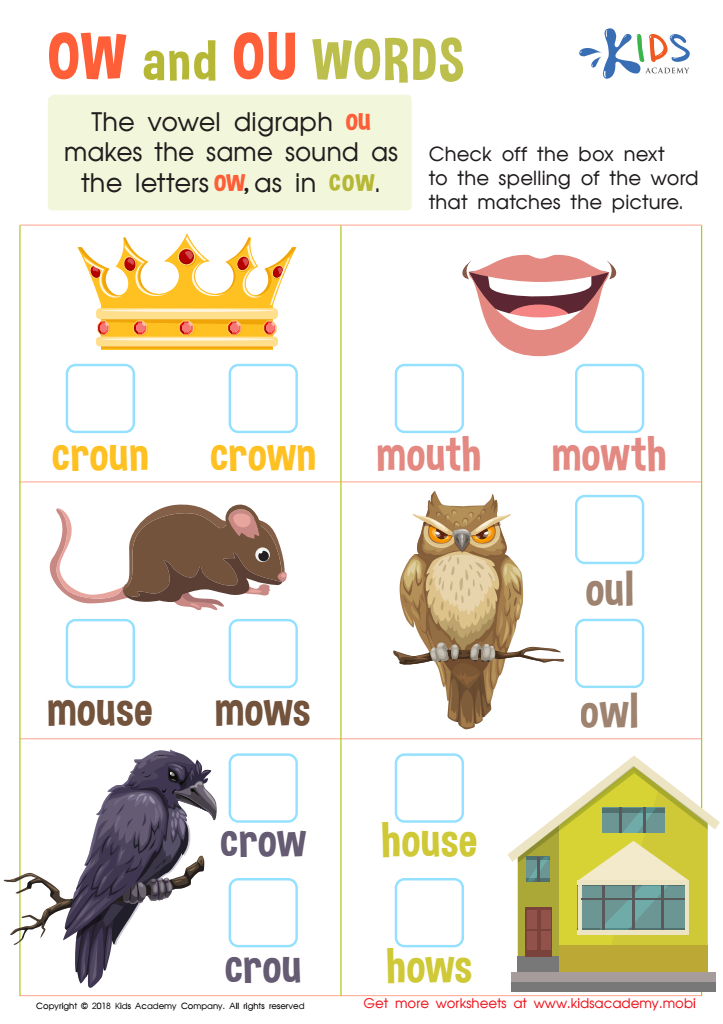
Reading: OW and OU Words Worksheet
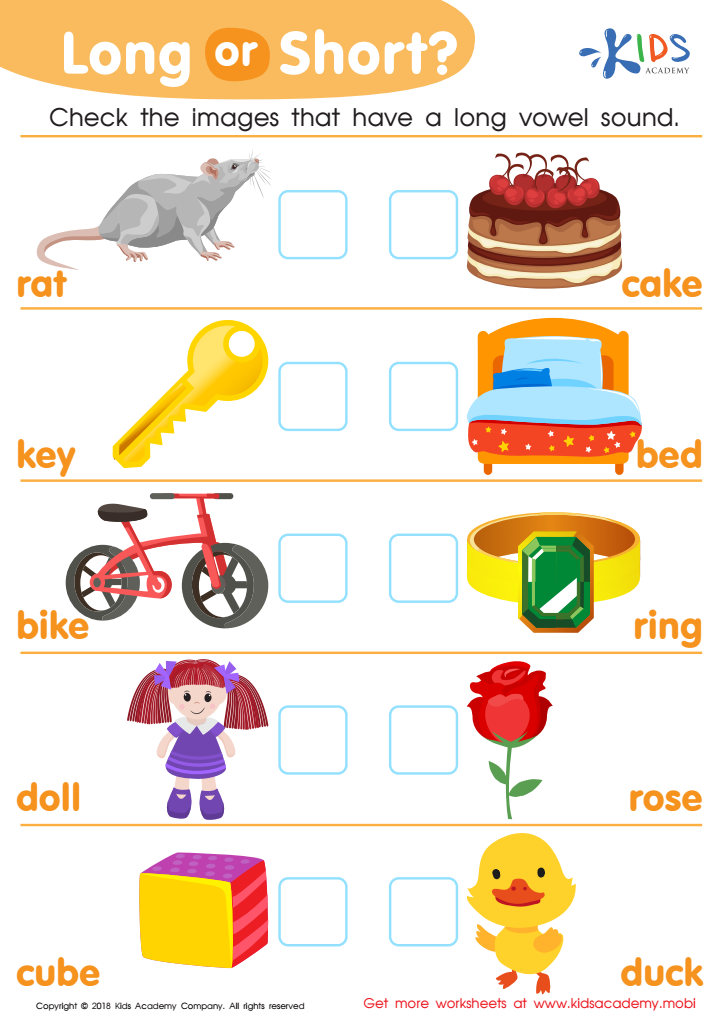
Long or Short Reading Worksheet
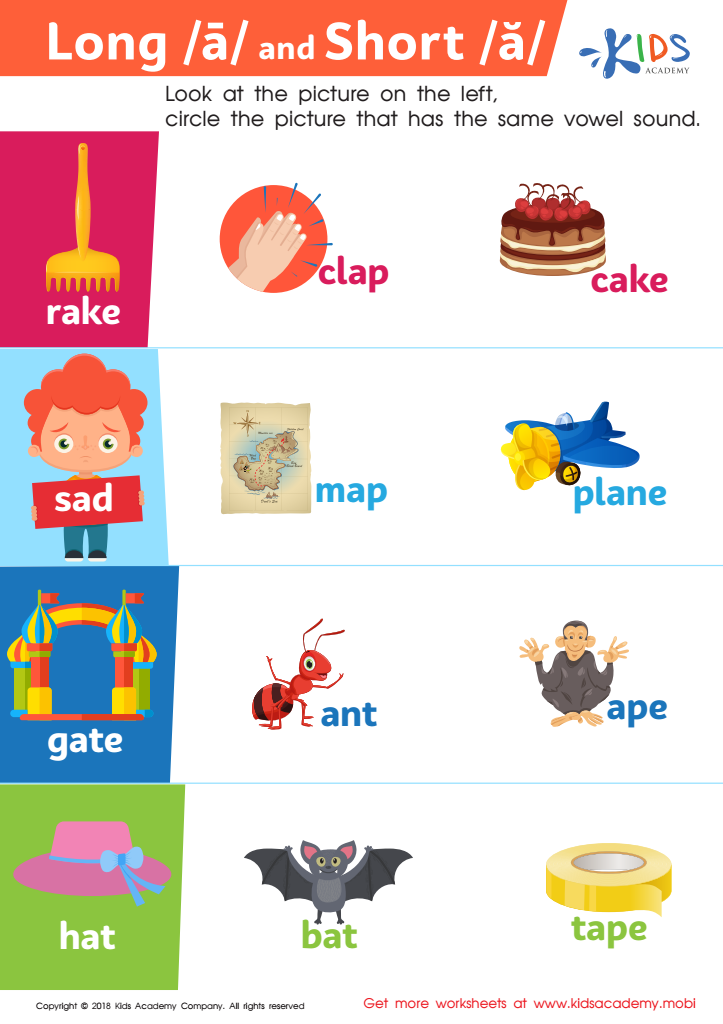
Reading: Long a and Short a Worksheet
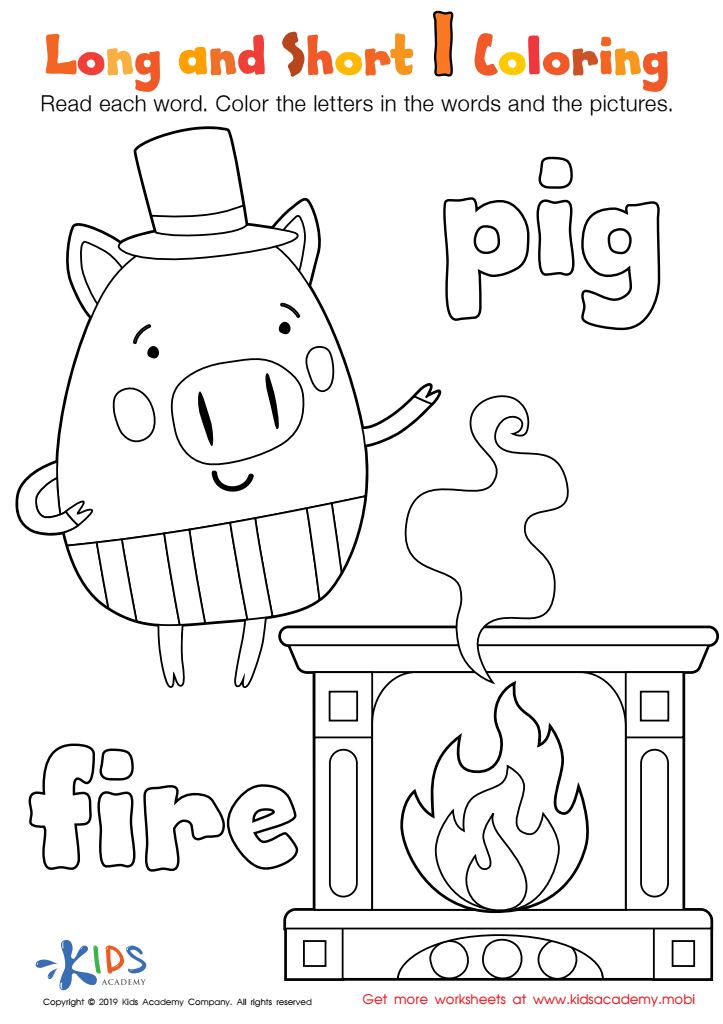
Long and Short I Worksheet
 Assign to My Students







Understanding vowel sounds is a fundamental part of early childhood literacy and plays a crucial role in reading, writing, and speaking skills for ages 5-7. At this stage, children are typically in kindergarten or the early grades of elementary school, where they are transitioning from recognizing letters to forming words and reading sentences.
Vowel sounds form the heart of syllables, and understanding them helps young learners decode new words. This process, known as phonemic awareness, is essential for effective reading. When children can distinguish between short and long vowel sounds, for example, they can more accurately pronounce, read, and understand a variety of words. Moreover, understanding vowel sounds aids in spelling and writing. For instance, knowing the difference between the sounds of “hat” and “hate” helps them grasp the concept of silent 'e' and how it changes word pronunciation and meaning.
Beyond literacy, proficiency in vowel sounds fosters better communication skills. Clear and correct pronunciation is key to being understood and understanding others in conversation, which enhances social interaction and confidence.
Teachers and parents who invest time in reinforcing these skills set the groundwork for academic success. Activities like phonics games, reading aloud, and frequent practice can make learning both effective and fun. Therefore, understanding vowel sounds isn’t just about education; it’s about empowering children to be confident communicators and capable learners.








