Hand-eye Coordination Normal Addition & Subtraction Worksheets for Ages 5-7
3 filtered results
-
From - To
Boost your child's math skills and fine motor development with our Hand-eye Coordination Normal Addition & Subtraction Worksheets for Ages 5-7. These engaging, expertly crafted activities are designed to enhance your child's basic arithmetic abilities while promoting hand-eye coordination. Our worksheets blend educational rigor with fun challenges to ensure an enjoyable learning experience. Perfect for classrooms and homeschooling alike, these resources cater to various learning styles, helping young learners develop confidence in addition and subtraction. Explore our comprehensive collection at Kids Academy and give your child the head start they deserve in mastering essential math concepts.
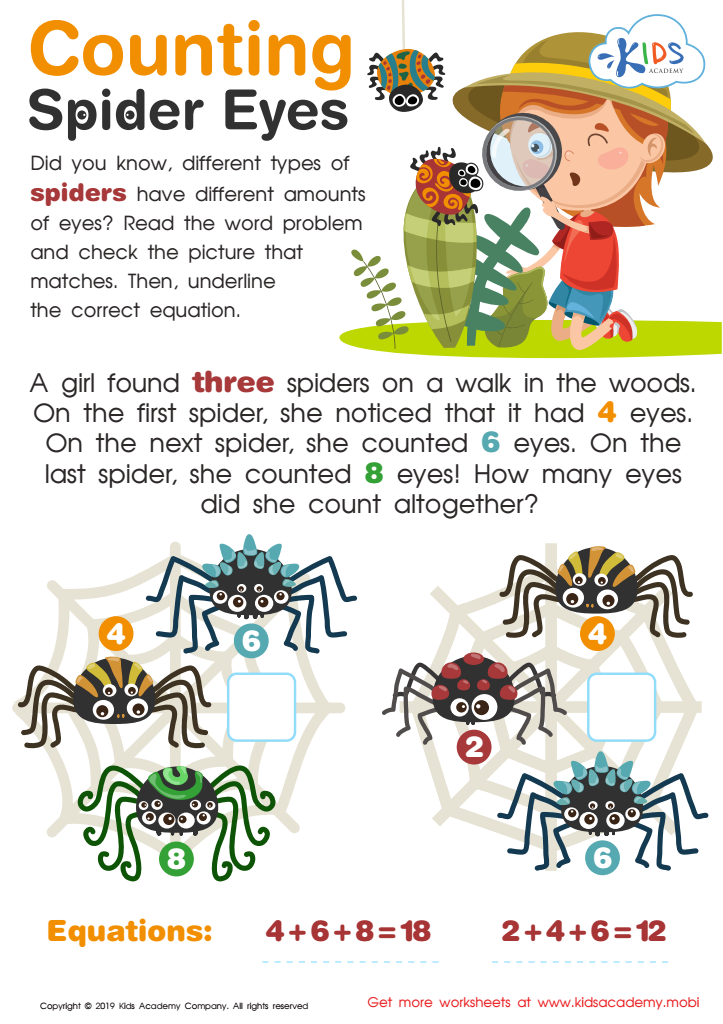
Counting Spider Eyes Worksheet
 Assign to My Students
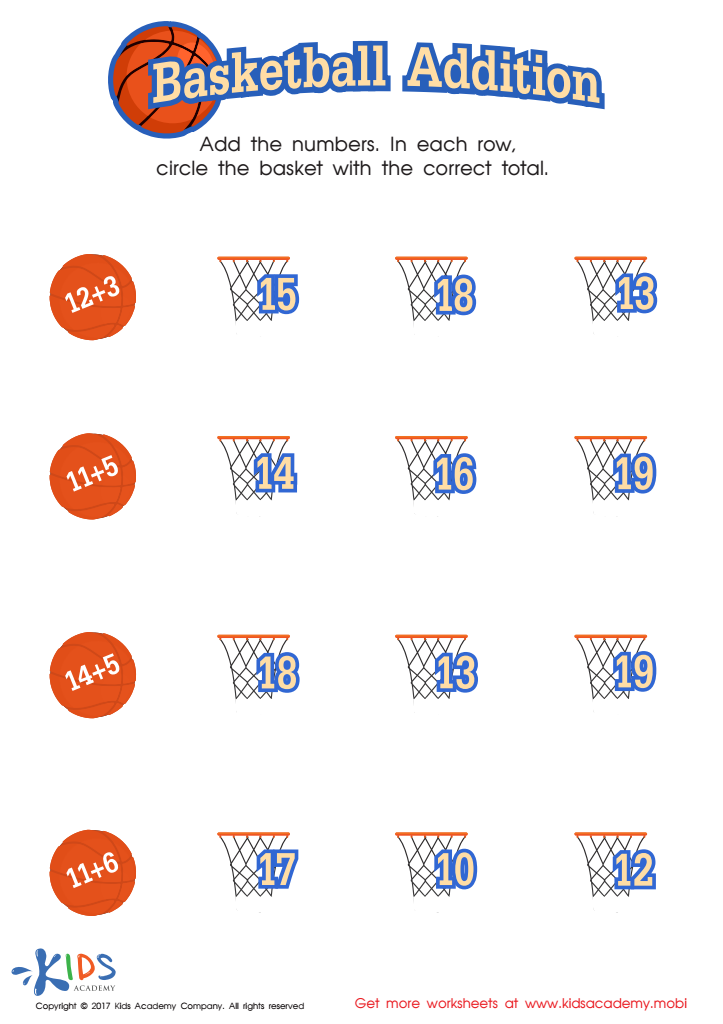
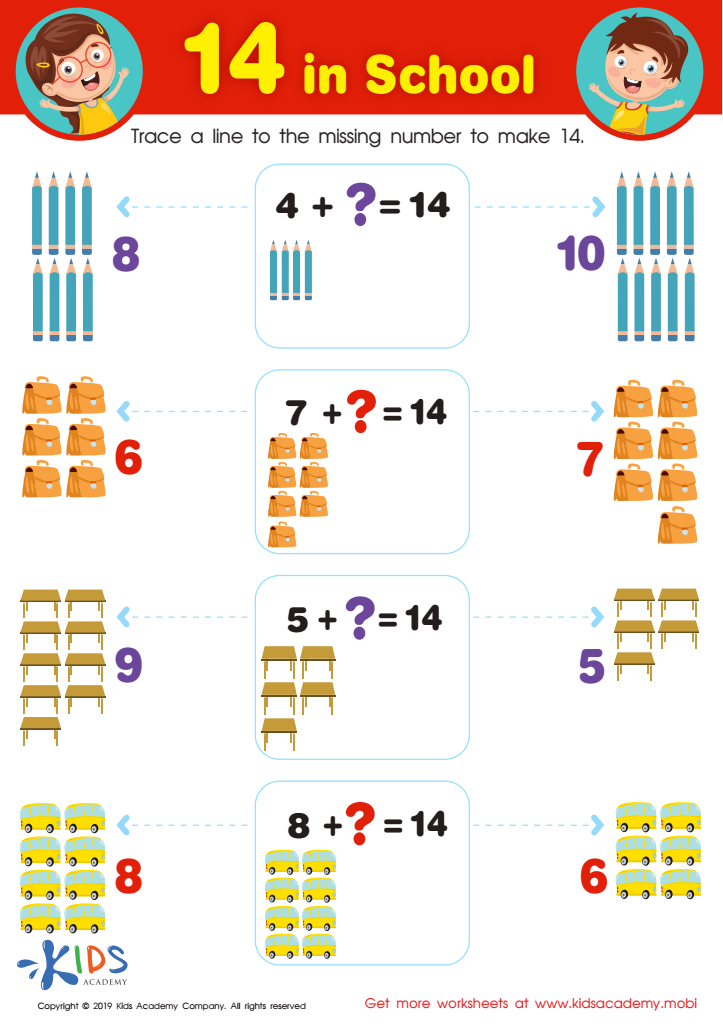
14 in School Worksheet








Hand-eye coordination, especially in the context of normal addition and subtraction for ages 5-7, is a crucial developmental milestone that parents and teachers should care about for several reasons. First, strong hand-eye coordination enhances a child's ability to perform daily tasks effectively, such as writing, drawing, and participating in physical activities. These skills are foundational and influence their academic and personal growth.
Moreover, integrating hand-eye coordination activities with learning basic math, like addition and subtraction, helps create a multi-sensory learning experience. This promotes better understanding and retention of mathematical concepts. For example, using manipulatives like counting beads or blocks engages a child visually and physically, ensuring they grasp the concept more concretely. This method addresses diverse learning styles and can make math more enjoyable and less intimidating.
Proper development of these skills also fosters better focus and concentration, as executing tasks that combine hand and eye movements can enhance a child's ability to pay attention to details. Finally, achieving competency in these foundational skills builds self-confidence. When children feel confident in their abilities, they exhibit greater enthusiasm for learning, setting a positive tone for their entire educational journey. Early attention to hand-eye coordination thus supports holistic developmental and academic success.








