Normal Fractions of Shapes Worksheets for Ages 5-7
5 filtered results
-
From - To
Our "Normal Fractions of Shapes Worksheets for Ages 5-7" are perfect for young learners beginning their journey with fractions. These engaging worksheets, designed for kids aged 5-7, use colorful shapes to introduce fraction concepts in a fun and accessible way. Students will develop a solid understanding of how fractions represent parts of a whole, enhancing their basic math skills. Each worksheet features intuitive, step-by-step exercises to help children identify and work with fractions, making learning interactive and enjoyable. Perfect for classroom and home use, these resources build confidence and lay a foundation for future math success.
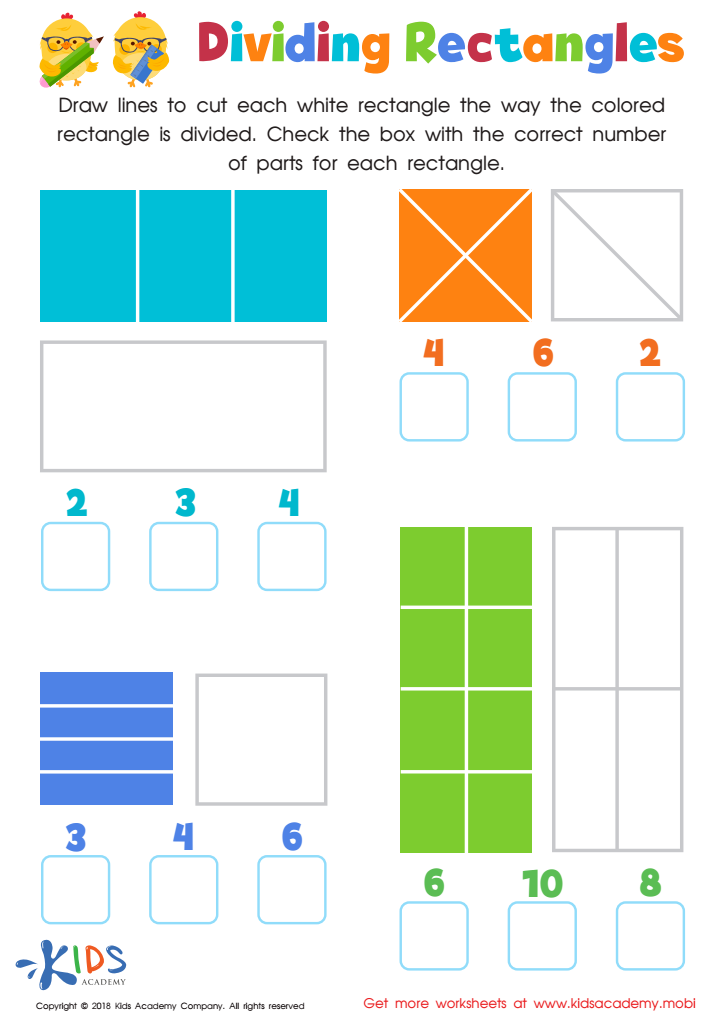
Dividing Rectangles Worksheet
 Assign to My Students
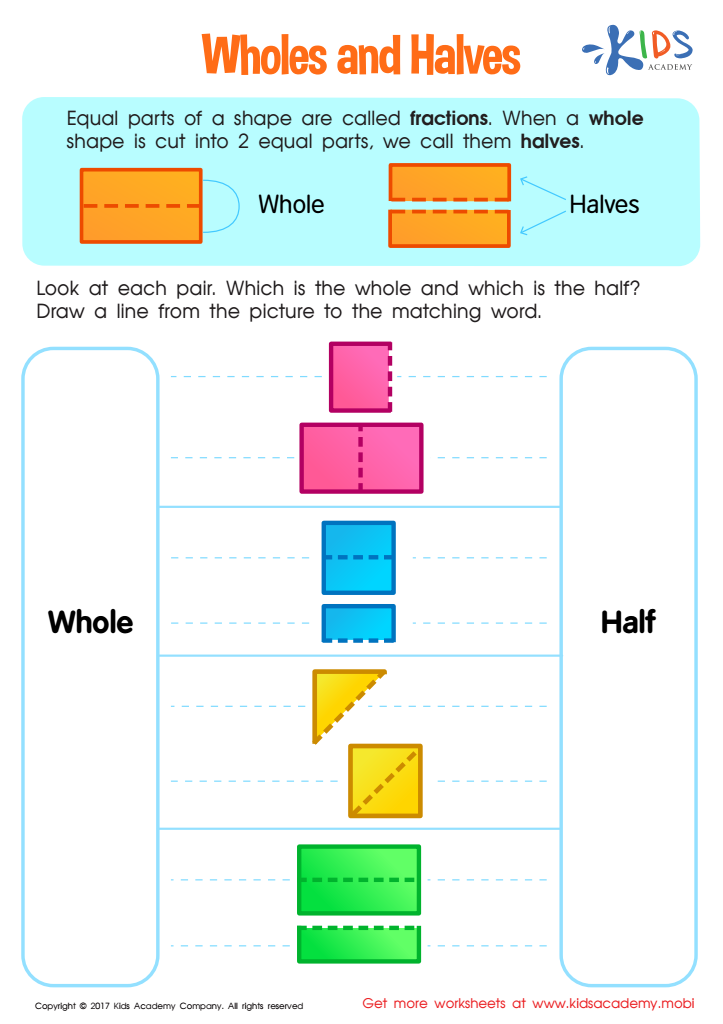
Wholes and Halves Worksheet
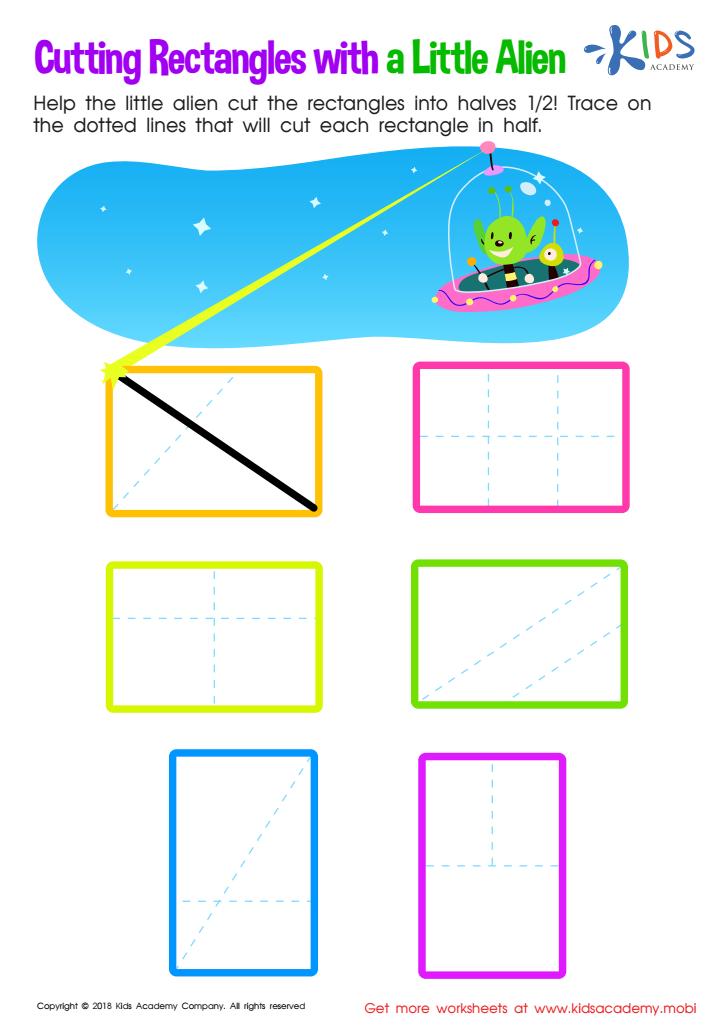
Cutting Rectangles with Alien Worksheet
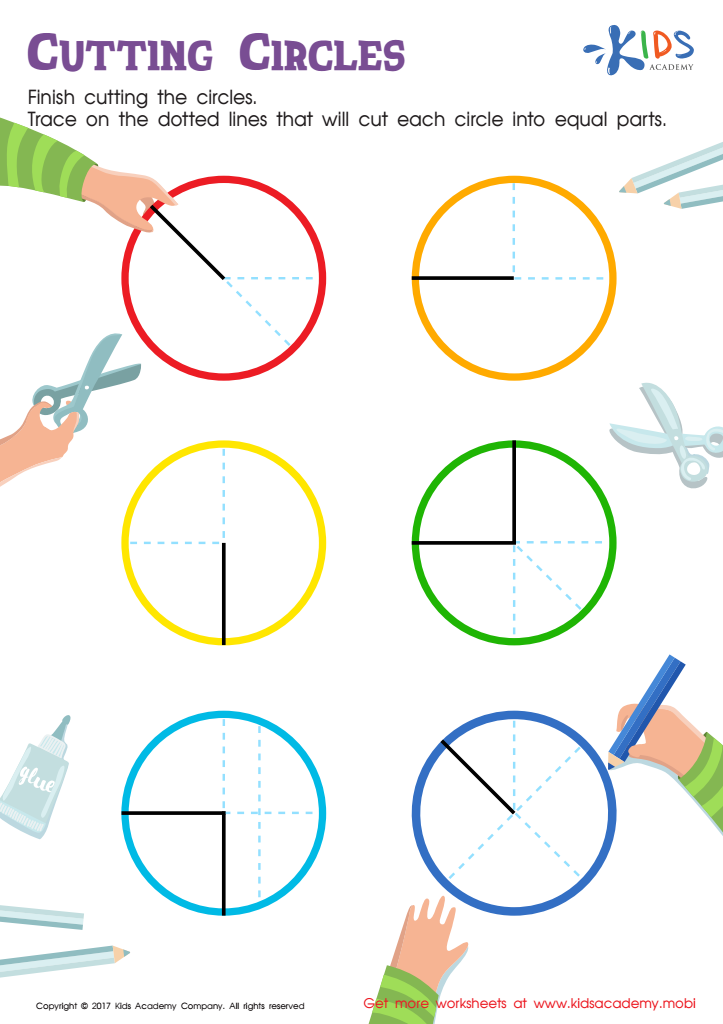
Cutting Circles Worksheet
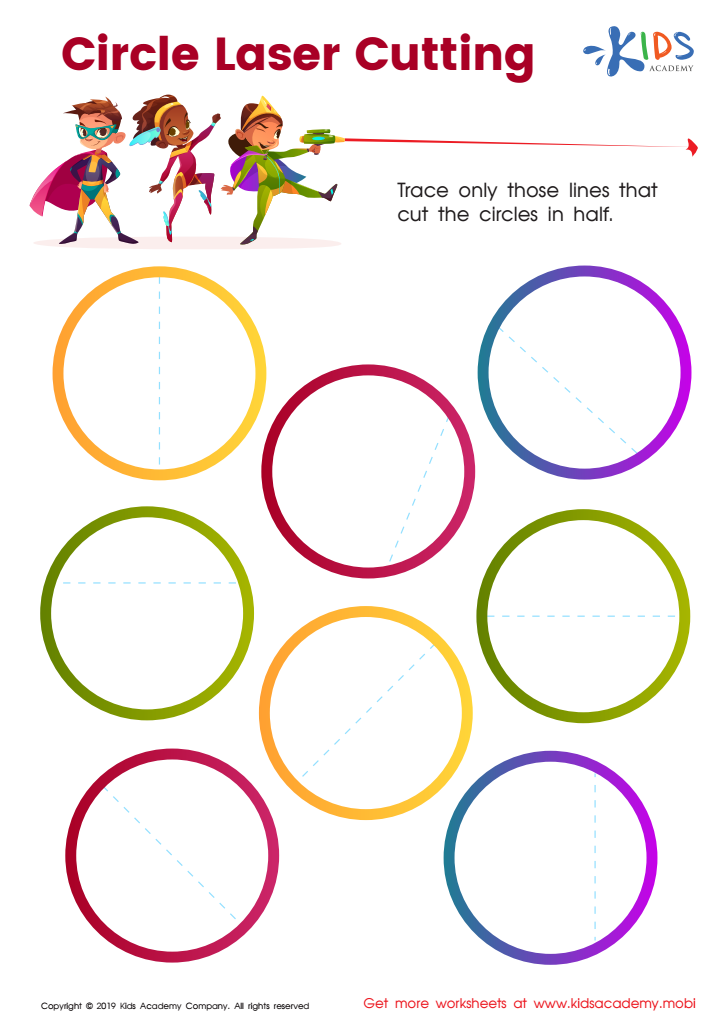
Circle Laser Cutting Worksheet








Understanding normal fractions of shapes, i.e., dividing circles, squares, and other simple shapes into equal parts, is a foundational mathematical skill for children ages 5-7. This concept is crucial for several reasons. First, it introduces children to the idea of fairness and equality because fractions deal with dividing things into equal parts, which aligns with young children's strong sense of fairness. Second, grasping fractions of shapes builds spatial awareness and helps children visualize and comprehend parts and wholes, concepts that are fundamental in math and everyday life.
Moreover, teaching fractions at this early age helps in the development of critical thinking and problem-solving skills. Children start to understand that a whole can be divided into parts and that these parts can come together to make a whole. This understanding is a precursor to more complex fraction concepts and proportions they'll encounter later in their education.
Additionally, fractions are omnipresent in real life, from dividing food items equally among friends to understanding time (e.g., half-hours and quarter-hours). Engaging with these concepts early on, using shapes ensures that children gain practical, relatable experiences. Hence, teachers and parents should prioritize teaching fractions of shapes to lay a strong mathematical foundation, foster equitable understanding, and make learning both fun and practically applicable.