Counting skills Normal Geometry Worksheets for Ages 5-7
6 filtered results
-
From - To
Discover our "Counting Skills Normal Geometry Worksheets" designed specifically for children ages 5-7! These engaging worksheets make learning enjoyable by combining counting and geometry concepts. Each activity focuses on helping young learners recognize shapes, understand patterns, and develop essential counting skills in a fun and interactive way. With colorful graphics and age-appropriate challenges, kids will confidently build their math foundation while enjoying hands-on practice. These resources are perfect for teachers and parents looking to enhance their child’s understanding of geometry through counting. Start your child's mathematical journey with our expertly crafted worksheets today, and watch their skills grow!
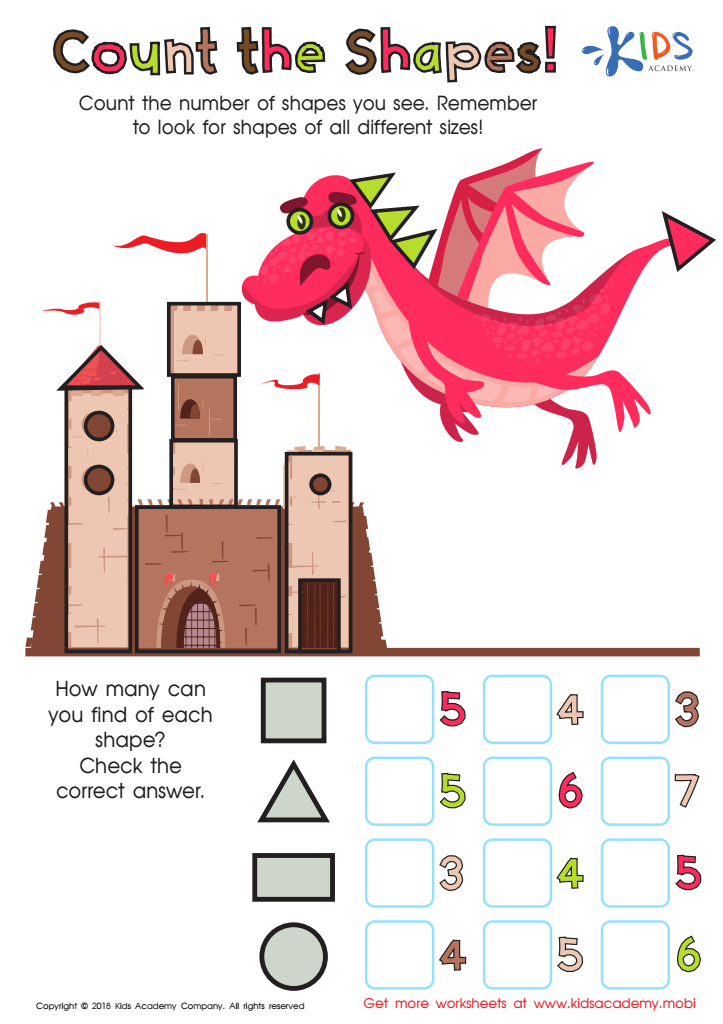
Count the Shapes Worksheet
 Assign to My Students











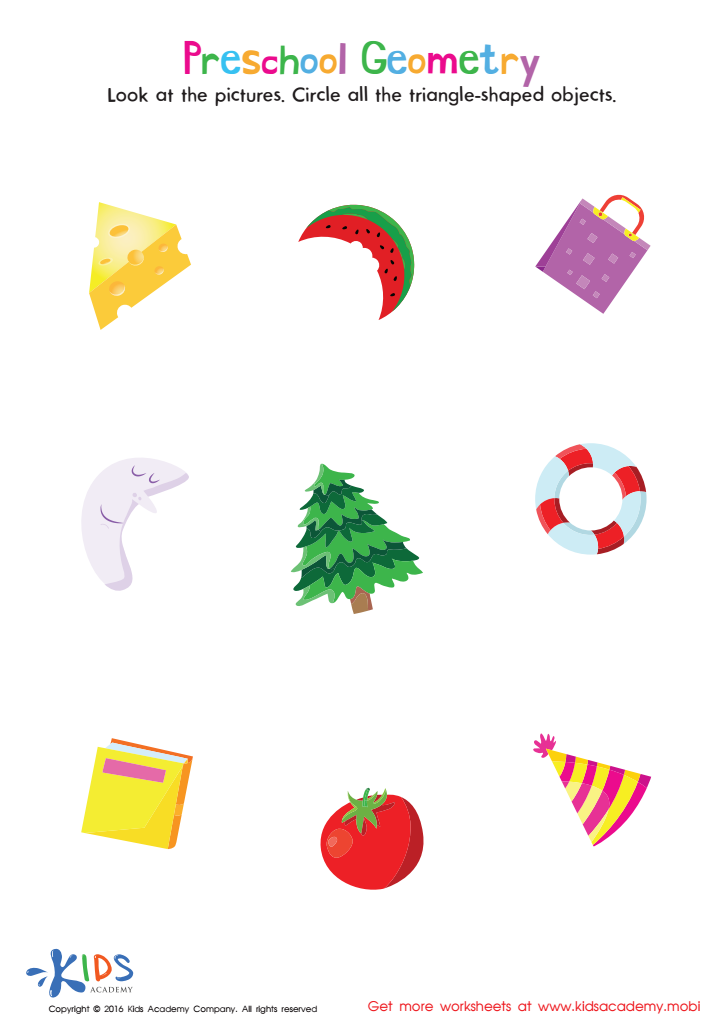
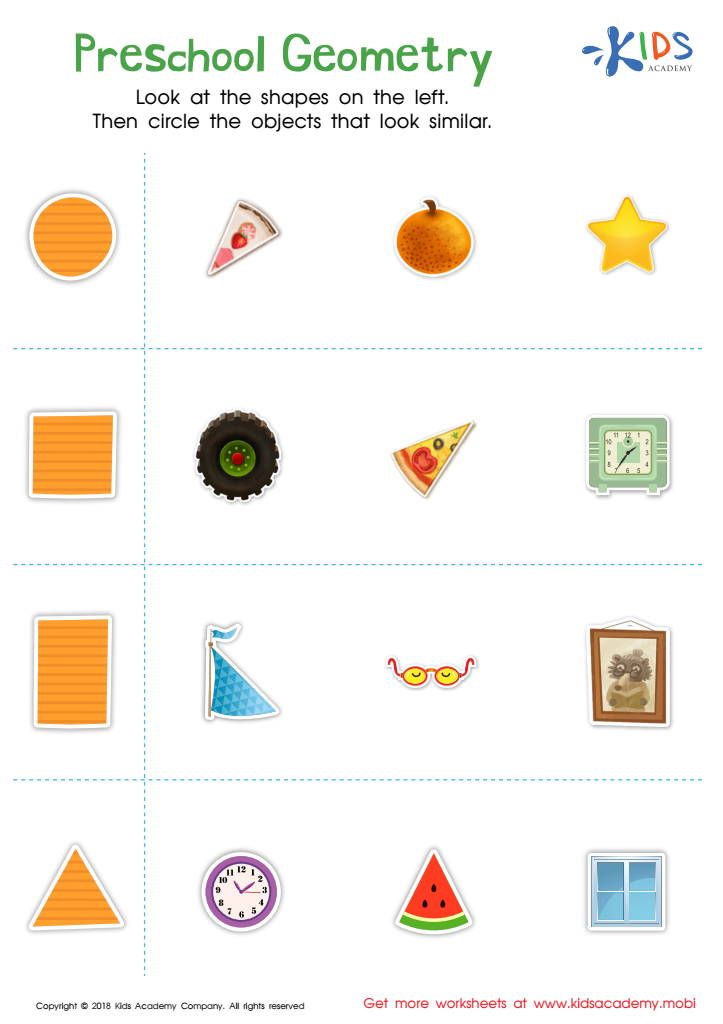
Preschool Geometry Worksheet
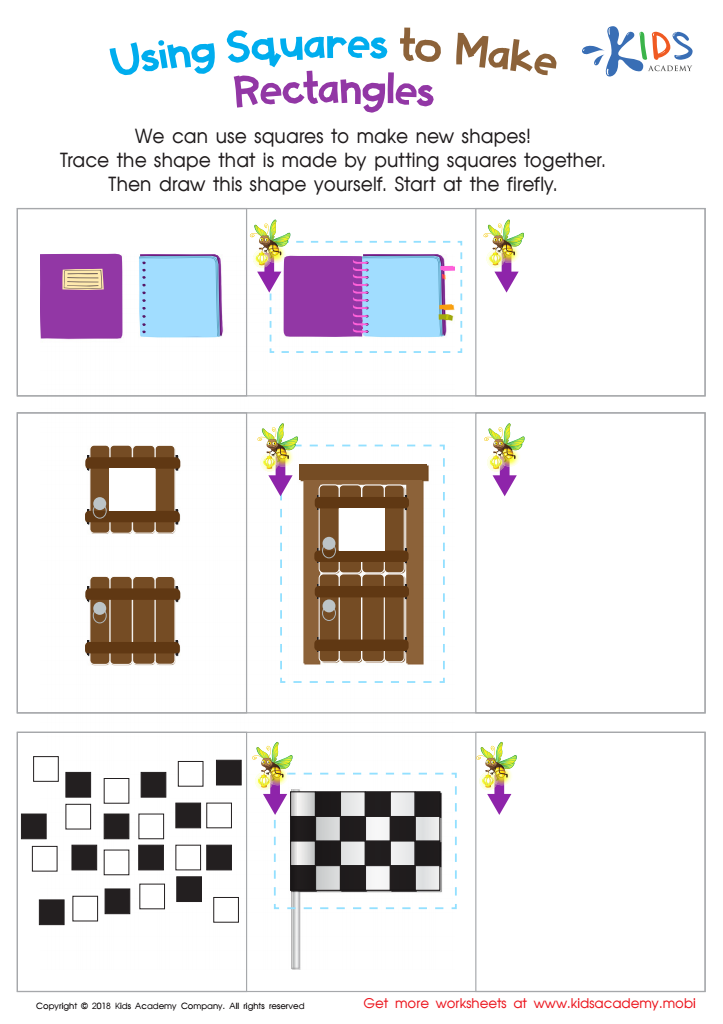
Using Squares to Make Rectangles Worksheet
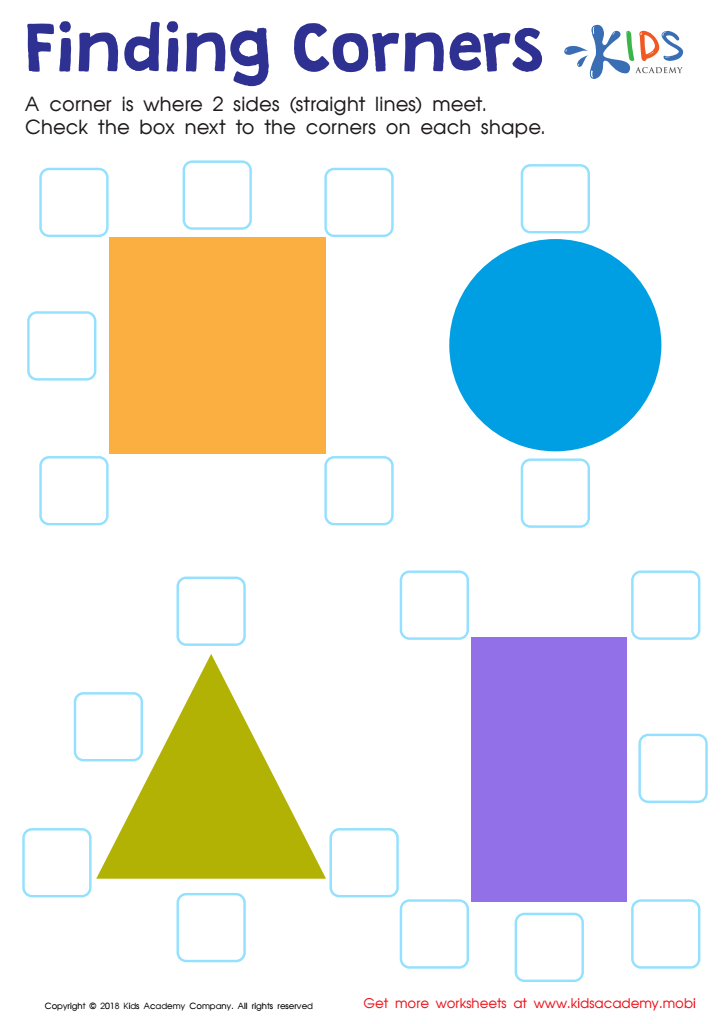
Finding Corners Worksheet
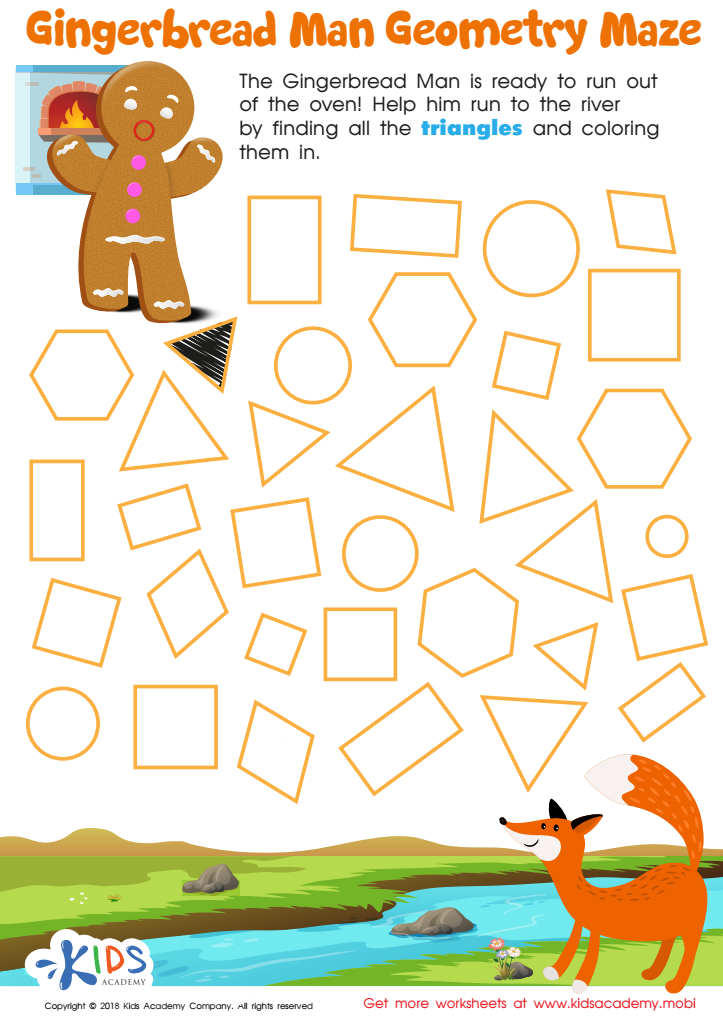
Gingerbread Man Geometry Maze Worksheet








Counting skills and understanding basic geometry are foundational elements of early mathematics education, crucial for children aged 5-7. Parents and teachers should prioritize these skills as they serve as stepping stones for future mathematical learning and problem-solving abilities. Counting helps children develop number sense, which is essential for understanding quantities and numerical relationships. It encourages cognitive development, as children learn to recognize patterns, develop their memory, and improve their logical thinking.
Geometry, on the other hand, introduces children to shapes, spatial reasoning, and measurement. Engaging with geometric concepts helps children understand their environment and build critical thinking skills. For instance, understanding different shapes and their properties lays the groundwork for more complex mathematical concepts such as area, volume, and even algebra in later years.
Moreover, fostering early counting and geometry skills enhances children's self-esteem and confidence in their mathematical abilities. As they become comfortable with these concepts in a supportive learning environment, they are more likely to enjoy and engage with math in the future. In summary, ensuring that children develop strong counting and geometry skills is essential for their overall growth and helps set the stage for academic success in mathematics and beyond.








